
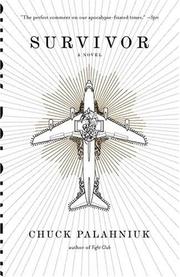
Survivor
2,683-word summary 12 min read 289 pages in the book
- First published
- 1999
- Publisher
- Jonathan Cape
- Pages
- 289
- ISBN
- 9780224060103
Reading options
What's inside (8 sections)
I picked up Survivor because someone told me it was the weird one even by Chuck Palahniuk standards, stranger than Fight Club and meaner in a different way. I expected a satire about fame. What I got was a man talking into a flight recorder while his hijacked plane runs out of fuel over the Pacific, telling his whole life in reverse order while the plane drops. It was published in 1999, with Jonathan Cape as the UK publisher in an edition cited at 289 pages, and the US edition from Norton that February. That publishing detail matters because the book feels rooted in the late nineties, in talk shows and tabloids and self help empires, in a moment when anyone could be turned into a product if an agent saw an angle.
The copy I read counts down instead of up. Page numbers run backwards. Chapters start near the end of Tender Branson's story and walk back toward the start. At first that feels like a stunt. After fifty pages it starts to feel like the point. You already know the plane is going down. You already know Tender has decided to tell everything into the black box. The only question is how a boy raised in a death cult became a domestic servant and then a television messiah, and whether he means to live through the crash he has set in motion.
The Creedish and the last living member
Tender Branson grew up Creedish. The Creedish are a closed religious community that keeps its children apart from the outside world, trains them for service, and teaches them that they are sinful and small and meant to labor. Boys learn housework and yard work and cooking and repair. Girls learn similar routines in other houses. Reading is limited. Contact with outsiders is limited. The theology is plain and harsh. Work will save you, pleasure will ruin you, and the outside is corrupt beyond fixing.
What makes the opening section stick is how practical Tender sounds about all of it. He does not give a sermon about being brainwashed. He talks about cleaning products and laundry starch and how to fold a fitted sheet so the corners sit flat. He talks about being rented out as a house servant after he turns seventeen, sent to live with strangers and send money back. He talks about suicide as a scheduled duty, something the church taught its members to accept when called. That flat tone is the book's engine. Tender describes terrible beliefs the way another person might describe a bus schedule.
Then the Creedish die. While Tender is out working in the city, the church members carry out a mass suicide back home. The news breaks in pieces. Police find bodies. Reporters start calling anyone with a Creedish name. Tender realizes he is one of the few left alive, and that his status has changed without his consent. He is no longer a servant nobody sees. He is a survivor, which in America in this novel means he is a story, which means he is inventory.
Palahniuk keeps the details of the deaths at a distance. You hear about the plan, the obedience, the way children were taught not to question the call. You do not get a long gore sequence. The horror is in Tender's acceptance. He had expected to die the same way. He had rehearsed it. When the call does not reach him, he keeps working, cleaning other people's houses, waiting for instructions that never come. That waiting becomes the whole book.
Cleaning houses and answering phones
For a long stretch Tender works as a domestic servant for wealthy households, the kind of people with too many rooms and too many opinions about grout. He cooks and irons and scrubs. He learns the private habits of his employers, what they eat when no one watches, what pills sit in the medicine cabinet, what photographs they keep facing down. He is invisible in the way service workers are often invisible, present for every mess and absent from every conversation.
He is also profoundly lonely. He has no family left in any usable sense. He has no friends from childhood who can speak freely, because every childhood friend was trained the same way. He goes to support meetings and church basements and free clinics because those are places where strangers will listen for an hour. He starts giving advice on the phone, talking strangers through bad nights, telling them how to breathe and what to do next when they say they want to die. He is not licensed. He is not trained in any modern sense. He knows how to sound calm while someone falls apart, because calm was the only acceptable sound where he grew up.
Those phone scenes are some of the strongest in the book. Tender tells a caller to open the windows. He tells another to drink water and sit on the floor. He repeats small instructions until the panic narrows. There is something bleakly funny about it. A man raised to expect death now spends his nights talking strangers out of it, using cleaning metaphors and chore schedules to keep them anchored. He tells them to sort one drawer. To wash one plate. To finish one small task and then call back. It works more often than it should.
At the same time his own life stays stuck. He steals small things from employers, not for money but for proof that he exists. He practices speeches in empty rooms. He counts his savings and realizes service work will never lift him out. He is polite to people who treat him as furniture. Palahniuk writes these chapters with a lot of brand names and cleaning tips and household detail, and the detail does double work. It shows how Tender sees the world through labor, and it shows how empty the rich houses feel despite being full of objects.
The agent who makes a messiah
Everything tilts when Tender meets an agent, a fast talking operator who sees the survivor story as a launch pad. The agent does not care about Creedish theology. He cares about camera angles and catchphrases and market share. He tells Tender he can be famous. He tells him he can be a teacher. He tells him people are hungry for rules, for someone to tell them how to live, and that Tender's background makes him perfect for the part.
The makeover is quick and total. Tender gets better clothes and a haircut and a set of talking points. The agent books him on shows and in front of crowds. He gives him a simplified message stitched together from Creedish discipline and pop psychology. Clean your house and you clean your soul. Throw away what you do not need. Pray through work. Obey. The crowds love it because it sounds strict and simple in a culture full of noise. Tender stands on stage and tells people to give up clutter and television and junk food, and they cheer as if he has handed them a new life.
Palahniuk is brutal about this machinery. The agent hires plants for the audience. He edits Tender's life story to remove awkward parts. He sells books Tender did not really write and tapes programs Tender barely understands. He teaches Tender how to pause for applause and how to cry on cue without actually crying. Tender goes along because going along feels like being chosen for the first time. After years of being told he was nothing, being told he is everything is hard to refuse, even when he can see the strings.
Fame in this novel is not glamorous. It is appointments and enemas and photo shoots and rented sincerity. Tender learns how to sign his name fast. He learns how to answer hostile questions without answering them. He learns that the same producers who built him up keep footage that could destroy him, in case the ratings dip. The agent keeps reminding him that attention is short and replacement is always waiting. If Tender will not say the line, someone else will.
Fertility and the crash course in wanting to live
In the middle of the fame circus Tender keeps crossing paths with a woman named Fertility. She is blunt where he is rehearsed. She works jobs that bring her close to death and mess, and she talks about the future as if she has already seen it and found it thin. At first she treats Tender as a joke, another television holy man. Then she starts testing him, asking what he actually believes when the cameras stop, what he wants when no agent hands him a script.
Their scenes together slow the book down in a good way. They meet in diners and cars and back rooms. They argue about suicide and survival and whether telling the truth ever helps. Fertility tells Tender things about his own future that sound too specific to be guesses, and Tender cannot decide if she is perceptive or ill or simply willing to say out loud what he already suspects. She does not flatter him. She asks why he lets the agent spend his life for him. She asks what he would do with one unobserved day.
The romance, if you can call it that, never turns soft. Tender does not know how to be tender in the ordinary sense. He was raised to distrust touch and to confess desire as sin. Fertility does not offer healing in the self help sense. She offers friction. She dares him to stop performing repentance and start making choices. When Tender says he wants to die, she does not gasp. She asks what is stopping him. When he says he wants to live, she asks what that would cost. Those exchanges carry more weight than the stadium sermons because they are the only conversations where Tender is not selling anything.
Around them the fame plot curdles. Followers start copying Tender's rules in extreme ways. Some stop eating. Some give away everything and then panic. A few kill themselves and leave notes quoting him. The agent spins each tragedy into more airtime. Tender watches his face on magazine covers while real people get hurt trying to live by slogans he does not believe. He starts to understand that mass suicide did not end with the Creedish. It just changed uniforms and moved to television.
The hijack and the backwards confession
Which brings us back to the plane. Tender hijacks a jet, or arranges to be on a jet that will be hijacked, the exact mechanics stay hazy on purpose, and points it out over the ocean with no plan to land. He speaks into the flight recorder because that is the only listener left who cannot interrupt or edit. He tells his story from the end toward the beginning, which is why the pages count down. He wants the record to show how it happened, even if no one can stop it now.
The final chapters, which are the first chapters in page order, lay out the crash logic. Tender has rigged the situation so survival is unlikely. He has said goodbye in the only way he knows how, by confessing chores left undone and lies told for money. He describes the plane's dive in physical terms, the pressure in the ears, the shaking tray tables, the sound of the engines straining. He keeps talking because talking is the last form of work he trusts. If he stops narrating, he will have to sit alone with what he did.
Whether Tender lives is left unclear. The recorder keeps running past the point where explanation should stop. There are hints that someone might survive, hints that Fertility might be involved, hints that the whole hijack might be another performance staged for an audience of one black box. Palahniuk does not resolve it cleanly. The ambiguity fits a book about a man who was taught that death is obedience and then taught that life is branding. Either ending would be a kind of escape. Neither would answer the question Fertility kept asking, which is what Tender actually wants when no one is watching.
I finished those pages feeling queasy in the way Palahniuk wants. The plane device is not really about aviation. It is about a narrator who can only be honest when he thinks no living person will grade him. Give him a crowd and he lies for love. Give him a dead microphone falling toward water and he finally says what happened.
What lands and what wears thin
A lot lands. The voice is the main achievement. Tender sounds like no one else in nineties fiction, polite and poisoned and funny about bleach. The household detail gives the satire a floor to stand on. When Tender explains how to remove blood from a shirt or how to polish silver without scratching it, you believe he has done it a thousand times, and that belief makes the later fame chapters credible. A man who knows how things get clean will notice how dirty television feels.
The Creedish material also lands because Palahniuk does not preach about cults. He shows the daily schedule and lets the reader feel the narrowing. Morning prayer, assigned labor, monitored meals, evening confession. Repeat until the outside world sounds like static. By the time the mass suicide arrives, it reads less as shock and more as the scheduled end of a long routine. That is far more disturbing than any graphic scene could be.
The criticism is fair too, and it starts with shock used for its own sake. Palahniuk loves a disgusting set piece, a medical procedure described too closely, a sexual confession held a beat too long. In Survivor some of those passages earn their place by showing how Tender was trained to endure shame. Others feel inserted to keep a reader awake. After the third detailed account of bodily fluids or cosmetic surgery, the provocation stops surprising and starts tiring. The book wants to disgust you into attention, but attention curdles when every chapter reaches for the same button.
The satire targets have dated as well. The agent, the talk show hosts, the self help publishers, the fame hungry followers, they read as specific parodies of late nineties media. The broad point about turning pain into product still holds. The specific jokes about ratings stunts and tabloid covers feel preserved in amber. A younger reader will get the idea without feeling the sting, the way you get a joke about a television star you never watched. The novel's anger at consumer culture remains legible, but some of its examples now need footnotes in your head.
Then there is the backwards gimmick. Counting pages down is clever for about a hundred pages. It forces you to think about cause and effect in reverse, which suits a book about a man trying to undo his fame. Over 289 pages it becomes a chore. You keep flipping back to check where you are. You lose the normal pleasure of progress, watching numbers climb as you finish. Palahniuk knows this and uses the annoyance on purpose, but intention does not remove friction. I admired the structure more than I enjoyed reading inside it.
Still, I would press Survivor on readers who think Palahniuk is only shock and slogans. Tender is a fuller creation than his reputation suggests. He is servile and sly and sad, a person who learned to survive by disappearing and then learned to perform by appearing on cue, and who never learned the middle distance where ordinary life happens. His confession from a falling plane is self serving and self lacerating and often very funny, sometimes in the same paragraph. When Fertility asks him to choose something without an audience, the book briefly stops satirizing America and starts describing a single lonely man. Those pages are why the novel stays with me, more than the plane, more than the cult, more than the countdown in the margins.
FAQ
When was Survivor published?
It was published in 1999, with Jonathan Cape as the UK publisher in a 289-page edition and Norton publishing the US edition that February.
Why do the pages count backwards in Survivor?
Tender Branson speaks into a flight recorder while his hijacked plane dives, telling his life from the end back to the start, so the numbers run down.
Does Tender survive the plane crash?
The ending stays ambiguous. The recorder keeps running past explanation, with hints about survival and Fertility, but no clean resolution.
Similar books

Haunted
Writers lock in for three months and trade worse stories as food runs out.
2,576-word summary · 11 min read

The Bookish Life of Nina Hill
Bookstore Nina gains a family and pub-quiz love in Los Angeles.
2,399-word summary · 11 min read
The Corrections
An aging Midwestern couple tries to gather three troubled adult children for one last Christmas at home.
2,094-word summary · 9 min read
The Nanny Diaries
NYU student Nan nannies four-year-old Grayer X on Park Avenue, caught between a demanding Mrs. X, an absent Mr. X, and a lonely child who needs her more than…
2,233-word summary · 10 min read

Lullaby
A reporter discovers that a poem in a children's book kills anyone who hears it, and his attempt to destroy every copy turns into a road trip through grief,…
2,147-word summary · 10 min read

Invisible Monsters Remix
A veiled model, a bold friend, and a scam-filled road trip remake Palahniuk's 1999 satire of beauty in shuffled Remix order.
2,665-word summary · 12 min read
Choke
A medical dropout fakes choking in restaurants to pay for his mother's care while stuck in a colonial park and sex addiction meetings.
2,044-word summary · 9 min read

Fight Club
An insomniac office worker and Tyler Durden build underground clubs that grow into Project Mayhem.
2,036-word summary · 9 min read

Size 12 Is Not Fat
Former teen pop star Heather Wells investigates two dorm elevator deaths while juggling her ex, her crush, and a size-12 wardrobe.
2,805-word summary · 12 min read

Go the Fuck to Sleep
A rhyming bedtime book for adults in which an exhausted father narrates the fourth hour of a toddler's stalling, one profane couplet at a time.
2,291-word summary · 10 min read
A Long Way Down
Four strangers meet on a London rooftop on New Year's Eve, each planning to jump, and end up making a pact to stay alive until Valentine's Day.
2,145-word summary · 10 min read

Little Earthquakes
Four Philadelphia women meet during pregnancy and discover that new motherhood is nothing like the plan, while friendship becomes the thing that holds them…
1,997-word summary · 9 min read

Mr. Maybe
Libby Mason wants a rich husband, but the wealthy man who proposes is dull and the broke writer she cannot forget is not offering forever.
2,322-word summary · 10 min read
Click, Clack, Moo: Cows That Type
Cows learn to type, demand electric blankets, and go on strike in a deadpan picture book about negotiation and withheld labor.
2,617-word summary · 12 min read
Infinite Jest
A film that kills its viewers, a tennis academy, a halfway house for addicts, and a future America where corporations name the years, all tangled together.
2,084-word summary · 9 min read
Hogfather
Death fills in for a missing Father Christmas, Susan Sto Helit hunts the Hogfather, and the twentieth Discworld novel turns Santa into a management problem.
2,871-word summary · 13 min read
Eligible
Austen's Bennet sisters move to modern Cincinnati, where marriage is a reality show and the house is losing its value.
2,293-word summary · 10 min read

Big Swiss
A transcriptionist for a sex coach falls for one of his clients, the tall Swiss gynecologist she calls Big Swiss, in a funny novel about work and secrets.
2,523-word summary · 11 min read
America (The Book): A Citizen's Guide to Democracy Inaction
Jon Stewart and the Daily Show writers turn a high school civics textbook inside out, with a foreword from beyond the grave.
2,511-word summary · 11 min read
Wedding Night
Lottie marries an old flame days after a breakup, then flies to a Greek island while her sister quietly works to sabotage the honeymoon. A farce about memory,…
2,213-word summary · 10 min read
The Sisters Brothers
Two hired killers ride from Oregon to Gold Rush California to murder a prospector, and find their trade, their brotherhood, and the frontier myth coming apart.
2,095-word summary · 9 min read

Marriage for One
Rose marries a cold lawyer to save her coffee shop, then discovers the arrangement was never only business.
2,032-word summary · 9 min read
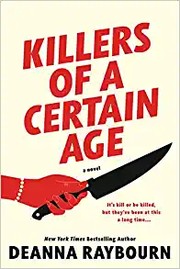
Killers of a Certain Age
Four sixty-year-old assassins discover their retirement cruise is a trap and turn their skills on the agency that trained them.
2,014-word summary · 9 min read
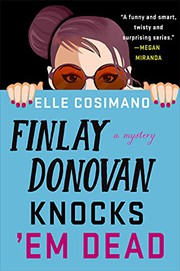
Finlay Donovan Knocks 'Em Dead
Someone has put a contract on Finlay Donovan's ex-husband, and the novelist and her nanny have to find the hitman before the school pickup.
1,990-word summary · 9 min read

Days at the Morisaki Bookshop
Heartbroken Takako moves into her uncle's tiny secondhand bookshop in Jimbocho, and the shop and its regulars slowly give her back her life.
2,011-word summary · 9 min read

Dash & Lily's Book of Dares
Two lonely New York teenagers trade dares in a red notebook left at the Strand, falling for each other on the page before they meet.
2,228-word summary · 10 min read
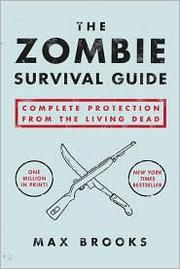
The Zombie Survival Guide: Complete Protection from the Living Dead
Max Brooks's deadpan survival manual explains the Solanum virus, the only ways to destroy the living dead, fortifying a home, and the outbreaks history quietly…
2,650-word summary · 12 min read

Dial A for Aunties
A wedding photographer accidentally kills her blind date, and her mother and three aunties help her hide the body during the biggest wedding of their careers.
2,076-word summary · 9 min read

A Connecticut Yankee in King Arthur's Court
Hank Morgan, a Connecticut factory man, wakes in King Arthur's England, rises to chief adviser, and rebuilds the kingdom until his own inventions turn on him.
2,193-word summary · 10 min read
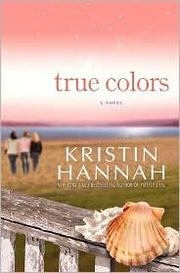
True Colors
Three Grey sisters split over love and duty after their father judges them.
2,596-word summary · 12 min read