
Reading options
What's inside (8 sections)
- A straight-faced manual for a threat that has not happened yet
- Solanum, the walking dead, and everything Hollywood gets wrong
- Weapons, armor, and the many ways to get yourself killed
- Running, fighting, and the long twilight after
- The recorded attacks: history's strangest homework assignment
- What holds up and what wears thin
- Key takeaways
- FAQ
A straight-faced manual for a threat that has not happened yet
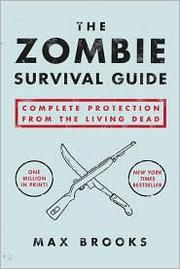
I picked this up expecting a novelty. World War Z had already convinced me that Max Brooks could write disaster like an oral historian, and I assumed his earlier book was the joke version, a stocking stuffer with a fake warning label. Then I started reading, and about twenty pages in I realized the joke is that there is no joke. The Zombie Survival Guide, published by Three Rivers Press in 2003, is a full survival manual, 272 pages of it, illustrated by Max Werner, and it never once breaks character. There is no narrator winking at you, no chapter where the author admits this is all for fun. It opens by asserting that the living dead are real, that governments have covered up every outbreak for centuries, and that the words in your hands are a document you may need to keep.
The book presents itself as the work of the world's leading zombie authority, a man who has studied the undead the way others study hurricanes. It reads like a cross between a FEMA handbook and an army field manual: numbered rules, equipment checklists, diagrams, dry discussions of load-bearing walls and water rations. Brooks had been a writer for Saturday Night Live, so the deadpan is professional grade. What surprised me was how much of the practical advice holds up when you swap "zombie" for "earthquake" or "hurricane". Water storage, food rotation, a designated meeting point, a plan for a night without power. The book is a parody, but it is a parody written by someone who actually read the preparedness guides it is mocking.
Solanum, the walking dead, and everything Hollywood gets wrong
The first chapter, "The Undead: Myths and Realities," lays down the biology and treats it as settled science. The cause of zombie outbreaks is a virus called Solanum. It is 100 percent communicable and 100 percent fatal, but it is not airborne and not waterborne, which is the one mercy in the whole system. You get it through direct fluid contact: a bite, a scratch, a splash of infected blood into an open wound or your eyes. The book walks through the infection clock hour by hour, and it is grimly specific. One hour in, the wound site discolors and hurts. By hour five there is fever, chills, and early dementia. Around hour eleven the legs stop working. Hour sixteen, coma. Hour twenty, the heart stops. Hour twenty three, the body gets back up.
There is no cure. Amputation immediately after a bite has saved a handful of people, mostly by luck, given how fast the virus moves through the bloodstream. The infected flesh is toxic, so eating it kills you rather than turns you. And because the virus runs on the brain, any infected person who dies without brain destruction comes back, including suicides, which the book mentions with the flat tone of a safety pamphlet. The physiology sections are where Brooks has the most fun being boring. Zombies feel no pain, never tire, never sleep, and never reconsider. They are slow, dumb, and utterly relentless, which the book insists makes them more dangerous than the movie version, not less. A zombie does not chase you. It just keeps walking toward you, and eventually you have to eat and sleep.
Only humans come back. Solanum kills every other animal it touches, and animals can sense it, which is why the guide recommends trained dogs as screeners at shelters: they smell the infection on a person before any symptom shows. The guide is also a work of film criticism in disguise. It separates the voodoo zombie, dismissed as a human being drugged and broken by a practitioner, from the Hollywood zombie, which it audits the way an engineer audits a bridge. Fast zombies violate the rules of the virus. Smart zombies violate them worse. The movie version dies from a shot to the chest, and the real version does not, because the only way to stop the living dead is to destroy the brain, a rule the book repeats until you could recite it in your sleep.
Then comes the section on detection, which is quietly the funniest part of the book. Since outbreaks start small and get buried fast, the guide teaches you to read the news like a paranoid analyst. Watch for homicides with head shots or decapitations followed by mass cremations, because civilians who figure out what is happening often handle it themselves and get charged with murder. Watch reports of missing hikers, especially when search parties go missing too. Watch "violent insanity" cases where the attacker bit someone, hospital patients who go berserk for no reason, riots without a cause, gang violence spikes, and any story where the press gets locked out. Any one of these can be nothing. A few of them together, in the same region, over a few weeks, and the book advises you to stock up and stay home.
Outbreaks come in four classes, and the escalation is the spine of the whole book. A Class 1 outbreak is one to twenty zombies in a rural area, over within hours or days, usually misreported as an accident or a homicide. Class 2 pushes into towns and cities, twenty to a hundred zombies, casualties in the hundreds, and a news cycle that calls it a riot. Class 3 is a war: thousands of the dead, a regular army instead of police, martial law, and months of fighting. Class 4 is the doomsday scenario, and the guide does not flinch. Governments retreat to bunkers, cities burn, raiders prey on survivors, and the human population could fall to a billion or less. Brooks writes this part with the same steady voice he used for water purification tablets, which is what makes it land.
Weapons, armor, and the many ways to get yourself killed
Chapter two, "Weapons and Combat Techniques," belongs in the comedy canon just for its structure. For every category of weapon, the book explains how to kill with it and then spends more time explaining how it will get you killed. A baseball bat is heavy and slow, and it demands strength and space you may not have. A crowbar is more reliable and doubles as a tool. A machete needs skill and room to swing. A sword is wonderful until you remember you have never trained with one. The book's beloved answer is the Shaolin spade, a shovel and blade hybrid that chops and pushes at a safe distance, and the fact that this is presented with total seriousness is the entire joke.
Firearms get the same treatment. A rifle beats a handgun for head shots at distance, but every shot announces your position to everything within hearing, and ammo weighs more than you think once you are carrying it on foot. Bows and slingshots are quiet but slow. Explosives and fire are rated as traps for the user, since a burning zombie keeps moving long enough to grab you and can burn down your shelter while it does. Body shots and broken bones do nothing at all, which means most of what you have seen in movies is worse than useless. Armor gets its own section, because bites are the threat, so anything that stops teeth, from thick leather to chain mail, matters more than protection for the chest, as long as you can still move and carry your gear.
The recurring lesson is that equipment does not save people, discipline does. Fight in open space. Keep your distance. Never corner yourself. Never fight when you are exhausted. Confirm every kill with a strike to the head, because zombies do not stay down from anything else. And know your weapon before the outbreak, not during it, because a stranger with a sword is a hazard to his own side.
That flows into chapter three, "On the Defensive," which is the part I have actually quoted to friends. The advice for a home siege is specific and weirdly sensible: pick an upper floor, because height buys you time; destroy or block the stairs so the only approach funnels into a kill zone; leave exactly one entrance and make it the one you can watch; fill every container with water before the taps stop; and stay out of the basement, which the book treats as a grave with a door. Windows get reinforced or boarded, with at least one kept clear for observation. Then it goes bigger, into what it calls a fortress: a site chosen for clear lines of sight, walls you maintain, fallback positions if the first line breaks, and a route out that stays secret. The book admits the obvious problem with all of it. You cannot build a fortress during an outbreak. Every preparation it describes is homework for the reader, due now, graded later.
Running, fighting, and the long twilight after
Chapter four, "On the Run," covers life in motion, and it is the most purely practical stretch of the book. Pack light. Carry water, a blade, a flashlight, a first aid kit, and copies of anything you cannot replace. Do not count on a car, since highways turn into parking lots in any disaster and the engine noise is a dinner bell. Bicycles, boats, and your own two feet rate higher. The guide walks through terrain types, forest, desert, mountains, swamp, and city, explaining what each one does to a traveler: deserts dehydrate you, swamps slow you and hide the enemy, cities are mazes full of doors that hide things behind them. The rule under all of it is the same. Keep moving, avoid crowds, and never sleep somewhere with only one exit.
"On the Attack" is the shortest and strictest chapter, because offense is where confidence kills people. Attacking the undead means clearing buildings room by room, moving in teams, staying silent, and accepting that the plan will fall apart the moment someone panics. The book is blunt about why armies lose to zombies: noise, logistics, arrogance, and the human habit of shooting at the chest. Its standing orders forbid heroics. No one goes back for a fallen friend. No one fights alone. No one improvises. The tone stays calm even when describing total war.
Then the final chapter, "Living in an Undead World," does something I did not expect from a comedy. It imagines the years after a Class 4 collapse, and it is bleak in a way that feels researched. Decay slows the undead but does not stop them quickly, and cold climates freeze them, which means they are waiting when the spring comes. Survivors have to farm, filter water, manufacture tools, and rebuild every system that used to arrive by truck. Communities split over whether to trust newcomers. Raiders burn what they cannot carry. The book talks about morale the way a field manual talks about ammunition, as a resource that runs out. I laughed at the Shaolin spade and then read this chapter on a train at night, feeling the temperature drop.
The recorded attacks: history's strangest homework assignment
The back of the book contains the "Recorded Attacks" chapter and then an appendix, and together they are the reason I recommend this to people who do not care about zombies. The attacks are a chronological log of outbreaks across human history, told in the same clipped style as the rest of the manual, complete with dates, casualty figures, and the official lie that covered each one up. The oldest entry is from around 60,000 BC at Katanda in Central Africa, where crushed skulls and cave art seem to describe the undead, though the guide itself doubts the file. The first confirmed case is 3000 BC at Hieraconpolis in Egypt, which is my favorite kind of detail: a virus with a paper trail older than most religions.
From there the log rolls through Rome and Caledonia, medieval Greenland, Edo Japan, and a Paris incident in 1807. Two entries do the heaviest lifting. In 1579, Francis Drake anchored in the Central Pacific and watched from his ship as islanders left their dead on a small cay they called the home of the gods of the dead, then watched the bodies get up and walk. Drake kept the account in a secret journal, which the book says surfaced centuries later. And in 1587, the Roanoke colony in North Carolina sent a hunting party to the mainland; a survivor came back raving about attackers whose worm-ridden skin shrugged off gunfire, the colony's own dead rose from shallow graves, and the settlement soon vanished from the record, leaving three competing stories about what happened, all of them bad.
The modern entries get even better. A 1980 outbreak in Brazil traced to tainted transplant organs. A 1987 incident in Khotan, China. And then the California run, which the guide treats as the outbreak that nearly went public. In December 1992, a couple named Sharon Parsons and Patrick MacDonald were camping in Joshua Tree National Monument when Sharon was bitten, likely by a wildlife photographer who had gone missing a month earlier. She turned in her sleep and attacked Patrick, who fought her off and fled, stopping at a gas station in Diamond Bar on the way to Los Angeles with a bite wound on his shoulder. In January 1993, a downtown LA gang rolled into rival territory to settle a score and found the area empty except for the walking dead. The two gangs called a truce, barricaded themselves in a junior high school, and fought their way out. The Los Angeles Police Department buried the whole thing as a gang shootout, and the survivors were convicted of first degree murder, because that is the recurring nightmare in this book: the zombies are simpler than the aftermath.
The log ends in 2002 in the U.S. Virgin Islands, and then comes the appendix, which pretends to be someone's outbreak journal, followed by blank pages and prompts so that the reader can start their own. It is the funniest and most unsettling thing in the book, a homework assignment for the apocalypse, handed out with a straight face.
What holds up and what wears thin
The guide is not a novel, and if you read it like one, it will exhaust you. Rule follows rule, and the weapons chapter starts repeating arguments it already made. The recorded attacks follow a template so rigidly that the format becomes the joke, which is genius for thirty pages and a slog for the other forty. The deadpan is a single note, held for 272 pages, and by the China and Soviet entries you can predict the shape of every paragraph. Some of the historical claims are invented outright, which is the point of the parody, but readers who like their history straight may grind their teeth at the idea of a secret zombie journal passed down by an admiral.
What holds up is better than I expected. The preparedness advice is not stupid, the satire has teeth, and the Class 4 chapter is genuinely disturbing. The book also works as a companion to World War Z, which shares the same virus and the same fictional universe, and knowing that makes the throwaway mentions of Solanum read like easter eggs. Brooks went on to build a much bigger story on these foundations, but the foundations themselves are worth visiting.
Read it in short sittings, ideally with a flashlight and a map, and skip nothing in the detection chapter. Or give it to someone who is difficult to shop for. The last thing in the book is a blank log for your own outbreak, waiting to be filled in, and the joke lands hardest when you realize you have already thought about where you would put your water.
FAQ
Is The Zombie Survival Guide a real survival manual?
No. It is a satirical book by Max Brooks, first published in 2003 by Three Rivers Press, that imitates the format of government survival handbooks while treating zombies as a real threat.
Do I need to read World War Z first?
No. The Zombie Survival Guide came first and stands alone, but the two books share the fictional Solanum virus and universe, so fans of one will catch references in the other.
What is Solanum in the book?
Solanum is Brooks's fictional zombie virus. It spreads through direct contact with infected fluids, is 100 percent communicable and fatal, and brings the body back roughly 23 hours after infection.
Similar books
Days Gone Bye
Rick wakes in empty hospital and walks to Atlanta in quiet gray panels.
2,000-word summary · 9 min read
World War Z
A UN researcher collects survivor accounts from Patient Zero in China to Yonkers and the Redeker Plan, charting the zombie war.
2,248-word summary · 10 min read
Warm Bodies
Zombie R eats Perry, spares Julie, and starts turning human again.
2,366-word summary · 11 min read
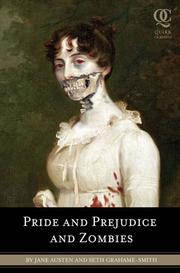
Pride and Prejudice and Zombies
Austen's courtship plot survives intact while Elizabeth and Darcy battle zombies, from the Netherfield ball to a duel with Lady Catherine.
2,526-word summary · 11 min read
Cell
A cell signal turns callers into violent phoners, and a father walks north through ruins to find his son.
2,103-word summary · 9 min read
Go the Fuck to Sleep
A rhyming bedtime book for adults in which an exhausted father narrates the fourth hour of a toddler's stalling, one profane couplet at a time.
2,291-word summary · 10 min read
Wilder Girls
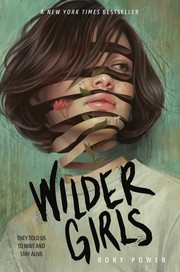
At a quarantined boarding school off Maine, three girls with strange mutations search for a missing friend and learn what the adults have hidden.
2,594-word summary · 12 min read
The Troop
A Boy Scout troop on a Canadian island takes in a stranger who cannot stop eating, and the worm inside him turns a camping trip into a war.
2,457-word summary · 11 min read
Hogfather
Death fills in for a missing Father Christmas, Susan Sto Helit hunts the Hogfather, and the twentieth Discworld novel turns Santa into a management problem.
2,871-word summary · 13 min read
Circus of the Damned
A rogue master vampire arrives in St. Louis and Anita Blake is caught in an undead turf war, with a science teacher in the crossfire.
2,757-word summary · 12 min read
America (The Book): A Citizen's Guide to Democracy Inaction
Jon Stewart and the Daily Show writers turn a high school civics textbook inside out, with a foreword from beyond the grave.
2,511-word summary · 11 min read
Lullaby
A reporter discovers that a poem in a children's book kills anyone who hears it, and his attempt to destroy every copy turns into a road trip through grief,…
2,147-word summary · 10 min read
The Twelve
The middle volume of the Passage trilogy braids the year America died, a picnic massacre decades earlier, and the survivors' war against the twelve master…
2,089-word summary · 9 min read
A Connecticut Yankee in King Arthur's Court
Hank Morgan, a Connecticut factory man, wakes in King Arthur's England, rises to chief adviser, and rebuilds the kingdom until his own inventions turn on him.
2,193-word summary · 10 min read
The Day of the Triffids
Blinded survivors flee carnivorous plants after a meteor shower.
2,171-word summary · 10 min read
Severance
Candace keeps office routine as fever empties New York, then joins survivors.
2,340-word summary · 10 min read
Redshirts
Ensigns realize they die to serve a bad TV show's narrative.
2,152-word summary · 10 min read
Haunted
Writers lock in for three months and trade worse stories as food runs out.
2,576-word summary · 11 min read
Wyrd Sisters
Three Lancre witches rescue a murdered king's baby, hide Lancre's future, and trap a guilty duke with a play in Ankh-Morpork.
3,085-word summary · 14 min read
Survivor
Tender Branson, last Creedish survivor, confesses into a flight recorder as his plane dives, from servant to agent-made celebrity messiah in Palahniuk's 1999…
2,683-word summary · 12 min read
Seveneves
Stephenson 880-page William Morrow epic, May 2015: the Moon shatters, the Cloud Ark fails, seven women restart humanity, and heirs meet survivors on Earth.
2,389-word summary · 11 min read
The Slippery Slope
Violet and Klaus climb icy peaks to rescue Sunny while Quigley and V.F.D. ruins change what they know.
2,678-word summary · 12 min read
Small Gods
God Om trapped as a tortoise must convince novice Brutha to save Omnia from its own church.
2,063-word summary · 9 min read
Skeleton Crew
King's 1985 collection pairs The Mist with The Jaunt, The Raft, and Survivor Type: 22 stories of Maine dread.
3,209-word summary · 14 min read
Post Office
Chinaski drifts through postal shifts, cheap rooms, horse tracks and rough love in Bukowski's 1971 debut about work, drink and survival.
2,444-word summary · 11 min read
My Best Friend's Exorcism
Abby fights to save possessed best friend Gretchen in 1988 Charleston Satanic Panic horror.
2,115-word summary · 9 min read
Mostly Harmless
Arthur makes sandwiches on Lamuella while Ford steals a Guide Mk II that wipes Earths across realities.
2,059-word summary · 9 min read
How to Sell a Haunted House
Siblings Louise and Mark must empty puppet filled parents house that fights back.
2,085-word summary · 9 min read

Tokyo Ghoul, Vol. 1
Student Ken Kaneki becomes half-ghoul after Rize attack and hides at Anteiku.
2,438-word summary · 11 min read
The Running Man
Out of work in a broken 2025, Ben Richards enters a televised manhunt where each hour alive pays cash.
2,922-word summary · 13 min read