
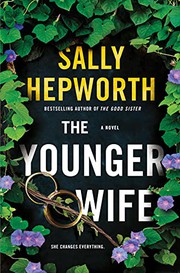
The Younger Wife
2,127-word summary 9 min read 352 pages in the book
- First published
- 2021
- Publisher
- St. Martin's Press
- Pages
- 352
- ISBN
- 9781250229618
Reading options
What's inside (10 sections)
I read The Younger Wife in two sittings, which is how Hepworth books tend to go for me. She writes domestic suspense that moves at a thriller pace but keeps its attention on family, and this novel has the best hook she has written: a wedding, an older woman standing at the back of the room with bare feet, and a celebrant emerging from the sacristy spattered with blood. Then the book rewinds a year and makes you wait for the thud.
The bride is Heather Wisher, thirty four, an interior designer. The groom is Stephen Aston, a celebrated Melbourne heart surgeon, rich, charming, beloved by his patients. He is two decades older than Heather and only slightly older than his own daughters, Tully and Rachel, which is awkward before anyone knows the rest. The rest is Pamela, Stephen's wife of many years, who has early onset Alzheimer's and lives in a care home. Stephen announces at a family dinner that he is divorcing Pamela so he can marry Heather. He says it kindly. He says Pamela will be looked after. Tully and Rachel sit there with their glasses and their questions, and the novel's machinery starts to turn.
Tully
Tully is the older daughter, a wife and mother of two boys who has spent her adult life being correct. She married Sonny, who is warm and funny and has just destroyed them financially with a bad business deal he hid from her. She also has a secret she has held since she was eleven: she steals things. Small things, usually, lipsticks and baubles, a compulsion she describes as pricking a balloon when the pressure gets too high. When Sonny finds her stash of stolen goods, her life splits open, and the money trouble means the family may have to sell the house she has curated into a monument of respectability.
Her chapters are the tightest in the book. Hepworth writes the shoplifting as neither glamorous nor pitiable. It is a pressure valve, and Tully knows it is stupid, and she keeps doing it. Her arc runs from managing appearances to admitting that her family's whole image has been a lie, starting with the story she tells herself about her parents' marriage.
Rachel
Rachel is the younger daughter, a baker whose business is taking off and whose personal life has been stalled for years. She was raped at sixteen, a fact she kept from almost everyone, and she has not dated since. Early in the book she meets Darcy, a former cafe owner who lost his two shops during the pandemic, and their relationship becomes a quiet counterweight to the noise around the wedding. She also becomes the family detective.
Pamela's decline gives Rachel a project and a wound at once. She starts visiting the care home more, and she notices things: how Pamela flinches when Stephen touches her, how staff treat him like a saint, how many of Pamela's injuries were explained away as falls. When Rachel asks her mother's book club friend Diana whether Pamela was more likely to injure herself when Stephen was around, Diana's answer is careful and telling.
Heather
The titular younger wife is the character Hepworth has the most fun with. Heather grew up with a father in prison for killing her mother, a fact she keeps from nearly everyone, including, for a while, Stephen. She drinks more than she admits and hides bottles the way other people hide debts. Her interior design work is how she met Stephen and also how she ended up inside the house, measuring rooms for a couple whose marriage was, by all appearances, ending politely.
Heather's scenes with Stephen start as romance and shade into something else. He is attentive, then controlling. He finds her hidden whiskey and calls it concern. He introduces her to his psychologist friend Mary, and Mary, who means well, becomes an instrument of doubt. When Heather tries to raise concerns about Stephen's temper, the machinery of his reputation grinds her down. This is the book's most convincing sequence, because it shows gaslighting as an accumulation of reasonable sounding explanations rather than a single villainous speech.
The section of the book that made me put it down and walk around was the strangling. Heather, acting on advice from her father in prison, deliberately tests Stephen, and he puts his hands around her neck. The attack leaves no marks, which is exactly the point. She is cut by broken glass in the struggle and needs seventeen stitches, and the injury is explained away as a kitchen accident. Heather is pregnant not long after, loses the pregnancy in an anembryonic one, and privately suspects stress or worse. Mary, the psychologist, reassures her that Stephen is a good man, and Heather spends a chapter unsure whether her own memory is reliable. Hepworth is careful here: the reader knows, Heather doubts, and the gap between those two positions is the most frightening thing in the novel.
The hot water bottle and the note
The plot's engine is a discovery. Rachel finds a hot water bottle stuffed with cash, ninety seven thousand three hundred and seventy two dollars, and a scrap of paper with two names on it: Tully, and Fiona Arthur. Fiona Arthur is not a name anyone in the family recognizes. Stephen denies knowing it, but his eyes flicker, and Hepworth lets the reader sit with that flicker for a hundred pages.
The note leads Rachel to Stephen's first wife, a marriage that happened before Pamela and was wiped from the family history. Fiona Arthur is also the anonymous first person voice in the strange, short interludes that break up the main chapters, the woman at the wedding, watching. When Rachel finds her on social media and sends a message, Fiona confirms what the reader has been dreading: Stephen hurt her. The pattern did not begin with Pamela.
The money, meanwhile, turns out to have its own small story, explained in an epilogue set three years earlier. Pamela's mother was committing pension fraud after her husband died, and Pamela took the cash to protect her. The note was a memory aid. Pamela suspected something about her husband and meant to write to Tully and Fiona Arthur, and then her memory began to go, and the plan was lost with it.
Pamela
The character Hepworth treats most carefully is the one with the least dialogue. Pamela in the care home is confused and sometimes violent, but she is not furniture, and the fragments that surface are the book's clue system. When Diana, her book club friend, is asked whether Pamela's injuries tended to happen around Stephen, the answer is careful and devastating, delivered by a woman who has decided not to make accusations she cannot support. There is another moment where Pamela, in a lucid stretch, says that Stephen hurt a poor woman terribly, and no one in the family knows who she means.
Hepworth gives Pamela the prologue's watcher role and, in a way, the last word. The wedding day scenes where she wanders through the reception are written from a mind that cannot hold the thread of the evening, and the effect is that the reader becomes her interpreter. She is also the one who ends up holding the candlestick, which the daughters' cover story turns into its own weapon. The epilogue, set three years before the main action, finally lets her think clearly for a page, and what she does with the clarity is write two names on a scrap of paper and hide it in a hot water bottle, because she has understood something and does not yet know how to say it. The woman who loses her memory spends the novel trying to leave herself a note. That is the emotional engine under the thriller engine, and the book knows it.
The wedding
The last act pays off the prologue. At the reception, Pamela wanders in, confused, and Stephen handles her with a grip that the daughters finally see for what it is. There is a brass candlestick. There is a chokehold. Rachel swings the candlestick at her father and he goes down, bleeding, and the three women make a choice in about four seconds. Tully tells the arriving guests that Pamela hit him. Heather stands beside her, blood on her wedding dress, and backs the story. Rachel does too. Stephen dies in the hospital, and the women keep their versions straight in front of police and paramedics.
What follows is quieter than I expected. The funeral, the family assembling over the aftermath, Heather raising a glass: to shitty fathers. The three women end up bound together by the lie, which the novel treats as a bond and a burden. Heather goes back to an empty house that was meant to be her marital home and starts dismantling the life she had planned. Tully and Sonny face the sale of their house and the thefts that were never quite secret. Rachel and Darcy keep visiting Pamela, who is the only person in the family with no idea what happened and the only one who had the truest picture of it all along. Pamela goes back to the care home, where she dies of pneumonia a month before Christmas.
The police thread is handled with restraint. The women give statements. The story holds, partly because Pamela's condition makes any prosecution impossible and partly because the wedding guests saw enough chaos to doubt their own memories. What the book does not provide is a trial scene or a detective figure building a case to expose the lie, and that refusal is important. Nobody is coming to hold these women accountable, because the novel has decided that accountability is not the missing ingredient in this family. What was missing was someone willing to see Stephen clearly, and his daughters only managed it with their hands mid swing.
What works and what strains
Hepworth is very good at the texture of family life under pressure: the dinners, the group chats, the way a mother's illness becomes a logistics problem before it becomes a grief problem. The three narrators have distinct voices without ever announcing their distinctness. Tully's kleptomania, Rachel's baking and Heather's drinking are all plausible coping mechanisms, not quirks.
The strain shows in the book's desire to carry every issue at once. There is the wedding plot, the Alzheimer's plot, the abuse plot, the sibling plot, the kleptomania, the money trouble, the rape backstory, and the imprisoned father, and sometimes a thread has to wave its arms for attention. The mystery of Fiona Arthur resolves early and easily once Rachel picks up the thread. Darcy, sweet as he is, exists mostly to give Rachel a soft place to land.
The biggest arguments about this book concern the ending. Reviewers who saw advance copies noted that the published version makes Stephen's violence more explicit than earlier drafts, which changed the read for people who had found the women's testimony suspicious rather than heroic. Jen Ryland, one of the more meticulous reviewers of Hepworth's work, documented added passages in the finished epilogue that leave little doubt about what Stephen was. Other readers went the opposite direction and complained that the book stacks so many issues that none of them gets its proper weight, and that the reveal about Pamela's money turns out to be a pension fraud subplot that undercuts the threat it seemed to represent. I think both camps are responding to a real thing. Hepworth wants to write about how abuse hides inside ordinary respectability, and she also wants a plot with twists, and the two desires fight each other in the last fifty pages.
On balance I land on the side of the book. The wedding sequence earns its certainty, and the image of three women standing in a bloodstained sacristy making eye contact and choosing a version of events is exactly the kind of scene the rest of the novel was building toward. The clunk of the epilogue's cash explanation is a wobble, not a wound. And if you finish the book wanting to talk about the difference between recommending a book and defending the people in it, that is Hepworth doing her job.
Who it is for
If you like Liane Moriarty, Jane Harper or the quieter end of the domestic suspense shelf, this fits. It is a book about daughters deciding what to do about a father they have been trained to admire, and about how much a family will spend on appearances. Content notes: domestic violence and gaslighting (central), rape in backstory, Alzheimer's decline, alcohol dependence, and a death in a wedding dress. Nothing is gratuitous, but nothing is soft either.
FAQ
What is The Younger Wife about?
It follows sisters Tully and Rachel Aston as their father, a celebrated Melbourne heart surgeon, divorces their mother, who has early onset Alzheimer's, to marry a much younger interior designer.
Is The Younger Wife part of a series?
No. It is a stand-alone novel, first published in Australia in 2021 and in the United States by St. Martin's Press in 2022.
Does The Younger Wife have a happy ending?
It ends with Stephen dead at his own wedding, the women bound together by a shared cover story, and Pamela passing away a month later, so it closes on relief and cost rather than comfort.
Similar books

The Best of Friends
Three lifelong friends discover their teenage sons were hiding more than anyone knew after a night that leaves one dead, one in a coma and one silent.
2,040-word summary · 9 min read
Every Last Secret
A wealthy wife tracks a possible affair, but dinners, therapy, and a sudden death expose buried secrets across two polished suburban marriages and force her to…
2,687-word summary · 12 min read
Bring Me Back
Finn lost Layla at a French rest stop twelve years ago. Now engaged to her sister Ellen, he faces sightings, emails and Russian dolls that reopen everything.
2,912-word summary · 13 min read
Strangers in the Villa
A strained couple in a Spanish villa takes in guests who refuse to leave.
2,208-word summary · 10 min read
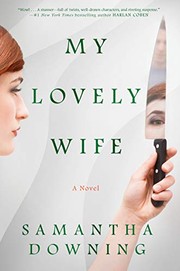
My Lovely Wife
A bored suburban couple murders together until one victim unspools them.
2,421-word summary · 11 min read
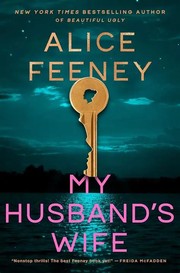
My Husband's Wife
Artist Eden Fox returns from a run to find her key fails at Spyglass and her husband claims a stranger is his wife in Hope Falls.
2,437-word summary · 11 min read
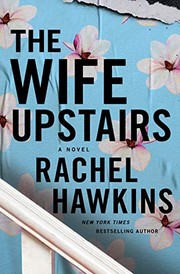
The Wife Upstairs
A struggling dog walker falls for a wealthy widower in Alabama, but his missing wife may still be alive upstairs.
3,255-word summary · 14 min read
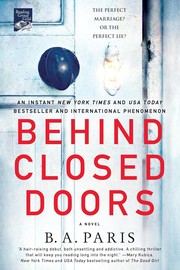
Behind Closed Doors
Grace seems to have a perfect marriage to Jack, until her sister and a friend see the locks and rules.
2,056-word summary · 9 min read
The Soulmate
A cliffside fall leaves a wife doubting her husband as old abuse and buried secrets surface.
2,126-word summary · 9 min read
The Good Sister
Twin sisters share a careful arrangement until a plan to have a baby pulls old family secrets into view.
3,255-word summary · 14 min read

The Beach House
A young valet is beaten to death at a Hamptons party, and his law-student brother spends a year building a case against the family that covered it up.
2,049-word summary · 9 min read

Six Years
A professor who promised to forget the woman he loved sees her husband's obituary and discovers that the wedding, the marriage, and the woman herself may never…
2,076-word summary · 9 min read
Saving Noah
A seventeen-year-old swimmer confesses to molesting two girls he coached, and his mother must decide what unconditional love is worth.
2,976-word summary · 13 min read

A Spool of Blue Thread
Four generations of the Whitshank family in Baltimore, and the silences, resentments and quiet love they hand down without ever saying so.
2,408-word summary · 11 min read
The Pilot's Wife
Kathryn Lyons's husband dies in a plane crash, and the investigation reveals a secret life that forces her to rethink their marriage.
2,006-word summary · 9 min read
The End of Her
A sleep-deprived mother of twins faces a stranger's accusation that her husband murdered his first wife in Shari Lapena's domestic suspense novel.
2,383-word summary · 11 min read
The Drowning Woman
Living in her car in Seattle, Lee saves a wealthy stranger from drowning. The friendship that follows draws her into abuse, murder, and a plan to disappear.
2,578-word summary · 11 min read
Strange Sally Diamond
Sally Diamond takes her dying father's joke literally and burns his body, then learns her whole childhood was built on a kidnapping and a lie.
2,411-word summary · 11 min read

Girl, Forgotten
A rookie US marshal guards a judge with a stalker and ends up reopening the 1982 prom-night murder of the judge's pregnant daughter.
2,111-word summary · 9 min read

The Woods
Twenty years after two teenagers were murdered and two vanished at summer camp, prosecutor Paul Copeland identifies a fresh corpse as one of the missing.
2,490-word summary · 11 min read

The Boy from the Woods
Wilde, found feral in a New Jersey forest in 1986, hunts for a missing teenager while a senator's secrets tear a wealthy town apart.
2,270-word summary · 10 min read
Things We Do in the Dark
A comedian kills her husband, then a podcaster digs up her teen murder past.
2,427-word summary · 11 min read

The Widow
A widow of a suspected criminal faces reporters and police while hiding what her marriage really cost.
2,599-word summary · 12 min read
The Therapist
A couple moves to a gated street where the previous therapist was murdered in their house.
2,437-word summary · 11 min read
The Heiress
A missing heiress returns to claim a mansion full of letters and lies.
2,362-word summary · 10 min read
The Silent Wife
A Chicago psychologist watches her twenty-year partnership collapse when Todd leaves for Natasha, then plans murder.
2,591-word summary · 12 min read
Rose Madder
After fourteen years of abuse, Rosie Daniels flees her cop husband and finds a painting that opens into a dangerous mythic world.
2,349-word summary · 10 min read

Keep It in the Family
Mia and Finn renovate a long empty house and find seven children hidden in the attic.
2,270-word summary · 10 min read
The Other Mrs.
A Chicago family inherits a house on a Maine island, then a neighbor is found murdered. Kubica's 2020 thriller builds to a final reframe.
2,267-word summary · 10 min read
The Cousins
Three cousins work at their rich grandmother island resort while digging into why their parents were cut off.
2,565-word summary · 11 min read