
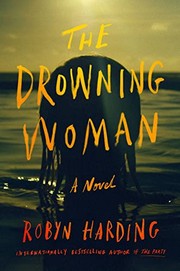
The Drowning Woman
2,578-word summary 11 min read 336 pages in the book
- First published
- 2023
- Publisher
- Grand Central Publishing
- Pages
- 336
- ISBN
- 9781538726761
Reading options
What's inside (8 sections)
I picked this up because the premise sounded like a clean, mean thriller: a woman living in her car saves a rich stranger from drowning, and the stranger turns out to be more dangerous than the water. Robyn Harding's 2023 novel is set in Seattle, around a wealthy stretch of beach and a diner that hires people with records. It moves fast, switches narrators, and keeps changing the shape of the con. I read it in two sittings, the second spent deciding how much of the plot I believed. That tension is part of the fun, and also where the book gets shaky.
A woman in the water
Lee Gulliver was a chef and restaurateur in New York. Her East Village restaurant, The Aviary, was her whole life. Then the pandemic hit, the business failed, and she borrowed money from a man named Damon who was not a bank. When she could not pay, he broke one of her fingers with a meat mallet and promised to keep breaking things. Lee fled to Seattle with almost nothing. She sleeps in a Toyota Corolla, works under the table at Uncle Jack's diner, and parks near an affluent beach because it feels safer than the streets.
One morning she hears sobbing and sees a well-dressed woman walk into Puget Sound. Lee pulls her out. The woman is furious. Her name is Hazel Laval, and she says Lee has just ruined her only chance to escape a sadistic husband. That opening is strong. Hazel is not grateful, and Lee is not a hero. She is cold, broke, and annoyed. The two women sit in the car with a bottle of whiskey, and Hazel says her husband, Benjamin, controls everything: her money, her clothes, her food, her friends. Lee listens because she is lonely. Hazel returns the next morning with breakfast and an antique netsuke from Benjamin's collection, which she says Lee can sell. A friendship starts.
Hazel is wealthy in the way that makes her problems invisible. She lives in a large house on the water. Benjamin is a criminal defense lawyer with a lot of money and cameras. He is also violent. Hazel describes a marriage that began as consensual kink and turned into a contract of total control. She is not allowed to leave except for the gym. Her mother has early-onset Alzheimer's, and Benjamin pays for a private care facility, which gives Hazel a reason to stay.
Lee's own backstory comes out in pieces. She is estranged from her sister Teresa because Lee caught Teresa's fiancé cheating and tried to extort him instead of telling her. That detail matters. Lee is not a pure good person. She is capable of bad decisions, and she knows it. When Hazel offers her fifty thousand dollars and a fake passport to help with an escape, Lee says yes. She needs the money and the new identity. She also wants to believe she is saving someone. Both things are true, and Harding lets them sit together.
The plan
Hazel's plan sounds simple. She and Lee look alike, especially after Hazel arranges for Lee to get a haircut and color that matches hers. At the gym, they swap clothes. Hazel leaves for the airport. Lee drives Hazel's car to the mansion, walks inside, makes a salad in front of the kitchen camera, collects an envelope with cash and a passport, and drives away. For two hours, Benjamin will think his wife is home. Lee gets paid. Hazel gets a head start to Panama.
There is a spa scene before that, and it is one of the book's better nasty set pieces. Hazel gives Lee an appointment as an apology for a moment at an oyster bar when Hazel treated her like a beggar in front of rich friends. Lee enjoys the massage and the facial, then the receptionist asks her to pay more than five hundred dollars. Hazel said it was prepaid. It was not. Lee calls and calls. Hazel arrives with a bruised face and says she has to leave Benjamin before he kills her. The humiliation and the violence land in the same scene, which is efficient.
Lee's relationship with Jesse Thomas runs alongside the escape plot. Jesse is a personal trainer who gives her an orange at the auto shop and later comes into the diner. He is kind, patient, and good-looking. He brings her tea when she is sick. He takes her out. After months of being invisible, Lee falls hard. The reader knows something is off because Harding keeps cutting between the romance and Hazel's warnings, but the exact shape of the betrayal is held back.
Hazel's plan is not the real plan. That is the first big turn, and it arrives with a body.
The body in the study
Lee does everything she is told. She puts on Hazel's clothes, drives the Mercedes to the house, makes the salad, finds the envelope. Then she wanders into Benjamin's study, which Hazel said has no cameras. There is a man in the chair. He has been stabbed. Lee turns the chair and sees Jesse's face.
That is a great chapter ending. The man Lee has been sleeping with is dead in the house of the woman she is helping, and she has been walking around the crime scene in Hazel's clothes. Lee runs, scrubs blood off in the ocean, finds the cash and a passport in the name Kelly Wilcox, and drives away. She does not know whether Hazel set her up or Benjamin killed Jesse. She only knows she is the obvious suspect.
The novel then rewinds.
This is where Harding takes a risk. Part two switches to Hazel's first person and retells the same events from her side. We learn that Hazel met Benjamin when she was young, and her mother's later illness gave her a reason to stay. The relationship started with rules she thought she could handle. Then the rules became isolation, then violence, then a contract that made her feel like property. She met Jesse at the gym. He was the first person in years who treated her like a woman rather than a possession. They planned the fake drowning: Hazel would walk into the sea, Jesse would pick her up in a boat, and they would leave for Panama.
Lee ruined that plan by saving her. So Jesse came up with another one. He would get close to Lee, kill Benjamin, and frame Lee for the murder. Hazel would inherit the house and the money. Lee would go to prison. Hazel agreed at first. She was frightened, in love, and used to doing what a man told her. She even stole the knife Lee kept in her car. Then she began to notice things. Jesse was sleeping with Lee. He punched Hazel during the rehearsal for the escape and did not pull it. He seemed excited by the killing. Hazel changed her mind. She threw Lee's knife into the ocean instead of leaving it where Jesse could use it. She got Lee a fake passport and left fifty thousand dollars and a ticket to Panama in the kitchen drawer. She went through with the clothes swap because she did not know what else to do. When she came home, Benjamin was waiting. Jesse was gone. Benjamin knew about the affair and the escape, though not everything.
Part two works as a magic trick. The same scenes look different once you know what Hazel was thinking. It also creates a problem. Hazel withholds so much in part one that the first section can feel like a cheat rather than a fair mystery. She is not lying to the reader exactly, but she leaves out the most important fact: she knew Jesse, and she was part of a plan to frame Lee. Some readers will enjoy the reversal. Others will feel the rug was pulled by the author rather than by the character.
Carter Sumner
Lee's section picks up with her trying to understand what happened. She searches Jesse's apartment and finds a Social Security card in the name Carter Douglas Sumner. Online, she finds a story about two brothers, Carter and Sean, arrested for a home invasion that turned violent. She recognizes Jesse in the photograph. Carter was the brother who turned state's evidence. Sean served more time because Carter's lawyer convinced him to blame Sean. That lawyer was Benjamin Laval.
This is the novel's best piece of plotting. Benjamin did more than hire a killer. He hired a man he had already represented, a man whose brother was still in prison because of a defense strategy Benjamin designed. The connection makes the villain feel less random. It also gives Lee a way into the story that is more than running away.
Lee visits Sean in a halfway house in Bellingham. Sean is bitter and damaged. He tells her that Carter loved violence. He also tells her that Benjamin is the person he hates most. Lee leaves with a better picture of Jesse, and it is not a flattering one. The charming trainer who brought her tea was a man who had hurt people before and would have hurt her.
Benjamin calls Lee and asks to meet. He is calm, well dressed, and completely in control. He explains that Hazel and Jesse planned to frame Lee for his murder. He offers her twenty-five thousand dollars and a plane ticket to Austin, where a friend will give her a job. He says he only wants her to disappear. Lee does not trust him. At an internet cafe she finds a USB drive hidden inside a pen she took from Jesse's apartment. The pen was Jesse's insurance. On it are recordings of Benjamin hiring Carter to seduce and then drown Hazel. Benjamin's voice is unmistakable.
Lee has a choice. Take the money and run, or give the recordings to the police. She chooses the police, anonymously. It is the first wholly unselfish thing she does in the book, and it costs her the clean escape Benjamin offered. She drops the pen at a station and heads for the airport.
The case falls apart
Hazel's part four is the aftermath. Benjamin keeps her in the house and punishes her for the affair. She pretends to be broken, which is not difficult. She plans to kill herself with sleeping pills and vodka, and she records a video confession to post after she is dead. Before she can do it, a detective knocks on the door. Benjamin is being arrested for conspiracy to commit Hazel's murder.
For a moment, it looks like justice. Then the case collapses. The recordings are powerful, but Carter is missing and cannot be cross-examined. Benjamin's lawyers argue that the audio is not enough without him. Hazel lies to the police about the affair and about Lee, protecting herself and making the prosecution's job harder. At the preliminary hearing, the charges are dismissed. Benjamin walks out.
Hazel's mother disappears from her care facility. Hazel is sure Benjamin took her. Then the police find the old woman dead in a park where they used to picnic. It appears she wandered off on her own. The scene is sad in a quiet way the rest of the book rarely allows. Hazel stayed with a monster to keep her mother safe, and her mother died anyway, alone, in a place that used to be happy.
Benjamin finds Hazel at a motel. He says he is going to have her committed. He can do it, too. He has money, lawyers, and a story about a hysterical wife. Hazel slashes his face with her car key and drives away. It is not a triumphant action. It is desperate and ugly, and it fits her character better than a sudden transformation into an action hero.
The final piece of evidence comes from the sea. Carter's jawbone washes ashore. Nate Mattias, Benjamin's security man, has been talking. His story about killing Carter in self-defense does not hold up. The police charge Benjamin with murder. Hazel digs up a second fake passport near the beach, the one she buried for herself, and flies to Panama as Nora Harmsworth.
Panama
Three months later, Lee is running a small beach restaurant called The Nest on Isla Carenero, living as Kelly Wilcox. She has money, a business, and a view of the water. She is also still looking over her shoulder. Then Hazel walks in.
Their reunion is the emotional test of the book. Hazel apologizes and asks to talk. Lee has had time to think about what Hazel did to her and what Hazel did for her. Hazel left her the money and the passport. Hazel also helped plan a murder that would have sent Lee to prison. Both are true. Lee offers her a job. They have a beer on the beach and start over.
I wanted to believe that ending, and I mostly did. The book has been careful to show that these two women are not innocent, and it does not pretend the friendship is clean. It also does not pretend that Hazel's abuse explains everything. Hazel made choices. Lee made choices. The ending is a second chance, not an absolution.
Where the novel strains is in the mechanics. The plot depends on an extraordinary number of coincidences: Lee and Hazel looking enough alike to fool a camera, Jesse happening to date Lee while working for Hazel's husband, the pen with the recordings surviving, the jawbone washing up at the right time. The legal system works or fails as the plot needs it to. Benjamin is a satisfying villain in the moment, but he is closer to a comic-book monster than a plausible man. He controls everything until he suddenly does not.
The dialogue can also be stiff. Some of the secondary characters speak in exposition, and the novel occasionally tells you what a scene means instead of letting it play. Kirkus called the dialogue clichéd, and I see the point. There are lines that sound like thriller dialogue rather than people talking. The short chapters keep the pages turning, but they also make some revelations feel rushed.
None of that ruined the book for me. I read it as a beach thriller, the kind you finish in an afternoon and describe to someone else in ten minutes. It is not a careful study of domestic abuse, and it is not a legal procedural. If you want a realistic portrait of coercive control, this will feel thin. If you want a fast story about two women who keep surviving each other's betrayals, it works.
The novel is more interested in female friendship than in romance. The men are predators or props. Jesse is charming until he is not. Benjamin is a threat. The real relationship is between Lee and Hazel, and the best scenes put them alone on the beach or in the car. Harding understands that loneliness can make a person overlook a lot, and she uses that understanding well.
I would recommend it to readers who liked The Party or want a Seattle-set thriller with a twist every few chapters. I would not recommend it to anyone looking for a fair-play mystery. The clues are revealed when convenient. The pleasure is in the ride, not in solving the puzzle. And the ride is good enough.
FAQ
Is The Drowning Woman told from more than one point of view?
Yes. The novel alternates between Lee's first-person narration and Hazel's, with Hazel's section retelling the same events from her side.
What happened to Jesse Thomas in The Drowning Woman?
Jesse is actually Carter Sumner, a violent ex-convict Benjamin hired to seduce and kill Hazel. He is found stabbed to death in Benjamin's study, and it is later revealed that Benjamin's security man killed him.
Does The Drowning Woman have a happy ending?
It ends on a cautious note. Lee has opened a restaurant in Panama, and Hazel finds her there; Lee offers her a job and a second chance.
Similar books

What She Knew
Rachel lets her eight-year-old son run ahead in a Bristol park, and the nine-day search turns her into a suspect in the public eye.
2,952-word summary · 13 min read

Six Years
A professor who promised to forget the woman he loved sees her husband's obituary and discovers that the wedding, the marriage, and the woman herself may never…
2,076-word summary · 9 min read

Still Missing
A realtor is abducted at a Vancouver Island open house and held for more than a year. Told through therapy sessions, the novel follows her escape and the hunt…
2,466-word summary · 11 min read

The Ex
Cassie thinks her new boyfriend's ex is the woman harassing her, but Freida McFadden's thriller keeps rearranging who the ex actually is.
2,103-word summary · 9 min read

Girl, Forgotten
A rookie US marshal guards a judge with a stalker and ends up reopening the 1982 prom-night murder of the judge's pregnant daughter.
2,111-word summary · 9 min read

The Boy from the Woods
Wilde, found feral in a New Jersey forest in 1986, hunts for a missing teenager while a senator's secrets tear a wealthy town apart.
2,270-word summary · 10 min read

The Widow
A widow of a suspected criminal faces reporters and police while hiding what her marriage really cost.
2,599-word summary · 12 min read
The Night Swim
A true crime podcaster covers a rape trial while probing an old drowning in a small town.
2,260-word summary · 10 min read
Keep It in the Family
Mia and Finn renovate a long empty house and find seven children hidden in the attic.
2,270-word summary · 10 min read
Twenty Years Later
A TV host reinvestigates a 20-year-old murder after a 9/11 victim ID names the accused, and the case pulls her own hidden past into view.
2,726-word summary · 12 min read

Pieces of Her
After her mother kills a mall shooter with shocking skill, Andy Oliver uncovers a hidden 1980s past of radicals and wealth.
2,791-word summary · 12 min read
The Good Lie
A psychiatrist and a grieving lawyer reopen a closed serial killer case in California and find the profile points somewhere painful.
2,964-word summary · 13 min read

Anatomy of an Alibi
Two Louisiana women swap lives for twelve hours to spy on a husband, then he turns up murdered and only one of them has an alibi.
2,278-word summary · 10 min read

The Silent Patient
Alex Michaelides's The Silent Patient retold: Alicia's silence, Theo's obsession, the Alcestis clue, and the final flip.
2,412-word summary · 11 min read
The Girl on the Train
Paula Hawkins's The Girl on the Train retold: Rachel's commute, Jess and Jason, Megan missing, and what really happened that night.
2,391-word summary · 11 min read

Gone Girl
Gillian Flynn's Gone Girl fully retold: Nick and Amy Dunne, the diary, Desi, the treasure hunt, and why the ending stays ugly.
2,334-word summary · 10 min read

The Beach House
A young valet is beaten to death at a Hamptons party, and his law-student brother spends a year building a case against the family that covered it up.
2,049-word summary · 9 min read

Rules of Prey
Minneapolis detective Lucas Davenport hunts a killer who leaves a new rule at every scene and treats murder as a game of wits.
1,914-word summary · 9 min read

4th of July
Lindsay Boxer shoots two armed teenagers in self-defense, faces a wrongful-death trial, and spends her leave chasing a string of throat-slashing murders in…
2,192-word summary · 10 min read
Persuader
Reacher goes undercover in a Maine crime family to find a missing DEA agent and the man he once failed to kill, and Lee Child keeps the whole thing tight,…
2,278-word summary · 10 min read

61 Hours
A bus crash strands Jack Reacher in a snowbound South Dakota town where a drug gang, a corrupt police force, and a single witness are on a collision course.
2,227-word summary · 10 min read

Saving Noah
A seventeen-year-old swimmer confesses to molesting two girls he coached, and his mother must decide what unconditional love is worth.
2,976-word summary · 13 min read

Bad Luck and Trouble
A deposit of $1,030 summons Jack Reacher back to his old army unit, which is being picked off one name at a time.
2,366-word summary · 11 min read

3rd Degree
The third Women's Murder Club novel follows a San Francisco terror cell and a three-day killing schedule, and it costs the club a member.
2,685-word summary · 12 min read

Worth Dying For
Reacher stops for one night in rural Nebraska and finds a family that runs the county, a missing girl and a shipment worth killing for.
2,021-word summary · 9 min read

The Best of Friends
Three lifelong friends discover their teenage sons were hiding more than anyone knew after a night that leaves one dead, one in a coma and one silent.
2,040-word summary · 9 min read

Say You're Sorry
A widowed prosecutor defends the teenager accused of killing her babysitter, uncovering a small town's secrets and a killer hiding in plain sight.
2,116-word summary · 9 min read

Echo Burning
Reacher hitches a ride with a Texas woman who wants her abusive husband killed, then has to prove she did not murder him when he comes home.
2,209-word summary · 10 min read

The End of Her
A sleep-deprived mother of twins faces a stranger's accusation that her husband murdered his first wife in Shari Lapena's domestic suspense novel.
2,383-word summary · 11 min read

The Woods
Twenty years after two teenagers were murdered and two vanished at summer camp, prosecutor Paul Copeland identifies a fresh corpse as one of the missing.
2,490-word summary · 11 min read