
Reading options
What's inside (7 sections)
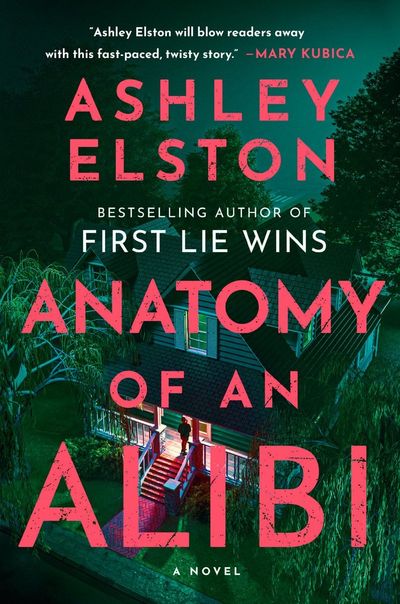
I came to this one on the strength of First Lie Wins. Elston's adult debut was a Reese's Book Club pick and a number one New York Times bestseller, the kind of thriller people press into your hands at parties, and it earned that. So when I heard her second adult novel was coming in January 2026, I put it on hold at the library months early. Anatomy of an Alibi arrived on January 13, 2026 from Pamela Dorman Books, 352 pages in hardcover, and it debuted as an instant New York Times bestseller, plus USA Today and indie lists, a Book of the Month pick and a LibraryReads selection for January. All of that machinery can mean nothing. Here it means something. The premise is one of the best thriller setups I have read in years.
Two women. One dead husband. Only one alibi. That is the whole pitch, and Elston wastes no time getting there. Everyone at a bar called Chantilly's notices an out of town woman named Camille Bayliss. Red lips, designer heels, a Negroni. She flirts a little with a local, then heads back alone to her bed and breakfast before midnight in her sleek car. Except that woman is not Camille Bayliss. It is Aubrey Price, wearing Camille's life for the evening. The next morning, Camille's husband Ben is found murdered, and both women need an airtight alibi, but only one of them has it. I read that setup on the jacket and cleared my weekend.
The night at Chantilly's
The opening movement is my favorite part of the book, and Elston knows exactly what she is doing with it. She gives us the impersonation first, in close detail, so we feel the texture of it. The bar, the drink, the shoes, the practiced ease. Aubrey has to be Camille in front of strangers, which means hitting the marks of a wealthy woman's manner without overselling any of them. One false step is all it takes, the copy warns, and the early chapters make you believe it. Every conversation Aubrey has as Camille carries a double charge. Strangers see a glamorous out of towner. We see a woman holding her breath.
What makes it work is that the plan sounds simple and is anything but. For twelve hours, Aubrey takes Camille's place out in the world while the real Camille uses the window to spy on her own husband. Twelve hours is specific enough to feel like a contract and short enough to feel survivable. Elston counts it down without making a fuss about the counting. The B&B return before midnight, the sleek car parked where it should be, the small choices about who to talk to and for how long. I found myself reading these chapters the way you watch someone cross a frozen lake. Do not look down. Do not hurry.
The flirtation with the local matters more than it first appears. It gives Aubrey witnesses, which is the point, and it gives the morning after its first knot of complications. Being seen is the alibi and also the trap. Anything Aubrey said or did as Camille now belongs to Camille's story, and anything Camille did while unwatched belongs to nobody. Elston sets this exchange up cleanly, with no wasted motion, and by the time Ben's body is found the reader understands the geometry of the problem before any detective explains it.
I should note the Louisiana setting, because it is doing quiet work from the start. This is a small southern town story, the kind where everyone at the bar notices a stranger and remembers her shoes. That notice is plot fuel. In a city, Aubrey's performance would dissolve into noise. Here every detail sticks. Elston grew up writing about the South in her young adult novels, and her feel for how attention moves in a small town, fast, specific, impossible to retract, gives the thriller its surface tension.
Two women, two reasons
The book's engine is that Aubrey and Camille each have a reason for the swap that has nothing to do with murder, and both reasons are strong enough to carry a novel alone.
Aubrey Price has been haunted by a terrible night that changed her life a decade ago, and she is convinced Benjamin Bayliss knows something about it. She lives, strikingly, in a house full of criminals, which tells you most of what you need about the resources and the moral weather she operates in. Aubrey understands there is more than one way to get to the truth. The swap is her way in. I liked Aubrey enormously as a construction. She is competent without being superhuman, damaged without being defined by it, and her investigation has the patience of someone who has waited ten years. She does not want revenge in any simple sense. She wants the missing piece.
Camille Bayliss appears to have the picture perfect life. She is married to Ben, a hotshot lawyer, and she is the daughter of a wealthy Louisiana family. None of it is as it seems. Camille believes Ben has been hiding dirty secrets for years, but she cannot find proof because he tracks her every move. That surveillance detail is what makes her half of the plan credible. A woman whose husband monitors her cannot go looking. She needs someone else to be her in public while she does the looking herself. The twelve hour window is her only unsupervised time, maybe in years.
Their alliance is transactional at first and that is its appeal. These are not friends. They are two women from very different worlds using each other for one night. Elston lets the class difference breathe without turning it into a lecture. Camille's money and name protect her in ways Aubrey's world never could, and Aubrey's comfort with risk lets her do things Camille cannot. Each woman mildly underestimates the other at the start. Watching those estimates revise is one of the book's steadiest pleasures.
What neither of them plans for is Ben's murder, and Elston is disciplined about keeping their pre murder motives intact after it. The women do not suddenly become different people when the stakes change. Aubrey keeps hunting her ten year old answer. Camille keeps guarding whatever she found during her window. The murder scrambles their priorities without erasing them, which is why the middle of the book feels like two thrillers braided instead of one thriller with a subplot.
The morning after
Then the structure flips. Ben is dead, and the question is not only who killed him but whose alibi covers whom.
The asymmetry is the whole game. Both women need an airtight alibi. Only one of them has it. I will not spell out which one, because working it out from the timeline is genuinely fun and the book wants you to do the arithmetic yourself. Think about who was seen, where, as whom. Think about what Camille was doing unwatched, and what Aubrey's witnesses actually prove. Elston plays fair with the timeline. The hours are all there. Readers who like to chart these things will have a good evening with a pencil.
The investigation pressure builds the way small town pressure builds, through talk. Police procedure exists in the book, but the real vise is social. People saw Camille at Chantilly's. People remember the heels. The alibi has to survive gossip as well as timestamps, and gossip in this town has perfect recall for surfaces and no interest in explanations. One review called it a taut puzzle about two women who need the same alibi after a husband turns up dead, with secrets simmering in the town around them, and that is exactly the sensation. Everything simmers. Nothing boils over until it does.
Elston also keeps the ten year old night in play without letting it swallow the present murder. That balance is hard. The old trauma explains Aubrey without excusing anything she does now, and the new murder reframes the old night without cheapening it. I appreciated that the book never suggests the past justifies the present. It suggests the past explains what people are capable of, which is darker and more interesting.
A note on Ben, who has to carry a lot of weight for a dead man. Elston builds him through other people's accounts, the hotshot lawyer, the controlling husband, the possible keeper of dirty secrets, the man who may know what happened a decade ago. Because he dies early, every description of him is also a claim by someone with skin in the game. I started keeping a mental ledger of who said what about Ben and why they might say it. The book rewards that habit and then punishes it, which is what good suspense is supposed to do.
How Elston builds it
The trade coverage keeps praising Elston's plotting, and after this book I understand why. Her construction is intricate without feeling assembled. The London Sunday Times line about her excelling at plotting, grippingly intricate, gets it right. The mechanism here has a lot of moving parts, two timelines of that single night, two investigations, a decade old incident, a town full of watchers, and they mesh. I never felt the grind of gears. When a late revelation recontextualized an early bar scene for me, I flipped back and confirmed the details had been there all along. That is the test, and the book passes it.
Her pacing philosophy seems to be: short chapters, clean cuts, no lingering. At 352 pages this is not a slim book, but it reads like one. Scenes end on the beat that makes you start the next. Exposition arrives inside action rather than before it. When we need to understand the Bayliss family money or Aubrey's household of criminals or the terms of Ben's control over Camille, we learn it because someone is doing something about it right now, not because the narrative pauses for a briefing.
The Louisiana texture deserves its own mention. Elston writes wealth and poverty in the same parish without caricaturing either. Camille's world of family money, B&Bs, and monitored movements sits alongside Aubrey's world of funded criminal competence, and both sit inside a town that watches everything. Food, cars, bars, porches, the physical stuff of the place, all of it feels observed rather than decorated. Readers of First Lie Wins will recognize the author's interest in women operating inside systems built by men. Here the system is marriage, money, and small town reputation, and Elston takes it apart carefully.
Comparisons may help. If First Lie Wins was a con artist thriller about identity as a tool, this is its darker sibling, identity as a trap. The swap that was supposed to free both women for one night becomes the thing that binds them to each other and to a dead man. Fans of Megan Miranda's small town suspense or Julie Clark's marriage thrillers, both authors praised this book in advance, will feel at home. Elston's version is meaner about consequences than most of the company it keeps, and I mean that as praise.
The parts that nagged me
Honest criticism now. The largest is the coincidence at the center, and there is no reviewing this book without naming it. The swap night and the murder night being the same night is an enormous piece of luck, or design, and the book has to work hard to make it feel like design. Elston does more work than most authors would. Without spoiling anything, I will say the explanation for the timing is load bearing and you have to accept it for the rest to stand. I accepted it, barely, on the strength of the surrounding construction. Readers with less patience for engineered timing may bounce off. If you need every event to arise organically, this is not your book.
Second: the middle third sags slightly under the weight of two investigations. Aubrey chasing her decade old answer and both women managing the murder fallout is a lot, and there is a stretch where scenes start to feel procedural, interview, deflection, regroup, repeat. No single scene is bad. The rhythm just flattens for a while before the late acceleration. I never considered stopping, but I noticed the gear change the way you notice a plane leveling off.
Third: some readers will want more interiority from Camille. Aubrey's damage is specific and old, rooted in a night we come to understand. Camille's damage is ongoing and structural, a monitored marriage, and by design she guards it. That guardedness is characterization, but it means Camille can feel slightly less inhabited than Aubrey for long stretches. The book knows this and gives Camille a late section that redresses it. Still, if you prefer your heroines equally transparent throughout, expect some frustration.
Fourth, a taste matter: this is a thriller about bad people doing bad things for understandable reasons, and Elston does not soften that. The house full of criminals is not cozy. Ben's control over Camille is ugly. The ten year old night, when its details arrive, is genuinely dark. Nobody is asked to forgive anyone. If you read thrillers for comfort, look elsewhere. If you read them to watch competent women navigate impossible binds, you are in the right place.
Would I still press it into hands at parties. Yes, with one instruction. Go in cold. The less you know about the timeline beyond the setup, the better the first hundred pages work. And keep your pencil handy for the morning after. You will want to do the arithmetic yourself before Elston does it for you.
FAQ
Who are Aubrey Price and Camille Bayliss?
Aubrey is haunted by a decade-old night and believes Ben Bayliss knows something about it. Camille is Ben's wife, daughter of a wealthy Louisiana family, whose every move he tracks.
What is the twelve-hour plan?
Aubrey takes Camille's place in public, including an evening at Chantilly's Bar, while Camille uses the unsupervised window to hunt for proof of Ben's secrets.
Is Anatomy of an Alibi part of a series?
No. It is Elston's second adult novel after First Lie Wins and it stands alone.
Similar books

Six Years
A professor who promised to forget the woman he loved sees her husband's obituary and discovers that the wedding, the marriage, and the woman herself may never…
2,076-word summary · 9 min read

Girl, Forgotten
A rookie US marshal guards a judge with a stalker and ends up reopening the 1982 prom-night murder of the judge's pregnant daughter.
2,111-word summary · 9 min read

The Boy from the Woods
Wilde, found feral in a New Jersey forest in 1986, hunts for a missing teenager while a senator's secrets tear a wealthy town apart.
2,270-word summary · 10 min read
Keep It in the Family
Mia and Finn renovate a long empty house and find seven children hidden in the attic.
2,270-word summary · 10 min read
Pieces of Her
After her mother kills a mall shooter with shocking skill, Andy Oliver uncovers a hidden 1980s past of radicals and wealth.
2,791-word summary · 12 min read

What She Knew
Rachel lets her eight-year-old son run ahead in a Bristol park, and the nine-day search turns her into a suspect in the public eye.
2,952-word summary · 13 min read

The Beach House
A young valet is beaten to death at a Hamptons party, and his law-student brother spends a year building a case against the family that covered it up.
2,049-word summary · 9 min read

Rules of Prey
Minneapolis detective Lucas Davenport hunts a killer who leaves a new rule at every scene and treats murder as a game of wits.
1,914-word summary · 9 min read

4th of July
Lindsay Boxer shoots two armed teenagers in self-defense, faces a wrongful-death trial, and spends her leave chasing a string of throat-slashing murders in…
2,192-word summary · 10 min read

61 Hours
A bus crash strands Jack Reacher in a snowbound South Dakota town where a drug gang, a corrupt police force, and a single witness are on a collision course.
2,227-word summary · 10 min read

Still Missing
A realtor is abducted at a Vancouver Island open house and held for more than a year. Told through therapy sessions, the novel follows her escape and the hunt…
2,466-word summary · 11 min read

Bad Luck and Trouble
A deposit of $1,030 summons Jack Reacher back to his old army unit, which is being picked off one name at a time.
2,366-word summary · 11 min read

3rd Degree
The third Women's Murder Club novel follows a San Francisco terror cell and a three-day killing schedule, and it costs the club a member.
2,685-word summary · 12 min read

Worth Dying For
Reacher stops for one night in rural Nebraska and finds a family that runs the county, a missing girl and a shipment worth killing for.
2,021-word summary · 9 min read

The Best of Friends
Three lifelong friends discover their teenage sons were hiding more than anyone knew after a night that leaves one dead, one in a coma and one silent.
2,040-word summary · 9 min read

Say You're Sorry
A widowed prosecutor defends the teenager accused of killing her babysitter, uncovering a small town's secrets and a killer hiding in plain sight.
2,116-word summary · 9 min read

Echo Burning
Reacher hitches a ride with a Texas woman who wants her abusive husband killed, then has to prove she did not murder him when he comes home.
2,209-word summary · 10 min read
The Drowning Woman
Living in her car in Seattle, Lee saves a wealthy stranger from drowning. The friendship that follows draws her into abuse, murder, and a plan to disappear.
2,578-word summary · 11 min read

The Woods
Twenty years after two teenagers were murdered and two vanished at summer camp, prosecutor Paul Copeland identifies a fresh corpse as one of the missing.
2,490-word summary · 11 min read
Without Fail
Reacher is asked to test vice presidential security by planning to kill.
2,084-word summary · 9 min read
Things We Do in the Dark
A comedian kills her husband, then a podcaster digs up her teen murder past.
2,427-word summary · 11 min read

The Widow
A widow of a suspected criminal faces reporters and police while hiding what her marriage really cost.
2,599-word summary · 12 min read
The Racketeer
A jailed lawyer trades a judge murder secret for freedom and revenge.
2,434-word summary · 11 min read
The Night Swim
A true crime podcaster covers a rape trial while probing an old drowning in a small town.
2,260-word summary · 10 min read
The Judge's List
Lacy Stoltz hunts a sitting judge who murders off his list.
2,513-word summary · 11 min read
The Innocent
A government hitman refuses one kill and must protect a teenage girl at the center of a cover-up.
2,403-word summary · 11 min read
The Girl Who Was Taken
A survivor returns alone while a reporter digs for her lost sister.
2,261-word summary · 10 min read

The Club
A luxury island resort for the rich turns deadly when secrets, staff and guests collide.
2,386-word summary · 11 min read
The Chalk Man
Childhood chalk codes lead to a murder that follows friends thirty years later.
2,350-word summary · 10 min read
The Silent Wife
A Chicago psychologist watches her twenty-year partnership collapse when Todd leaves for Natasha, then plans murder.
2,591-word summary · 12 min read