
Reading options
What's inside (8 sections)
I picked up The Good Lie because a friend kept telling me the last hour of it made her sit in her car after she got home. She did not spoil anything. She only said the killer reveal made her rethink every earlier chapter. That is a risky promise for a thriller, since most of them fall apart once you know the answer. This one held up better than I expected, though not for the reasons I assumed at the start.
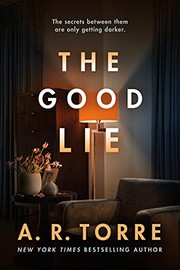
A.R. Torre published the novel with Thomas and Mercer in 2021, a paperback edition that runs about 255 pages. Torre is the thriller pen name for Alessandra Torre, who had already built a large readership in romance before she moved into darker books. You can feel that earlier career in the way she writes attraction and closeness. The romance here is messy and sometimes ill advised, and it keeps getting in the way of good judgment. That felt true to the characters, even when I wanted to shake them.
The story is set in California and follows two people who probably should never have teamed up. Dr. Gwen Moore is a psychiatrist who works with patients who have violent histories. People call her the Doc of Death, which sounds like a tabloid nickname, and she hates what it implies about her work. She sees herself as someone trying to keep dangerous urges from turning into harm. Robert Kavin is a defense attorney and a father who lost his teenage son to a serial killer. He is grieving, angry, and fixed on one idea: that the man in jail did not do it.
Torre tells most of the book from close around Gwen, with detours into the lives of other players when the plot needs pressure. The pace is quick. Chapters are short. The book wants you to keep reading past bedtime, and for long stretches I did.
A psychiatrist who misses the warning signs
Gwen starts the book already carrying guilt. One of her patients is John Abbott, a pharmacist who has talked openly about hostility toward his wife Brooke and about violent thoughts that scare him. Gwen has tried to treat those thoughts as something that can be managed. She misses messages from John on a morning that matters. By the time she catches up, John and Brooke are dead in their home.
The details of that death stay with Gwen. Brooke appears to have died of a heart attack. John is found stabbed in the stomach. The early read is that John hurt himself after Brooke died, or that something violent and private happened between them. A detective comes to Gwen with questions. She answers in a careful way that protects patient privacy but also protects herself. She does not say everything she suspects. I read those scenes as the heart of her character. She is smart about other people and evasive about her own fear that she failed at her job.
The funeral is where her private shame meets the larger plot. Gwen goes, feels out of place, and ends up at a nearby bar. That is where she meets Robert. He is also at the funeral, though his connection to the Abbotts is not clear at first. They drink. They talk in the loose way strangers talk when both are raw. Then they go back to her house together.
I found this opening stretch effective because Torre does not make Gwen a hero. She makes her tired and slow to admit that John may have been more dangerous than his file suggested. The clinical scenes feel lived in. Gwen listens for patterns. She watches for risk.
One small complaint here. Gwen's inner monologue can circle the same point. She returns to her guilt about John several times in slightly different words. I understood why. A death like that would sit in your head. Still, two of those passages could have been cut without losing anything.
The seventh boy comes home
While Gwen is dealing with the Abbott deaths, Los Angeles is gripped by the Bloody Heart case. Six teenage boys have been taken and killed. The name comes from the pattern left on the bodies, and the press has made it into something huge. Parents are afraid. Schools send notes home. Every new rumor spreads fast.
Then a seventh boy, Scott Harden, comes home. He is a senior at Beverly High School. He is thin, shaken, and covered in the marks of captivity. He says he escaped from the man who took him. And he names that man as Randall Thompson, a science teacher at his school.
The case looks closed from the outside. Police search Thompson's home and find a shoebox with small keepsakes tied to the dead boys. That kind of trophy collection is hard to explain away. The media treats Thompson as guilty. Gwen, like most people watching the news, assumes the police have the right man.
Torre does a good job showing how certainty forms around a case like this. An escaped victim points a finger. Physical items turn up in the accused man's house. The public wants relief. Doubt starts to look like denial. I believed Thompson was guilty for a good part of the book, and I think most readers will.
But Torre plants small cracks early. Scott seems to enjoy the cameras more than you would expect from a boy who just lived through hell. His mother Nita watches him with a worry that goes past normal parental fear. She cannot name what feels off about his story, yet she starts checking his truck and phone because his behavior does not line up. Those details are easy to miss on a fast read. On a second pass they stand out.
Thompson himself is unpleasant in a way that makes judgment harder. Former female students have complained about him crossing lines. He has that teacher who lingers too long after class reputation. That history makes him easy to dislike. It also raises a question Gwen keeps returning to. The killer takes teenage boys. Thompson's boundary problems, as far as anyone can prove, involved girls. That mismatch does not clear him. It does make Gwen pause.
Robert Kavin and an offer Gwen should refuse
Robert turns out to be Gabe Kavin's father. Gabe was the sixth boy taken by the Bloody Heart Killer, and his death was worse than the others. More violent. More personal, somehow. Robert cannot accept that Thompson is the answer. He tells Gwen he is going to defend Thompson without charging a fee, and he wants her help building a psychological profile of the real killer.
Gwen wakes after their first night together to find Robert in her home office, paging through John Abbott's file. She throws him out. It is a sharp scene, and it sets the terms for everything after. Robert is grieving and pushy. He crosses lines and then apologizes in a way that almost works. Gwen is attracted to him, wary of him, and curious about the case in a way that feels professional at first and personal soon after.
She says yes to the consulting work. Part of it is money and exposure. Part of it is that the profile puzzles her. Robert gives her access to files, including Gabe's case records. She starts reading victim by victim, looking for habits, timing, and method.
Their working relationship turns romantic again fast. Too fast, honestly. Robert shows her his collection of odd objects and gives her an emerald ring at one point, a gesture that reads as intimate and strange given how little they truly know each other. I bought that they were drawn together by grief and adrenaline. I did not always buy the trust. Gwen hands over belief quicker than a careful psychiatrist should, and Robert keeps back key facts while asking her to be fully open.
That imbalance is the point, I think. Torre wants you to notice that Robert knows more than he says. He steers Gwen toward certain files and away from certain questions. He gets angry when she presses on John Abbott. At the time I read his anger as a grieving father's temper. Later it looks more like fear of being found out.
Profiling a killer who does not fit
The middle of the book is Gwen doing the work. She lays out what is known about each boy. How they were taken. How long they were held. How they died. What was done to the bodies after death. Most of the deaths were quick and almost gentle compared with what you expect from the headlines. The boys were fed. Their wounds were cleaned and tended. Someone took care of them in captivity in a way that does not match a rage driven captor.
Gabe's death breaks the pattern. It was brutal in a way the others were not. Gwen keeps circling that difference. Was Gabe killed by the same person in a different state of mind. Was something interrupted. Did something personal enter the picture. She starts to wonder if the killer lives with a break from reality, something like a psychotic illness or a split in identity, where care and violence take turns.
Scott's story also starts to shift under pressure. When detectives push him on vague points, he changes key details. At first he escaped through luck and nerve. Later he admits he was let go. That is a large change. Being released suggests a bond with the captor, or a plan that needed him alive. It supports Robert's claim that Scott may be shielding someone. It also makes Scott look less like a lucky survivor and more like a participant who wants praise without scrutiny.
Gwen gets a short session with Thompson in custody. She goes in expecting a clear read. What she finds is murkier. Thompson does not fit the careful, tending profile she has built. He feels wrong in a different way. Creepy, entitled, and possibly dangerous to young women, yet not the man who kept boys alive for days and dressed their wounds. She leaves unsure. That uncertainty is well written. Profiling in real life is full of near fits, and Torre lets Gwen sit in that discomfort instead of handing her a clean answer.
There is a parallel thread with Gwen's practice. A client brings up Thompson in session. The moment rattles her because her two worlds are bleeding together. Her patients, her guilt about John, and the Bloody Heart files all start to feel like one large test she is failing.
If I have a criticism of this section, it is that the police can feel dim when the plot needs them to be. Detectives lean hard on Scott's first account and on the shoebox, and they wave off gaps that seem clear to the reader. Some of that is fair. Tunnel vision happens in big cases. But one interview scene strains belief, where follow up questions stop just short of the change that later breaks the story open. Torre needed Scott free and famous for the back half, so the system looks the other way a beat too long.
The attic room and who was really killing
The turn comes from an unlikely place. A realtor shows a house to a couple, opens an attic door, and finds a hidden room with a bed, tools, and amputated fingers kept like records. The news hits fast. Tests confirm it is the killer's holding space. And the house ties back to John and Brooke Abbott.
Gwen sees the report and feels her stomach drop. She pulls John's file and reads it with new eyes. The careful tending of victims. The medical knowledge. The control that looks like nursing as much as cruelty. It fits John. The aftercare, the feeding, the cleaning, that fits Brooke. Together they were not a lone monster but a pair, with John taking boys and Brooke keeping them alive and close. That pairing reframes the early deaths. Brooke's heart attack and John's stab wound stop looking like a sad private end. They look like the close of a killing life that had run out of room.
Scott's role sharpens here too. He fantasized about Brooke, who had paid attention to him and made him feel chosen. In his head it was almost love. In practice it was grooming. Brooke helped steer blame toward Randall Thompson, a man she had reason to hate from her own youth, when he assaulted her while she was in high school. Scott went along, partly from loyalty to Brooke and partly because the story made him important. Once Brooke stopped answering his calls, he was left holding a lie that had grown larger than he could manage.
Then comes the scene I found hardest to read. Gwen is home, turning these pieces over, when she realizes Robert is in the room with a knife. He does not posture. He asks her straight out what she knew about John and when she knew it. She tells the truth as she sees it. She suspected John had a hand in Brooke's death but never saw him as the serial killer until the attic report. Robert believes her, or decides to, and lowers the weapon.
Robert admits what he has carried alone. He always knew John was the killer. He found his own proof through his son's case and through watching the Abbotts. He is the one who stabbed John that morning, not in self defense in the moment but as payback for Gabe. Brooke died of natural causes during the same crisis, which is why the scene first read as murder and suicide. When Detective Saxe arrives to ask Gwen for insight, she confirms the part about John killing Brooke in the sense that his poison or pressure brought on her heart failure, yet she says John died by his own hand. She lies to shield Robert. She knows it. She writes it on her conscience next to the earlier failure to act on John's warnings.
I thought this sequence worked because Torre had earned the shock. The clues were present without being loud. John's medical skill. Brooke's constant presence. The tended wounds. Gabe's different death, which now reads as Robert's son dying harder because John knew the father was closing in, or because the pair was unraveling. Even the shoebox makes darker sense as planted proof, with Scott and Brooke using Thompson's past to sell the frame. The book does not pause to spell out every link, which I liked. It trusts you to connect the last few lines yourself.
What the ending asks you to sit with
A month later, Scott waits outside Thompson's house with killing on his mind. Thompson is out, angry, and suing Scott's family and the police for what the false accusation cost him. Nita gets there in time and pulls her son away. It is a brief scene, but it lands. Scott wanted fame as a survivor. What he has instead is exposure as a liar who helped jail an innocent man while the real killers went on until death stopped them.
Two months after that, Gwen meets Robert at a bar. He has quit practicing law. He looks less wound up, though not healed. They trade apologies. He is sorry for holding a knife on her and for pulling her into his revenge. She is sorry for missing John when he was her patient and her warning to heed. She agrees to take Robert as a client, which is a strange and fitting close. The psychiatrist who failed to see will now try to see him clearly, with rules and distance she did not have before.
What stays with me is how the title earns itself. The good lie is not one line but a habit. Scott wants to stay special. Gwen shields Robert and calls that choice what it is. Robert holds back for most of the book, then tells the truth when it saves no one. Torre spreads guilt around instead of placing it on one villain, and that choice makes the end feel heavy rather than clever.
I do have real complaints, and they kept this from being a favorite. The middle romance moves too quickly for the stakes. Gwen is written as careful, yet she lets Robert into her files and her judgment with little pushback. A few reveals lean on timing luck, mainly the attic discovery by strangers. And the police work bends to keep Scott available as a public figure.
Who should read it. If you like courtroom pressure mixed with psychological profiling, and if you accept some melodrama in exchange for momentum, this will suit you. If you need a fully sound investigation, or if a fast romance inside a grief story will bother you, you may want to pass. For me the draw was Gwen's voice and the queasy idea at the center. Sometimes the person best trained to spot danger is the last to name it in her own office. Torre uses that blind spot well, and the final bar scene gives it weight without pretending anyone is fixed.
I finished it in two sittings and spent the next morning thinking about Brooke more than John. John took the boys. Brooke kept them, fed them, and chose who would take the fall. That division of labor is what makes the book hard to shake. Care can be part of cruelty. Attention can be bait. Gwen missed it when it sat across from her in session, and I missed it while I rooted for the wrong solution. That shared miss is why my friend stayed in her car. I get it now.
FAQ
When was The Good Lie published?
Thomas & Mercer published it on July 20, 2021. The paperback runs 255 pages with ISBN 9781542020169.
Who are the main characters?
Dr. Gwen Moore, a psychiatrist who treats violent patients, Robert Kavin, a defense attorney whose son was killed, Scott Harden, the surviving teenager, and Randall Thompson, the accused teacher.
Is The Good Lie part of a series?
No. It is a standalone thriller with no sequel, and the ending closes the case around Gwen and Robert.
Similar books

What She Knew
Rachel lets her eight-year-old son run ahead in a Bristol park, and the nine-day search turns her into a suspect in the public eye.
2,952-word summary · 13 min read

Still Missing
A realtor is abducted at a Vancouver Island open house and held for more than a year. Told through therapy sessions, the novel follows her escape and the hunt…
2,466-word summary · 11 min read

The Widow
A widow of a suspected criminal faces reporters and police while hiding what her marriage really cost.
2,599-word summary · 12 min read
The Night Swim
A true crime podcaster covers a rape trial while probing an old drowning in a small town.
2,260-word summary · 10 min read
Twenty Years Later
A TV host reinvestigates a 20-year-old murder after a 9/11 victim ID names the accused, and the case pulls her own hidden past into view.
2,726-word summary · 12 min read

The Silent Patient
Alex Michaelides's The Silent Patient retold: Alicia's silence, Theo's obsession, the Alcestis clue, and the final flip.
2,412-word summary · 11 min read
The Girl on the Train
Paula Hawkins's The Girl on the Train retold: Rachel's commute, Jess and Jason, Megan missing, and what really happened that night.
2,391-word summary · 11 min read
Gone Girl
Gillian Flynn's Gone Girl fully retold: Nick and Amy Dunne, the diary, Desi, the treasure hunt, and why the ending stays ugly.
2,334-word summary · 10 min read

The Beach House
A young valet is beaten to death at a Hamptons party, and his law-student brother spends a year building a case against the family that covered it up.
2,049-word summary · 9 min read

Six Years
A professor who promised to forget the woman he loved sees her husband's obituary and discovers that the wedding, the marriage, and the woman herself may never…
2,076-word summary · 9 min read

Rules of Prey
Minneapolis detective Lucas Davenport hunts a killer who leaves a new rule at every scene and treats murder as a game of wits.
1,914-word summary · 9 min read

4th of July
Lindsay Boxer shoots two armed teenagers in self-defense, faces a wrongful-death trial, and spends her leave chasing a string of throat-slashing murders in…
2,192-word summary · 10 min read

61 Hours
A bus crash strands Jack Reacher in a snowbound South Dakota town where a drug gang, a corrupt police force, and a single witness are on a collision course.
2,227-word summary · 10 min read

Bad Luck and Trouble
A deposit of $1,030 summons Jack Reacher back to his old army unit, which is being picked off one name at a time.
2,366-word summary · 11 min read

3rd Degree
The third Women's Murder Club novel follows a San Francisco terror cell and a three-day killing schedule, and it costs the club a member.
2,685-word summary · 12 min read

Worth Dying For
Reacher stops for one night in rural Nebraska and finds a family that runs the county, a missing girl and a shipment worth killing for.
2,021-word summary · 9 min read

The Ex
Cassie thinks her new boyfriend's ex is the woman harassing her, but Freida McFadden's thriller keeps rearranging who the ex actually is.
2,103-word summary · 9 min read

Say You're Sorry
A widowed prosecutor defends the teenager accused of killing her babysitter, uncovering a small town's secrets and a killer hiding in plain sight.
2,116-word summary · 9 min read

Echo Burning
Reacher hitches a ride with a Texas woman who wants her abusive husband killed, then has to prove she did not murder him when he comes home.
2,209-word summary · 10 min read
The End of Her
A sleep-deprived mother of twins faces a stranger's accusation that her husband murdered his first wife in Shari Lapena's domestic suspense novel.
2,383-word summary · 11 min read
The Drowning Woman
Living in her car in Seattle, Lee saves a wealthy stranger from drowning. The friendship that follows draws her into abuse, murder, and a plan to disappear.
2,578-word summary · 11 min read

Girl, Forgotten
A rookie US marshal guards a judge with a stalker and ends up reopening the 1982 prom-night murder of the judge's pregnant daughter.
2,111-word summary · 9 min read

The Woods
Twenty years after two teenagers were murdered and two vanished at summer camp, prosecutor Paul Copeland identifies a fresh corpse as one of the missing.
2,490-word summary · 11 min read

The Boy from the Woods
Wilde, found feral in a New Jersey forest in 1986, hunts for a missing teenager while a senator's secrets tear a wealthy town apart.
2,270-word summary · 10 min read
Without Fail
Reacher is asked to test vice presidential security by planning to kill.
2,084-word summary · 9 min read
Things We Do in the Dark
A comedian kills her husband, then a podcaster digs up her teen murder past.
2,427-word summary · 11 min read
The Therapist
A couple moves to a gated street where the previous therapist was murdered in their house.
2,437-word summary · 11 min read
The Racketeer
A jailed lawyer trades a judge murder secret for freedom and revenge.
2,434-word summary · 11 min read
The Last House on Needless Street
A lonely man, a cat and a mysterious neighbor pull you into a house full of buried trauma.
2,627-word summary · 12 min read
The Judge's List
Lacy Stoltz hunts a sitting judge who murders off his list.
2,513-word summary · 11 min read