
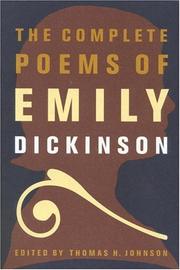
The Complete Poems of Emily Dickinson
2,191-word summary 10 min read 770 pages in the book
- First published
- 1960
- Publisher
- Little, Brown
- Pages
- 770
- ISBN
- 9780316184137
Reading options
What's inside (8 sections)
Emily Dickinson wrote more than a thousand poems, published fewer than a dozen of them in her lifetime, and left the rest in a drawer, or rather in dozens of small hand-sewn booklets that her sister found after her death. The edition under discussion, Thomas H. Johnson's one-volume Complete Poems, published in 1960, is the book that carried her out of the archives and into ordinary American reading life. It is not flashy. It contains 1,775 poems, no titles, no illustrations and very little commentary. It remains the standard reading edition for anyone who wants the whole of Dickinson in a single physical object, and it is the version in which most people first meet her.
The Poet Who Did Not Publish
Emily Dickinson was born in Amherst, Massachusetts, in December of 1830, into a family that mattered in the town. Her father, Edward Dickinson, was a lawyer, a college treasurer and a one-term congressman. Her mother, Emily Norcross, kept a quiet and difficult house. Her brother Austin married Susan Gilbert, who lived next door and who became one of Emily's closest and most complicated relationships. Her sister Lavinia, called Vinnie, stayed in the house her entire life and outlived all of them.
The young Emily was sociable, funny and well liked. She went to Amherst Academy, then spent one year at Mount Holyoke Female Seminary, where she did not experience the religious conversion the school expected of its students and did not come back for a second year. In her twenties she traveled, saw friends, attended lectures and wrote letters that are as sharp as anything in her poems. Then, in a slow turning that biographers have argued about for a century, she withdrew. She stopped leaving Amherst. In later years she rarely let visitors see her, conducted friendships through letters, wore white, worked in the garden and wrote in a small room with a window that faced the family's orchard.
She was not a hermit exactly, and the popular image of a fragile spinster is a distortion. She was the household's practical engine: she baked, nursed her mother through a long illness, ran the kitchen, and lowered baskets of gingerbread to the children of the neighborhood from a second-floor window. What she was protecting was her time. On the evidence, she spent the second half of her life doing one thing with near-total concentration: writing poems that no one was allowed to read and revising them like a woman who intended them to last.
What Lavinia Found
Dickinson died in May of 1886 at fifty-five. Lavinia, going through the house, found her sister's writing in a locked chest and in the bureau drawers: fascicles, the booklets made of folded and stitched sheets, plus hundreds of loose pages and drafts. The booklets alone contained roughly eight hundred poems. Some were fair copies. Most were something stranger, working texts with alternate words, floating dashes and lines that seemed to change their minds in the middle. Lavinia had no idea the volume of work existed, and she spent the rest of her life getting it published.
The first editions were put together by two people who loved her poetry and did not entirely trust it: Thomas Wentworth Higginson, the Atlantic editor who had once been the only person Dickinson asked for an opinion, and Mabel Loomis Todd, a family friend with a complicated history with the Dickinson clan. Their Poems, published in 1890, became a national bestseller. It was also, by modern standards, dishonest. They smoothed her punctuation. They added titles. They rearranged words, broke her lines into stanzas they thought looked better, and generally translated her strangeness into the polite nineteenth century's idea of a poem. Later editors did versions of the same thing, until, in 1955, Thomas H. Johnson published his three-volume variorum edition, which returned to the manuscripts and restored the poems to something close to the form Dickinson left them in.
Johnson's one-volume edition of 1960 condensed that scholarly work for general readers. Since then, Ralph Franklin's editions of the 1980s and 1990s have refined the text again, and many scholars now use Franklin's numbering. But the 1960 Johnson volume is the book that most libraries, classrooms and readers still use, and its numbering, the familiar J numbers, is the backbone of almost all Dickinson citation.
The Fascicles
When Lavinia opened the chest, what she found was not a manuscript in any ordinary sense. Dickinson had spent the early 1860s stitching sheets of stationery into small booklets, about forty of them, and copying poems into them in a careful fair hand, roughly eight hundred poems in all. Scholars call these fascicles, and they are the closest thing she left to a planned book. The rest of the work arrived in loose sets of sheets and in the poems she tucked into letters, where a verse might arrive as a birthday present, a thank-you note or an apology. No poet has ever left a body of work this organized and this private at the same time.
The fascicles also explain the textual mess that followed. Editors who wanted to publish the poems in a sensible order had to take the booklets apart, and pages that had lived next to each other for decades were scattered into different collections and family hands. A bitter feud between Mabel Loomis Todd and the Dickinson heirs kept some poems out of print for years, and the editing of individual poems stayed a family argument well into the twentieth century. Johnson's contribution, beyond punctuation, was simply counting honestly: he established the canon at 1,775 poems. Franklin later revised the number slightly upward, but the fascicles remain the evidence that Dickinson knew exactly how much work she had made. She was nobody, and she kept receipts.
The subjects repay the same close attention she gave them. Death comes first: Because I could not stop for Death is the poem readers know even when they know nothing else, and the restored text is stranger and colder than the genteel version that circulated for decades. Faith gets treated as a sparring partner. Nature shows up in poems about snakes, bees, sunsets and storms, written by a woman who spent most of her adult life in one small town and knew its weather the way sailors know the sea. And love gets its own category, the one the first editors found most embarrassing. Wild Nights is twelve lines long, and it did not reach print until the 1891 Poems, Second Series, after Thomas Wentworth Higginson hesitated over its erotic charge. The scholarship about her has spent a century catching up to what the poems were doing all along.
What holds everything together is the sound. Dickinson's ear runs on the meters of the Protestant hymnal, and she bends those meters until they creak. A reader who taps a foot to the beat will find that her line breaks do not always land where the beat does, which produces a small, permanent feeling of imbalance. Add the slant rhymes and the dashes, and the result is a style so recognizable that a single stanza can be identified at a glance, and so flexible that she used it for jokes, elegies, arguments and riddles without ever seeming to change tools.
The Poems Themselves
Dickinson's collected poems do not behave like a normal collection. Because she left no titles and no order, editors had to invent both, and Johnson arranged the poems roughly by the dates of composition he could reconstruct. Reading the book straight through, then, is like watching a mind evolve in real time: the playful, hymn-flavored poems of the 1850s, the astonishing burst of work in the early 1860s, the later, starker poems from the 1870s and 1880s. There are love poems, nature poems, religious poems that argue with God like a neighbor, mystifying riddles, jokes and elegies. Nothing is quite like anything else in American literature, and nobody has ever successfully imitated it.
The subjects are the oldest ones and the ones nobody can resolve. Death gets more poems than anything else, and gets the best ones. In Because I could not stop for Death, the hearse is a carriage and immortality is a passenger. In I heard a Fly buzz when I died, the last sensation of a dying person is not God or light but an insignificant insect. Nature appears as a set of sharp, observed facts, a narrow fellow in the grass, a sunset, a snake, a bee. Faith and doubt circle each other: Some keep the Sabbath going to Church is a poem about finding worship at home, and its confidence is matched by poems where the speaker demands that God explain Himself. The inner life gets its own geography. The Brain is wider than the Sky gives more territory to the mind than to the sky. Then there is the poem that starts I'm Nobody! Who are you?, probably the cheeriest celebration of anonymity ever written, and probably a joke about the fact that she was writing in secret.
Her form is the thing that took editors so long to take seriously. Dickinson wrote in quatrains and couplets, often in common meter, the thump of the hymnal. Then she loaded the hymn rhythm with slant rhyme, rhymes that sound like a door not quite closing, and with commas, capitals and, above all, dashes that work like marks of hesitation, or breath, or interruption. A typical Dickinson poem reads like an argument being worked out at speed in a small room. It is short, it turns once or twice, and it ends without tidiness. Editors who "fixed" the dashes into periods and semicolons produced poems that made sense. They also produced poems that were not hers.
How to Read Her
The right way to read this collection is slowly and out of order. Do not try to construct a single story from the poems, and do not read the biography first, because the biography has been invented too many times. The popular Emily Dickinson is a recluse in white. The actual Emily Dickinson had friends, a garden, a family and a taste for practical jokes, and she wrote these poems at a desk in a house where she chose, deliberately, to spend most of her time. She sent hundreds of them to friends inside letters, which means she had readers, just not many and not strangers.
Read the poems aloud. They were built for that, and the dashes function as pacing marks once your ear gets used to them. Notice the verbs. Notice how often the second stanza turns the first one against itself. Accept ambiguity as design, because Dickinson's poems are not failed attempts at clarity; they are precise instruments for holding two possibilities at once, and the pleasure of reading a hundred of them in a row is watching the same mind refuse, again and again and with total discipline, to lie for our comfort.
Why the Volume Matters
Every few decades, someone proposes that Dickinson's punctuation was a symptom or a quirk of her handwriting, and every generation of editors does battle over how the poems should look on the page. Johnson restored her dashes, capitals and wayward spellings, and defended them as choice rather than accident, and by now the argument is settled in spirit if not in every detail. The poems that transformed twentieth-century poetry, the poems the modernists studied and the confessional poets absorbed, are the poems in the shape Dickinson left them in. This book is where most readers meet that shape for the first time, and it has earned the permanent place it holds on American shelves.
It also contains the whole arc of her art, from the bright, conventional verses of the 1850s to the compressed late poems where almost every word carries the sound of a bell being struck. There are several editions of Dickinson now, and Franklin's version is the one scholars may prefer, but Johnson's 1960 Complete Poems is the door most readers walk through, and there is no shame in a door being well used. Start anywhere. Let a poem fail to make sense and come back to it in a year. Nothing written in the same century is more likely to still be waiting for you.
Her reputation has kept widening anyway. The twentieth century recovered her as a proto-modernist, a poet who broke the line before the men who are usually credited with breaking it, and the twenty-first century did something wilder: it made her popular. Her verses circulate as epigraphs and internet shorthand, a television series turned her into a teenage heroine with a soundtrack, and the museum in her Amherst house draws visitors from all over the world to a building where a woman once lowered gingerbread to the neighborhood children in a basket. The poems have absorbed all of it without changing shape. They were built to survive attention, which is a strange thing to say about work written for an audience of almost no one.
FAQ
How many poems are in The Complete Poems of Emily Dickinson?
This edition contains 1,775 poems, the full body of work established by editor Thomas H. Johnson from her manuscripts and letters.
Why are Dickinson's poems numbered instead of titled?
She left almost all of her poems untitled. Johnson numbered them roughly by date of composition to give scholars and readers a stable way to cite them.
Is this the edition used by scholars?
It is the standard one-volume reading edition. Johnson's three-volume variorum of 1955 remains the scholarly reference, and this 1960 collection condenses it for general readers.
Similar books
Leaves of Grass
Free verse songs of self, America, bodies and democracy.
2,240-word summary · 10 min read

Revolutionary Road
A Connecticut couple who believe they are too good for the suburbs plan to move to Paris, and the plan slowly exposes everything they cannot say to each other.
2,085-word summary · 9 min read
Naked Lunch
Burroughs's banned 1959 collage novel follows Bill Lee through addiction, Tangier, and the nightmare bureaucracy of the Interzone.
2,082-word summary · 9 min read
The Lottery
In Jackson's 1948 story, a village draws lots to keep the corn heavy, and the chosen person is stoned by her neighbors.
3,080-word summary · 14 min read
The Last of the Mohicans
During the French and Indian War, Hawkeye and two Mohican warriors try to save two British sisters from a Huron chief whose revenge will end the Mohican line.
2,017-word summary · 9 min read
Doctor Zhivago
A doctor and poet lives through revolution, war, and love in Pasternak's novel of private life under the pressure of Russian history.
2,213-word summary · 10 min read
Native Son
Richard Wright's landmark novel follows Bigger Thomas through one panicked night in Chicago and the manhunt, trial and reckonings that follow, exposing the…
2,265-word summary · 10 min read
A Raisin in the Sun
Lorraine Hansberry's 1959 play follows the Younger family as a $10,000 insurance check, a house in a hostile neighborhood, and a stolen investment test their…
2,444-word summary · 11 min read
The Epic of Gilgamesh
Gilgamesh loses Enkidu, then seeks endless life past the flood.
2,246-word summary · 10 min read
Sonnets & Poems
154 sonnets plus Venus and Adonis and other poems on time, love, and fading beauty.
2,341-word summary · 10 min read
Howl and Other Poems
Ginsberg's 1956 City Lights debut: Howl for outcasts plus tender shorter poems, in 48 pages that survived an obscenity trial.
2,570-word summary · 11 min read
The Aeneid
Trojan Aeneas flees burning Troy for Italy, losing Dido and friends before warring to found a line that becomes Rome.
2,080-word summary · 9 min read
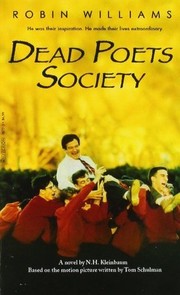
Dead Poets Society
Keating tells Welton boys to seize the day and his secret club costs more than grades.
2,031-word summary · 9 min read
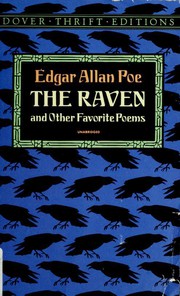
The Raven
A grieving student asks a midnight raven and hears only Nevermore.
2,141-word summary · 10 min read
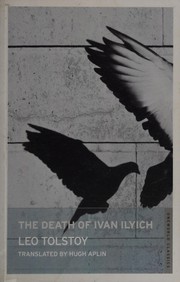
The Death of Ivan Ilyich
A successful judge hurts his side hanging drapes, then faces a long dying where evasive doctors fail him and peasant Gerasim shows what his correct life missed…
2,986-word summary · 13 min read
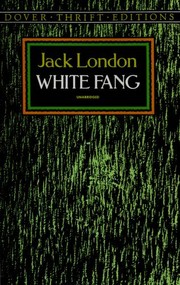
White Fang
A wild wolfdog grows through hunger and cruelty toward a hard earned trust in one patient man.
2,540-word summary · 11 min read
Walden
Thoreau builds a cabin at Walden Pond and spends two years testing what a person really needs to live well.
2,986-word summary · 13 min read
Beowulf
An anonymous Old English epic in Heaney's Norton translation: Beowulf faces Grendel, Grendel's mother, and a dragon across a lifetime of fame and cost.
2,810-word summary · 12 min read
Island of the Blue Dolphins
Left alone on San Nicolas Island for eighteen years, Karana builds shelter, faces wild dogs, and finds company with Rontu.
2,559-word summary · 11 min read
The Iliad
Achilles quits the fight over Briseis, Patroclus falls to Hector, and Troy burns toward its fate in Homer's war epic.
2,320-word summary · 10 min read
The Call of the Wild
Stolen pet Buck learns club and fang on the Klondike trail from Perrault to Thornton and the wolves.
2,489-word summary · 11 min read
A Tree Grows in Brooklyn
Francie Nolan grows up poor in 1910s Williamsburg, reading on fire escapes while her family scrapes by, and learns how schooling can lift her out.
2,485-word summary · 11 min read
A Light in the Attic
Silverstein's attic poems and line drawings turn chores, monsters, and homework into jokes and small rebellions.
2,998-word summary · 13 min read
The Very Hungry Caterpillar
Eric Carle's hungry caterpillar eats through the week and turns into a butterfly: what the holes, counts, and days teach, and why kids still ask for it again.
2,413-word summary · 11 min read
I Know Why the Caged Bird Sings
Angelou recalls Stamps, St Louis and San Francisco, from childhood silence after trauma to voice through books and work.
2,607-word summary · 12 min read
The Odyssey
Homer's Odyssey in Fagles translation: Odysseus fights home past Cyclops, Circe, and Sirens while Telemachus seeks news and Penelope stalls suitors in Ithaca.…
2,504-word summary · 11 min read
Where the Sidewalk Ends
Sidewalk Ends retold: poems and drawings, Sarah Cynthia, unicorns, homework and giants.
1,952-word summary · 9 min read
The Adventures of Huckleberry Finn
Huck Finn fakes his death, floats the Mississippi with the runaway Jim, and tears up the letter that would betray him. Twain's river classic, its cons and…
2,605-word summary · 12 min read
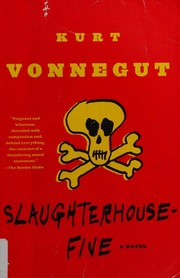
Slaughterhouse-Five
Billy Pilgrim slips through time from Dresden to Tralfamadore in Vonnegut's short antiwar classic.
2,722-word summary · 12 min read
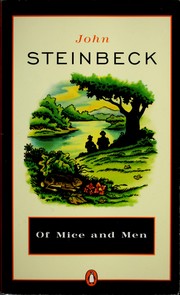
Of Mice and Men
Steinbeck's Of Mice and Men retold: George and Lennie on a California ranch, the dream farm, and why mercy ends it.
2,237-word summary · 10 min read