
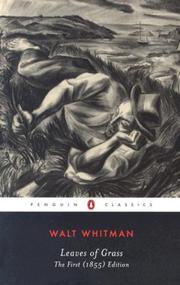
Leaves of Grass
2,240-word summary 10 min read 145 pages in the book
- First published
- 1855
- Publisher
- Penguin Books
- Pages
- 145
- ISBN
- 9780140421996
Reading options
What's inside (6 sections)
I read Leaves of Grass in pieces over months because free verse that big needs breathing room. First published in 1855 by Penguin Books at 145 pages in the cited 1976 reprint of the first edition, poetry by Walt Whitman celebrating self, America, bodies, democracy. Song of Myself, Calamus, Drum Taps, Crossing Brooklyn Ferry. Free verse without rhyme, long lines that breathe. I found it exuberant, erotic, democratic, and uneven in ways that feel human. At 145 pages in this edition (first edition with 12 poems), it invites rereading more than finishing. Good. Grass grows back. So do lines.
Whitman starts with self. I celebrate myself, and sing myself. That opening to Song of Myself announces democratic epic where worker, slave, mother, prostitute all contain multitudes. He lists occupations, bodies, states with catalogs that thrill and tire. Barber, blacksmith, farmer, mother. Each seen with erotic attention to hands and sweat. Bodies celebrated without shame. Male and female, straight and queer (Calamus for adhesiveness between men). That inclusiveness in 1855 shocks and heals. Read aloud to feel breath. Lines run long then break. You must breathe deeply to speak. That breathing is point. Poetry as body practice. Do it. Stand and recite. Feel lungs fill. Good.
Song of Myself as center deserves slow reading, not summary. Fifty two sections moving from self to cosmos. Grass as hope, hair as death, animals as calm. Questions to self. Who are you. Answer by listing what you contain. Do not define narrowly. Contain multitudes. Contradict. That permission liberates readers told to be one thing. Be many. Teachers can use with journal prompts. What do you contain. List without censoring. Share if willing. Those lists build classrooms where selves expand. Whitman models by expanding to include readers directly. You, whoever you are, I am with you. That direct address across 170 years startles. Feel addressed. Answer back in margins. Good.
Calamus, war, ferry
Calamus poems honor adhesiveness between men with tenderness that reads queer then and now. Live oak, calamus root, lovers holding hands. In 1855 such love unspeakable except in poetry. Whitman speaks without naming fully, allowing deniability and truth together. That coding aches for modern queer readers who want clarity. Give it while honoring historical constraints. He risked prosecution and scorn. He published self funded. Courage in code counts. Read Calamus aloud with friends you love. Feel adhesiveness as friendship and more. Let meanings multiply. Do not reduce to label alone, though label fits. Whitman contains. Let contain.
Drum Taps nurses Civil War wounded without flinching. Whitman volunteered as nurse in Washington hospitals, seeing amputations, fevers, deaths. Poems list wounds, faces, vigils. Beat, drums, blood. No glory, just care. I dress the wounded, he writes. That nursing stance defines democratic poetry as service, not celebration alone. Celebrate bodies, then tend when broken. Both needed. Read Drum Taps after Song to feel cost of democracy sung. Freedom requires nursing. Who nurses now. Ask while reading news of wars. Volunteer in small ways. Give blood, time, attention. That giving continues Whitman more than quoting. Do.
Crossing Brooklyn Ferry joins readers across time. Just as you stand on ferry gazing, I stood. Crowds of men and women, tides, gulls. He addresses future readers directly. You who come after, I am with you. That time collapse comforts lonely readers. You are not first to cross uncertain waters. Others stood, gazed, doubted. Feel company across ferry rides, commutes, migrations. Read on ferries if you can. Let water move while lines move. Good.
What shines is voice and vision. Free verse that breaks rhyme to breathe. Catalogs that include. Eroticism that celebrates without objectifying (mostly). Democracy as poetic project, not just political. America as poem to be written by all, not just founders. That vision inspires despite flaws. Whitman includes Black, white, Native, immigrant, though sometimes stereotypically for 1855. Read critically. Celebrate expansiveness while noting limits. Who is missing or caricatured. Native as vanishing? Black as body without full personhood at times? Name gaps while loving whole. That critical love honors better than blind praise. Teach so. Love poem, question poet. Both.
What challenges is length and repetition even in short first edition. Catalogs thrill then tire. About twenty pages of lists test patience. Skim lists first read to find gems, then return to favorites. Do not force cover to cover in one sitting or grass blurs. Graze like cows. Nibble. Ruminate. That grazing suits grass metaphor. Lawns mowed, regrow. Read so. Also, language about bodies shocks some. Explicit celebration of sex, childbirth, wounds. No pornographic linger, but frank. Suitable for teens older ready for body positivity and adults who like democratic vistas. Pair with warnings that 1855 views on race and gender limit. Discuss. Good.
Content is poetry with bodies. No graphic violence beyond war nursing honest. Language free with 1855 frankness about sex that still surprises. Suitable for ages fifteen and up ready for free verse and democracy debates, and all who sing. At 145 pages in this reprint, it invites carrying in pocket. Do. Read one section daily. Memorize lines about multitudes. Recite when small. You contain. Good.
Who should sing
Read it if you like poetry that breathes, like Ginsberg after Whitman, or Mary Oliver for attention. Read it for America singing itself, flawed and vast. At 145 pages in first edition, start here before deathbed complete edition with hundreds of pages. Small grass before field. Good.
Skip it for now if free verse without story bores. No plot here, only songs. If you need narrative, try Whitman biography first, then return. Skip if democratic vistas ring hollow given history. They should ache with gap between promise and practice. Sit with ache while singing. Both true. America contains multitudes, including failures. Sing to mend, not to deny. Good.
For me, the image that stays is Whitman crossing Brooklyn Ferry at dusk, gazing at crowds and water, speaking to me across time. You who look. I am with you. At 145 pages, Leaves of Grass argues democracy needs singers as well as laws. Vote and sing. March and list. Include bodies often excluded. That including, repeated in catalogs, builds poem no law can. I closed it wanting to list my own multitudes. Barber, teacher, friend, stranger. Contain. Sing. Cross ferries daily with attention. Grass grows where walked. Walk gently. Sing loudly. Leaves return each spring. So do lines when reread. Keep singing. Contain multitudes. Good.
Singing self and others
I want to say more about Song of Myself as practice, because fifty two sections can overwhelm without entry points. Start with sections 1, 6, 11, 24, 48, 52. Those hold core invitations. Section 1 celebrates self and invites you. Section 6 meditates grass as hope, hair as death, with child asking what is grass. Answer by listing guesses without settling. That not settling teaches comfort with mystery. Grass is flag, handkerchief, velvet, hair. All true. Hold multiple. Section 11 shows twenty eight bathers watched by woman, erotic and tender without shame. Bodies bathing, laughed at, desired kindly. That gaze respects. Learn to look at bodies with joy not use. Section 24 lists bodies in catalog that thrills. Heads, necks, breasts, wombs. Name parts plainly to honor. That naming was radical in 1855 and remains fresh against shame. Say body words aloud. Reclaim. Section 48 says he is large, contains multitudes. Contradict. That permission liberates readers told to be consistent. Be many. Section 52 bids farewell, bequeathing self to dirt to grow grass. Death as compost, not end. That cycle comforts grieving readers. Loved ones become grass you walk. Feel underfoot. Good. Read those six first, then wander. You will find favorites to memorize. Memorize two lines to carry. I celebrate myself lived long in mind. Repeat when small. You contain. Good.
Calamus poems honor adhesiveness between men with tenderness that reads queer then and now. Live oak, calamus root, lovers holding hands. In 1855 such love unspeakable except in poetry. Whitman speaks without naming fully, allowing deniability and truth together. That coding aches for modern queer readers who want clarity. Give it while honoring historical constraints. He risked prosecution and scorn. He published self funded. Courage in code counts. Read Calamus aloud with friends you love. Feel adhesiveness as friendship and more. Let meanings multiply. Do not reduce to label alone, though label fits. Whitman contains. Let contain. Live oak sturdy, calamus fragrant. Both hold. Hold friends so. Live oak steady through storms. Calamus sweet in marshes. Be both. That bothness suits queer and straight allies learning to love beyond categories. Practice.
Drum Taps nurses Civil War wounded without flinching. Whitman volunteered as nurse in Washington hospitals, seeing amputations, fevers, deaths. Poems list wounds, faces, vigils. Beat, drums, blood. No glory, just care. I dress the wounded, he writes. That nursing stance defines democratic poetry as service, not celebration alone. Celebrate bodies, then tend when broken. Both needed. Read Drum Taps after Song to feel cost of democracy sung. Freedom requires nursing. Who nurses now. Ask while reading news of wars. Volunteer in small ways. Give blood, time, attention. That giving continues Whitman more than quoting. Do.
Crossing Brooklyn Ferry joins readers across time. Just as you stand on ferry gazing, I stood. Crowds of men and women, tides, gulls. He addresses future readers directly. You who come after, I am with you. That time collapse comforts lonely readers. You are not first to cross uncertain waters. Others stood, gazed, doubted. Feel company across ferry rides, commutes, migrations. Read on ferries if you can. Let water move while lines move. Good.
What shines is voice and vision. Free verse that breaks rhyme to breathe. Catalogs that include. Eroticism that celebrates without objectifying (mostly). Democracy as poetic project, not just political. America as poem to be written by all, not just founders. That vision inspires despite flaws. Whitman includes Black, white, Native, immigrant, though sometimes stereotypically for 1855. Read critically. Celebrate expansiveness while noting limits. Who is missing or caricatured. Native as vanishing. Black as body without full personhood at times. Name gaps while loving whole. That critical love honors better than blind praise. Teach so. Love poem, question poet. Both.
If you carry this 145 page reprint in pocket as I do, read one section daily. Memorize lines about multitudes. Recite when small. You contain. Grass grows back. So do lines when reread. Keep singing. Contain multitudes. Good. At 145 pages in first edition, start here before deathbed complete edition with hundreds of pages. Small grass before field. Good. That starting small invites rather than overwhelms. New poetry readers fear long books. Start with twelve poems, not four hundred. Taste, then hunger for more. Hunger will come. Feed with later editions. Grow library as grass grows. Patch by patch. Good.
Reading aloud and carrying
I want to add about reading aloud, because Whitman demands voice, not eyes alone. Free verse lines run long, catalogs roll, breath needed. Read Song of Myself section 11 about twenty eight bathers aloud in a room alone. Feel mouth shape bathing, laugh, desire kindly. That voicing transforms private reading to bodily practice. Throat opens. Chest expands. You breathe like swimmer. Do it. Similarly, read Calamus live oak passage to a friend you love. Hear adhesiveness in voice shake. That shake tells truth shyness hides. Share shake. Friends understand. Read Drum Taps softly for wounded, not loudly for glory. Lower voice for blood and bandages. That lowering honors. Practice volume as care. Loud for joy, soft for grief. Whitman gives both. Follow cues. Good.
Carrying pocket edition matters more than shelf display. At 145 pages, it fits coat, bag, back pocket. Take on ferries, to parks, to waiting rooms. Read one section while waiting for appointments. Time passes differently with multitudes. Boredom lifts. Strangers glance at old book and smile. Conversations start. What are you reading. Grass, you say. They nod, remembering school encounters with Whitman that bored. Show them short section 6 about grass as hope. Read aloud two minutes. Watch eyes change. Poetry read aloud converts skeptics faster than analysis. Do that outreach. Be Whitman ferry, carrying lines across time to tired commuters. Good.
Memorization deserves encouragement in age of search. Learn two lines by heart. I celebrate myself, and sing myself. And what I assume you shall assume. Say while walking. Lines return when anxious. Multitudes contain anxiety too. Large, larger than fear. Repeat till breath steadies. That use is not academic. It is survival. Poems as tools, not museum pieces. Whitman intended use. He sang for workers, mothers, soldiers. Use so. Teach kids to memorize Jo-Jo Yopp and Whitman both. Small voices count. Self contains. Both truths fit in one chest. Practice.
If you visit Brooklyn, ride ferry at dusk. Stand where Whitman stood, gaze at crowds and water. Read Crossing aloud into wind. Feel addressed across time. You who look. I am with you. That feeling, uncanny and comforting, is why 1855 lines live in 2026 phones. Technology changes. Ferries remain. Bodies cross water daily. Sing while crossing. Notice who stands beside. Barber, teacher, friend, stranger. All contain. Good. At 145 pages, the book fits ferry rides. Read one way, gaze other. Balance intake and looking. That balance is democratic practice. Receive lines, give attention. Both. Keep ferrying. Keep singing. Grass grows where walked, even concrete ferry docks with weeds in cracks. Find weeds. Smile. Continue.
FAQ
When was Leaves of Grass published?
It was first published in 1855 by Penguin Books at 145 pages in the cited 1976 reprint of the first edition. It is poetry.
What is in it?
Walt Whitman sings self, Manhattan, Civil War nursing, and democratic vistas in free verse.
Similar books
The Complete Poems of Emily Dickinson
Thomas H. Johnson's one-volume edition gathers all 1,775 of Emily Dickinson's poems in their restored texts, the standard reading edition since 1960.
2,191-word summary · 10 min read
Walden
Thoreau builds a cabin at Walden Pond and spends two years testing what a person really needs to live well.
2,986-word summary · 13 min read
Rosencrantz and Guildenstern Are Dead
Stoppard's 1966 play retells Hamlet from the wings, where two minor courtiers wait, joke, and walk toward a death they cannot see.
2,021-word summary · 9 min read

Fathers and Sons
Arkady brings the nihilist Bazarov home to his father's estate, and a generational argument turns into love, a duel, and an early death.
2,192-word summary · 10 min read

The Dharma Bums
Ray Smith rides freight trains, climbs Matterhorn Peak and argues about Zen with the poet Japhy Ryder in Kerouac's 1958 road novel.
2,729-word summary · 12 min read
Out of the Silent Planet
A Cambridge philologist is kidnapped and taken to Mars, where the natives are civilized and the humans are the dangerous invaders.
2,612-word summary · 12 min read

Doctor Zhivago
A doctor and poet lives through revolution, war, and love in Pasternak's novel of private life under the pressure of Russian history.
2,213-word summary · 10 min read
Letters to a Young Poet
Rilke's ten letters to a young officer cadet refuse easy criticism and ask whether he must write, offering patience and solitude as a way of life.
2,530-word summary · 11 min read

Beyond Good and Evil: Prelude to a Philosophy of the Future
A guide to Friedrich Nietzsche's Beyond Good and Evil: its attack on moral prejudice, the will to power, master and slave morality, and the philosopher of the…
2,597-word summary · 12 min read

The Epic of Gilgamesh
Gilgamesh loses Enkidu, then seeks endless life past the flood.
2,246-word summary · 10 min read
A Canticle for Leibowitz
After nuclear war, monks save books across centuries while the world rebuilds and falls again.
2,381-word summary · 11 min read

The Fall
A fallen Paris lawyer confesses in an Amsterdam bar, tracing guilt from Paris success to a bridge he failed to face.
2,220-word summary · 10 min read
Sonnets & Poems
154 sonnets plus Venus and Adonis and other poems on time, love, and fading beauty.
2,341-word summary · 10 min read

Solaris
Kelvin reaches a silent station above Solaris and finds grief made solid when the ocean returns his dead wife Rheya, testing memory, science, and the limits of…
2,548-word summary · 11 min read
On the Origin of Species
Darwin's 1859 case for evolution by natural selection, from Beagle finches and breeding pigeons to fossils and anatomy.
2,589-word summary · 12 min read
Howl and Other Poems
Ginsberg's 1956 City Lights debut: Howl for outcasts plus tender shorter poems, in 48 pages that survived an obscenity trial.
2,570-word summary · 11 min read

One Day in the Life of Ivan Denisovich
One freezing day with prisoner Shch-854 in a Soviet camp: roll call, bricklaying in the cold, bread rations, and small wins that let Shukhov call the day…
2,668-word summary · 12 min read
Demian
Hesse's 1919 German classic of Emil Sinclair, from Kromer blackmail to Demian, Abraxas, Beatrice and Frau Eva, ending in war: a short, strange guide to growing…
2,510-word summary · 11 min read

The Island of Doctor Moreau
Shipwrecked Prendick finds Doctor Moreau shaping beasts into men by pain on lost island.
2,137-word summary · 9 min read
The Dispossessed: An Ambiguous Utopia
Physicist Shevek leaves anarchist Anarres for capitalist Urras to share time theory, finding walls both places.
2,288-word summary · 10 min read
The Aeneid
Trojan Aeneas flees burning Troy for Italy, losing Dido and friends before warring to found a line that becomes Rome.
2,080-word summary · 9 min read

Nausea
Historian Roquentin in Bouville catalogs dread as objects turn strange in Sartre diary novel.
2,134-word summary · 9 min read
Faust, Part One
A restless scholar bets his soul against one perfect moment, then ruins an innocent girl in Goethe's 1808 verse tragedy.
2,568-word summary · 11 min read
Dead Poets Society
Keating tells Welton boys to seize the day and his secret club costs more than grades.
2,031-word summary · 9 min read
Aesop's Fables
Short animal tales of hares, foxes, ants, and wolves that still sting: old fables in plain modern English.
2,916-word summary · 13 min read
Thus Spoke Zarathustra
A prophet comes down from ten years alone to preach the overman after the death of God.
1,983-word summary · 9 min read
The Raven
A grieving student asks a midnight raven and hears only Nevermore.
2,141-word summary · 10 min read
Tao Te Ching: Annotated & Explained
Eighty one brief verses on the Way and effortless action, with Lin's translation and facing notes.
2,140-word summary · 10 min read

Childhood's End
Silver ships end war and want while Overlords midwife humanity's children into something beyond human.
2,054-word summary · 9 min read

The Death of Ivan Ilyich
A successful judge hurts his side hanging drapes, then faces a long dying where evasive doctors fail him and peasant Gerasim shows what his correct life missed…
2,986-word summary · 13 min read