
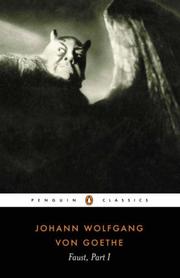
Faust, Part One
2,568-word summary 11 min read 240 pages in the book
- First published
- 1808
- Publisher
- Cotta
- Pages
- 240
- ISBN
- 9780140449013
- Original title
- Faust. Eine Tragödie
Reading options
What's inside (8 sections)
I put off reading Faust for years because it sounded like homework. A German verse tragedy from 1808 about a scholar who sells his soul. Every time someone mentioned it, they used that hushed voice people save for monuments. Then a friend told me to stop thinking of it as a monument and to think of it as a mess: a brilliant man blows up his own life, drags a sweet girl down with him, and cracks jokes with the devil along the way. That got me through the door, and I am glad it did. The Penguin paperback in the David Constantine translation runs 240 pages and moves faster than I expected, though some stretches still feel like wading through fog.
Three doors before the story starts
Goethe makes you walk through three short preludes before Faust himself shows up, and they are worth your patience because each one sets the terms of everything after.
First comes the Dedication, where the poet speaks in his own voice. He is older now, and the friends he once imagined reading these lines are scattered or dead. The figures of his youth crowd back in, half remembered, and he admits he is both steadier and sadder than the young man who started the thing. It reads like someone opening a box of old letters. You learn right away that this play took decades of its author's life, and the ache in these stanzas is personal.
Then the Prelude on the Stage drops the tone completely. A theatre director, a jobbing poet, and a clown sit around arguing about what a play is even for. The director wants full houses and spectacle. The poet wants something true and lasting. The clown says the audience wants to laugh, cry, and feel something before supper, and honestly the clown wins the argument. It is funny and a little cynical, and it tells you Goethe knew exactly what crowd-pleasers look like. He just wanted more than that.
Then the register changes again with the Prologue in Heaven. The archangels sing about the order of creation, and into this brightness steps Mephistopheles, the devil as a sarcastic courtier. He complains that humans are miserable creatures who use their reason mostly to make themselves worse off than animals. The Lord points to Faust, his servant, as the exception: a restless striver who still reaches. Mephisto asks permission to tempt him, betting he can drag Faust down into the mud. The Lord agrees, with the calm line that a good man groping in the dark still finds his way. Scholars argue endlessly about what this wager means, whether heaven is callous for gambling with a soul, and whether Mephisto ever had a chance. I read it more simply. The bet gives the devil a leash of a certain length, and the rest of the play is about how much damage gets done inside that length.
A scholar who has read everything and enjoyed nothing
When we finally meet Heinrich Faust, he is sitting up late in a narrow Gothic study surrounded by books, skulls, and instruments, telling us he has mastered philosophy, law, medicine, and theology, and that it has all left him cold. Students call him master and doctor, and he feels like a fraud. He cannot stand the gap between what books describe and what life feels like. So he turns to magic, not for power exactly but for contact, for one real experience that is not filtered through somebody else's sentences.
He opens a forbidden book and calls up the Earth Spirit, a blazing, restless force of nature. The encounter goes badly. The Spirit tells him, in effect, that he is not its equal, that he resembles the spirit he actually comprehends, and vanishes. Faust is crushed. He was reaching for the infinite and got told to know his place. His assistant Wagner wanders in, cheerful and pedantic, full of talk about scholarship and rhetoric, and the contrast is painful. Wagner loves the very bookish life Faust is choking on. Faust can barely be polite.
What saves him from suicide, at least for one night, is sound. He lifts a vial of poison, ready to drink, and then hears Easter bells and a choir outside his window. The music pulls him back to childhood Easters, to memories of his father, and he sets the poison down. I found this scene moving because it is not an argument that changes his mind. It is a sense memory that interrupts him. Goethe seems to be saying that despair is sometimes answered by beauty rather than by logic.
The next day Faust walks outside the town gate with Wagner into a spring crowd: townspeople dancing, drinking, flirting, showing off. Everyone greets the old doctor with respect. For a moment Faust warms to ordinary life. Then he notices a black poodle circling him, getting closer on the walk home, and something about the dog's behavior feels wrong. Back in the study, the poodle swells and smokes and reveals itself as Mephistopheles, first in the costume of a traveling scholar. The devil is urbane, funny, and faintly bored, which makes him more unsettling than any horned monster.
The pact scene is the hinge of the whole play, so it pays to follow it closely. Mephisto offers service: he will be Faust's companion and servant here, granting experience, pleasure, knowledge, whatever Faust wants, and in return Faust will serve him in the afterlife. Faust, proud and reckless, raises the stakes himself. He bets that no moment will ever satisfy him so completely that he wants it to last forever. If he ever says to a moment, stay, you are so beautiful, then Mephisto can take him. They seal it with blood, which Mephisto finds old fashioned and delightful. Notice what Faust is really wagering. He is not trading his soul for gold or youth. He is betting that his hunger is infinite, that nothing will ever fill him. It is arrogance dressed as despair, and the devil accepts gladly.
A tour of low life and false youth
Before Gretchen enters the story, Goethe gives Faust and Mephisto two strange adventures that work like samples of the life the devil is selling.
In Auerbach's Cellar in Leipzig, Mephisto drags Faust into a tavern full of roaring students and performs cheap tricks: wine drilled from a table, fireworks, a vine of grapes. The students turn on each other, grabbing noses, drawing knives, until Mephisto puts a glamour on them and slips out with Faust. Faust is unimpressed, even disgusted. Crude indulgence bores him. This matters because it shows the devil's standard goods will not satisfy this particular customer. Mephisto will have to aim higher, or lower in a different way.
Then comes the Witch's Kitchen, one of the oddest scenes in the play. Amid apes and cats and cauldrons, a witch brews Faust a drink that will strip thirty years off his body and wake every sleeping appetite. While the potion works, Faust sees the image of a beautiful woman, Helen-like, in a mirror, and falls instantly in love with a reflection. Mephisto leers through the whole scene. The rejuvenation is the devil's real instrument. He cannot make Faust wise or content, but he can make him young and hungry again, which is far more dangerous. I laughed in places here and felt uneasy right after, which I think is the point. The comedy curdles.
A fair criticism belongs here. These middle scenes slow the play down, especially for a modern reader waiting for the plot to start. The Cellar scene feels like a leftover student prank, and the Kitchen scene piles on grotesque business that plays better on a stage than on the page. You can skim them and lose little. But they do establish something important: Faust's corruption will not come through tavern lowlife. It will come through desire aimed at one real person.
Gretchen changes everything
Margarete, called Gretchen, is a young, poor, devout girl who lives with her mother and helps raise her little sister. When Faust sees her on the street and bluntly propositions her, she slips away with dignity. She is not a symbol at first. She is a specific girl with chores, prayers, and a sharp tongue. That specificity is why the rest hurts so much.
Faust becomes obsessed, and Mephisto arranges access through Gretchen's neighbor Martha, a woman whose absent husband gives the devil room to invent stories. Mephisto plays go-between while Faust plants gifts: first a casket of jewels left in Gretchen's room, which her mother promptly gives to the church, then a second casket that Martha helps her keep. Gretchen is dazzled and troubled in equal measure. She has never owned anything fine, and she senses, correctly, that these gifts come with a price nobody names.
The seduction scenes alternate between tenderness and calculation in a way that made my skin crawl. In the garden, Gretchen plays the old flower game, pulling petals and whispering that he loves her, and Faust answers with soaring speeches about feeling that sound almost like worship. In the arbor, they declare love while Mephisto and Martha flirt nearby like a parody double of the main couple. Then Faust spends a famous monologue alone in a forest cave, praising nature and his own expanded senses, and admits in the same breath that he has reduced Gretchen to an instrument of his experience. He knows what he is doing. He does it anyway. That self-awareness makes him harder to forgive than a villain who lies to himself.
Gretchen's side of the story is told in small domestic scenes that hit harder than any speech. Alone in her room at her spinning wheel, she sings the song beginning my peace is gone, my heart is heavy, turning her longing over and over like the wheel itself. At the well, she listens to other girls gossip about a girl in town ruined by a lover, and realizes with horror that she recently judged that girl and may soon be her. She gives her mother a sleeping draught on Faust's instructions so the lovers can meet, and the mother never wakes up. Whether you call that accident or manslaughter, Gretchen carries the guilt. Her brother Valentine, a soldier home on leave, finds her shamed and confronts Faust in the street; Faust with Mephisto's help kills him, and Valentine dies cursing his sister in front of the neighbors. Step by step, the girl's whole world burns: mother dead, brother dead, reputation gone, and she is pregnant and abandoned.
Modern readers will rightly ask why Gretchen gets so little room to choose. The play frames her mostly as the thing Faust wants and ruins, and her piety reads at times like helplessness. I felt that frustration too. But her final scenes give her back a will of iron, and I think Goethe knew the story only works if she becomes more than a victim. The middle of her arc is where the play shows its age, and a reader is allowed to say so.
The cathedral, the mountain, and the prison
From here the play moves fast between horror and spectacle. In the cathedral, Gretchen kneels for comfort and is tormented by an Evil Spirit whispering her guilt: the mother, the brother, the child growing inside her. The choir sings of judgment day while she gasps for air. It is one of the most brutal scenes Goethe wrote, because there is no devil with a contract here, only a conscience doing the devil's work. She flees before the service ends.
Then Goethe cuts away to Walpurgis Night on the Brocken, the highest peak of the Harz mountains, where Faust and Mephisto climb through a storm of witches, ghosts, and half-human revelers on the traditional night of sorcery. A will-o'-the-wisp leads them, voices call from the rocks, and Faust glimpses famous beauties including Lilith, Adam's first wife in legend, while Mephisto flirts with old witches and cracks jokes about politics and literature. Midway through, Faust sees a pale apparition of Gretchen with a red mark at her throat like a cut, and a mouse at her feet, and he is shaken. Mephisto talks him past it. The attached Dream interlude, a string of satirical verses about fairies and artists, feels like Goethe emptying his desk drawers. On stage this night can be thrilling. On the page, I confess, it sprawls. You can feel the author enjoying himself while the main story waits.
The waiting ends in the last three scenes, which are spare and devastating. On a gloomy day Faust learns Gretchen has drowned her child in madness and is condemned to execution. He turns on Mephisto with genuine fury, and the devil coldly points out that Faust is the one who wanted this. At midnight they ride phantom horses past a place of judgment to the prison, where Gretchen lies on straw, singing broken songs to her dead baby, not recognizing her lover at first. When she finally knows him, calling him by his first name, she refuses to be rescued by devilish means. She will accept judgment, and mercy, from a higher court than Mephisto's. Faust is dragged off as dawn comes, and a voice from above announces that she is saved. Mephisto is left to snarl that she is judged. The contradiction hangs in the air, and the play ends.
That ending divided readers then and divides them now. Has Faust learned anything, or has he simply survived his victim? Is Gretchen's salvation grace or consolation? Goethe refuses to settle it, and I came to admire the refusal. A tidy moral would shrink everything that came before. Instead the last image is a man led away by the devil and a ruined girl lifted by a voice, and you have to decide what that pairing means.
What drags and who should read it
Let me be honest about the costs. The verse, even in a lively modern translation, demands attention. Some passages, especially the Walpurgis Dream and the satirical jabs at long-dead literary figures, will baffle you unless the notes rescue you, and sometimes even the notes feel like homework. Faust himself can be exhausting company. He monologues, he contradicts himself, he treats other people as experiments and then weeps about it. If you need a hero to admire, look elsewhere. And Gretchen's suffering is so total that some readers will find the play cruel, whatever the final voice from above promises.
Still, I would press this book on anyone who likes big stories about hunger: readers of Marlowe's Doctor Faustus who want the German answer, theater lovers curious about the most staged play in the language, poetry readers who want to see what rhymed verse can still do. Read it in short sittings, use the notes without shame, and let the Gretchen scenes carry you through the patches where the witches overstay their welcome. What stays with me is not the bargain but the pattern: a man who wanted everything and a girl who loved one person, and how differently heaven seems to weigh those two hungers. For a play finished in 1806 and printed by Cotta in 1808, it feels uncomfortably current about what happens when curiosity stops caring who gets hurt.
FAQ
When was Faust, Part One first published?
It appeared in German as Faust. Eine Tragödie in 1808 from Cotta in Tubingen, finished in 1806 after decades of drafting. This post cites the Penguin Classics paperback in the David Constantine translation, 240 pages, ISBN 9780140449013.
Who are the main characters?
Heinrich Faust, the striving scholar; Mephistopheles, the sardonic devil; Gretchen (Margarete), the young girl Faust seduces; and her neighbors Martha, her brother Valentine, and her mother.
Is Faust, Part One part of a series?
No. Part One stands alone here, though Goethe later completed Part Two in 1831, published after his death in 1832.
Similar books
The Sorrows of Young Werther
A young artist writes letters about his love for Lotte, promised to another, until feeling turns fatal in Goethe's 1774 classic.
2,934-word summary · 13 min read
Rosencrantz and Guildenstern Are Dead
Stoppard's 1966 play retells Hamlet from the wings, where two minor courtiers wait, joke, and walk toward a death they cannot see.
2,021-word summary · 9 min read

Thus Spoke Zarathustra
A prophet comes down from ten years alone to preach the overman after the death of God.
1,983-word summary · 9 min read
Paradise Lost
Blind Milton's epic of Satan's revolt, Adam and Eve's fall, and their hard walk out of Eden.
2,963-word summary · 13 min read
Waiting for Godot
Two tramps wait by a tree for Godot who never comes, with jokes, boots, and silence.
2,045-word summary · 9 min read

Julius Caesar
Brutus joins Cassius to kill Caesar for Rome, then loses Rome to Antony words and Octavius swords.
1,916-word summary · 9 min read
A Streetcar Named Desire and Other Plays
Blanche DuBois moves in with Stella and Stanley in New Orleans while her past closes in, plus two more Williams plays.
2,902-word summary · 13 min read
Othello
Iago's lies drive the Moor of Venice to murder his innocent wife in Shakespeare's tragedy of jealousy.
2,409-word summary · 11 min read
Macbeth
Macbeth hears witches hail him king and murders Duncan with Lady Macbeth pushing him on.
4,056-word summary · 18 min read

Hamlet
Hamlet sees his father's ghost in Elsinore and pretends madness to test Claudius and Gertrude while Denmark slides toward duel and death.
2,996-word summary · 13 min read
Romeo and Juliet
Shakespeare's Romeo and Juliet retold: Verona feud, balcony, Friar's plan, and why the last minutes collapse.
2,531-word summary · 11 min read

Revolutionary Road
A Connecticut couple who believe they are too good for the suburbs plan to move to Paris, and the plan slowly exposes everything they cannot say to each other.
2,085-word summary · 9 min read

Sophie's Choice
A young Southern writer in 1947 Brooklyn befriends a brilliant, unstable couple and slowly learns the story of the Polish Catholic woman at the center of their…
2,798-word summary · 12 min read

Fathers and Sons
Arkady brings the nihilist Bazarov home to his father's estate, and a generational argument turns into love, a duel, and an early death.
2,192-word summary · 10 min read

The Dharma Bums
Ray Smith rides freight trains, climbs Matterhorn Peak and argues about Zen with the poet Japhy Ryder in Kerouac's 1958 road novel.
2,729-word summary · 12 min read

Out of the Silent Planet
A Cambridge philologist is kidnapped and taken to Mars, where the natives are civilized and the humans are the dangerous invaders.
2,612-word summary · 12 min read
The House of Mirth
Lily Bart, beautiful and penniless at twenty-nine, navigates New York's marriage market until a Dorset yacht scandal strips her of the only currency she has.
2,468-word summary · 11 min read

Beyond Good and Evil: Prelude to a Philosophy of the Future
A guide to Friedrich Nietzsche's Beyond Good and Evil: its attack on moral prejudice, the will to power, master and slave morality, and the philosopher of the…
2,597-word summary · 12 min read

A Raisin in the Sun
Lorraine Hansberry's 1959 play follows the Younger family as a $10,000 insurance check, a house in a hostile neighborhood, and a stolen investment test their…
2,444-word summary · 11 min read
Pygmalion
Higgins bets he can pass flower girl Eliza off as a duchess.
2,521-word summary · 11 min read
Leaves of Grass
Free verse songs of self, America, bodies and democracy.
2,240-word summary · 10 min read

A Canticle for Leibowitz
After nuclear war, monks save books across centuries while the world rebuilds and falls again.
2,381-word summary · 11 min read
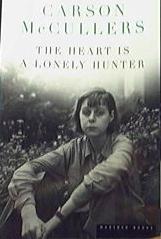
The Heart is a Lonely Hunter
A deaf man becomes the quiet center for lonely souls in a small Georgia mill town.
2,000-word summary · 9 min read

The Fall
A fallen Paris lawyer confesses in an Amsterdam bar, tracing guilt from Paris success to a bridge he failed to face.
2,220-word summary · 10 min read

Solaris
Kelvin reaches a silent station above Solaris and finds grief made solid when the ocean returns his dead wife Rheya, testing memory, science, and the limits of…
2,548-word summary · 11 min read

One Day in the Life of Ivan Denisovich
One freezing day with prisoner Shch-854 in a Soviet camp: roll call, bricklaying in the cold, bread rations, and small wins that let Shukhov call the day…
2,668-word summary · 12 min read
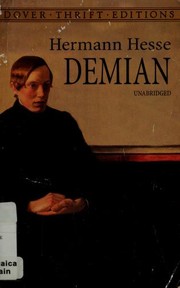
Demian
Hesse's 1919 German classic of Emil Sinclair, from Kromer blackmail to Demian, Abraxas, Beatrice and Frau Eva, ending in war: a short, strange guide to growing…
2,510-word summary · 11 min read
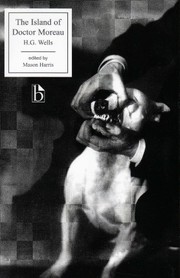
The Island of Doctor Moreau
Shipwrecked Prendick finds Doctor Moreau shaping beasts into men by pain on lost island.
2,137-word summary · 9 min read
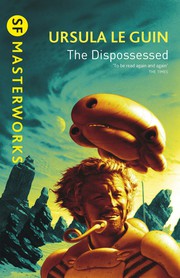
The Dispossessed: An Ambiguous Utopia
Physicist Shevek leaves anarchist Anarres for capitalist Urras to share time theory, finding walls both places.
2,288-word summary · 10 min read
Nausea
Historian Roquentin in Bouville catalogs dread as objects turn strange in Sartre diary novel.
2,134-word summary · 9 min read