
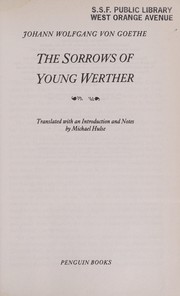
The Sorrows of Young Werther
2,934-word summary 13 min read 144 pages in the book
- First published
- 1774
- Publisher
- Weygand'sche Buchhandlung
- Pages
- 144
- ISBN
- 9780140445039
- Original title
- Die Leiden des jungen Werthers
Reading options
What's inside (8 sections)
I picked up The Sorrows of Young Werther because Frankenstein sent me here. In Mary Shelley's novel the creature finds three books in a bag, and one of them is Werther. He reads it and sees himself in it. That detail stuck with me for years. A creature with no name, hated on sight, opens Goethe's little novel from 1774 and feels understood. So I wanted to know what kind of book could do that. The answer surprised me. It is short, feverish, strange, and sad in a way that feels modern even through old translations. It was first published in German as Die Leiden des jungen Werthers on 29 September 1774 by Weygand'sche Buchhandlung in Leipzig, when Goethe was only 24, and it made him famous across Europe almost overnight.
The form matters. Almost the whole novel is letters from a young man named Werther to his friend Wilhelm, with a short editor voice at the start and a longer one at the end. Book One and Book Two carry dates, beginning in May 1771. You watch feeling build in real time. There is no cool narrator to explain him. You get weather, walks, quarrels, small joys, and long spirals, all in his own words. I read the Penguin Classics translation by Michael Hulse, the 144 page paperback with ISBN 9780140445039, and the letters move fast. If you have only an hour a night, you can finish it in three or four sittings. That speed is part of the danger of the book. You fall into his rhythm before you notice how narrow it has become.
Goethe wrote it in about five and a half weeks between January and March 1774, and it shows in the best way. The sentences run hot. He drew on his own summer in Wetzlar in 1772, where he loved Charlotte Buff, who was engaged to Johann Christian Kestner, and on the death of an acquaintance, Karl Wilhelm Jerusalem, who shot himself in October 1772 with a pistol borrowed from Kestner. Goethe later revised the book in 1787, and the first English version appeared in 1779. Knowing those roots helped me. This is not a puzzle plot. It is a portrait of a heart that cannot step back from itself, written by someone who had just lived near that edge and got out by writing.
Wahlheim, letters, and a ball
Werther comes to the fictional village of Wahlheim to get away. An early letter mentions a past entanglement with a woman named Leonore, and you sense he wants clean air. He walks the hills, sketches, talks with peasants, plays with children, and praises simple life over town manners. Some of these pages are lovely. He describes light on fields, flies above stalks, water fetched by village girls, and card houses built with a judge's children. He can be snobbish about rank and then tender toward a farmer in the same letter. That swing is the point. He feels everything at full volume and trusts the volume as proof of truth.
Then comes the ball. A friend drags him to a dance in the country, and there he meets Charlotte, called Lotte, the daughter of a local official. Her mother has died, and Lotte keeps house and raises her younger brothers and sisters. The famous first scene has her cutting bread for the children with a kind of calm grace. Werther dances with her, talks fast, and falls hard within hours. The waltz passages still read as electric. Partners whirl, hands touch, talk breaks off. He already knows she is as good as engaged to a man named Albert, who is away on business and eleven years her senior. He knows it and does not care. On the way home in the night air he keeps repeating her name. I found those pages embarrassing in the way real crushes are embarrassing. He mistakes a strong evening for a fate.
What follows is a friendship that he treats as a courtship. He visits Lotte often. He watches her with the children. He praises her singing, her care, her steady sense. He writes Wilhelm that she is perfect and that Albert is lucky, then writes again that the luck is unfair. Lotte likes him. That much is clear. She enjoys his talk and his attention. But she has chosen Albert, a solid, decent man with a post and a plan. Werther tells himself that such a choice cannot hold against true passion. He starts to read every kindness from her as a hidden promise. When you read these letters in order, you can mark the exact point where admiration turns into demand. He stops asking what she wants and starts keeping score of what he feels.
Albert returns and kindness becomes a cage
Albert comes back to Wahlheim, and the book gets painful in a precise way. Werther tries to befriend him. The three walk together, talk books and business, and manage for a while. Albert is not a villain. He is patient, a little stiff, secure in his place, and fond of Lotte in an orderly fashion. Werther praises him in one letter and resents him in the next. He borrows Albert's calm the way he borrows books, then hates that he needs it. There is a pistol on Albert's wall in one scene, ordinary and domestic, and it sits in the story like a nail waiting for a hammer. Goethe places objects early and lets them wait. That patience makes the ending land harder.
The triangle grinds on through small scenes. Werther reads to Lotte. They talk about poetry, including his own translation of Ossian, the misty songs then thought ancient and now known as a modern creation. They argue about suicide, with Albert taking the firm line that it is weakness and Werther defending the sufferer. Lotte listens and tries to keep peace. She asks Werther to be moderate. He promises and fails. He leaves town for a stretch because the daily nearness hurts too much, then writes letters full of nature and philosophy that still circle back to her. Even his praise of fields sounds like love talk redirected. A stream is her voice. A storm is his chest. After a while I started to skim his landscape passages, not because they are badly written but because they all point one way. That sameness is deliberate, I think. Passion narrows the world until everything rhymes with the wound.
One hard truth the book keeps showing is how Werther uses Wilhelm. The friend gets letter after letter, plea after plea, and answers mostly offstage. Werther asks for advice and ignores it. He wants a witness more than a guide. I have been on both sides of that exchange in life, the friend who writes too much and the friend who reads with growing worry. Goethe catches the tone exactly. Long letters when hope spikes. Short, dark notes when it drops. Apologies for silence, then floods of words. If you have ever tried to help someone who only wants permission to keep suffering, these pages will feel familiar and awful.
Weimar, rank, and humiliation
To break the spell Werther takes a post at an embassy in Weimar and tries to become a practical man. This middle section is my favorite for its cold clarity, because love steps aside and pride steps forward. He works for an envoy he finds petty. He tries to please, fails, and blames the system. Then comes the set piece at the Count of O, where Werther stays too long at a gathering of nobles and is asked to leave because he lacks rank. A kind woman named Fraulein von B tries to smooth it over, but the cut is public. He writes about it with fury and shame mixed together.
Readers sometimes treat this as a detour. I read it as the other half of the tragedy. Werther hates rules when they block his love, and hates them again when they block his career. He wants a world ordered by depth of feeling, where the most sincere man wins the girl and the post. The real world of 1770s Germany runs on birth, patronage, and paper. He cannot flatter, wait, or bow. So he quits in a huff and drifts. His letters from this period swing between contempt for society and begging to be received by it. That contradiction felt true to me. Many of us want both outsider credit and insider comfort. Werther wants them absolutely, at the same time, without paying either price.
He returns to Wahlheim worse than before. Lotte and Albert are now married. That fact changes every visit. What was once fond and loose is now watched and timed. Albert grows colder, not from cruelty but from strain. Who could bear a brilliant, weeping guest who loves your wife and will not leave? Lotte grows thinner in spirit. She still cares for Werther, but care now costs her peace at home. Werther reads her restraint as betrayal. He presses harder precisely when he should step back. There is a terrible logic to it. Each rebuff proves to him how deep his love is, which licenses the next advance, which earns the next rebuff. Around this point I stopped rooting for his love and started hoping someone would remove him from the scene for his own good. No one does.
The last weeks and the Ossian night
The final stretch is paced like a countdown. Lotte, with effort, tells Werther to visit less often and to master himself. She even says, with a sharpness new to her, that only the impossibility of having her keeps his desire so hot, a remark she admits anyone might make. He hears it as philosophy and misses the plea inside it. He comes once more. They read together. He recites his Ossian translation about fallen heroes and empty halls, and both weep. The passage speaks of loss that no courage can undo, and Lotte breaks down. For a moment they hold each other. Then she pulls away and locks herself in another room. He leaves in a storm of feeling and writes his last letters through the night.
Goethe handles the suicide with plain detail rather than purple fog, which makes it worse. Werther writes a farewell to be found after death. He sends his servant to Albert with a note asking to borrow his two pistols for a journey. Charlotte understands at once what journey means. She hesitates, trembles, and hands them over at Albert's instruction. That handing over is the book's cruelest beat. No one wants this death, yet manners and habit carry it forward. At midnight Werther shoots himself at his desk. A servant finds him at six in the morning still breathing. He dies at noon. An editor voice, dry and broken, reports the burial and notes that Charlotte's life was feared for after the news. No angels speak. Workmen carry the coffin. The letters stop.
I admire how little Goethe explains here. He does not give a medical label or a moral tag. He shows a sequence: a mind that reads every event as proof, friends who set limits too late, a woman asked to save a man she cannot save, and a loaded object made easy to borrow. The pistol request uses the language of travel, which is how Werther has talked all along. Every departure was supposed to cure him. This last one is only the literal form of the others. When I closed the book I sat quiet for a while, not because I agreed with him but because the machinery felt so plain. Remove one link, a visit declined earlier, a pistol refused, a friend who drags him home by force, and the chain might have snapped.
Why the book shook Europe, and where it sags
The shock in 1774 makes sense once you feel the style from inside. German readers had not seen private feeling rendered at such length and heat. Young men copied Werther's blue coat and yellow waistcoat. Women wrote letters in Lotte's voice. Publishers rushed translations and pirate editions. Authorities in Leipzig banned the book in 1775, and Denmark and Italy followed, partly from fear of copycat suicides. The rumor of the Werther effect, young lovers killing themselves with the book nearby, spread wide. Whether every tale was true matters less than what the panic shows. Readers took these letters as permission to treat sorrow as identity. Napoleon is said to have carried the novel on his Egypt campaign and praised it. Thomas Carlyle later coined the word Wertherism for the age's self pity. Massenet turned it into an opera called Werther in 1892. Friedrich Nicolai mocked it with a satire where Albert loads the pistol with chicken blood and Werther lives to become respectable. Goethe himself, famous and a little trapped by the fame, reworked the text for 1787 and later spoke of the book as something he had fed with his own blood.
That history can make the novel sound like homework. It is not. The letters still move, especially in Book One, and Lotte's bread cutting, the waltz, the children's games, and the night ride home after the ball stay bright across 250 years. But a fair report should name the drag. Werther repeats himself. Many letters say the same thing in new weather. Albert never quite becomes a person, more a wall with good manners. Lotte gets devotion but little interior life of her own; we learn what she does for others, rarely what she dreams about when alone. Wilhelm stays a mailbox. And the book gives Werther's view almost no real correction until the editor's last pages. If you dislike being locked inside one consciousness, the middle will test you. I also winced at how quickly Werther turns principle into excuse. He praises nature's freedom, then stalks a married woman. He scorns rank, then begs rank to notice him. Goethe sees this, I believe, but he lets Werther have the microphone so long that some readers mistake volume for verdict.
So who should read it now? Anyone curious about where modern talk of romantic obsession comes from will find the source here. Anyone who likes epistolary novels, from Les Liaisons Dangereuses to later letter books, will see the form used with rare force. It pairs well with Frankenstein, since Shelley's creature learns language partly through Werther and misreads it in touching ways, taking a suicide story as a guide to feeling. It also pairs well with Goethe's older self. Read the 24 year old who wrote in a rush, then read his later remark that every young person has a Werther season. The older Goethe sounds tired of the boy but tender toward him too. That double view steadied me after the bleak end.
A few practical notes before you start. The names shift by translation. Charlotte and Lotte are the same woman. Albert is sometimes Alberto in older English versions. Wahlheim is invented, based on Garbenheim near Wetzlar. Wilhelm is the friend who receives most letters. The Ossian passage Werther recites near the end is Goethe's own German rendering, and its gloom is meant to sound like a bell tolling for him. The pistols come from Albert by request, which is why the last chapters implicate everyone and accuse no one. Keep those threads in mind and the short book will feel roomy. It is a tragedy built from ordinary courtesies that curdle: visits, loans, readings, kind words held too long. That is why it scared Leipzig and charmed Paris. It says the fatal thing can enter through the front door, wearing good clothes, asking politely for pistols for a journey.
A last word on reading it kindly and clearly
I closed Werther with pity and irritation in equal measure, and that seems right. Pity because his pain is rendered without fakery. He loves children, notices servants, and writes about dawn with real skill. Irritation because he refuses every exit. Work, travel, friendship, art, limits, time: he tries each briefly and declares it hollow when it does not deliver Lotte. The novel lets you feel both at once without forcing a lesson. If you want a villain, Albert will not serve. If you want a saint, Lotte will not serve either, though her care for her siblings and her late attempt at a boundary earn respect. If you want a hero, Werther fails the test by design. He is a witness to his own drowning who keeps describing the water beautifully instead of swimming.
What remains, for me, is smaller and stronger than legend. A young man writes letters no one can answer in a way that would save him. A young woman tries to be kind within a marriage the world approves and finds kindness is not enough. A husband defends his house with cold politeness because he has no other weapon. Around them Schwalm hills, bread, dances, and office slights go on as usual. Goethe at 24 caught how ordinary life can feed an extraordinary fire. At a distance of 1774 to now, the clothes changed and the letters became messages, but the pattern did not. Someone loves without return, mistakes attention for promise, and calls the mistake fate. Reading this short novel is a good inoculation against that old spell, provided you read it awake. Let Werther speak, hear Lotte's tired request for space, notice Albert's quiet strain, and put the book down before midnight with the pistols still on the wall.
FAQ
When was The Sorrows of Young Werther first published?
It appeared in German as Die Leiden des jungen Werthers on 29 September 1774 from Weygand'sche Buchhandlung in Leipzig, with a revised edition in 1787 and an English translation in 1779. This post cites the Penguin Classics paperback, 144 pages, ISBN 9780140445039.
Who are the main characters?
Werther, the young letter writer; Charlotte, called Lotte, who raises her siblings after her mother's death; Albert, her fiance and later husband; and Wilhelm, the friend who receives most of the letters.
Is The Sorrows of Young Werther part of a series?
No. It stands alone. Goethe revised it in 1787, and later writers from Mary Shelley to Thomas Mann answered or reworked it.
Similar books
Faust, Part One
A restless scholar bets his soul against one perfect moment, then ruins an innocent girl in Goethe's 1808 verse tragedy.
2,568-word summary · 11 min read

Revolutionary Road
A Connecticut couple who believe they are too good for the suburbs plan to move to Paris, and the plan slowly exposes everything they cannot say to each other.
2,085-word summary · 9 min read

Sophie's Choice
A young Southern writer in 1947 Brooklyn befriends a brilliant, unstable couple and slowly learns the story of the Polish Catholic woman at the center of their…
2,798-word summary · 12 min read
The House of Mirth
Lily Bart, beautiful and penniless at twenty-nine, navigates New York's marriage market until a Dorset yacht scandal strips her of the only currency she has.
2,468-word summary · 11 min read
Anne of Windy Poplars
Anne spends three letter-filled years as principal of Summerside High, outlasts the Pringle clan, and warms a lonely vice-principal and a dreaming little girl…
2,599-word summary · 12 min read
The Heart is a Lonely Hunter
A deaf man becomes the quiet center for lonely souls in a small Georgia mill town.
2,000-word summary · 9 min read
Ethan Frome
In snowy Starkfield, farmer Ethan Frome falls for his wife's young cousin Mattie, and one sled ride ends any hope of escape.
2,558-word summary · 11 min read
Thus Spoke Zarathustra
A prophet comes down from ten years alone to preach the overman after the death of God.
1,983-word summary · 9 min read
Paradise Lost
Blind Milton's epic of Satan's revolt, Adam and Eve's fall, and their hard walk out of Eden.
2,963-word summary · 13 min read
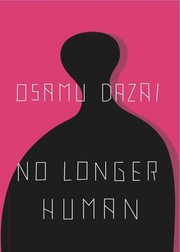
No Longer Human
A shy boy becomes a clowning teen and a lost adult in postwar Japan, told in notebooks that read close to confession.
2,320-word summary · 10 min read

The Original Folk and Fairy Tales of the Brothers Grimm
Zipes translates all 156 tales from the Grimms' 1812 and 1815 first edition, rougher and stranger than the famous 1857 versions.
2,331-word summary · 10 min read
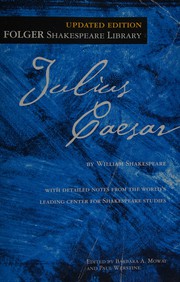
Julius Caesar
Brutus joins Cassius to kill Caesar for Rome, then loses Rome to Antony words and Octavius swords.
1,916-word summary · 9 min read
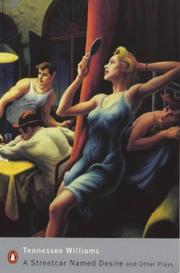
A Streetcar Named Desire and Other Plays
Blanche DuBois moves in with Stella and Stanley in New Orleans while her past closes in, plus two more Williams plays.
2,902-word summary · 13 min read
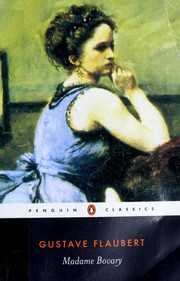
Madame Bovary
Emma Rouault marries Charles Bovary for romance, then seeks lovers and luxury until debts ruin them both.
2,400-word summary · 11 min read
A Farewell to Arms
Frederic loves Catherine in Italy until desertion leads to Switzerland and stillbirth.
2,502-word summary · 11 min read
Othello
Iago's lies drive the Moor of Venice to murder his innocent wife in Shakespeare's tragedy of jealousy.
2,409-word summary · 11 min read
East of Eden
In California's Salinas Valley, the Trasks and Hamiltons replay Cain and Abel through love, betrayal, and the hard choice to rise above the past across two…
2,734-word summary · 12 min read
The Color Purple
Celie writes letters to God and to her sister, surviving abuse in the rural South to find her own voice.
2,053-word summary · 9 min read

Flowers for Algernon
Charlie Gordon's experimental surgery makes him a genius, then the mouse Algernon starts to slip.
2,074-word summary · 9 min read
Macbeth
Macbeth hears witches hail him king and murders Duncan with Lady Macbeth pushing him on.
4,056-word summary · 18 min read
Lolita
Humbert Humbert confesses his obsession with Dolores Haze and the road trip that ruins them.
2,706-word summary · 12 min read
Hamlet
Hamlet sees his father's ghost in Elsinore and pretends madness to test Claudius and Gertrude while Denmark slides toward duel and death.
2,996-word summary · 13 min read

Anna Karenina
Anna leaves Karenin for Vronsky while Levin seeks faith and farming outside Moscow.
3,942-word summary · 18 min read
Wuthering Heights
Emily Bronte's Wuthering Heights retold: Heathcliff and Cathy on the moors, two houses, two generations.
2,056-word summary · 9 min read
Romeo and Juliet
Shakespeare's Romeo and Juliet retold: Verona feud, balcony, Friar's plan, and why the last minutes collapse.
2,531-word summary · 11 min read
Of Mice and Men
Steinbeck's Of Mice and Men retold: George and Lennie on a California ranch, the dream farm, and why mercy ends it.
2,237-word summary · 10 min read
Dracula
Count Dracula sails for England in letters and diaries, and Van Helsing leads the hunt to stop him.
2,860-word summary · 13 min read
The Great Gatsby
The Great Gatsby through Nick Carraway: Gatsby's parties, the green light, Daisy and Tom, and why Fitzgerald's 1925 novel ends as a judgment on the American…
2,501-word summary · 11 min read

The Long Winter
Dakota Territory, 1880: seven months of blizzards cut a town off from the railroad, and a family survives on twisted hay, ground wheat, and a dangerous wheat…
2,210-word summary · 10 min read

The Crying of Lot 49
A California woman named executor of her ex-lover's estate follows a muted post horn into a possible centuries-old postal conspiracy, and Pynchon refuses to…
2,003-word summary · 9 min read