
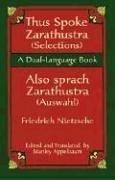
Thus Spoke Zarathustra
1,983-word summary 9 min read 256 pages in the book
- First published
- 1883
- Publisher
- Dover Publications
- Pages
- 256
- ISBN
- 9780486437118
- Original title
- Also sprach Zarathustra
Reading options
What's inside (8 sections)
I came to this book late, after hearing it quoted for years without ever reading it straight through. People throw around lines about God being dead or the overman as if they are slogans. The actual book, first published in German between 1883 and 1885 as Also sprach Zarathustra, is stranger and funnier and sadder than the slogans suggest. I read it in the Dover dual language edition from 2004, which runs 256 pages, but the year that matters is 1883, when the first part appeared from Ernst Schmeitzner in Chemnitz.
Zarathustra is thirty when he leaves his home by a lake and goes up a mountain to live alone for ten years. He has an eagle and a serpent for company. At forty he decides he has too much wisdom stored up and needs to go back down to people, like a cup that wants to overflow. That image, of giving rather than taking, runs through everything that follows.
Going down to the marketplace
The opening scenes are my favorite because they fail. Zarathustra walks into a town where a crowd has gathered to see a tightrope walker. He tries to preach to them about the overman, about man being a rope stretched between animal and something greater. The crowd does not want philosophy. They want the show. They laugh. A buffoon jumps out and leaps over the tightrope walker, who falls and dies.
Zarathustra stays with the dying man, carries his body, buries him. He learns his first lesson: he does not need followers in a marketplace. He needs companions who will question him. From then on he speaks mostly to disciples who come and go, to animals, to himself, and later to a odd group called the higher men. The book is not a novel with a tight plot. It is a series of speeches, songs, parables, and arguments, often interrupted by Zarathustra laughing at himself or getting tired.
The famous line about God comes early. Zarathustra meets an old saint in the forest who praises God all day, and afterward wonders aloud whether it is possible the old man has not heard that God is dead. He does not mean it as a celebration. He means that the old source of values, the Christian moral order that told Europe what was good and bad, no longer holds for thinking people. If that is true, he asks, what do we put in its place? That question drives the rest.
The overman and the last man
Two figures face each other in these speeches. The overman, sometimes translated as superman or overhuman, is not a comic book hero. Nietzsche means a person who creates values rather than inheriting them, who can affirm life including pain, who does not need revenge against existence. Zarathustra says man is something to be overcome. Our ape past should embarrass us less than our unwillingness to grow.
Opposite him stands the last man. The last men blink and ask what is love, what is creation, what is longing. They have made everything small and comfortable. No shepherd and one herd, everyone wants the same, everyone is the same. They have their little pleasures for the day and their little pleasures for the night, and they call it happiness. When I first read that passage I laughed, then felt uncomfortable, because parts of my own routine look like that.
Nietzsche is not arguing for cruelty here, whatever later readers tried to make of him. He is arguing against settling. The overman is a direction, not a rank. Zarathustra himself never claims to be one. He says he is a forerunner, a bridge, someone who loves those who do not know how to live except by going under, meaning by risking themselves for something beyond comfort.
I struggled with this section because it is easy to read as arrogance. Who gets to decide what counts as overcoming? The book does not give a clean answer. Zarathustra praises the body, dance, laughter, friendship, children, work done well. He criticizes priests, scholars who only dissect, merchants of virtue, the state which he calls the coldest of monsters. Some of those criticisms land. Some feel like a brilliant man in a bad mood. Both can be true.
Will, recurrence, and the animals
Two other ideas arrive later and are harder to hold. The will to power is often misunderstood as wanting power over others. In Zarathustra it is closer to the drive in all living things to expand, shape, interpret, create. Even obedience contains it, Nietzsche says, because in obeying you give up something to belong to a larger form. Even the scholar who claims to only want truth is still willing his version of the world to count.
Then there is eternal recurrence. A dwarf or spirit asks Zarathustra what he would do if every moment of his life returned again and again, infinitely, with nothing new. Would he curse it or bless it? Zarathustra first chokes on the thought. Later he sings about it. The test is simple to state and hard to live: act so that you could want this exact day back forever. I found that more useful than any rule about good and evil. It made me ask about ordinary afternoons, not just big choices.
His animals, the eagle proud and the serpent wise, keep popping up to praise him, and Zarathustra keeps telling them they are making his speeches into songs too soon. That humor saved the book for me. He is not a guru with a finished system. He argues with his own disciples, tells them to lose him and find themselves, warns them not to believe him too easily. Few philosophical books tell you to throw the book away.
The higher men and the long night
Part Four, written in 1885 and first shared privately with friends, brings a strange carnival. Sorcerers, kings, a pope out of work, a voluntary beggar, a shadow, a leech collector, an ugliest man who killed God by pity, all gather in Zarathustra's cave. They are called higher men, but they are mostly broken in comic ways. They eat, drink, argue, listen to Zarathustra, and hold what scholars call the ass festival, where they worship a donkey and laugh until they cry.
I did not expect to like this part, but it moved me. After all the hard speeches about overcoming, Nietzsche gives us tired men who want comfort and applause. Zarathustra likes them, feeds them, scolds them, and then leaves them sleeping while he steps out at dawn. He has pity, but he does not want pity to be the end. The ugliest man's story, about how pity for man killed God because no one could stand being watched in suffering, is one of the darkest passages. It made me think about charity that controls people rather than freeing them.
The night songs and dance songs break up the prose. Some are beautiful. Some go on too long. Nietzsche was a composer as well as a writer, and you can feel him trying to make philosophy sing. When it works, as in the song about joy wanting eternity, it really works. When it does not, you get pages of bees and honey and cups overflowing again. I started marking the repetitions with a pencil and gave up after twenty marks.
That is a fair criticism. The book repeats. Overman, will, recurrence, bridge, going under, great noon, great contempt, all return many times with small changes. Part of that is deliberate, like musical themes. Part of it is a man writing alone in mountains, ill, with few readers, talking himself into courage. Knowing he would collapse in 1889 and spend his last years silent made the repetitions feel more painful to me, not less interesting.
How to read it without turning it into slogans
If you have never read Nietzsche, do not start by hunting for positions. Read it as a story about a teacher who keeps failing in public and keeps going. Notice when Zarathustra is tender and when he is cruel. He is tender toward children, toward friends who leave, toward the tightrope walker who dies, toward his animals. He is cruel toward complacency, toward moralists who love to punish, toward himself when he wants rest.
The translation matters. I used the Stanley Appelbaum Dover edition, which prints German and English together. Other readers swear by the Hollingdale or Kaufmann versions. The titles shift too. Thus Spoke Zarathustra and Thus Spake Zarathustra are the same book. Do not let that confuse you into thinking you have two different works, as I briefly did in a used bookstore.
A few practical notes from my reading. Short sessions help. Twenty pages at a time, then a walk. The speeches blur if you push through. Keep a list of characters, because the higher men arrive fast. Allow yourself to skip a song and come back. And do not treat the overman as permission to look down on people. Zarathustra loves the very townspeople who laugh at him enough to bury their dead. That matters more than the grand phrases.
For who this is for: if you like philosophy that reads like poetry, or poetry that argues, you will find pages you will keep for years. If you want a clear system or a guide to living, you will be annoyed, and honestly you should be. The book does not want disciples. It wants readers who will argue back, close it, live a week, and then argue more. I closed it admiring the courage and wary of the pride, which seems like exactly the split Nietzsche wanted.
A note on history and how I kept my footing
It helped me to remember the conditions. Nietzsche wrote the four parts between 1883 and 1885 while moving between Sils Maria, Nice, and other cheap rooms, often ill with headaches and eye trouble, with few sales. The first three parts were printed together in 1887. The fourth was shared privately in 1885 and only published for the public in 1892 after his collapse. He was not writing from a chair of influence. He was writing into silence and trying to make that silence answer.
That does not excuse the passages that sound harsh about women or about crowds. There are lines in the chapter on old and young women that I found mean spirited and easy to misuse. Scholars argue about context and irony, and some of that debate is worth reading. But on a first pass I found it better to mark those pages and keep going rather than stop the whole book for them. The core about creating values, affirming the body, and refusing revenge still stands apart from the worst jokes.
I also kept a small timeline on the back flyleaf. 1883 Part One, 1883 to 1884 Part Two, 1884 Part Three, 1885 Part Four written, 1887 first three together, 1892 all four together. Seeing those dates stopped me from treating the book as timeless wisdom dropped from nowhere. It is a sick man in his late thirties trying to get well by writing, and sometimes the effort shows in a good way, as energy, and sometimes in a hard way, as pressing too hard on a phrase until it thins.
One habit that worked was reading a speech aloud. Nietzsche punctuates for breath. The short bursts, the questions, the sudden shouts, they make more sense heard than skimmed. I read the tightrope chapter to my partner in the kitchen and we both laughed at the buffoon and then went quiet at the burial. On the page alone I had missed how tender that burial is. Zarathustra pays for the burial, sits with the body, takes the risk of being blamed. For a book accused of coldness, it opens with care for a stranger.
FAQ
What is the overman in Thus Spoke Zarathustra?
The overman is a direction, not a hero type: a person who creates values and affirms life including pain. Zarathustra calls himself a bridge to it, not an example of it.
What is eternal recurrence?
It asks you to live so you could want this exact life back forever, without change. Zarathustra first chokes on the idea and later sings about joy wanting eternity.
When was Thus Spoke Zarathustra first published?
Part One appeared in 1883 from Ernst Schmeitzner in Chemnitz. Later parts followed in 1883 to 1885, with all four together in 1892. The Dover edition cited here is from 2004.
Similar books
Beyond Good and Evil: Prelude to a Philosophy of the Future
A guide to Friedrich Nietzsche's Beyond Good and Evil: its attack on moral prejudice, the will to power, master and slave morality, and the philosopher of the…
2,597-word summary · 12 min read
A Canticle for Leibowitz
After nuclear war, monks save books across centuries while the world rebuilds and falls again.
2,381-word summary · 11 min read
Faust, Part One
A restless scholar bets his soul against one perfect moment, then ruins an innocent girl in Goethe's 1808 verse tragedy.
2,568-word summary · 11 min read
Paradise Lost
Blind Milton's epic of Satan's revolt, Adam and Eve's fall, and their hard walk out of Eden.
2,963-word summary · 13 min read
The Republic
Socrates debates justice and sketches a city ruled by philosophers, with the cave and the soul.
2,167-word summary · 10 min read
Stranger in a Strange Land
A Mars-raised man lands on Earth, learns religion and love, and founds a church that shocks everyone.
2,725-word summary · 12 min read
Rosencrantz and Guildenstern Are Dead
Stoppard's 1966 play retells Hamlet from the wings, where two minor courtiers wait, joke, and walk toward a death they cannot see.
2,021-word summary · 9 min read

Fathers and Sons
Arkady brings the nihilist Bazarov home to his father's estate, and a generational argument turns into love, a duel, and an early death.
2,192-word summary · 10 min read

The Chosen
A shattered pair of glasses in a 1944 Brooklyn softball game starts a friendship between a Hasidic boy and his Orthodox neighbor, and their fathers pull them…
2,443-word summary · 11 min read
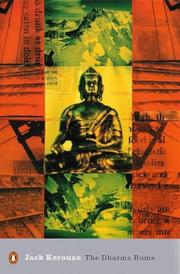
The Dharma Bums
Ray Smith rides freight trains, climbs Matterhorn Peak and argues about Zen with the poet Japhy Ryder in Kerouac's 1958 road novel.
2,729-word summary · 12 min read
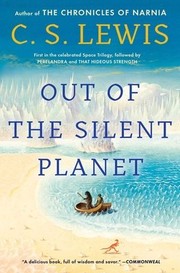
Out of the Silent Planet
A Cambridge philologist is kidnapped and taken to Mars, where the natives are civilized and the humans are the dangerous invaders.
2,612-word summary · 12 min read
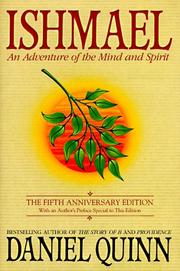
Ishmael: An Adventure of the Mind and Spirit
A gorilla named Ishmael teaches a disillusioned man that civilization is a story, and that humans may compete but must not wage war on other species.
2,015-word summary · 9 min read
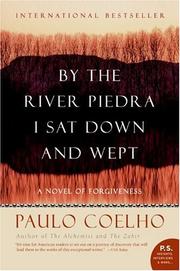
By the River Piedra I Sat Down and Wept
Pilar, 29, meets her childhood friend again in Madrid and finds a rumored miracle worker. One winter week through the Pyrenees to the river Piedra, and the…
2,845-word summary · 13 min read
The Fire Next Time
Baldwin writes his nephew and faith on race in America.
2,463-word summary · 11 min read
Leaves of Grass
Free verse songs of self, America, bodies and democracy.
2,240-word summary · 10 min read
God Is Not Great
Hitchens argues religion poisons life across history and texts.
2,545-word summary · 11 min read
The Fall
A fallen Paris lawyer confesses in an Amsterdam bar, tracing guilt from Paris success to a bridge he failed to face.
2,220-word summary · 10 min read
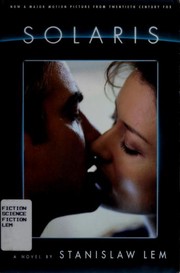
Solaris
Kelvin reaches a silent station above Solaris and finds grief made solid when the ocean returns his dead wife Rheya, testing memory, science, and the limits of…
2,548-word summary · 11 min read

One Day in the Life of Ivan Denisovich
One freezing day with prisoner Shch-854 in a Soviet camp: roll call, bricklaying in the cold, bread rations, and small wins that let Shukhov call the day…
2,668-word summary · 12 min read
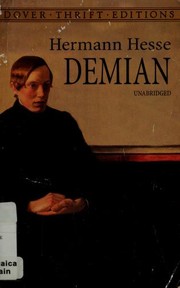
Demian
Hesse's 1919 German classic of Emil Sinclair, from Kromer blackmail to Demian, Abraxas, Beatrice and Frau Eva, ending in war: a short, strange guide to growing…
2,510-word summary · 11 min read
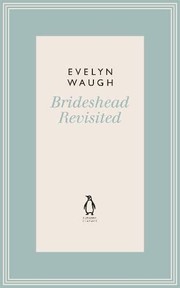
Brideshead Revisited
At Oxford Charles Ryder befriends Sebastian Flyte and falls into the Catholic Marchmain family, from Brideshead summers to Julia's affair and Lord Marchmain's…
2,353-word summary · 10 min read

The Island of Doctor Moreau
Shipwrecked Prendick finds Doctor Moreau shaping beasts into men by pain on lost island.
2,137-word summary · 9 min read
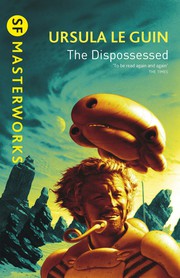
The Dispossessed: An Ambiguous Utopia
Physicist Shevek leaves anarchist Anarres for capitalist Urras to share time theory, finding walls both places.
2,288-word summary · 10 min read
Small Gods
God Om trapped as a tortoise must convince novice Brutha to save Omnia from its own church.
2,063-word summary · 9 min read
Nausea
Historian Roquentin in Bouville catalogs dread as objects turn strange in Sartre diary novel.
2,134-word summary · 9 min read
God Emperor of Dune
Worm god Leto II rules 3500 years to force humanity free through his Golden Path.
2,006-word summary · 9 min read
Aesop's Fables
Short animal tales of hares, foxes, ants, and wolves that still sting: old fables in plain modern English.
2,916-word summary · 13 min read
The Sorrows of Young Werther
A young artist writes letters about his love for Lotte, promised to another, until feeling turns fatal in Goethe's 1774 classic.
2,934-word summary · 13 min read
Contact
A radio astronomer catches prime numbers from Vega, helps build a strange machine, and returns with no proof but static.
2,763-word summary · 12 min read
Tao Te Ching: Annotated & Explained
Eighty one brief verses on the Way and effortless action, with Lin's translation and facing notes.
2,140-word summary · 10 min read