
Nausea
2,134-word summary 9 min read 192 pages in the book
- First published
- 1938
- Publisher
- New Directions
- Pages
- 192
- ISBN
- 9780811220309
- Original title
- La Nausée
Reading options
What's inside (8 sections)
I read Nausea slowly, a few pages each morning with coffee going cold, because it demands that pace. Jean-Paul Sartre first published it in French in 1938 as La Nausée with Gallimard. The New Directions English edition runs 192 pages with ISBN 9780811220309. It is a standalone philosophical novel, Sartre first novel. It follows Antoine Roquentin, a historian in the port town of Bouville, whose diary records dread as ordinary objects turn strange. Do not expect plot twists. Expect mood that sticks.
Roquentin is thirty, lives on a modest income, travels little now, researches a dull aristocrat named Rollebon. He lives alone in a hotel, eats in cafes, visits the library, sleeps badly. One day a beer glass feels wrong. Then a doorknob. Then a chestnut root in a park. He calls it nausea, a sweetish sickness that rises when things show themselves as simply existing, without reason, too much, too close. He writes to track it. The diary is the book.
Bouville, mud town, is convincing and gray. Rain, tram bells, cafe mirrors, Sunday crowds. Roquentin walks the same streets and finds them foreign. He watches people in the park and feels separate, as if glass stands between. He visits the museum, the library, the railway station. Each place offers a small social ritual he cannot join. He tries. He fails kindly. His loneliness is not romantic. It is tired.
Anny and the Self Taught Man
Two people orbit him. Anny, his former lover, an actress who lives for perfect moments, writes to meet. She arrives with theories about privileged instants when life feels just right. Roquentin hopes she will save him. Their hotel afternoons are tender and doomed. Anny wants life to be like art. Roquentin now sees art as lie that hides excess. They make love and talk past each other. She leaves for another man, not cruelly, just following her script. He lets her go because holding would require believing in scripts again.
The Self Taught Man, Ogier P., a bailiff who reads the library alphabetically, befriends Roquentin with earnest humanism. He loves people in general, prisoners he teaches, youth he admires. Roquentin likes him and dreads his optimism. Their debates in the library are the philosophical core made human. The Self Taught Man argues life has meaning through kindness, progress, culture. Roquentin answers that existence comes before meaning, and meaning we make is fragile. Neither wins. The Self Taught Man later faces public shame in a scene that is painful to read. Roquentin watches and does nothing, which indicts them both.
Rollebon research frames the diary. Roquentin tries to write a life of a marquis who may have been a mediocrity. He finds letters, portraits, gossip. The more he learns, the less Rollebon holds together. Was he brave, cruel, banal. Roquentin realizes biography invents coherence where there was mess. He abandons the book. That abandonment frees him and terrifies him. If Rollebon has no story, neither does he, unless he makes one.
The diary form suits this. Dated entries, some short, some long. Present tense that slips into memory. Roquentin addresses no one, which makes honesty possible. He records nausea attacks with time, place, trigger. Monday, chestnut tree. Tuesday, beer glass. He theorizes, retracts, tries again. Sartre lets him be wrong in interesting ways. Readers watch a mind work, not a hero act.
Chestnut root
The central scene arrives in a park. Roquentin sits before a chestnut tree root and sees it. Not thinks. Sees. The root exists, black, knotty, too much, without reason to be there or to be that shape. Words fail. Thingness remains. Existence reveals itself as gratuitous, de trop. He feels nausea as truth, not illness. Everything, himself included, is superfluous. The world does not need us. That vision lasts seconds and changes all pages after.
Sartre writes this without jargon, which surprised me. No being in itself lectures. Just a man looking at a root until language peels. The prose, in Lloyd Alexander translation used in many editions and updated in later ones, is clear and sensory. Bark, mud, spit, beer foam. Philosophy arrives through skin. Later, Roquentin tries to explain to Anny and fails. Words return him to stories. The root stays outside stories. That gap is the point.
Music offers brief rescue. A jazz song, Some of These Days, played in a cafe, seems to hold together. Notes follow notes by necessity, unlike life. Roquentin listens repeatedly. He thinks art might justify existence by making necessary forms from contingency. He imagines writing a novel that would make readers ashamed to exist without reading it, then smiles at his vanity. The ending holds that fragile hope without promising cure. He will leave Bouville. He may write. Nausea may return. That conditional future feels honest after dread.
The town itself judges him. Cafe owners find him odd. Waiters watch. Children stare. He is not persecuted. He is irrelevant, which hurts more. Sartre captures how depression isolates without villains. People are kind enough. Coffee arrives. No one asks why hands shake. Roquentin does not tell. The book respects that silence while showing its cost.
Why it still matters
Nausea is the key existentialist novel because it dramatizes ideas other books summarize. Existence precedes essence means Roquentin must make himself without script. Bad faith means Anny perfect moments and Self Taught Man humanism are evasions, comforting stories that hide freedom. Freedom means nausea, because if nothing must be, everything could be otherwise, which is dizzying. Sartre does not preach. He shows a man feeling these truths in his stomach before his head.
Reading now, after wars and pandemics Sartre did not see, the book still lands. Anyone who sat in a familiar room during lockdown and found it strange knows Roquentin moment. Anyone who returned to an office and felt desks too there knows it. The book gives language for that excess. It does not fix. It names. Naming helps some mornings.
Fair criticism is needed. At 192 pages, the book drags for plot readers. Nothing happens for long stretches. Roquentin walks, sits, writes. Anny visit excites then fades. The Self Taught Man shame scene disturbs without enough care for victims. Women exist as muses or tests, Anny, the cafe keeper, a lover in memory. Their inner lives stay thin. Readers wanting story should skip. Readers wanting company in dread will stay.
Translation matters. Early Lloyd Alexander version is brisk. Later editions revise. French La Nausée carries puns nausea and nausee, bile and disgust, that English loses. If you read French, read Gallimard 1938 text, 264 pages. If English, New Directions editions are standard. The 2013 edition with ISBN 9780811220309 is clean and portable. Pair with Beauvoir memoirs for context on Sartre life, or Camus Stranger for a different absurd response.
The philosophy can be misread as despair manual. It is not. Sartre refused the Nobel in 1964 partly because he distrusted institutions that turn thought into honor. Nausea argues we are free and therefore responsible, which is heavy but not hopeless. Roquentin decides to write, to make something that might matter. That decision, small and conditional, is the book ethics. Make, do not just be.
How I read it
I kept a pencil and marked nausea attacks. Glass, root, suspenders, faces in tram. Patterns emerged. Attacks come when Roquentin is idle and looks too long. Work, talk, music delay them. That practical note helped me. When dread rose in my own gray week, I walked, washed dishes, called a friend. Not to cure. To change relation. Sartre would approve of action over rumination, even if he would mock my hope that dishes save.
Ages adult and college fit best. There is depression, sexual content, suicide talk, antisemitism discussed to condemn but still present, colonial attitudes in Rollebon papers. No graphic horror, but emotional weight is heavy. Teens studying existentialism can try with teacher guidance. Others should wait until life has shown them a strange root.
I finished on a bench near trees, which felt staged. Wind moved leaves. A root showed. I felt a flicker, not full nausea, just awareness that bark does not need me. It was oddly calming. Things go on. I can go on and make a sentence that holds. That is what Roquentin keeps. A maybe book. A maybe song. Enough to leave Bouville. Enough to live as a time being, to borrow Ozeki phrase, without demanding reason from chestnuts.
Cafe, library, and Sundays
Bouville daily life deserves closer look because Sartre builds dread from routine. The cafe where Roquentin eats has mirrors that multiply him. He watches himself lift a glass and feels the gesture foreign. The waiter knows his order and brings it without asking, which should comfort and instead proves he is predictable. He tips correctly and leaves quickly. Those small transactions, repeated, show how social scripts hide excess until they crack. When nausea hits mid sip, beer tastes too alive. He puts glass down and pays to escape.
The library is second home and second trial. The Self Taught Man reads A to Z, a project both admirable and absurd. Roquentin researches Rollebon among dusty files. The reading room smells of wax and paper. Quiet rules. A schoolboy whispers. An old man sleeps. Roquentin feels safe among books because books order mess. Then he notices the books themselves are too many, too heavy, piled by chance. The library, temple of meaning, reveals contingency. He leaves with notes he no longer trusts.
Sundays are worst. Families promenade. Brass bands play. Roquentin walks and watches contentment he cannot share. He describes faces, clothes, dogs with anthropological care. No one is cruel. Everyone belongs to Sunday. He does not. That exclusion is not persecution. It is ontological, to use a word he would hate in the moment. He is extra. The town does not need him to complete its picture. Recognizing that without self pity is the book ache and gift.
Anny visit breaks routine and proves routine was shelter. She brings hotel rooms with faded wallpaper, meals eaten in bed, talk about perfect moments. They try to recreate old joy. Bodies remember. Minds do not. After she leaves, Roquentin returns to cafe and finds it emptier. Absence teaches what presence hid. He is alone more clearly. That clarity hurts and helps. He stops pretending research will save. He considers leaving, not as escape but as acknowledgment that Bouville taught what it could.
The final pages in the cafe with the jazz song bring all three spaces together. He listens where he once drank to forget. He writes where he once read to avoid. He plans Sunday departure while others plan Sunday lunch. No one notices his decision. That lack of notice feels right. Freedom rarely applauded. He pays, nods to waiter, steps out. Nausea may follow. He walks anyway.
Rollebon and making stories
Rollebon research failure needs emphasis because it mirrors Roquentin self. The Marquis was likely a minor schemer Sartre invented to stand for biographers hope that archives yield lives. Roquentin finds a portrait that flatters, letters that contradict, a death that means little. He tries to force a thesis, Rollebon was a patriot, a villain, a victim. Each thesis fits some papers and ignores others. The Self Taught Man suggests picking the kinder version. Anny suggests picking the dramatic one. Roquentin picks none. He stops. That stopping is philosophical action. Refusing to lie about another man prepares him to stop lying about himself.
This has practical bite for writers. How often we shape messy years into arcs, bad year, growth year, lost year. Roquentin shows the shaping as choice, not discovery. His diary, unlike biography, keeps mess. Entries contradict. Moods swing. He leaves gaps. That honesty makes the diary truer than the history he planned, though less useful for publishers. Sartre suggests art that admits contingency earns the right to console. The jazz song consoles because it does not pretend to be life. It is form made from contingency, held for three minutes, then gone. Roquentin wants to write that way. So should we, the book hints, in journals if not novels.
Anny perfect moments theory gets its due here too. She chases instants when posture, light, words align. Roquentin once loved that chase. After the root, he sees it as editing life while living it. He tells her so badly and she hears contempt. She leaves. He regrets tone, not point. Later he listens to jazz and understands Anny better. She wanted art in life. He wants art after life, made from it but separate. Both want rescue. Neither finds it in the other. That mutual failure, described without blame, is the saddest and kindest part. People cannot save each other from excess. They can share songs while it lasts.
FAQ
When was Nausea published and how long is it?
First published in French in 1938 as La Nausee by Gallimard. The New Directions edition runs 192 pages with ISBN 9780811220309.
Is Nausea part of a series?
No. It is a standalone philosophical novel, Sartre first novel.
Who should read Nausea?
Adults and college readers fit best. There is depression, sexual content, and dense philosophy.
Similar books

Fathers and Sons
Arkady brings the nihilist Bazarov home to his father's estate, and a generational argument turns into love, a duel, and an early death.
2,192-word summary · 10 min read
The Dharma Bums
Ray Smith rides freight trains, climbs Matterhorn Peak and argues about Zen with the poet Japhy Ryder in Kerouac's 1958 road novel.
2,729-word summary · 12 min read
The Fall
A fallen Paris lawyer confesses in an Amsterdam bar, tracing guilt from Paris success to a bridge he failed to face.
2,220-word summary · 10 min read
Steppenwolf
Harry Haller, half man and half wolf in his own mind, dances, loves, and enters a magic theatre in Hesse's strange 1927 novel.
3,181-word summary · 14 min read
Sophie's World
Sophie gets philosophy lessons by mail, then finds she is fiction in a father birthday book for Hilde.
2,013-word summary · 9 min read
The Plague
Oran is sealed after plague breaks out, and Dr Rieux treats the dying while neighbors face exile, fear, and small acts of care.
3,177-word summary · 14 min read
The Karamazov Brothers
Dmitri, Ivan, and Alyosha Karamazov face their father, murder, faith, and doubt in Dostoevsky's final novel.
2,512-word summary · 11 min read
The Stranger
Meursault buries his mother, kills a man on an Algiers beach, and faces trial for seeming to feel nothing.
2,417-word summary · 11 min read
The Picture of Dorian Gray
Dorian Gray retold: Basil paints, Henry talks, wish holds youth while canvas bears years.
2,061-word summary · 9 min read

The Crying of Lot 49
A California woman named executor of her ex-lover's estate follows a muted post horn into a possible centuries-old postal conspiracy, and Pynchon refuses to…
2,003-word summary · 9 min read
Silas Marner
A falsely accused weaver hoards gold in Raveloe until a stolen hoard and an abandoned child remake his narrow life.
2,699-word summary · 12 min read

Revolutionary Road
A Connecticut couple who believe they are too good for the suburbs plan to move to Paris, and the plan slowly exposes everything they cannot say to each other.
2,085-word summary · 9 min read
Rosencrantz and Guildenstern Are Dead
Stoppard's 1966 play retells Hamlet from the wings, where two minor courtiers wait, joke, and walk toward a death they cannot see.
2,021-word summary · 9 min read

Howards End
Forster's 1910 novel follows two families, a house in Hertfordshire, and a burned note, asking whether money and feeling can ever be connected.
2,187-word summary · 10 min read

Sophie's Choice
A young Southern writer in 1947 Brooklyn befriends a brilliant, unstable couple and slowly learns the story of the Polish Catholic woman at the center of their…
2,798-word summary · 12 min read
Naked Lunch
Burroughs's banned 1959 collage novel follows Bill Lee through addiction, Tangier, and the nightmare bureaucracy of the Interzone.
2,082-word summary · 9 min read

The Chosen
A shattered pair of glasses in a 1944 Brooklyn softball game starts a friendship between a Hasidic boy and his Orthodox neighbor, and their fathers pull them…
2,443-word summary · 11 min read

Ivanhoe
A disinherited Saxon knight, a great tournament, a besieged castle and a trial by combat. Scott's most famous novel, set in England in 1194.
2,834-word summary · 13 min read

Wide Sargasso Sea
Jean Rhys gives the first Mrs. Rochester a Caribbean childhood, a marriage built on money and suspicion, and a voice that Charlotte Bronte left in the attic.
2,021-word summary · 9 min read
The Gambler
Dostoevsky's roulette novella: Alexei loses Polina, wins a fortune, loses everything, and promises himself one more bet tomorrow.
2,022-word summary · 9 min read
Out of the Silent Planet
A Cambridge philologist is kidnapped and taken to Mars, where the natives are civilized and the humans are the dangerous invaders.
2,612-word summary · 12 min read
Orlando
A young Elizabethan nobleman becomes a woman and lives for centuries, moving through English history while writing a single poem about an oak tree.
2,030-word summary · 9 min read
Mother Night
Howard W. Campbell Jr., a Nazi propagandist and American spy, tells the story of his double life from an Israeli prison cell while waiting to be tried for war…
1,988-word summary · 9 min read
The House of Mirth
Lily Bart, beautiful and penniless at twenty-nine, navigates New York's marriage market until a Dorset yacht scandal strips her of the only currency she has.
2,468-word summary · 11 min read
Beyond Good and Evil: Prelude to a Philosophy of the Future
A guide to Friedrich Nietzsche's Beyond Good and Evil: its attack on moral prejudice, the will to power, master and slave morality, and the philosopher of the…
2,597-word summary · 12 min read
If on a Winter's Night a Traveler
You, the Reader, chase a defective novel through bookshops and translators while ten other novels keep interrupting. Calvino's famous puzzle about the act of…
2,173-word summary · 10 min read
By the River Piedra I Sat Down and Wept
Pilar, 29, meets her childhood friend again in Madrid and finds a rumored miracle worker. One winter week through the Pyrenees to the river Piedra, and the…
2,845-word summary · 13 min read
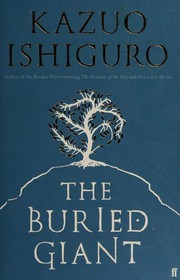
The Buried Giant
An old couple crosses a misty post Arthur Britain searching for a son.
2,593-word summary · 12 min read
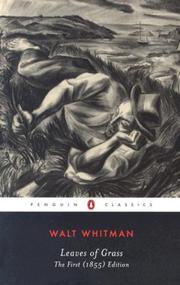
Leaves of Grass
Free verse songs of self, America, bodies and democracy.
2,240-word summary · 10 min read