
The Stranger
2,417-word summary 11 min read 123 pages in the book
- First published
- 1942
- Publisher
- Gallimard
- Pages
- 123
- ISBN
- 9780679720201
- Original title
- L'Étranger
Reading options
What's inside (7 sections)
I read this book late on a dare from a college roommate who said it would take one evening. He was right about the time and wrong about how long it would sit with me. It is only 123 pages in the standard English text, first published in French as L'Étranger in 1942 by Gallimard, and it reads even shorter because the sentences are plain and short. I finished it in a night and then spent a week annoyed at it, then a month thinking about it. That seems to be the normal path.
The story is told by Meursault, a young French clerk living in Algiers. He speaks in a flat voice about heat and food and sleep and work. He notices bodies and light more than feelings. He does not explain himself much. You watch him act and you wait for the normal wave of regret or joy to arrive. It never quite arrives in the form you expect.
Mother died today. Or maybe yesterday, I don't know.
That opening, in various translations, sets the whole tone. Meursault gets a telegram that his mother has died in an old age home at Marengo. He asks his boss for two days leave. His boss is annoyed but agrees. Meursault takes a bus out in the heat, dozes, arrives to a plain building with white walls and a warden who talks in careful phrases.
The funeral takes up the first long stretch. Meursault sits through the night beside the coffin. He drinks coffee. He smokes, after asking if he may. He watches the old friends of his mother, their strange small movements. The next day he walks behind the coffin under a hard sun to the burial ground. The light pounds down. He thinks about the heat more than about loss. When people later ask if he cried, the honest answer is no. He felt tired. He felt the glare. He went home and slept a long time.
That flatness alarms other people more than it alarms him. I felt that alarm as a reader too. I kept waiting for a private breakdown. Camus does not give you one.
A funeral without tears
The home at Marengo matters because it shows how Meursault lives at a distance. He placed his mother there after they ran out of money and patience living together. He visited sometimes. He did not visit often. The warden says she complained a little at first and then settled, made friends, even had a sort of fiance among the residents, an old man named Thomas Perez who walked with her holding hands. Meursault hears this without pride or shame. It is simply what happened.
At the viewing he refuses to look long at the body when the caretaker offers to open the coffin. He says it does not matter much. People around him hear coldness in that. He means something simpler. Seeing or not seeing will not change that she is gone. He sits, he watches, he notes the nurse with a bandaged hand, the old people dozing, Perez weeping quietly.
The burial walk is written through sense detail. Sweat. Dust. The shine off metal. The slow van. Perez nearly faints in the heat. Meursault thinks the day was so hot he could barely gather his thoughts. Back in Algiers he goes to swim and sleeps for almost twelve hours. That choice, to swim the day after burying his mother, will return in court as proof that he has no soul. At the time it reads as a tired young man cooling his body.
I found this section both strong and trying. Strong because the physical writing is exact. You feel the Algerian sun as a weight. Trying because Meursault offers so little inner life that you start to supply it yourself, and then you wonder if you are misreading him.
Marie, Raymond, and ordinary days in Algiers
The next part follows Meursault through ordinary pleasures. He meets Marie Cardona, a former typist from his office, at the beach. She is lively and warm. They swim, they laugh, they go to a comedy film that night. She asks about his mother. He says she died. She pulls back a little, then stays. They start sleeping together. She asks if he loves her. He says it does not mean much but he supposes not really, or that it is all the same. She laughs as if he is joking. He is not joking.
He works at the shipping office, copying papers, content enough. His boss offers him a move to Paris. He refuses without excitement. He says Paris is dirty with pigeons, or that life changes nothing much wherever you live. His boss calls him aimless. Meursault agrees in his own mind. Ambition feels like a story other people tell.
Then Raymond Sintes enters. Raymond lives in the same building, a big man with a reputation as a pimp and a bully. He invites Meursault to eat and drink and asks for help with a letter. Raymond is angry at an Arab woman he was involved with, whom he suspects of cheating and taking his money. He wants to write a letter to lure her back so he can punish and shame her. Meursault writes it without moral fuss. He says it does not matter to him. Raymond is grateful and calls him a true friend.
Meursault also meets Salamano, an old man with a spotted dog he curses and loves, and Masson, a coworker with a small beach hut who invites Meursault and Marie for a Sunday. These small ties form a plain social world. Work, beach, meals, sex, sleep. Marie asks Meursault to marry her. He says if she wants, they will marry. She asks if he loves her. He says no, not really, but marriage means nothing much either way. She looks sad and then accepts his honesty as a strange kind of loyalty.
Bold fact that matters later: Meursault agrees to almost everything without desire or refusal, and people read that ease as menace.
There is a fight on the street when Raymond beats the woman and police come. Meursault agrees to testify that the woman cheated on Raymond. He does it as a favor, with the same shrug he gives everything. Raymond's enemies, including the woman's brother, an Arab man, start watching them. Threats hang in the air but Meursault barely registers them as threats. Heat and wine and days pass.
My view here is mixed. I liked the natural way Camus builds guilt by small steps. No single choice looks evil. Writing a letter. Saying yes to dinner. Walking on a beach with a gun in a pocket. Each yes is tiny. Together they carry Meursault toward a killing he does not plan and does not avoid.
Heat and a gun on the beach
The killing happens on a Sunday at Masson's beach place near Algiers. Masson, Marie, Raymond, and Meursault eat and swim in the morning. After lunch they walk along the shore and meet two Arab men, one of them the brother of the woman Raymond hit. Knives show. Raymond gets cut in a scuffle. They walk back, shaken. Later Meursault, Raymond, and Masson go out again. The air is white with heat. The sand burns.
Meursault ends up alone with Raymond's gun in his pocket. He walks back down to a cool rock and spring where the two Arab men rest in shade. Words are few. One man stares. Light flashes off a knife. Meursault describes the sun pressing on his forehead, sweat in his eyes, the glare like a blade. He says the trigger gave. He fires once. The man falls. Then Meursault fires four more times into the still body, each shot distinct, which he calls knocking on the door of misfortune.
That second burst is what makes the act so hard to excuse as panic. One shot could be fear. Five shots looks like something else, though Meursault never offers hate as a motive. He offers heat and light and a body that acted before thought. I read the scene twice because I wanted a clearer reason. Camus refuses to give one. The refusal is the point and also the frustration.
Meursault is arrested without drama. He answers questions plainly. He does not hire a sharp lawyer with energy. He gets a court appointed man who is dismayed by his client's lack of grief display. In jail Meursault misses cigarettes and women and the sea at first, then adapts. He learns to pass time by remembering small details of his old room, the grain of wood, a crack in the wall. He sleeps a lot. He does not pray.
A trial about character more than killing
The trial takes up the second half of the book and shifts the focus in a way that surprised me the first time. The facts of the beach are fairly clear. Meursault shot a man and the man died. But the prosecutor spends more time on who Meursault is than on what he did. Witnesses are called about Marengo. Did he cry. Did he look at the body. Did he smoke and drink coffee beside the coffin. Did he swim with a girl the next day and go to a comedy film. The warden testifies. Perez testifies, weeping again. Marie is asked about their mornings together right after the funeral.
Meursault listens with growing confusion. He wants to say he is accused of murder, not of bad mourning, but his lawyer tells him to stay quiet and look sorry. He cannot perform sorrow on command. When asked about shooting five times, he says the sun was to blame, or the heat, which sounds absurd in a courtroom and ruins him. The prosecutor calls him a monster, a man with no soul, a danger to society. Even Raymond's history is used to paint Meursault as a pimp's friend, a loafer, a foreigner in moral terms though he is French in Algeria.
The victim stays almost entirely in shadow. He is called the Arab through the whole book, rarely named, never given a family scene to match Perez or Marie. That absence hit me harder on reread. Camus clearly means to show how colonial courts valued a French life over an Arab life, and how easily a trial becomes theater about French feeling rather than about a dead man. Still, the book itself repeats the erasure it criticizes. The dead man gets no inner life, no past, no mourners with names. Modern readers are right to name that as a flaw even if it was part of the point in 1942.
Marie and Masson try to help. Marie says Meursault is honest and kind in his way. Masson says he is a decent man. Raymond says Meursault is innocent of planning. None of it counters the image of the cold son. The magistrate, an older man with a crucifix, waves it at Meursault during questioning and demands belief. Meursault refuses to lie about God to please him. That refusal seals the dislike.
The jury finds him guilty. The sentence is death by guillotine in the public square. Meursault hears it with the same dull attention he gave everything else, then goes back to his cell to wait and think about appeals and about whether escape is possible.
The priest, the night, and a strange peace
The last pages hold the famous scene with the prison chaplain. The priest comes to offer comfort and confession. Meursault does not want him. The priest insists, speaks of sin and grace and a next life. Meursault grows angry, truly angry for the first time in the book. He tells the priest he has no time for God, that all lives lead to the same end, that Marie will forget him, that nothing he did matters more or less than anything else. He grabs the priest's robe. Guards separate them.
Afterward, alone at night, Meursault feels something close to peace. He thinks about his mother at Marengo, how she must have felt free near the end to start again with Perez and small joys. He thinks about the sky full of stars over the prison yard. He decides the world is without higher meaning and that this lack is not cruel but neutral. He hopes many spectators will come to his execution and greet him with cries of hate, because shared anger would make him feel less alone.
That ending divides readers. Some find it brave and clear, a man refusing false comfort. Some find it empty posturing, a killer dressing indifference as wisdom. I sit between. The anger at the priest feels real and earned after a trial that judged his soul instead of his act. The final wish for hate feels both honest and staged, as if Meursault still needs an audience even to die.
Fair criticism needs plain words here. The flat style that makes the book fast can also make it feel thin. Whole stretches pass with meals and swims and office hours and little else. If you need rich inner growth, you will not get it. Meursault does not grow in the normal sense. He clarifies. That clarity may move you or leave you cold depending on your patience.
There is also the colonial frame to face. Algiers in the 1940s was a French colony with deep injustice, and the book shows French characters at leisure while Arab characters stand at the edge, silent or threatening. Camus knew that world well, and later wrote about it with more direct care. Here the focus stays tight on Meursault's mind, which means the wider harm stays in soft focus. You can read the novel as a study of the absurd and still ask why the man who dies has no name in most readings and no voice in the text.
Still, I keep the book on my shelf. It does something few short novels do. It forces you to notice how much of justice is theater about feeling correct feelings at correct times. Meursault is guilty of killing. He is condemned for not crying. That gap is worth sitting with. Read it in one sitting if you can, in heat if possible, and let the plain sentences do their work. Then argue about the last five pages with someone you trust. The book earns that argument even where it fails to earn love for its narrator.
FAQ
What crime does Meursault commit?
He shoots an Arab man on a hot beach after a tense staredown with a knife glinting, then fires four more times into the still body.
Why does his trial focus on his character?
The prosecutor dwells on his flat conduct at his mother's funeral, his swimming and films the next day, and his life with Marie and Raymond.
When was The Stranger first published?
It first appeared in French as L'Étranger in 1942 with Gallimard. The edition cited here is a standard 123 page English text.
Similar books
More like The Stranger →
The Trial
Josef K. is arrested one morning on an unknown charge and pulled into an endless court he can never leave.
2,318-word summary · 10 min read

War and Peace
Pierre, Natasha, and Andrei search for meaning amid the Napoleonic wars.
2,536-word summary · 11 min read

The Prince
Machiavelli advises Lorenzo on rule through fear and love, fortune, cruelty and mercy.
2,204-word summary · 10 min read
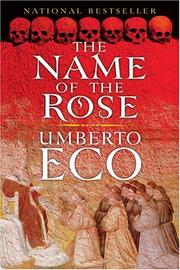
The Name of the Rose
Friar William and Adso investigate 1327 abbey deaths amid library labyrinth.
2,580-word summary · 11 min read

The Karamazov Brothers
Dmitri, Ivan, and Alyosha Karamazov face their father, murder, faith, and doubt in Dostoevsky's final novel.
2,512-word summary · 11 min read

The Unbearable Lightness of Being
Surgeon Tomas loves Tereza yet keeps mistresses, while artist Sabina and professor Franz test freedom around the 1968 Soviet invasion of Prague.
2,427-word summary · 11 min read