
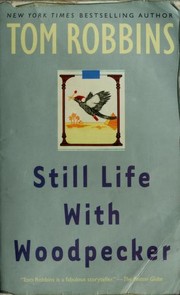
Still Life with Woodpecker
2,061-word summary 9 min read 277 pages in the book
- First published
- 1980
- Publisher
- Bantam Books
- Pages
- 277
- ISBN
- 9780553012606
Reading options
What's inside (8 sections)
I came to Still Life with Woodpecker knowing only that it was the strange one in Tom Robbins's catalogue, the book with the Camel cigarette pack on the cover. It was first published in 1980 by Bantam Books, and it is Robbins's third novel. The description on the back calls it a love story that takes place inside a pack of Camels, which sounds like a joke until you read the book and realize he meant it more or less literally. This is a novel that argues with itself, digresses constantly, and treats a cigarette box as a sacred text. It is also, underneath all of that, a genuinely tender story about two people who cannot agree on anything and stay in love anyway.
A princess, an outlaw, and a cigarette pack
The heroine is Princess Leigh-Cheri Furstenberg-Barcalona, though the princess part is mostly symbolic. She lives in a converted farmhouse in Seattle with her exiled royal parents, King Max and Queen Tilli, and their servant Gulietta. The king is a gambler and sports fanatic with a special hatred of blackberry brambles. The queen is sweet and rather vacant, devoted to opera and her lapdog, whose favorite Americanism is a bewildered little phrase about spaghetti. Gulietta does not speak English, is dependent on cocaine, and turns out to be far more important than her station suggests. I enjoyed this household immediately. It is funny and a little sad, a family playing out a drama it no longer has a country for.
Leigh-Cheri is a modern college student in most ways, but she takes her title seriously as a kind of moral obligation. She wants to use being a princess for the good of mankind. That leads her into liberal and ecological causes, and eventually to CareFest, a symposium in Hawaii where progressive thinkers gather to present their plans for improving the world. She is a Ralph Nader supporter, an idealist, a nature lover, and a redhead, and each of those facts will matter.
The novel keeps returning to a pack of Camel cigarettes as a kind of framing device. Leigh-Cheri stares at it, reads its design, and eventually decides the pyramids printed on it are a secret message from red-haired exiles from the planet Argon. The word CHOICE emerges from her reading of the pack. It sounds absurd, and it is, but Robbins commits to it with such conviction that the cigarette box starts to feel like a genuine object of devotion. That is the book's central trick: it treats the junk of consumer culture as if it were scripture, and then asks whether that is any sillier than the things people actually worship.
CareFest and the woman from Argon
CareFest is where Leigh-Cheri's optimism takes its first beating. The gathering of progressive minds is riven by infighting, ego, and sectarian squabbles, and she becomes disenchanted fast. The movement she hoped would save the world cannot even agree on how to hold a meeting. Robbins is having fun here, and the satire of activism is pointed without being mean. He clearly cares about the causes his heroine cares about. He just thinks the people who organize them are often ridiculous.
Then a beautiful blonde woman shows up claiming to be an alien from Argon. She denounces Leigh-Cheri's red hair as the mark of a mutant, renegade Argonian, and delivers a tirade that unsettles her badly. Whether the woman is actually an alien is something the book plays with rather than settles. Soon after, while an outlaw bomber is drunk on tequila, he accidentally destroys a UFO conference going on across from CareFest. The attendees all witness a flying saucer escaping, which makes Leigh-Cheri wonder if the Argonian woman was telling the truth after all.
This is where the novel's range becomes clear. Robbins folds together environmental politics, UFO lore, the symbolism of hair color, and a meditation on the purpose of the moon, and he does it without ever sounding like he is checking boxes. The digressions are the point. At one moment he is explaining the difference between criminals and outlaws, at another he is considering the Moon as a kind of cosmic appliance, and at another he is discussing the problem of being a redhead. The narrative voice is the real engine of the book, a stream of comic, philosophical patter that rarifies into something almost hypnotic when it settles on a subject it loves.
Bernard Mickey Wrangle, the Woodpecker
The outlaw is Bernard Mickey Wrangle, known as the Woodpecker, also a redhead. He plans to blow up CareFest, and Leigh-Cheri places him under citizen's arrest. Instead of resisting, he charms her. His philosophy is that freedom matters more than happiness, and he lives by it, setting off explosives to destroy buildings he considers symbols of oppression. His mantra is a small, satisfied word of relish, and he says it constantly. He is wanted, he is funny, and he is completely uninterested in being respectable.
The two fall in love almost immediately, which is the part of the book some readers find hardest to buy. Their attraction is a collision of opposites: the activist who believes in collective improvement and the outlaw who believes in individual liberty above all else. Robbins is less interested in whether the romance is plausible than in what it lets him argue about. Beneath the explosions and the tequila, the novel keeps asking whether social activism and romantic individualism can coexist, and whether either can survive a person who refuses to be organized.
Bernard gets drunk and accidentally blows up the UFO conference, then later kills Queen Tilli's lapdog during a visit to Seattle and slips away in disgrace. His visit to the city leads to his recapture and return to prison. That sequence is funny on the surface but it also shows the limits of his creed. Bernard frees buildings and himself, but he keeps hurting the person he loves, and his commitment to freedom has no language for loyalty. He can blow up a pyramid, but he cannot sit still in a relationship.
An attic cell and the message in the Camel pack
After Bernard is locked up, Leigh-Cheri does something that shocks her family and the media: she turns her attic bedroom into a replica of his prison cell. She strips it down to a bed, a lamp, and a pack of Camel cigarettes, then locks herself in. It is an act of solidarity, a protest, and a kind of grief all at once. The press picks it up, and soon a movement starts of people locking themselves away for causes of their own. Her private gesture becomes a public craze, which is both comic and a sharp observation about how quickly earnest acts get recycled as spectacle.
Bernard hears about the copycat imprisonment and sends her a scathing letter. He argues that by giving up her freedom and happiness, and by leading others to do the same, she has become the exact opposite of everything he stands for. Then, shortly after, Leigh-Cheri learns he has been killed in an apparent escape attempt. The book does not linger on her grief in a conventional way. Instead it pivots toward the strange plan she forms with the wealthy Saudi prince A'ben Fizel.
While shut in the attic, Leigh-Cheri had studied the Camel pack and decided its pyramids were a message about self-determination from the red-haired Argonians. The word CHOICE, as she reads it, becomes her private scripture. It is one of the most amusing and oddly moving ideas in the novel, because her reading is surely a projection, and yet the meaning she extracts is exactly what she needs. Robbins is not asking whether the message is real. He is showing how people make meaning out of whatever is lying around, especially when they are desperate.
A pyramid, a wedding, and being sealed in
Leigh-Cheri agrees to marry Prince A'ben Fizel on one condition: he must build her a pyramid as a wedding gift. He agrees, and the pyramid rises as a kind of monument to her obsession with the pack of Camels. The prince is suspicious, and rightly so. He knows she still loves Bernard and has her followed by spies. The night before the wedding, while exploring the finished pyramid, Leigh-Cheri finds Bernard alive. He has been hiding inside, preparing dynamite to destroy the structure. The reunited lovers reconcile in the middle of his own bomb plot, which is about as close to a normal romantic gesture as this pair gets.
A'ben Fizel seals the pyramid, intending to leave them to die. What follows is the strangest extended love scene I have read in a novel. Trapped for weeks with wedding cake and champagne, Bernard and Leigh-Cheri talk. They discuss pyramids, redheads, the Moon, the Argonian message on the cigarette pack, and above all the question the book keeps returning to: how do you make love stay? There is no action here, just two voices and a pile of cake, and Robbins makes it the emotional center of the entire book.
I found this section surprisingly affecting. The comedy does not vanish, but it thins out, and what is left is two imperfect people facing the one problem neither of their philosophies can solve. Bernard's answer would be to keep moving and never be contained. Leigh-Cheri's answer, eventually, is sacrifice. She decides to use the dynamite to blast an opening while Bernard sleeps, reasoning that giving up her life is the only way to make love stay. Bernard wakes at the last moment and tries to shield her from the blast, and both of them are caught in the explosion.
How to make love stay
They survive, but the blast leaves them deaf. In the aftermath, Leigh-Cheri's father Max dies of a heart attack, and Gulietta is revealed to be his illegitimate elder sister. She returns to her homeland to rule as queen, which pays off the mystery planted in the first chapter. Leigh-Cheri and Bernard, fitted with hearing aids that restore part of their hearing, move back to Seattle and stay in love. The book ends with a conventional happy ending delivered by completely unconventional means, and it feels earned because the two of them have actually changed.
The title question never gets a tidy answer, and I think that is the point. Bernard and Leigh-Cheri arrive at sacrifice as their answer, but the book has spent hundreds of pages mocking easy answers, so a reader is entitled to be skeptical. What the ending suggests is that love stays not through a principle but through a willingness to be damaged for the other person, and that even that insight is temporary. Robbins keeps the philosophical claims playful. He is not preaching a doctrine so much as enjoying the act of thinking out loud in a very particular voice.
There are things that do not work. The pace is uneven, and the digressions, which are the novel's greatest pleasure, also bog it down when a topic fails to spark. The satire of activism can feel dated, and some of the jokes about royalty and Arabs have aged into discomfort. The plot mechanics, especially the business with the alien and the pyramids, rely on a pile of coincidences that the book waves through with a grin. Readers who want a tightly plotted love story will be frustrated. This is a book that wanders because wandering is its method.
Still, the voice carries it. Still Life with Woodpecker is funny on almost every page, and its weirdest ideas, the moon, the Camel pack, the redheads, the difference between an outlaw and a criminal, keep circling back until they form a kind of argument. Robbins writes like someone who discovered that a novel can hold any number of unrelated obsessions if the person telling it is charming enough. For a certain kind of reader that is the whole appeal, and for others it will be exactly the thing they cannot stand. I landed firmly in the first camp. It is a book about freedom and commitment that refuses to choose between them, and it has the good sense to be very funny while it refuses.
FAQ
What is Still Life with Woodpecker about?
It is a comic 1980 novel about an environmentalist princess named Leigh-Cheri and an outlaw bomber called the Woodpecker who fall in love and argue about freedom, activism, and sacrifice.
Do I need to read Tom Robbins's other novels first?
No. It is a standalone book and Robbins's third novel, and it does not depend on the events of his earlier work.
Is it a conventional love story?
Not really. The romance unfolds through long comic digressions about the Moon, redheads, UFOs, and a Camel cigarette pack, and much of the book is philosophical argument rather than plot.
Similar books
Dead Souls
A charming stranger buys the rights to serfs who have died but remain on the census rolls, and a whole province turns against him.
2,255-word summary · 10 min read
The Pelican Child
Twelve short stories by Joy Williams, where talking dogs, bleak comedy, and the nearness of death mark a late-career stylist at work.
2,415-word summary · 11 min read
Pyramids
A prince raised by assassins comes home to a desert kingdom where the high priest rules and a spitefully huge pyramid starts bending time.
2,441-word summary · 11 min read
Naked Lunch
Burroughs's banned 1959 collage novel follows Bill Lee through addiction, Tangier, and the nightmare bureaucracy of the Interzone.
2,082-word summary · 9 min read
Eligible
Austen's Bennet sisters move to modern Cincinnati, where marriage is a reality show and the house is losing its value.
2,293-word summary · 10 min read

Big Swiss
A transcriptionist for a sex coach falls for one of his clients, the tall Swiss gynecologist she calls Big Swiss, in a funny novel about work and secrets.
2,523-word summary · 11 min read
If on a Winter's Night a Traveler
You, the Reader, chase a defective novel through bookshops and translators while ten other novels keep interrupting. Calvino's famous puzzle about the act of…
2,173-word summary · 10 min read
By the River Piedra I Sat Down and Wept
Pilar, 29, meets her childhood friend again in Madrid and finds a rumored miracle worker. One winter week through the Pyrenees to the river Piedra, and the…
2,845-word summary · 13 min read
I Capture the Castle
Cassandra journals six months of love and money trouble in a castle.
2,402-word summary · 11 min read
Small Gods
God Om trapped as a tortoise must convince novice Brutha to save Omnia from its own church.
2,063-word summary · 9 min read
Post Office
Chinaski drifts through postal shifts, cheap rooms, horse tracks and rough love in Bukowski's 1971 debut about work, drink and survival.
2,444-word summary · 11 min read
The Humans
An alien borrows Andrew Martin's life to erase a proof, then a dog, peanut butter, and a tired family win him over.
2,959-word summary · 13 min read
How to Stop Time
Tom Hazard, aging one year in fifteen, hides behind new identities until a London classroom and a lost daughter force him to live.
2,597-word summary · 12 min read
Breakfast of Champions
A Pontiac dealer breaks down while a broke sci-fi writer brings the book that tells him others are robots.
2,013-word summary · 9 min read
Catch-22
Yossarian tries to survive Pianosa bombing runs while the catch traps him.
3,764-word summary · 17 min read
Universality
Natasha Brown's short second novel turns a lockdown fracas over a gold bar into a sharp satire of money, identity and public argument.
2,302-word summary · 10 min read
The Rest of Our Lives
A law professor drives his daughter to college, then heads west instead of home, testing a private promise he made twelve years ago.
2,238-word summary · 10 min read
The Nix
A stalled novelist and community college professor goes looking for the mother who left him and finds a radical activist whose rock thrown at a governor made…
2,214-word summary · 10 min read
The Loneliness of Sonia and Sunny
Two Indian families, a failed arranged match, and years between Allahabad and New York shape a slow, sprawling romance.
2,092-word summary · 9 min read
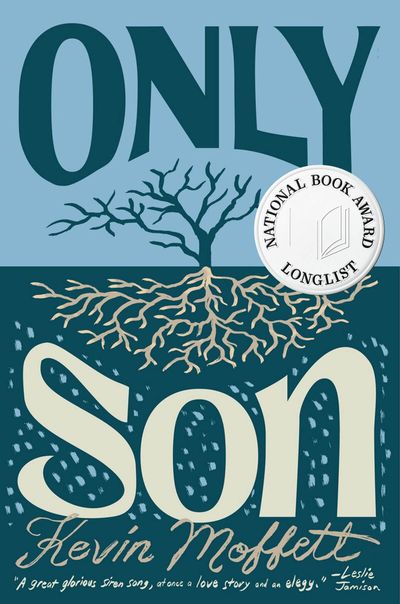
Only Son
A brief, funny, melancholy debut about a boy whose father dies in 1982 Florida, and the man he becomes, still trying to read the mystery of that loss.
2,170-word summary · 10 min read

Of Love and Other Demons
In colonial Cartagena, a twelve-year-old girl bitten by a rabid dog is locked in a convent, where the priest sent to exorcise her falls in love.
2,258-word summary · 10 min read
My Roommate Is a Vampire
A struggling artist takes a cheap room in Chicago and discovers her polite, nocturnal roommate is a vampire with a proposition.
2,502-word summary · 11 min read

When the Moon Hits Your Eye
The Moon turns into cheese, and a loose collection of stories follows how institutions, billionaires, pastors and ordinary people respond to the impossible.
2,002-word summary · 9 min read
What We Can Know
In McEwan's eighteenth novel, a lonely scholar in a flooded, diminished Britain chases a vanished poem that could win him the professorship he has long wanted.
2,408-word summary · 11 min read
Three Days in June
A Baltimore mother loses her job, and her ex-husband turns up with a rescue cat, in Anne Tyler's short, funny novel about the three days around her daughter's…
2,867-word summary · 13 min read

The Zahir
A bestselling novelist's wife vanishes from their Paris home, sending him on a search that becomes a reckoning with his own marriage and attention.
2,433-word summary · 11 min read
The Vacationers
A New York family's two-week stay in Mallorca turns into a comedy of exposed secrets when a magazine editor's affair and a son's debts come to light.
2,324-word summary · 10 min read
The Rachel Incident
A funny, sharp novel about two twenty-somethings in recession-era Cork whose bookshop friendship, tangled romance and a married professor's lie leave a secret…
2,346-word summary · 10 min read
The Paying Guests
A widowed mother and her unmarried daughter take in lodgers in 1922 south London, and a secret affair between Frances and Lilian pulls them into a murder case.
2,661-word summary · 12 min read