
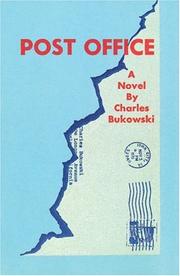
Post Office
2,444-word summary 11 min read 208 pages in the book
- First published
- 1971
- Publisher
- Black Sparrow Press
- Pages
- 208
- ISBN
- 9780876850862
Reading options
What's inside (8 sections)
I picked up Post Office because a coworker kept leaving it in the break room and daring people to read past page ten. He said it was the only novel about a day job that felt like an actual day job. I had tried Bukowski poems in college and bounced off the macho act, so I was not eager. Then one rainy weekend with nothing planned I started it on the couch and finished it the next night with a sore neck. First published in 1971 by Black Sparrow Press, in a 208 page edition, it is Bukowski's first novel and the one that introduced Henry Chinaski. It covers Chinaski's years with the United States Postal Service in Los Angeles from the early 1950s to his final resignation in 1969, with a break in the middle when he quits to live off horse race winnings.
The setup is plain and that is the point. Chinaski is broke in Los Angeles, drinking too much, living in cheap rooms with roaches and thin walls. He signs on as a substitute mail carrier because the post office will take almost anyone and the money is steady. He tells himself it is temporary. It stays temporary for years. He carries routes he has never seen before, forty or fifty of them, each with a different case layout and different stairs and dogs. He has to get the mail up before the truck leaves. If he misses a box on the first pass he has to loop back while the clock runs. Supervisors watch and write him up. Regulars complain. His feet ache and his shirt sticks to his back. He goes home and drinks until the ache fades.
What hooked me early was how physical the work feels. Bukowski does not write about the post office as an idea. He writes about trays and bundles and rubber bands snapping on your wrist. About casing mail at five in the morning with your hands moving before your brain wakes up. About apartment buildings where the boxes are rusted shut and houses where the slots are blocked by old newspapers. About rain warping the flats and heat making the ink run. One stretch follows Chinaski learning that every route has its own small cruelties. A hill section that wrecks your calves. A business loop with managers who treat carriers like furniture. A rich block where people still tip at Christmas and a poor block where people leave notes asking you to hold the checks one more day. I have done warehouse temp work, and the tired math of that life came back to me page after page. You count hours. You count pay. You tell yourself you will quit Friday and you are still there in November.
Betty and the Rooms That Smell Like Beer
Chinaski's love life in the first third centers on Betty, an older woman based on Jane Cooney Baker, the great love of Bukowski's real life. In the book she is in her fifties to his thirties, widowed, drinking hard, with a swollen belly and a laugh that fills a small apartment. She is kind to him when almost no one else is. She cooks when there is food. She waits up. She also drinks as much as he does, and their fights turn ugly and loud through thin walls.
I found these pages sadder than anything at the post office. Work grinds Chinaski down, but Betty shows what it costs to go home to someone who is drowning at the same speed you are. They take care of each other in small ways. He brings cash on payday. She saves him a plate. Then a bottle empties and the night tilts. He says a cruel thing. She throws something. They pass out without fixing it. You can see he loves her in his limited way, and you can see it is not enough to stop either of them.
Betty dies about midway through, in January of a cold year, and the book does not dress it up. Chinaski drinks after. He misses his route. He sits in the room and notices her things still there, a sweater, an empty bottle by the chair. Bukowski gives this maybe three pages, flat and plain, which hit me harder than a long speech would have. Grief in this novel is not a lesson. It is a room you keep walking into by mistake.
A fair warning here. Bukowski writes women as seen through Chinaski's eyes, and Chinaski's eyes are often selfish and drunk. Betty gets more interior life than most characters, but even she exists mostly to feed him, forgive him, or yell at him. If you need your narrator to grow out of that gaze, this book will annoy you. He does not grow much. He notices, he feels bad for a paragraph, he pours another one.
Quitting for the Track
The middle break is my favorite part and the strangest. Chinaski quits the post office and decides to live by betting horses. He moves into a smaller place, studies the racing form like scripture, takes the bus to Santa Anita, stands in the sun with old men who have systems involving birthdays and jockey silks.
Bukowski loved the track in real life, and it shows in the texture. The smell of cigar smoke and hot concrete. The way a ticket feels in your palm when your horse breaks well and the way it feels like trash when he fades on the turn. Chinaski wins enough to stay free for a while. He drinks in the morning without hiding it. He sleeps late. He tells himself he beat the system.
Then the inevitable happens. A cold streak eats the cushion. He starts chasing, doubling down on long shots, borrowing from people he should not borrow from. A landlord knocks. The phone gets cut. Freedom starts to look a lot like the same poverty with better daylight. He goes back to the post office with his tail down, and the clerk who rehires him does not even look surprised. Men came back all the time.
I laughed a lot in this section, but I also felt the trap clearly. The post office is presented as soul killing and the track is presented as freedom, yet both run on the same loop. Wait, hope, lose a little, tell yourself next time. Bukowski is honest that Chinaski prefers the track loop because at least the sun is out and nobody times his bathroom breaks. That is not redemption. It is preference. I respected that he did not pretend it was more.
Back as a Sorter and Married to Joyce
When Chinaski returns he comes back inside, as a clerk and sorter rather than a carrier. The work moves from streets to the big sorting room, night shifts under buzzing lights, conveyor noise, dust in the throat. If carrying was about feet and weather, sorting is about eyes and standing still while time crawls. He describes the schemes by which mail gets thrown to the right sack, the constant pressure to keep the belt clear, the write ups for missorts. Supervisors have favorites and grudges. Men call in sick after payday and get punished on the schedule. Chinaski drinks on the job in coffee cups and gets away with it until he does not.
Around this time he marries Joyce, based on Bukowski's first wife Barbara Frye. In the novel she is young, rich, from Texas money, and hungry for a wild life she can tell her friends about. She sees Chinaski as a project and a thrill. He sees her as a way out of rent panic and loneliness. They are terrible for each other from the first week.
Joyce wants parties and talk and sex on her schedule. Chinaski wants to drink and bet and be left alone to type or sleep. She spends. He sulks. They drive across the country in a way that feels less like a honeymoon and more like two people seeing who will blink first. She files for divorce after about two years, citing mental cruelty, which matches the real history. The book plays it as farce with sharp edges. She gets to go back to money. He gets to go back to a room with a hot plate.
I should note the humor here is real but mean. Bukowski can be very funny about marriage as performance. Joyce poses with a poet husband the way you might pose with a rescue dog, and Chinaski plays feral on purpose to embarrass her friends. Some lines made me snort. Some made me put the book down and stare at the wall, because the cruelty is not only aimed at Joyce. Chinaski treats her body and her money as props, then acts wounded when she treats him the same way. If you read this as satire of both of them, it works. If you read it hoping he will see his part, you will wait a long time.
The Daily Grind Wears Everyone Down
The last third settles into routine, and routine is the villain. Chinaski is older now, late forties in book years, still sorting, still drinking, still picking up women in bars after shift. He has affairs and one night stands that blur together. Fay appears, a younger woman who gets pregnant and keeps the child while Chinaski drifts at the edges, sending money when he can and failing in the ways he always fails. He is not monstrous about it. He is just absent and broke and drunk, which amounts to the same thing for the people waiting.
What makes these chapters worth reading is the gallery of coworkers. Bukowski peoples the post office with men who each found a different way to endure. One guy studies racing forms between throws and never talks about anything else. One guy is a churchgoer who prays on break and curses the belt the rest of the night. One supervisor, Jonstone in all but the spelling in some memories, lives to catch men leaning or talking. He stalks the floor with a clipboard and a smile that never reaches his eyes. Chinaski hates him with a focus that is almost religious, and their battles over minutes and sacks give the book its late engine.
The prose stays short and plain. Subject verb. Drink poured. Sack thrown. Woman left. That flatness can feel dead on a tired night, and I will admit I skimmed a few pages where one bar night ran into the next with little change. But then a paragraph will land clean, like Chinaski watching dawn come through the high windows after a night shift and realizing he has spent his whole adult life under that kind of light, and the flatness feels like honesty rather than laziness. He is not going to give you pretty language about a fluorescent tube. He gives you the tube.
Why the Ending Still Works
The end is famous among Bukowski readers because it mirrors life. In December 1969 John Martin started Black Sparrow Press to publish Bukowski and offered him one hundred dollars a month for life if he would quit the post office and write full time. Bukowski agreed and wrote Post Office in about three weeks. In the novel Chinaski hands in his resignation in 1969 after years of threats and false exits. He walks out without a speech. He goes home to drink and type.
I loved how small that scene is. No confrontation with the big boss. No coworkers cheering. Just a form signed and a timecard pulled. Freedom arrives as paperwork, which is perfect for a book about paperwork. Chinaski does not promise to stay sober or be good to women or write a masterpiece. He promises nothing. He is out.
So who should read this now? If you like plainspoken American novels about work, like Steinbeck without the warmth or Fante with more beer, you will find a lot here. The Los Angeles detail is strong without tourist gloss. Cheap courts off Alvarado. Bus rides at 4 a.m. Liquor stores that cash checks. Racetrack crowds that smell like sweat and cheap cigars. The book preserves a version of the city that is mostly gone, and it does it without nostalgia. Nobody in these pages thinks the old days were better. They think today is hot and the supervisor is watching.
The criticisms are fair and you should hear them before you start. The plot repeats. Job, bottle, woman, fight, track, job again. Chinaski rarely learns, and the women rarely get to be more than mirrors or exits. The drinking that looks rebellious at twenty five looks like illness at forty five, and Bukowski does not always mark that shift clearly. Some readers will find that dishonest. I found it partly honest and partly blind, which is its own kind of truth about alcohol in that era. He shows the fun and the cost but keeps choosing the fun on the page.
My break room friend was right about one thing. I have read many novels where work is background. Here work is the weather. It decides when Chinaski sleeps, what he eats, who he meets, how his back feels at forty. When he finally leaves, you feel the weight lift even though you know he is trading one hard life for another hard life as a writer with no health plan. That lift is enough. I closed the 208 pages feeling wrung out and oddly grateful for my own boring job with decent lighting. Then I poured coffee and started Factotum, because I wanted to see what Chinaski did with freedom once the forms were signed.
A Few Things to Carry In
Read the dedication page and sit with it for a second. Dedicated to nobody. That joke tells you the tone better than any review. This is not a book asking for your love. It is a report from a man who spent his best years throwing other people's letters into sacks while his own life sat unopened.
If the slang and the attitudes sting, remember the date on the title page. 1971. Written fast by a man in his fifties who had lived it. Some of it curdled since. Some of it, the parts about bad bosses and tired feet and choosing beer over sleep because sleep brings tomorrow faster, still reads like it was written last week on a night shift. I argued with this book all the way through and I am glad I did. That argument is the reason it lasts.
FAQ
Is Post Office autobiographical?
Yes. It follows Bukowski's own years as a Los Angeles carrier and sorter from the early 1950s to his 1969 resignation, with Henry Chinaski as his alter ego.
How long is Post Office and who published it?
The edition cited here is the 208-page Black Sparrow Press paperback with ISBN 9780876850862. The novel was first published in 1971.
Is Post Office part of a series?
No. It has no series, but it is the first Henry Chinaski novel, followed by Factotum. It reads fully alone.
Similar books
Breakfast of Champions
A Pontiac dealer breaks down while a broke sci-fi writer brings the book that tells him others are robots.
2,013-word summary · 9 min read
The Crying of Lot 49
A California woman named executor of her ex-lover's estate follows a muted post horn into a possible centuries-old postal conspiracy, and Pynchon refuses to…
2,003-word summary · 9 min read
Naked Lunch
Burroughs's banned 1959 collage novel follows Bill Lee through addiction, Tangier, and the nightmare bureaucracy of the Interzone.
2,082-word summary · 9 min read
Infinite Jest
A film that kills its viewers, a tennis academy, a halfway house for addicts, and a future America where corporations name the years, all tangled together.
2,084-word summary · 9 min read
The Gambler
Dostoevsky's roulette novella: Alexei loses Polina, wins a fortune, loses everything, and promises himself one more bet tomorrow.
2,022-word summary · 9 min read
If on a Winter's Night a Traveler
You, the Reader, chase a defective novel through bookshops and translators while ten other novels keep interrupting. Calvino's famous puzzle about the act of…
2,173-word summary · 10 min read
A Connecticut Yankee in King Arthur's Court
Hank Morgan, a Connecticut factory man, wakes in King Arthur's England, rises to chief adviser, and rebuilds the kingdom until his own inventions turn on him.
2,193-word summary · 10 min read
I Capture the Castle
Cassandra journals six months of love and money trouble in a castle.
2,402-word summary · 11 min read
A Confederacy of Dunces
Ignatius J. Reilly, jobless and full of opinions in New Orleans, meets work, his mother, and the law in Toole's posthumous Pulitzer winner.
3,089-word summary · 14 min read
The Master and Margarita
Devil Woland visits 1930s Moscow while Master writes Pilate and Margarita bargains.
2,535-word summary · 11 min read
Catch-22
Yossarian tries to survive Pianosa bombing runs while the catch traps him.
3,764-word summary · 17 min read
Ham on Rye
Henry Chinaski grows up rough in Depression Los Angeles and finds writing.
2,244-word summary · 10 min read
The Idiot
A Turkish-American freshman at Harvard falls in love through email with a Hungarian math student and spends a summer in Hungary trying to turn correspondence…
2,019-word summary · 9 min read
Silas Marner
A falsely accused weaver hoards gold in Raveloe until a stolen hoard and an abandoned child remake his narrow life.
2,699-word summary · 12 min read
Revolutionary Road
A Connecticut couple who believe they are too good for the suburbs plan to move to Paris, and the plan slowly exposes everything they cannot say to each other.
2,085-word summary · 9 min read
Go the Fuck to Sleep
A rhyming bedtime book for adults in which an exhausted father narrates the fourth hour of a toddler's stalling, one profane couplet at a time.
2,291-word summary · 10 min read
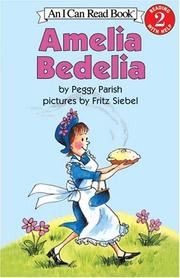
Amelia Bedelia
A literal-minded housekeeper follows her employer's list to disastrous and funny effect in the 1963 picture book that made wordplay a children's staple.
2,038-word summary · 9 min read

Howards End
Forster's 1910 novel follows two families, a house in Hertfordshire, and a burned note, asking whether money and feeling can ever be connected.
2,187-word summary · 10 min read

Sophie's Choice
A young Southern writer in 1947 Brooklyn befriends a brilliant, unstable couple and slowly learns the story of the Polish Catholic woman at the center of their…
2,798-word summary · 12 min read
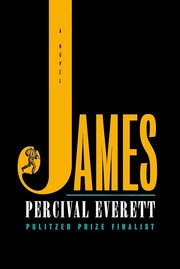
James
Percival Everett retells Huckleberry Finn from Jim's side, giving him a library, a hidden school, and a voice the novel lets loose.
2,211-word summary · 10 min read

Fathers and Sons
Arkady brings the nihilist Bazarov home to his father's estate, and a generational argument turns into love, a duel, and an early death.
2,192-word summary · 10 min read
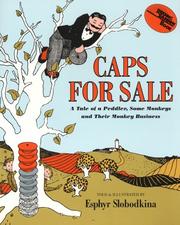
Caps for Sale
A peddler balances his caps on his head, naps under a tree, and wakes to find monkeys wearing his stock in this 1940 picture book.
2,787-word summary · 12 min read

The Chosen
A shattered pair of glasses in a 1944 Brooklyn softball game starts a friendship between a Hasidic boy and his Orthodox neighbor, and their fathers pull them…
2,443-word summary · 11 min read
The Dharma Bums
Ray Smith rides freight trains, climbs Matterhorn Peak and argues about Zen with the poet Japhy Ryder in Kerouac's 1958 road novel.
2,729-word summary · 12 min read

Ivanhoe
A disinherited Saxon knight, a great tournament, a besieged castle and a trial by combat. Scott's most famous novel, set in England in 1194.
2,834-word summary · 13 min read
Hogfather
Death fills in for a missing Father Christmas, Susan Sto Helit hunts the Hogfather, and the twentieth Discworld novel turns Santa into a management problem.
2,871-word summary · 13 min read
Eligible
Austen's Bennet sisters move to modern Cincinnati, where marriage is a reality show and the house is losing its value.
2,293-word summary · 10 min read
Dry
A memoir of drinking, rehab and relapse, and the strange business of getting sober one morning at a time.
2,643-word summary · 12 min read

Big Swiss
A transcriptionist for a sex coach falls for one of his clients, the tall Swiss gynecologist she calls Big Swiss, in a funny novel about work and secrets.
2,523-word summary · 11 min read
America (The Book): A Citizen's Guide to Democracy Inaction
Jon Stewart and the Daily Show writers turn a high school civics textbook inside out, with a foreword from beyond the grave.
2,511-word summary · 11 min read