
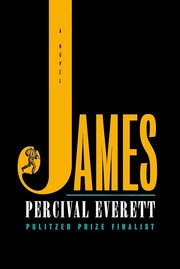
James
2,211-word summary 10 min read 320 pages in the book
- First published
- 2024
- Publisher
- Doubleday
- Pages
- 320
- ISBN
- 9780385550369
Reading options
What's inside (8 sections)
The first thing I noticed about this novel is how quickly it makes Twain's Mississippi feel like a stage set with the lights turned up. Percival Everett takes the raft, the river, the runaway boy, and the con men, and then he does something Twain could not: he lets the enslaved man tell the story in his own voice, in his own English, with his own opinions about Voltaire. The result is funny in a way that keeps catching in your throat.
The book came out from Doubleday in 2024 and runs about 320 pages. It won the National Book Award and the Kirkus Prize, and then the Pulitzer in 2025, which is a lot of official approval for a novel that spends so much time making its readers uncomfortable. It is not a respectful homage. It is an argument with a classic, conducted from inside the classic's own furniture.
A shed, a school, and a plan
James is about twenty-seven, enslaved by Miss Watson in Hannibal, Missouri. He sleeps in a windowless shed behind the house, and he has a wife named Sadie and a daughter named Lizzie who belong to a nearby household. The novel opens with a notebook, or rather with the notebook of Daniel Decatur Emmett, the minstrel composer, whose lyrics run across the first pages. Only later do you understand that the notebook belongs to James's story, and that the story is being written by a man who was not supposed to be able to write at all.
James can read. He taught himself in Judge Thatcher's library, at night, when the house was quiet. He has read Locke and Rousseau and Voltaire, and he has opinions about them. He also runs a secret school for enslaved children in a hidden room, where he teaches letters and numbers and the dangerous habit of thinking. The school is one of the novel's best inventions because it makes literacy a form of resistance without turning it into a speech.
The other invention is the language. Among themselves, James and the other enslaved people speak ordinary, precise English. In front of white people, they switch into a broad, ungrammatical dialect, drop their consonants, play dumb, and let the white people finish their sentences for them. The novel calls this "slave language," and it is both a survival strategy and a joke at the expense of everyone who ever mistook it for nature. The audiobook makes the switch audible, but on the page you can see it in the grammar, and it is the most politically pointed thing in the book.
When James learns that Miss Watson plans to sell him to a man in New Orleans, he runs. He does not run blindly. He has a plan to reach Cairo, Illinois, find work, and buy his family out. It is a plan built on the assumption that the world will behave rationally, which is the first thing the novel sets out to disprove.
Jackson Island and the river
James hides on Jackson Island, and Huck Finn finds him there. Huck has faked his own death to escape his father, and he is delighted to see a familiar face. The two of them fall into the old pattern: Huck talks, James listens, and James keeps his real thoughts behind his teeth. What is different is that we are inside James's head while he does it. We see him decide, sentence by sentence, how much of himself to show.
A flood brings a whole house floating down the river, and inside it is a dead man. James recognizes him as Huck's father, Pap, and he does not tell Huck. He lets the boy believe his father is still out there. It is a mercy and a lie, and the novel does not pretend it is simple. James is constantly making these calculations: when to protect Huck, when to use him, when to let him see the truth.
The journey downriver includes a rattlesnake bite and a fever dream in which James argues with a hallucinated Voltaire. Voltaire is smug, elegant, and convinced that Africans are a separate and inferior species. James, sweating and half out of his mind, takes him apart. It is a strange scene, and a risky one, because it stops the plot dead. It also does something the rest of the novel needs: it shows that James's mind is not a reaction to white people. It has its own furniture, and it has been thinking about the big questions for a long time.
The wreck, the books, and the pencil
The raft is destroyed by a steamboat, and James washes up alone in Illinois. He meets a group of enslaved men who are cautious but kind. They tell him the thing he has been avoiding: a Black man cannot simply walk into a bank and buy his family. He needs a white man to front the transaction, which means he needs to trust someone, which means he needs to be lucky.
One of the men steals a pencil stub for James, and is later lashed and then hanged for it. That pencil is the hinge of the novel. James has been carrying his story in his head, and now he begins to write it down. The reader has been reading that story all along. The novel is, among other things, a fake slave narrative that keeps reminding you who is holding the pen.
The middle section is the most picaresque. James and Huck are separated and reunited, and the episodic structure starts to feel deliberate, as if the novel were imitating the loose, drifting shape of Twain's book in order to sabotage it from within. There are con men, a wrecked steamboat, a stolen raft, and a series of narrow escapes. The difference is that every escape has a cost, and the costs are paid by people whose names Twain did not bother to give.
The King and the Duke are still here, and Everett makes them worse than Twain's harmless frauds. They are funny for a while, then they sell Jim. The betrayal is not a plot twist so much as a reminder that charm is a business and Jim is the inventory. Everett also lets James see how easily the con men read the room, which is the same skill James uses every day, turned to a different purpose. The two white men are what happens when performance has no survival behind it.
The minstrel show
The strangest and best stretch of the book begins when James is bought by Daniel Decatur Emmett, the real historical founder of the Virginia Minstrels. Emmett is putting together a blackface troupe, and he needs a tenor. James is treated with courtesy, fed well, and addressed as a professional. For a few pages he is almost seduced by it. Then he understands the arrangement: he is not a member of the troupe, he is its property, and if the audience ever realizes that the man behind the burnt cork is actually Black, he will be killed.
The minstrel scenes are where the novel's anger is sharpest. The troupe is anti-slavery in its politics and grotesque in its art. They sing songs about happy plantations to audiences who want to believe them. James performs a version of himself that is two layers deep: a Black man pretending to be a white man pretending to be a Black man. Norman, another member of the troupe, is a Black man passing as white, and he becomes James's ally. Their friendship is one of the few warm things in the book that is not immediately taken away.
James steals Emmett's notebook and runs. Norman follows. They need money, so Norman poses as a white slaveowner and sells James to a sawmill owner named Henderson. The plan is to take the money, escape, and repeat. It works once. Then James meets Sammy, a teenage girl at the mill, and sees his daughter in her. He takes her with him when he runs, and she is shot by their pursuers. The scene is quick and almost offhand, which makes it worse. James and Norman bury her and keep moving.
The explosion, the confession, and the farm
They stow away on a riverboat. A boiler explosion destroys it, and James is thrown into the water. He hears Norman calling on one side and Huck calling on the other. He can only save one. He saves Huck, and afterward he tells the boy why: he is Huck's biological father. He and Huck's mother, a white woman, were young together, and Huck is the child of that relationship. Huck is stunned, then hurt that James never told him, then determined to stay with him. James tells him to go back and keep passing as white, because that is the only way the boy survives.
The reveal is the novel's biggest swing, and it changes the meaning of everything that came before. It also makes the book's title a kind of joke about paternity and naming. Huck has spent the whole novel believing he is an orphan with a violent father. James has spent the whole novel being treated as a servant by the son he cannot claim.
They return to Hannibal, and James learns that Sadie and Lizzie have been sold. He hides in his old cabin and watches the overseer, Hopkins, rape a woman named Katie. He does not intervene, because he cannot, and the restraint is more damning than a rescue would have been. Later he finds Hopkins drunk and alone on Jackson Island and kills him. It is the first time James acts without calculating the odds, and the novel treats it as a release and a loss at the same time.
Huck finds out that Sadie and Lizzie have been sold to the Graham farm. James breaks into Judge Thatcher's library, holds the judge at gunpoint, and makes him show him the route on a map. Then he marches Thatcher to the river, makes him row, and ties him to a tree. The scene is a reversal of every scene in American literature where a white man explains the world to a Black man. Thatcher is terrified, and what terrifies him most is James's vocabulary.
The Graham farm is a slave-breeding plantation. James frees the men chained to a post and asks whether they want to run or fight. They choose to fight. They set the cornfield on fire, overpower the overseer, and James shoots Graham. He finds Sadie and Lizzie, and they flee north with the other escapees. They reach Iowa, where the war has already begun, and a sheriff asks James his name. He says James. Just James.
What Everett does with the voice
The novel's central technical achievement is the code-switching. It would be easy to make the two registers a gimmick, but Everett uses them to show how much labor goes into being safe. James is always editing himself. He is polite when he wants to scream, slow when he wants to run, and grateful when he wants to burn the house down. The reader gets to see the edit marks.
The book is also very funny, in a dry, grim way. The minstrel scenes are comic and horrifying at once. The philosophical dreams are absurd. Huck's earnestness is funny because James keeps having to translate it. The humor is not relief from the horror. It is the sound the horror makes when it has been lived with for a long time.
The criticisms are worth stating. The picaresque structure means that some episodes feel like set pieces, and the middle of the novel sags under the weight of one more escape. Sadie and Lizzie are offstage for most of the book, which is partly the point, but it also means the emotional payoff at the end depends on characters we barely know. The final act moves very fast, and the revenge on Graham is satisfying without being especially complicated. Some readers will find the philosophical interludes too neat, as if the novel were stopping to lecture.
None of that undoes what the book does. It takes a story that American culture has spent a century treating as a boy's adventure and puts the bill on the table. It is angry, clever, and surprisingly tender about Huck, who is as much a victim of the world as anyone and who is given the chance to choose differently. The last line, with James claiming his own name, is not a resolution. It is a refusal to go back to being called something else.
That name is the whole argument in miniature. "Jim" is the name other people use, the one that comes with a dialect and a fiddle and a minstrel grin. "James" is the one he chose. The novel does not pretend that saying it out loud makes him free, and the war that has just started is not presented as a rescue. It is a door opening, and he walks through it with his wife and daughter and a group of people who decided to run. That is as much ending as the book is willing to give, and it feels honest.
FAQ
Is James a retelling of Huckleberry Finn?
Yes. It follows the same river journey, but Jim, who calls himself James, narrates it, and several scenes are recontextualized or end differently. Huck is still a main character, but the reader stays inside James's perspective.
What happens at the end of James?
James learns that Sadie and Lizzie were sold to the Graham farm, forces Judge Thatcher to show him the route, and leads a revolt there. He escapes with his family and other freed people to Iowa, where he gives his name as James.
Did James win the Pulitzer Prize?
Yes, it won the 2025 Pulitzer Prize for Fiction, after taking the 2024 National Book Award and the Kirkus Prize. It was published by Doubleday in 2024.
Similar books
Naked Lunch
Burroughs's banned 1959 collage novel follows Bill Lee through addiction, Tangier, and the nightmare bureaucracy of the Interzone.
2,082-word summary · 9 min read
The Sisters Brothers
Two hired killers ride from Oregon to Gold Rush California to murder a prospector, and find their trade, their brotherhood, and the frontier myth coming apart.
2,095-word summary · 9 min read
Invisible Man
A nameless young Black man goes from a Southern college to Harlem, hunting for identity in a country that refuses to see him.
2,871-word summary · 13 min read
Yellowface
Struggling writer June steals her dead friend Athena's manuscript and publishes it as Juniper Song.
2,081-word summary · 9 min read
The Crying of Lot 49
A California woman named executor of her ex-lover's estate follows a muted post horn into a possible centuries-old postal conspiracy, and Pynchon refuses to…
2,003-word summary · 9 min read
Revolutionary Road
A Connecticut couple who believe they are too good for the suburbs plan to move to Paris, and the plan slowly exposes everything they cannot say to each other.
2,085-word summary · 9 min read

The Beach
A young backpacker follows a dead man's map to a hidden island community, then discovers what the people there are willing to do to keep it secret.
2,067-word summary · 9 min read

Less Than Zero
Clay returns to Los Angeles for Christmas and drifts through parties, drugs, and old friends, including one who is selling himself to survive.
1,926-word summary · 9 min read
Witches Abroad
Three Lancre witches fly to Genua to stop a fairy godmother from forcing a servant girl into a storybook marriage, and find a city arranged around a happy…
2,651-word summary · 12 min read
Infinite Jest
A film that kills its viewers, a tennis academy, a halfway house for addicts, and a future America where corporations name the years, all tangled together.
2,084-word summary · 9 min read

The Rose & the Dagger
Shahrzad is pulled from her Caliph husband and left in a desert camp of rebels, needing to break his curse and end a war before it ends her.
2,520-word summary · 11 min read

Ivanhoe
A disinherited Saxon knight, a great tournament, a besieged castle and a trial by combat. Scott's most famous novel, set in England in 1194.
2,834-word summary · 13 min read
Eligible
Austen's Bennet sisters move to modern Cincinnati, where marriage is a reality show and the house is losing its value.
2,293-word summary · 10 min read

Wide Sargasso Sea
Jean Rhys gives the first Mrs. Rochester a Caribbean childhood, a marriage built on money and suspicion, and a voice that Charlotte Bronte left in the attic.
2,021-word summary · 9 min read
This Is How You Lose Her
Yunior cycles through love affairs and betrayals in nine linked stories, tracing the damage he does and the family history behind it.
2,195-word summary · 10 min read
The Silence of the Girls
Briseis, queen of Lyrnessus, is captured by Achilles and narrates the Trojan War from inside the Greek camp, where women are prizes and survival is its own…
2,098-word summary · 9 min read
The Last of the Mohicans
During the French and Indian War, Hawkeye and two Mohican warriors try to save two British sisters from a Huron chief whose revenge will end the Mohican line.
2,017-word summary · 9 min read

The Story of Edgar Sawtelle
A mute boy on a Wisconsin dog-breeding farm relives Hamlet as his uncle returns, his father dies in the barn, and the dogs inherit what is left.
2,392-word summary · 11 min read
The Orphan Master's Son
Adam Johnson's Pulitzer-winning novel follows Pak Jun Do from a North Korean orphanage to a deadly identity swap, under a state whose loudspeakers never stop…
2,219-word summary · 10 min read
Native Son
Richard Wright's landmark novel follows Bigger Thomas through one panicked night in Chicago and the manhunt, trial and reckonings that follow, exposing the…
2,265-word summary · 10 min read
A Raisin in the Sun
Lorraine Hansberry's 1959 play follows the Younger family as a $10,000 insurance check, a house in a hostile neighborhood, and a stolen investment test their…
2,444-word summary · 11 min read
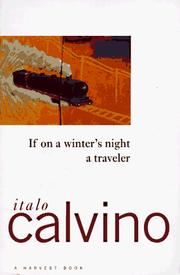
If on a Winter's Night a Traveler
You, the Reader, chase a defective novel through bookshops and translators while ten other novels keep interrupting. Calvino's famous puzzle about the act of…
2,173-word summary · 10 min read
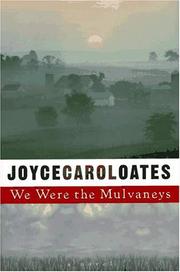
We Were the Mulvaneys
After a rape following a school dance, the Mulvaneys, a family that believed it was blessed, comes apart over fifteen years. Narrated by the youngest son.
2,094-word summary · 9 min read
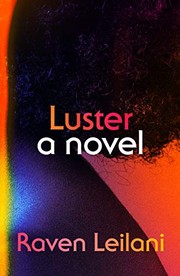
Luster
Edie, twenty-three and adrift in New York, falls into an affair with an older white archivist in an open marriage, and into the orbit of his wife and adopted…
2,049-word summary · 9 min read
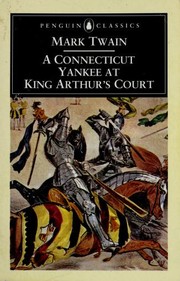
A Connecticut Yankee in King Arthur's Court
Hank Morgan, a Connecticut factory man, wakes in King Arthur's England, rises to chief adviser, and rebuilds the kingdom until his own inventions turn on him.
2,193-word summary · 10 min read
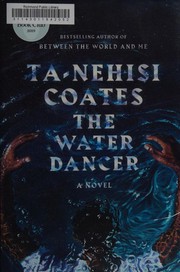
The Water Dancer
An enslaved man with a strange power for travel fights to free himself and rescue those he loves.
2,910-word summary · 13 min read
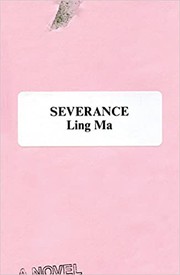
Severance
Candace keeps office routine as fever empties New York, then joins survivors.
2,340-word summary · 10 min read
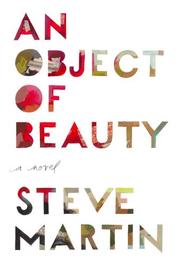
An Object of Beauty
Lacey climbs the art world from Sotheby to fraud and fall.
2,629-word summary · 12 min read
Song of Solomon
Milkman Dead leaves Michigan to hunt for family gold and finds instead the old song of his ancestor Solomon.
2,465-word summary · 11 min read