
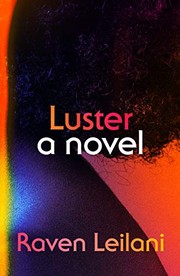
Luster
2,049-word summary 9 min read 240 pages in the book
- First published
- 2020
- Publisher
- Farrar, Straus and Giroux
- Pages
- 240
- ISBN
- 9780374194321
Reading options
What's inside (8 sections)
The first thing to say about Luster is that the voice is the book. Edie narrates her own catastrophe in a style that is dry, funny, and completely turned inward, and within a few pages you either trust that voice or you do not. I trusted it. It is the kind of debut where the sentences are doing so much work that the plot could have been almost anything and I would have kept reading, but the plot is not incidental. It is a 2020 novel by Raven Leilani, published by Farrar, Straus and Giroux, and it won a shelf of first-novel prizes, including the Kirkus Prize and the Dylan Thomas Prize, and it earned all of them.
It is also a book that people describe wrong. It gets called a novel about an affair, and it does have an affair in it, but the affair is scaffolding. What is being built is a portrait of a young Black woman who has decided, somewhere below the level of conscious thought, that she does not deserve to be cared for, and of the strange household that finally forces the question.
Edie
Edie is twenty-three, living in a Bushwick apartment that has more in common with a barn than a home, and working as an editorial assistant at a children's publishing house. She is a painter, or was, or could be. The book is very careful about not making her talent a promise the plot has to cash. She sleeps with people she does not respect, including coworkers, mostly to feel something and mostly to punish herself a little, and Leilani writes those encounters with a bluntness that some readers will find exhilarating and others will find bleak. There is no tidy explanation offered for any of it.
The pieces of her backstory arrive in flashes rather than a chapter. Her mother died when Edie was a teenager, and Edie found the body. Her childhood involved an abortion. She grew up learning that her body was a problem other people commented on. By the time the novel starts, she has built a self that can survive almost anything except kindness. That contradiction is the whole engine of the book.
Eric and the rules
Edie meets Eric, a white digital archivist in his mid-forties, who is married and in an open relationship. His wife, Rebecca, is a medical examiner. The marriage has rules, and the rules are mostly Rebecca's: what he can do, how often, what he has to say about it. From the beginning, Edie is not really participating in a love affair. She is participating in someone else's marriage, on a license she did not negotiate.
Leilani is sharpest in these early chapters about the racial math of the arrangement. Edie is the young Black woman kept at the edge of a white couple's progressive self-image, and Eric's liberal vocabulary about it does not make him any less thoughtless. The book never lectures. It just lets Eric talk, and lets Edie listen, and trusts the reader to hear what is happening.
Then Eric goes silent for ten days, which is all it takes. Edie, with nowhere to be and nothing to lose, lets herself into his New Jersey house. Rebecca is home. What could have been a scene of confrontation instead becomes an invitation: stay for dinner. It is the couple's fourteenth-anniversary party, and Edie meets their adopted twelve-year-old daughter, Akila, who is Black, and who has been growing up in a house that is still learning what that means.
The hinge moment of the early book comes right after, in the car, when Eric drives Edie home. He admits he wants to hit her. She tells him to. He does, gently enough to be legal and roughly enough to be what it is, and then they have sex. It is the scene people argue about, and it is meant to be awful, and it is. It also tells you exactly where Edie's self-worth has been filed for safekeeping, which is the point.
Fired, evicted, and installed
The middle third of the book is a spiral that Leilani keeps comic for longer than seems possible. Edie is fired from the publishing house after a series of encounters with colleagues, including one named Mark, are summarized as sexual misconduct. Her roommate leaves. Her landlord evicts her. She takes delivery shifts on an app.
This is where the book's most audacious plot move kicks in. One of her deliveries happens to go to Rebecca's address. Rebecca, having done the arithmetic, invites Edie to observe an autopsy, and then, learning that Edie is about to be homeless, invites her to stay at the family's house while Eric is away. It is generosity and it is also something else. Edie becomes a presence in Akila's life, doing the things the household has not figured out how to do, including caring for Akila's hair. Their friendship is the novel's warmest element, and Leilani writes it with real tenderness, which lands harder because of how little tenderness Edie allows herself elsewhere.
She also resumes painting, and she resumes sleeping with Eric behind Rebecca's back, because part of the deal Edie has made with herself for years is that she does not get to keep good things. There is an argument to be made that the book's middle flattens here, that the drift becomes literal, and I half agree with the critics about this stretch. What holds it up is Akila, and the sense that Edie is being offered a version of family she cannot yet accept.
The end of the arrangement
The unraveling comes in stages. Edie discovers she is pregnant. Eric collapses after an encounter with drink and drugs and ends up in a hospital. Rebecca, who has been doing the real work of the household the whole time, gives Edie a month to move out. At Comic-Con, of all places, Edie tells Eric, simply, that she does not like him. It is the first honest thing she has done about him, and it arrives too late to matter, which is how this kind of story works.
Then the book turns cruel. Edie takes Akila out, and they are pinned to the pavement by police, a scene Leilani writes with a flat, unforgiving clarity: two Black people on the ground in a public place while the machinery does what it does. Edie wakes up bleeding. She loses the pregnancy. Rebecca cares for her in the aftermath, which is somehow the most complicated kindness in the book.
The last movement is quiet. Edie gets a communications job. She moves to a Crown Heights apartment, and Rebecca helps her move. Then Edie paints Rebecca, a nude portrait, directing her into a pose the way you direct someone you have finally got the upper hand on. Rebecca looks at the painting. She leaves without saying a word. That is the last page. There is no tidy resolution, no lesson, no redemption arc, and the finality of that silent exit is more devastating than any argument the two of them could have had.
Reception, and what the book is for
Luster was one of the most decorated debuts of 2020: the Kirkus Prize for Fiction, the Center for Fiction First Novel Prize, the National Book Critics Circle's John Leonard Prize, and, the following year, the Dylan Thomas Prize. Kirkus called it sharp, strange, and propellant, which is exactly right. The main critical note, from Entertainment Weekly among others, is that the novel's momentum sags after its wildly beguiling start, and that is also right. The Bushwick chapters have a velocity the New Jersey chapters do not, and readers who want the book to keep escalating will feel the air go out.
What remains is the voice and the portrait. Leilani writes self-destruction without either glamorizing it or turning it into a diagnosis, and she refuses the two endings American fiction most often offers a woman like Edie: rescue by a good man, or punishment. Instead Edie survives, sort of, and makes a painting of the person who tried to save her, and it is unclear whether that is a gesture of love, revenge, or just the artist doing the one thing she can. I do not know what that ending means. I am pretty sure that is the point.
Read it for the sentences first, because they are extraordinary, and for the uncomfortable truth underneath them second. It is not a book for readers who need their protagonists likable, and it is not a book that will make you feel good about anyone involved. It is a book about what happens when a person who has never been held carefully encounters a form of care she cannot trust, and it stays with you far longer than its thin plot would suggest.
The shelf Luster shares
Edie belongs to a lineage of narrators who are intelligent, observant, and committed to wrecking their own lives in slow motion, and Luster is honest about its ancestors without imitating them. The obvious comparison is Ottessa Moshfegh's My Year of Rest and Relaxation, published two years earlier, where the protagonist's weapon is sleep. Edie's weapon is sharper and more social: she burns relationships the way other people burn candles, for the light and the smell. Where the Moshfegh heroine withdraws, Edie overcommits, sleeping with coworkers, moving into the home of her lover's wife, letting her life become a situation she can observe from the inside but cannot stop.
The other ancestor is older and more exact. Nella Larsen's Quicksand, from 1928, follows a mixed-race woman through a series of rooms where she is never quite allowed to belong, and the parallels with Edie's navigation of white literary New York and a white couple's New Jersey house are strong enough that Luster sometimes reads like Quicksand updated for the age of the open marriage. The comparison is flattering, and Leilani earns most of it. Her book also shares a shelf with Sally Rooney's Conversations with Friends, another novel about an affair with a married man where the real subject is the young woman's self-possession, though Rooney's characters can afford their melancholy in ways Edie's cannot.
The title is doing more work than it first appears. Luster is what a glaze does on pottery, a surface shine applied to something fragile under heat, and Edie's adult life has been an exercise in maintaining a finish. She dresses well for jobs she is losing, she performs competence in rooms that do not value her, she keeps her desirability polished even as her apartment rots. The novel's question is what happens when the glaze cracks, and the ending, the painted portrait and the silence after it, is the sound of that fracture being heard for the first time.
There is one more fact worth having. In 2021, HBO announced a series adaptation from Gaumont and Tessa Thompson's production company, with Leilani involved, which would make the book's hot, cramped interiors into television. Whether it arrives is out of my hands, and it does not change what is on the page. What is on the page is a debut that won almost every first-novel prize worth having in a single season, and a voice that showed up fully formed and left nobody neutral. Two years later, the industry was still trying to find the next Luster. That is usually the sign of a real one.
For the reader deciding whether to spend an evening with Edie, here is the honest pitch. The first fifty pages are among the best writing published this decade, and the last fifty are among the most debated. In between, a young woman makes every wrong choice available and a few that had to be invented, and the book refuses to punish her for it, which turns out to be the most radical thing it does. Literary Hub counted sixteen year-end best-of lists for it in 2020. The readers who put it there were not rewarding the plot. They were rewarding a voice that told the truth about an unlovely life in beautiful sentences, which is the oldest bargain in fiction and still the best one.
FAQ
What is Luster about?
It follows Edie, a young Black artist drifting through a publishing job and unstable relationships, as an affair with an older man lands her inside his marriage and his family's home.
Is Luster part of a series?
No. It is a stand-alone debut novel, published by Farrar, Straus and Giroux in 2020. An HBO adaptation was announced in 2021.
Does Luster have explicit content?
Yes. The novel is candid about sex and self-destruction and is written for adult readers.
Similar books
On the Come Up
Bri Jackson, a sixteen-year-old rapper in Garden Heights, chases a record deal while a viral song turns her into a symbol she never wanted to be.
2,034-word summary · 9 min read
The Interestings
Meg Wolitzer follows Jules Jacobson from 1974 arts camp into middle age, as friendship with Ethan and Ash turns into envy, money gaps, marriage strain, and…
2,990-word summary · 13 min read
Summer Sisters
Vix and Caitlin share Martha's Vineyard summers from age twelve into adulthood, through first love, grief, marriage, and a disappearance that still haunts Vix.
3,633-word summary · 16 min read
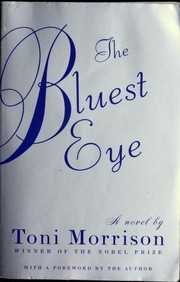
The Bluest Eye
Pecola prays for blue eyes while her parents repeat the racism that broke them, and the town looks away.
2,024-word summary · 9 min read
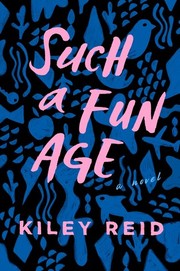
Such a Fun Age
A late-night grocery store clash pulls sitter Emira Tucker and her employer Alix Chamberlain into a tense fight over race, money, and good intentions.
2,339-word summary · 10 min read

Conversations with Friends
Rooney's debut: Frances and Bobbi, Dublin students and ex-lovers, fall into the orbit of married Melissa and Nick, and wit turns into affair and ache.
2,194-word summary · 10 min read

What Happened to Goodbye
Mclean has reinvented herself in four towns since her parents divorced. In Lakeview she uses her real name, and for the first time staying put becomes a choice.
2,796-word summary · 12 min read
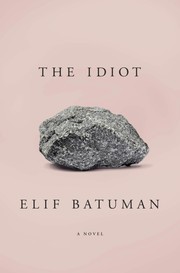
The Idiot
A Turkish-American freshman at Harvard falls in love through email with a Hungarian math student and spends a summer in Hungary trying to turn correspondence…
2,019-word summary · 9 min read
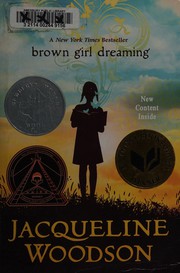
Brown Girl Dreaming
Jacqueline Woodson retells her childhood in verse, moving from Ohio to South Carolina to Brooklyn while the civil rights movement reshapes the world around her.
2,727-word summary · 12 min read
Alone With You in the Ether
Two people in Chicago agree to six conversations, and the experiment becomes a love affair that is also a study of bipolar disorder, obsession, and the shape…
2,713-word summary · 12 min read
The Power of One
A boy in apartheid South Africa decides to become welterweight champion of the world, and the novel follows every mentor, fight, and loss that gets him there.
2,145-word summary · 10 min read

Less Than Zero
Clay returns to Los Angeles for Christmas and drifts through parties, drugs, and old friends, including one who is selling himself to survive.
1,926-word summary · 9 min read

Dumplin'
Willowdean Dickson enters her town's beauty pageant as a protest and discovers that confidence is harder to keep once she lets someone close.
1,922-word summary · 9 min read

James
Percival Everett retells Huckleberry Finn from Jim's side, giving him a library, a hidden school, and a voice the novel lets loose.
2,211-word summary · 10 min read
The Age of Miracles
A California girl grows up while the Earth's rotation slows, and ordinary adolescence continues alongside slow catastrophe.
2,417-word summary · 11 min read
Peace Like a River
An asthmatic boy in the early 1960s narrates his family's search for his older brother, who is accused of two killings and has escaped custody.
1,969-word summary · 9 min read

The Chosen
A shattered pair of glasses in a 1944 Brooklyn softball game starts a friendship between a Hasidic boy and his Orthodox neighbor, and their fathers pull them…
2,443-word summary · 11 min read
Eligible
Austen's Bennet sisters move to modern Cincinnati, where marriage is a reality show and the house is losing its value.
2,293-word summary · 10 min read

Big Swiss
A transcriptionist for a sex coach falls for one of his clients, the tall Swiss gynecologist she calls Big Swiss, in a funny novel about work and secrets.
2,523-word summary · 11 min read

A Spool of Blue Thread
Four generations of the Whitshank family in Baltimore, and the silences, resentments and quiet love they hand down without ever saying so.
2,408-word summary · 11 min read

Wide Sargasso Sea
Jean Rhys gives the first Mrs. Rochester a Caribbean childhood, a marriage built on money and suspicion, and a voice that Charlotte Bronte left in the attic.
2,021-word summary · 9 min read
This Is How You Lose Her
Yunior cycles through love affairs and betrayals in nine linked stories, tracing the damage he does and the family history behind it.
2,195-word summary · 10 min read

The Story of Edgar Sawtelle
A mute boy on a Wisconsin dog-breeding farm relives Hamlet as his uncle returns, his father dies in the barn, and the dogs inherit what is left.
2,392-word summary · 11 min read
Maame
Maddie Wright, 25, has spent years as the responsible one in her Ghanaian British family, and the year she finally tries to live for herself is the year…
2,108-word summary · 9 min read
Foster
A girl spends a summer with relatives on a Wexford farm and is cared for properly for the first time. A spare novella about family and what children notice…
2,043-word summary · 9 min read
I Capture the Castle
Cassandra journals six months of love and money trouble in a castle.
2,402-word summary · 11 min read

Ham on Rye
Henry Chinaski grows up rough in Depression Los Angeles and finds writing.
2,244-word summary · 10 min read

Song of Solomon
Milkman Dead leaves Michigan to hunt for family gold and finds instead the old song of his ancestor Solomon.
2,465-word summary · 11 min read

Since You've Been Gone
Shy Emily spends summer finishing her vanished best friend Sloane list of thirteen dares, finding Frank, Dawn, and courage.
2,566-word summary · 11 min read