

Less Than Zero
1,926-word summary 9 min read 208 pages in the book
- First published
- 1985
- Publisher
- Simon & Schuster
- Pages
- 208
- ISBN
- 9780671543297
Reading options
What's inside (9 sections)
The first thing you notice is the voice. Clay narrates in short, flat sentences, usually in the present tense, and he describes a party, a movie, a dead body, and a pool with the same tone. There is no outrage, no analysis, no obvious feeling. For the first few pages it can seem like bad writing, as if the author has no style. Then you realize the flatness is the style, and the absence of feeling is the subject.
Clay is eighteen and a student at Camden College in New Hampshire. He comes home to Los Angeles for Christmas break. His family is rich. His parents are distracted. His grandmother is dying of cancer, and he seems to be the only person who notices. He reconnects with his ex-girlfriend Blair, his friend Trent, and a circle of wealthy teenagers who spend their nights driving, drinking, doing drugs, and having sex with people whose names they barely remember.
The plot, such as it is, is a series of encounters. Clay goes to parties. He goes to a concert. He has sex with a male student and with a woman whose name he does not give. He tries to find his old friend Julian, who has disappeared. When he finds him, Julian is a heroin addict and a prostitute, and he owes money to people who are not patient. Clay lends him money, then asks for it back, and Julian takes him to meet Finn, his pimp. The meeting leads to a hotel room, a married businessman from Indiana, and a scene that Clay watches without intervening.
The circuit
The novel is organized around movement. Clay drives from one house to another, from a party to a club to a diner, and the repetition creates a sense of a city without exits. Everyone is beautiful, everyone is bored, and everyone is looking for the next thing that will make the night feel like something. The drugs are everywhere. The sex is casual and often transactional. The conversations are fragments, half-finished sentences, names of bands and brands.
Ellis is precise about the texture of this world. The cars, the clothes, the restaurants, the music, the way people talk about movies they have just seen. The details are not there to create nostalgia. They are there to show how a culture trains people to experience life as a series of products. Even the bodies become products. Julian sells his. Rip, the dealer, keeps a drugged twelve-year-old girl in his bedroom and offers her to his friends. Trent stays to participate. Clay leaves.
The scene with the girl is the novel's most notorious, and it is meant to be. Ellis does not describe it graphically, but he does not soften it either. The horror is in the casualness. Rip is not a monster in a cape. He is a bored rich kid with a trust fund and a taste for control. The other characters do not react with shock. They react with curiosity, or indifference, or a joke. Clay's revulsion is the only moral response in the room, and it is not enough to stop anything.
Julian
Julian is the emotional center of the book, though Clay would never use a phrase like that. He is Clay's friend from grade school, the one who was always around, the one who belonged to the same world. Now he is thin, nervous, and desperate. He borrows a large sum of money from Clay and says it is for an abortion. Clay does not believe him. Later, when Clay asks for the money back, Julian takes him to Finn, and the truth comes out.
The hotel scene is the novel's moral test. Julian is going to have sex with a businessman for money, and the businessman wants Clay to watch. Clay stays. He tells himself he is there because he wants to understand, or because he cannot look away, or because Julian asked him to. The reasons are not convincing. He stays because he is curious, and because his curiosity has always been stronger than his conscience.
Ellis does not give the reader a speech about exploitation. He gives the reader the details: the man's wedding ring, the way he talks to Julian, the way Julian performs. The scene is long enough to be uncomfortable and short enough to avoid exploitation. It is one of the few places where the novel's flatness feels like a form of restraint rather than a lack of feeling.
The parties and the corpse
The party scenes are the novel's signature. At one, Muriel, a girl Clay knows, shoots heroin while the other guests take Polaroids. At another, Trent shows a snuff film, and several people are aroused. Later, Clay and his friends find a dead body in an alley, a young man who has apparently overdosed, and they stand around looking at it. Nobody calls the police. Nobody covers it. They treat it as a spectacle, something to talk about later.
The repetition of these scenes is deliberate. Ellis is showing how quickly the mind adapts to horror when the horror is surrounded by comfort. The characters are not evil in a dramatic sense. They are numb. They have been given everything except a reason to care, and they have learned to fill the emptiness with sensation. The novel's title comes from an Elvis Costello song, and the phrase captures the condition: less than zero, a deficit of feeling that cannot be measured.
Clay's family is part of the same pattern. His parents are divorced or absent in the way that rich parents can be absent while still in the room. His grandmother is dying, and the family treats her illness as an inconvenience. Clay visits her, but he cannot connect. He is not cruel to her. He is simply unable to be present. The novel suggests that this inability was learned at home, long before the parties and the drugs.
Blair is the closest thing the novel has to a conscience, and she is given very little to do. She loves Clay, or thinks she does, and she keeps asking him to talk to her. He cannot. Their scenes together are painful because she is trying to reach a person who has already left. Ellis is good at the small failures of intimacy, the way a conversation can end without anyone raising their voice.
The style
Ellis wrote Less Than Zero when he was a student at Bennington College, and it was published when he was twenty-one. The style is often called minimalist, and it owes something to Joan Didion and to the noir films of Los Angeles. The sentences are short. The paragraphs are short. The descriptions are precise but not lyrical. The effect is a kind of deadpan, a voice that reports without interpreting.
The repetition is important. Clay says the same things over and over. He describes the same drives, the same conversations, the same parties. The repetition creates a sense of time without progress. It also makes the moments of violence stand out, because they are described in the same tone as everything else. When Clay sees the dead body, the prose does not change. That is the point. The prose is the character's nervous system, and it has been flattened.
The brand names are another feature. Ellis lists products, bands, films, and places with the specificity of a catalog. Some readers find this shallow. Others find it devastating, because it shows how a person can be made entirely of references. Clay knows the name of every band and every restaurant, and he does not know how to feel about his dying grandmother. The contrast is the novel's argument.
Where it strains
The biggest criticism is that the novel is monotonous. Clay's voice does not develop. The scenes repeat. The characters are thin, and some of them are indistinguishable. Blair exists mostly to be sad about Clay. Trent exists to be awful. Julian exists to suffer. The novel is more interested in the atmosphere than in the people, and that can make it feel like a mood piece rather than a story.
The shock value is also a problem. The underage sex slave, the snuff film, the corpse, the heroin, all of it is designed to provoke. Some of it earns its place. Some of it feels like a young writer testing how far he can go. The novel does not always know the difference between showing the numbness of a culture and enjoying the spectacle of its excess.
The film adaptation, released in 1987, is a different creature. It softens the story, adds a romance, and gives Clay a clearer moral arc. The novel is colder and more unresolved. Readers who know the movie may be surprised by how little comfort the book offers.
The novel's whiteness and wealth are also worth naming. Los Angeles in the book is a city of rich white kids and the people who serve them, and the servants are mostly invisible. That may be an accurate portrait of Clay's circle, but the book rarely steps outside it. The result is a critique of privilege that is itself enclosed by privilege. It shows the cage from the inside, which is useful, but it does not show who built the cage or who is kept outside it.
What it gets right
For all its flaws, Less Than Zero captures something about privilege that is hard to capture without sounding like a sermon. It shows how money can insulate a person from consequence, and how that insulation can become a kind of death. The characters are not poor, not oppressed, not trapped in any obvious way. They are free, and their freedom is the problem. They have no reason to grow up, no pressure to become anyone, and no one who will tell them no.
The novel also understands the economy of bodies. Julian's body is a commodity. The girl in Rip's room is a commodity. The people at the parties trade attention, sex, and status. Clay is part of this economy even when he thinks he is observing it. He watches, and watching is a form of participation. The novel's refusal to redeem him is its most honest move.
The ending is not an ending. Clay goes back to college. Nothing has changed. He has seen terrible things, and he has not been transformed by them. That is the point. The book does not offer a lesson. It offers a portrait of a person who has been trained not to feel, and it leaves him there.
Why it lasts
Less Than Zero is not a pleasant book, and it is not a generous one. It is a young man's book, with a young man's certainty that the world is hollow and that saying so is enough. But it is also a precise book, and its precision has lasted. The flat voice, the brand names, the endless parties, the dead body in the alley, all of it has become part of the way American culture talks about wealth and numbness.
I would not recommend it to someone looking for a plot. I would recommend it to someone interested in style, in the 1980s, in the way a generation of writers learned to describe emptiness. It is a short book, and it goes by quickly. The feeling it leaves is not quick. It is a cold, thin feeling, like the air in a house where nobody is home.
FAQ
What is Less Than Zero about?
It follows Clay, a wealthy eighteen-year-old, through a Christmas break in Los Angeles, where he drifts through parties, drugs, and encounters with friends who are numb or self-destructing.
Is Less Than Zero autobiographical?
It draws on the world Ellis grew up in and the Los Angeles private school scene, but it is a novel. Ellis wrote it as a student at Bennington College and published it at twenty-one.
How does the book differ from the film?
The 1987 film softens the story, adds a romance, and gives Clay a clearer moral arc. The novel is colder, more repetitive, and leaves Clay essentially unchanged.
Similar books
Naked Lunch
Burroughs's banned 1959 collage novel follows Bill Lee through addiction, Tangier, and the nightmare bureaucracy of the Interzone.
2,082-word summary · 9 min read
Go Set a Watchman
Jean Louise Finch returns to Maycomb and finds her father changed: Lee's contested 2015 draft about family loyalty and race in Alabama.
3,478-word summary · 15 min read
To Kill a Mockingbird
To Kill a Mockingbird through the eyes of Scout Finch: Maycomb's slow days, Atticus's defense of Tom Robinson, the Boo Radley mystery, and what Lee's 1960…
2,308-word summary · 10 min read
The Idiot
A Turkish-American freshman at Harvard falls in love through email with a Hungarian math student and spends a summer in Hungary trying to turn correspondence…
2,019-word summary · 9 min read
Revolutionary Road
A Connecticut couple who believe they are too good for the suburbs plan to move to Paris, and the plan slowly exposes everything they cannot say to each other.
2,085-word summary · 9 min read

James
Percival Everett retells Huckleberry Finn from Jim's side, giving him a library, a hidden school, and a voice the novel lets loose.
2,211-word summary · 10 min read

The Age of Miracles
A California girl grows up while the Earth's rotation slows, and ordinary adolescence continues alongside slow catastrophe.
2,417-word summary · 11 min read
Peace Like a River
An asthmatic boy in the early 1960s narrates his family's search for his older brother, who is accused of two killings and has escaped custody.
1,969-word summary · 9 min read

The Chosen
A shattered pair of glasses in a 1944 Brooklyn softball game starts a friendship between a Hasidic boy and his Orthodox neighbor, and their fathers pull them…
2,443-word summary · 11 min read

The Story of Edgar Sawtelle
A mute boy on a Wisconsin dog-breeding farm relives Hamlet as his uncle returns, his father dies in the barn, and the dogs inherit what is left.
2,392-word summary · 11 min read
We Were the Mulvaneys
After a rape following a school dance, the Mulvaneys, a family that believed it was blessed, comes apart over fifteen years. Narrated by the youngest son.
2,094-word summary · 9 min read
Paper Girls, Volume 1
Four paper girls in 1988 Ohio chase a stolen walkie-talkie into a basement and stumble into a time war, flying dinosaurs, and an older version of themselves.
2,235-word summary · 10 min read
Luster
Edie, twenty-three and adrift in New York, falls into an affair with an older white archivist in an open marriage, and into the orbit of his wife and adopted…
2,049-word summary · 9 min read
Foster
A girl spends a summer with relatives on a Wexford farm and is cared for properly for the first time. A spare novella about family and what children notice…
2,043-word summary · 9 min read
I Capture the Castle
Cassandra journals six months of love and money trouble in a castle.
2,402-word summary · 11 min read
Ham on Rye
Henry Chinaski grows up rough in Depression Los Angeles and finds writing.
2,244-word summary · 10 min read
The Interestings
Meg Wolitzer follows Jules Jacobson from 1974 arts camp into middle age, as friendship with Ethan and Ash turns into envy, money gaps, marriage strain, and…
2,990-word summary · 13 min read
Summer Sisters
Vix and Caitlin share Martha's Vineyard summers from age twelve into adulthood, through first love, grief, marriage, and a disappearance that still haunts Vix.
3,633-word summary · 16 min read
Purple Hibiscus
Kambili, fifteen, watches her devout factory-owner father rule the Enugu house through fear until a Nsukka visit teaches her speech and freedom.
2,595-word summary · 12 min read
All the Pretty Horses
John Grady and Rawlins ride to Mexico for ranch work, finding love, prison, and a code that costs all.
2,677-word summary · 12 min read
Superfan
A lonely Austin freshman pours herself into a boy band forum while her idol Halo hides a tragic past that could ruin them both.
2,127-word summary · 9 min read
So Old, So Young
Six college friends reunite at five parties over twenty years in Ginder's funny, moving novel of millennial friendship.
2,457-word summary · 11 min read
Half His Age
Teen Waldo begins an affair with her teacher Mr. Korgy.
2,491-word summary · 11 min read
Crux
Two broke Mojave teens chase pro climbing dreams as friendship, class gaps, and family strain pull Dan and Tamma apart.
2,489-word summary · 11 min read
The Heart's Invisible Furies
John Boyne follows Cyril Avery, adopted in Dublin in 1945, through seventy years of love and secrecy as Ireland changes around him and he learns to live openly.
2,904-word summary · 13 min read
The Elegance of the Hedgehog
A Paris concierge hides her brilliant mind while a gifted girl plans her death, until a new tenant sees through them both.
2,248-word summary · 10 min read
The Cider House Rules
Homer Wells grows up in a Maine orphanage under Dr. Larch, who delivers babies and performs illegal abortions.
2,985-word summary · 13 min read
Invisible Man
A nameless young Black man goes from a Southern college to Harlem, hunting for identity in a country that refuses to see him.
2,871-word summary · 13 min read
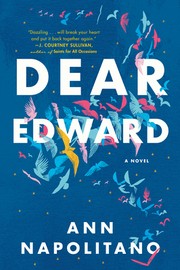
Dear Edward
Twelve-year-old Edward Adler survives a plane crash that kills his family, then learns how to live with grief, letters, and love.
2,903-word summary · 13 min read
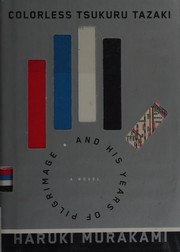
Colorless Tsukuru Tazaki and His Years of Pilgrimage
At thirty six, Tsukuru revisits four old friends to learn why they cut him off at twenty.
2,765-word summary · 12 min read