
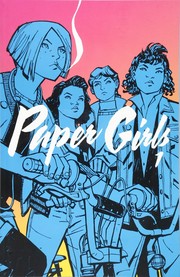
Paper Girls, Volume 1
2,235-word summary 10 min read 144 pages in the book
- First published
- 2016
- Publisher
- Image Comics
- Pages
- 144
- ISBN
- 9781632156747
- Series
- Paper Girls (#1)
Reading options
What's inside (8 sections)
I read this volume in two sittings, less because it is short than because the first issue ends on a hook so abrupt that I laughed and immediately turned the page. Brian K. Vaughan wrote it. Cliff Chiang drew it. Matt Wilson colored it, and Jared K. Fletcher lettered it. The book collects the first five issues of the series, which Image Comics started publishing in October 2015; this trade paperback followed in April 2016 and runs 144 pages. What surprised me is how little nostalgia it needs. It is a comic set in the 1980s that does not ask you to feel warm about the 1980s. It mostly asks you to keep up.
The premise is deliberately small. It is the early hours of November 1, 1988, in Stony Stream, a suburb outside Cleveland, Ohio. Halloween is finished, the streets are still scattered with the leftovers of the night, and four girls are out on their routes before dawn. Erin Tieng is new in town, and it is her first morning delivering for the local paper. She is nervous, careful, and carrying a pocketknife she is not sure she could use. She has a younger sister, Missy, whom she worries about constantly.
She is not alone for long. Erin runs into three older paper girls who already know the streets and each other. Mac (Mackenzie Coyle) is the loud one, a foul-mouthed tomboy in a bomber jacket and combat boots who smokes and claims she is the first paperboy in Stony Stream, sliding past the fact that Tiffany carried papers before her. KJ (Karina Brandman) is the private-school girl who keeps a field hockey stick in her hands like a weapon. Tiffany Quilkin is the one with the walkie-talkies, a gamer who talks in clipped, practical bursts. Erin is the outsider joining an established crew, and Vaughan uses that position well. The other girls explain the town, the rules, and the specific danger of being a girl alone on the street before sunrise, and they do it without a single lecture.
The morning the sky goes wrong
The first real threat is not science fiction. It is a group of teenage boys still wearing their Halloween costumes, and one of them corners Erin with a line that makes your skin crawl. The other three girls step in. That scene sets the tone for everything after it. The girls talk rough, they insult the boys back, and they never wait to be rescued. Mac, in particular, swings between casual cruelty and loyalty so fast that you can see the twelve-year-old underneath the attitude.
Then the ordinary danger turns strange. Two figures in robes, or something close to robes, take Tiffany's walkie-talkie. The girls chase them to a half-built house at the edge of the neighborhood. In the basement they find a machine that plainly did not come from 1988. It reads as a spacecraft or a time pod, and somewhere on its surface is an Apple logo. That detail landed hard for me. It is the first signal that whatever is happening has a future behind it, and it is a very Vaughan way of planting a clue the characters shrug past.
When they get close to the machine, the sky turns colors. The town changes. The streets empty out, or seem to. Strange things move overhead: pterodactyls, or creatures close enough that the girls settle on that name, some of them carrying riders with laser spears. A hole opens over a football field. The girls ride away because there is nothing else to do. The volume keeps dropping images like this and refusing to explain them, which is either thrilling or maddening depending on the reader.
I want to be honest about how much I understood on a first pass. Almost none of it, and I think that is the intended experience. Vaughan writes the opening arc like a nightmare with good dialogue. Events interrupt each other before anyone can lay out the rules. You get a machine, an invasion, and dinosaurs in the space of one morning, and the book will not slow down to tell you what any of it means.
Four girls, sketched fast
The best thing in the volume is how quickly it makes you care about all four of them without parking the plot. Mac gets the most room after Erin. Her home life is a mess: her father and stepmother met in an AA meeting, which the book shows rather than announces, and her older brother Dylan is someone she openly admires. Mac's toughness reads as armor once you see the house she goes back to. KJ vanishes for stretches of the book, and the volume gives her just enough that you feel the gap: Jewish, Buttonwood Academy, that hockey stick, a quiet streak that hints at more. Tiffany gets one of the strangest and funniest sequences in the collection. A device briefly holds her, and when it shows her life flashing before her eyes, the reel turns out to be her playing the same video game over and over. The comic spends several pages on it. It is a joke and a character note at the same time, and it tells you what the story thinks a life is worth.
Because Erin is the viewpoint, she gets the most interior life. We watch her dream, fret about Missy, and try to hold onto some moral footing while the world around her stops behaving. There is a running thread about apples, and another about the Rapture, and a thin suggestion that all of this might circle back to something old and biblical about a woman's place in the story. None of that resolves in this volume. It is planted, and it is worth knowing that before you start.
The town itself is a character in these pages. Stony Stream is drawn as a place where nothing is supposed to happen, which is what makes the invasion land. The houses repeat, the lawns run together, and the paper route is a map of small, familiar stops. When the streets empty and the colors shift, the loss is not just danger. It is the disappearance of a routine the girls had only just learned. Vaughan grew up near Cleveland in 1988 and had a paper route of his own, and you can feel that memory in the details: the cold, the bundles of newsprint, the way the girls treat the route as both a job and a small kingdom. It gives the weirdness something ordinary to push against.
The wound and the strangers
Partway through, Erin is shot. During a struggle that involves Mac's stepmother and a gun, the shot goes off and Erin is hit. It is the beat where the book stops being an adventure and becomes a survival story. Mac, who has spent the whole volume acting untouchable, is the one who comes apart.
Two strangers step out of the mess to help. Heck and Naldo are soldiers from some future conflict, dressed in gear that looks nothing like 1988 and speaking a language the girls cannot parse. They carry a translating stone, and they use small robotic bugs to close Erin's wound. That healing is one of the images I remember most from the whole volume. The bugs work inside the wound and seal it, and it is gross and beautiful at once, which is exactly the register Chiang's art handles best. Heck and Naldo are not villains. They are tired and sick, caught in a war much older than any of the girls, and they treat the kids gently even while everything around them stays dangerous. Later in the arc they die from injuries taken in a time jump, and the volume treats their deaths as plain and sad rather than heroic.
Running underneath all of it is the sense that two sides are fighting over the past. There are soldiers like Heck and Naldo, young and displaced. There are older figures who want the timeline left alone, or restored to some version they prefer. The girls have walked into a conflict they cannot understand, over a past each side wants to keep or change. Vaughan never lets them choose a side, because they never get enough information to choose one. That refusal is one of the smarter choices in the book.
Meeting yourself
The emotional center of the volume arrives when Erin faces an older version of herself. The girls have been pushed forward through time, and adult Erin is not the person young Erin is hoping to meet. She is unmarried, still working at the same newspaper, living alone, managing anxiety with medication. She is not a hero and not a wreck. She is simply a person who grew up, which is somehow more unsettling than either extreme. Young Erin staring at her future self is the moment the book stops being only a puzzle and becomes about the fear of who you will turn into. Mac gets a version of this too, and what she learns about her own future lands heavy, though the volume only hints at the weight of it.
I will not pretend the timeline is clear by the last page. It is not. The girls finish the volume scattered, threatened, and no closer to getting home. If you need a tidy arc, this is the wrong book. If you can enjoy five issues of smart kids in over their heads, it works.
The art and the pace
Chiang's line is clean and a little severe, and Wilson's colors do a lot of the storytelling about time. The 1988 scenes sit in warm, dusty oranges and browns. The future scenes go cold and electric, so you feel the shift before any character explains it. Fletcher's letters keep the dialogue snappy and legible even when five people are shouting at once. The page work is generous with big images when it needs them. The sky breaking, the dinosaurs, the basement machine: each gets room to breathe. For a story built on confusion, it is rarely hard to follow panel to panel. The difficulty lives in the plot, not on the page.
The pacing is aggressive. Every issue ends on a hook, and the book reads more like a season of television than a self-contained story. That is the collection's real structural weakness. It gathers the opening act of a longer series and it knows it. Some readers will find the first volume frustrating because almost nothing lands. I found the forward motion worth it, but I understand the complaint, and it is the fairest criticism you can make of this book.
There are smaller things to dislike. The homophobic language Mac throws around is period-accurate and still unpleasant, and the volume uses it to show how casually cruel 1988 could be, a choice that will not sit well with every reader. The cast is large for five issues, so a few faces blur together. The mystery is doing so much work that a couple of scenes feel like they exist mainly to place one more clue.
I keep coming back to the dream sequences, because they are the strangest thing the book does with its art. They break the action at their own rhythm and let Chiang draw images that do not have to obey the plot. One of them turns a character's whole life into a loop of the same game. Another suggests an ending that has not happened yet. These pages could have been padding. Instead they carry most of the volume's dread, because they tell you the girls are being watched by something that knows how their story ends. The comic never confirms whether the dreams are warnings, memories, or traps, and I liked that it did not tidy them up.
Who it is for
If you like Vaughan's other comics, especially the way he assembles a crew and then puts it under pressure, this is recognizably his. It is also the book to hand to someone who liked the idea of a kids-on-bikes story from the 1980s but wanted the girls to have the good lines and the agency. The four leads are the reason to read it. They are not adorable. They are scrappy, rude, loyal, and frightened in believable ways, and the volume gives each of them a moment that makes you want to follow her into the next book.
It is not for readers who want a complete story in one sitting, or who want the time travel explained early. It is also rougher and more violent than the cover suggests. None of the weirdness is real until the book says it is, so the book is aware of the bargain it is making. It gives you spectacle and withholds the answer.
What stayed with me after the last page was not the time war. It was Erin looking at her future self and having to decide what to do with that. The volume is a first chapter and it knows it, but the girls make the cliffhanger worth it. If you read it, watch the apples, watch how often the adults simply are not there, and watch how the four of them keep choosing each other even when the town stops making sense.
FAQ
What does Paper Girls, Volume 1 collect?
It collects the first five issues of the Image Comics series, which began in October 2015. The trade paperback was released in April 2016 and runs 144 pages.
Who are the four paper girls in Paper Girls?
Erin Tieng, Mac Coyle, KJ Brandman, and Tiffany Quilkin, all twelve years old and out delivering newspapers in Stony Stream, Ohio, on the morning after Halloween in 1988.
Does the first volume resolve its time travel mystery?
No. Volume 1 is the opening act of a longer series and ends with the girls scattered and the conflict over the past still unexplained. The apple and Rapture threads are only planted here.
Similar books
More from Paper Girls first, then related titles.
When You Reach Me
A sixth grader in 1970s New York gets strange notes that seem to predict the future.
2,456-word summary · 11 min read
The First Fifteen Lives of Harry August
Harry August dies and is born again into the same life, again and again, until a warning from a child tells him the world is ending faster with each pass.
2,189-word summary · 10 min read
The Eyre Affair
Literary detective Thursday Next chases a villain who kidnaps Jane Eyre from her own novel in an alternate 1985 England.
1,929-word summary · 9 min read
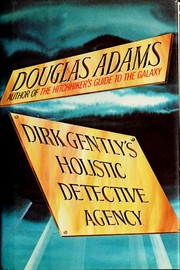
Dirk Gently's Holistic Detective Agency
Holistic detective Dirk Gently links a Cambridge murder, a ghost, and time travel to stop a four-billion-year-old mistake.
3,000-word summary · 13 min read
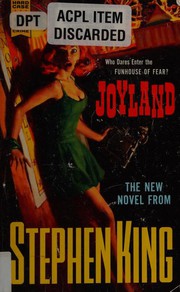
Joyland
Heartbroken Devin works a 1973 carny summer, probes an old Horror House murder, and befriends dying Mike.
2,059-word summary · 9 min read

I Am the Messenger
Nineteen year old Ed stops a robbery, then gets playing cards sending him to help strangers.
2,124-word summary · 9 min read
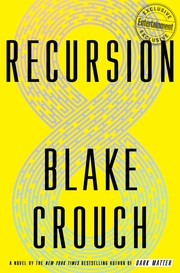
Recursion
False pasts feel truer than true ones as a memory chair lets the grieving rewrite deaths.
1,995-word summary · 9 min read

Paper Towns
Quentin chases clues after Margo vanishes, learning the girl he imagined was never the whole story.
2,198-word summary · 10 min read
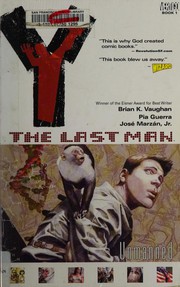
Y: The Last Man, Vol. 1: Unmanned
Yorick Brown and his monkey Ampersand survive a plague that kills every Y-chromosome mammal and cross a collapsed America.
2,525-word summary · 11 min read
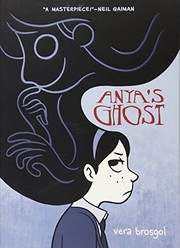
Anya's Ghost
A lonely Russian immigrant falls into a well, befriends the ghost trapped there, and discovers that the ghost's help comes with a dangerous price.
2,001-word summary · 9 min read
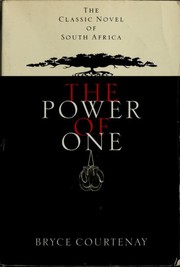
The Power of One
A boy in apartheid South Africa decides to become welterweight champion of the world, and the novel follows every mentor, fight, and loss that gets him there.
2,145-word summary · 10 min read

Less Than Zero
Clay returns to Los Angeles for Christmas and drifts through parties, drugs, and old friends, including one who is selling himself to survive.
1,926-word summary · 9 min read

Dumplin'
Willowdean Dickson enters her town's beauty pageant as a protest and discovers that confidence is harder to keep once she lets someone close.
1,922-word summary · 9 min read
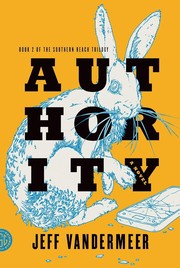
Authority
The new director of the Southern Reach takes over an agency that is hiding the truth about Area X, and the building starts to change around him.
2,029-word summary · 9 min read
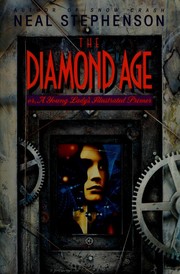
The Diamond Age: Or, A Young Lady's Illustrated Primer
A stolen nanotech primer raises a poor girl in 22nd-century Shanghai, and Neal Stephenson turns her education into an argument about class, freedom, and who…
2,055-word summary · 9 min read
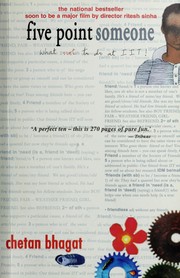
Five Point Someone: What Not to Do at IIT
Three friends at IIT drift to a five-point GPA, mock the system, and break into a professor's office for an exam paper.
2,458-word summary · 11 min read
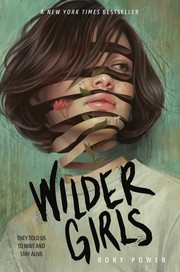
Wilder Girls
At a quarantined boarding school off Maine, three girls with strange mutations search for a missing friend and learn what the adults have hidden.
2,594-word summary · 12 min read
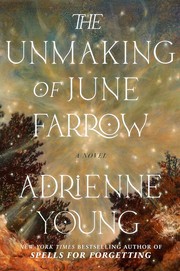
The Unmaking of June Farrow
A woman in a North Carolina flower-farming family walks through a red door into 1951, where she must solve her mother's disappearance and decide whether to…
2,701-word summary · 12 min read
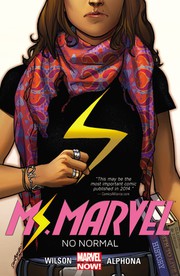
Ms. Marvel, Vol. 1: No Normal
Kamala Khan, a Jersey City teenager and Carol Danvers fan, gains shapeshifting powers and has to decide what kind of hero she wants to be.
2,579-word summary · 11 min read

The House of the Scorpion
A clone raised in a drug lord's poppy fields learns what he was made for and chooses what to do with the life he was given.
2,527-word summary · 11 min read

The Age of Miracles
A California girl grows up while the Earth's rotation slows, and ordinary adolescence continues alongside slow catastrophe.
2,417-word summary · 11 min read
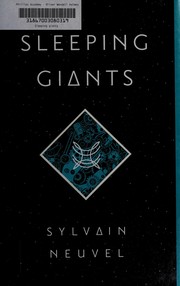
Sleeping Giants
A girl falls into a field and lands in a giant metal hand. Years later a secret team assembles the rest of the machine, and it chooses its own pilots.
2,466-word summary · 11 min read

Heist Society
A teenage art thief gets expelled from boarding school, then has two weeks to steal five paintings back from a London museum and clear her father.
2,781-word summary · 12 min read
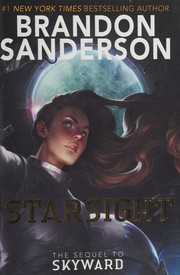
Starsight
Spensa Nightshade goes undercover aboard the Superiority space station Starsight to steal a hyperdrive, and finds a frightened bureaucracy where she expected…
2,568-word summary · 11 min read
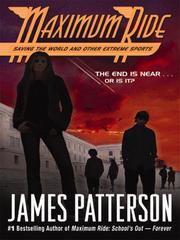
Saving the World and Other Extreme Sports
Max and the flock split in two to take down the lab behind their lives, one half in California and the other in Europe.
2,175-word summary · 10 min read

The Second Summer of the Sisterhood
Four friends share the traveling pants through a summer of grandmothers, first loves, and mothers who are learning to let go.
2,209-word summary · 10 min read
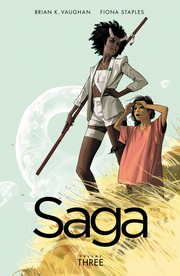
Saga, Volume 3
Marko, Alana, and Hazel hide on the planet Quietus with the reclusive author who inspired their romance, while assassins and a prince close in.
1,989-word summary · 9 min read

Locke & Key, Vol. 1: Welcome to Lovecraft
After their father is murdered, the Locke children move into a haunted family estate where keys unlock doors to ghosts, other places, and dangerous secrets.
2,019-word summary · 9 min read

Aristotle and Dante Dive into the Waters of the World
Ari and Dante return for senior year in El Paso, navigating first love, AIDS, family grief, and the cost of being openly gay in 1987 Texas.
2,188-word summary · 10 min read
American Born Chinese
Three stories, a monkey king, a Chinese-American boy and a sitcom cousin, converge in a graphic novel about shame, assimilation and learning to accept yourself.
2,107-word summary · 9 min read