
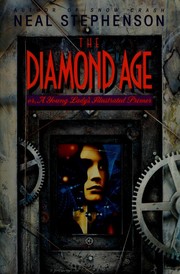
The Diamond Age: Or, A Young Lady's Illustrated Primer
2,055-word summary 9 min read 455 pages in the book
- First published
- 1995
- Publisher
- Bantam Spectra
- Pages
- 455
- ISBN
- 9780553096095
Reading options
What's inside (9 sections)
I came to The Diamond Age through the wrong door. A friend handed it to me as "the book with the talking book in it," and for the first hundred pages that is exactly what it is: a Victorian bedtime story wrapped around a nanotech thriller. Then the mugging happens, the primer ends up in the wrong hands, and the novel turns into something stranger, a long argument about education, class, and who gets to inherit the future. It is the 1995 follow-up to Snow Crash, published by Bantam, and it is both more ambitious and more uneven than its famous predecessor.
A duke, an engineer, and a stolen book
The setup is pure Victorian pastiche. In twenty-second-century Shanghai, nation-states have largely given way to phyles, voluntary tribes bound by shared culture and law. The Neo-Victorians of New Atlantis run the city's financial elite, the Han and Nippon and Hindustan phyles hold their own territories, and at the bottom sit the thetes, people with no phyle at all, living under the Common Economic Protocol. Matter compilers make almost anything on demand, fed by a global network called the Feed. It is a world of astonishing plenty and very old hierarchies.
Lord Alexander Chung-Sik Finkle-McGraw, an Equity Lord with a guilty conscience about his granddaughter, commissions the engineer John Percival Hackworth to build something illegal and extraordinary: A Young Lady's Illustrated Primer, a book that talks, listens, and adapts. Its stated purpose is to educate young Elizabeth Finkle-McGraw. Its real purpose is subtler. Finkle-McGraw wants a girl who can think for herself inside a rigid Victorian society, someone subversive enough to keep the phyle honest.
Hackworth, who needs money and has a daughter of his own, secretly runs a second copy through a black-market compiler belonging to a man called Dr. X. On the way home he is mugged by Harv, a thete boy with more nerve than sense, and the stolen primer ends up in the hands of Harv's four-year-old sister, Nell.
That mugging is the hinge of the entire novel. Everything before it is world-building. Everything after it is the consequence of a cheap street crime redirecting a piece of aristocratic technology into the life of a child who was never supposed to have anything.
Nell, and the book that raises her
Nell's home life is awful in a very ordinary way. Her father Bud is a small-time criminal with a skull gun and a body full of cheap modifications. Her mother Tequila is neglectful, exhausted, and drawn to violent men. Bud is executed early on after a robbery goes wrong, and Harv becomes the closest thing Nell has to a parent, which is not saying much since he is still a child himself.
The primer steps into that gap. It tells Nell a serialized story about Princess Nell in a dark castle, with companions named Dinosaur, Duck, Peter Rabbit, and Purple. The story is not decoration. When Nell needs to learn to read, the primer teaches reading. When she needs to understand nutrition or mechanics or self-defense, the lessons arrive as plot. The book is a tutor, a friend, and a surveillance device all at once, and Nell loves it without fully understanding what it is.
The most famous sequence in this stretch involves Tequila's boyfriend Burt, who burns Nell with cigarettes and beats the children. The primer gives her a story about Odysseus and the Cyclops, and Nell, maybe seven years old, takes the lesson literally. She builds a screwdriver and stabs Burt in the forehead. It is a horrifying scene, and Stephenson does not soften it. A book designed to raise an independent girl has just taught one to commit violence in self-defense, and the novel lets that sit there without a moral.
Miranda Redpath is the other half of the primer's magic. She is a ractor, a live performer whose voice and movements are captured and fed into interactive stories. She takes the job voicing the primer's characters, then realizes that the child on the other end is real, poor, and alone. Miranda becomes Nell's remote mother, and the novel's emotional charge comes from the fact that neither of them can touch the other. Miranda's employer, Carl Hollywood, warns her that the arrangement is unusual. She keeps going anyway, and eventually that choice costs her almost everything.
The education of a young lady
Nell's path upward runs through Dovetail, an artisan enclave where people still make things by hand, and then through Miss Matheson's School of the Three Graces, a Neo-Victorian academy where she meets Elizabeth and Fiona, the two girls whose lives were supposed to receive the primer. Elizabeth is rich, restless, and eventually drawn to the anti-Feed underground called CryptNet. Fiona is Hackworth's daughter, raised on the illegitimate second copy, and she grows up sad and drifting, talking to a father who is mostly absent.
The school chapters are where the novel's satire sharpens. Miss Matheson's curriculum is a strange mix of Latin, manners, and covert training in subversion. Miss Stricken, a sadistic teacher, beats students until Nell disarms her in front of the class. The episode is funny and ugly at once, and it shows what the primer has made: a girl who can read a room, calculate a risk, and act before she is afraid.
Stephenson is good at this kind of set piece. He is less good at keeping Nell active once the plot accelerates. In the last third she spends a lot of time being moved around by other people's plans, and the clever child of the early chapters becomes a symbol more than a character. I noticed it more on a second read. The primer is such a strong device that when it recedes, Nell's interior life thins out.
Harv gets one of the novel's quietest and saddest scenes. Nell, now a young Neo-Victorian woman, visits him in a charity hospital where he is dying of lung damage from years of inhaling printer toner. He is still the boy who stole a book for her, still proud of her, and still unable to imagine a life outside the thete quarter. The visit lasts a few pages. It contains more feeling than most of the battle scenes, and it makes the cost of Nell's ascent concrete. She got out. Harv did not.
Hackworth in the wilderness
While Nell grows up, Hackworth disappears into one of the strangest subplots in nineties science fiction. Finkle-McGraw and a military man named Major Napier pressure him into working for Dr. X as a double agent. Dr. X sends him to the Drummers, a community in Vancouver that lives in a collective, bodily network and is developing something called the Seed, a technology meant to break the Feed's monopoly on matter.
Hackworth spends ten years with the Drummers. His wife Gwendolyn divorces him. His daughter Fiona grows up talking to a father who is not there, and the novel keeps cutting between his slow absorption into the collective and Nell's education. The contrast is deliberate. Nell is being raised by a book that teaches individual agency. Hackworth is being dissolved into a group mind that teaches collective survival. Both are forms of education, and neither is clean.
The Seed is the book's big political idea. The Feed is centralized, expensive, and controlled by the phyles that own the infrastructure. The Seed would let anyone grow what they need locally, which is why the powers that be are terrified of it. Stephenson is clearly interested in the politics of manufacturing, and some of the best passages are about who owns the means of production when the means are microscopic.
He is also, characteristically, in no hurry to explain it. The Seed remains fuzzy at the level of engineering. I can tell you what it is for and why people want it. I cannot tell you how it works, and the novel does not really try.
The Mouse Army and the war
The primer's second life is the novel's best structural joke. Hackworth, sentenced by Judge Fang to produce non-interactive primers for Dr. X's rescued Han orphan girls, secretly links them all to Nell. The result is the Mouse Army: thousands of girls raised on the same story, educated to the same standard, and quietly oriented toward a girl they have never met.
When the Fists of Righteous Harmony, a nationalist movement, attack Shanghai and tear down the Feed infrastructure, the Mouse Army marches. Nell is captured, tortured, and escapes. The final battle is chaos, with Victorian troops, Han forces, CryptNet hackers, and a swarm of literate orphan girls converging on the same city. Nell rescues Miranda from the Drummers. Hackworth makes his last contribution to the Seed. The Celestial Kingdom wins, and Nell ends up leading a new mixed phyle that blends Han and Victorian traditions.
It should be thrilling. Parts of it are. But the ending is also where the novel's ambitions outrun its execution. Characters reappear after long absences, the Seed's finale is described in language that gestures at transcendence without quite landing, and the political resolution arrives faster than the setup deserves. Stephenson has never been a tidy finisher, and this is one of his messier landings.
What it is actually about
Strip away the nanotech and the Victorian cosplay and The Diamond Age is a book about education. Every major character is trying to shape a child. Finkle-McGraw wants a granddaughter who can subvert his own class. Hackworth wants a daughter he can love and cannot raise. Miranda wants a child she can reach without touching. Dr. X wants a generation of girls who can survive the world he grew up in. The primer is the instrument, but the question is always the same: what do you teach a person if you want them to be free?
The novel's answer is uncomfortable. Nell becomes free because she was taught to read, to fight, and to distrust authority, but she also becomes a leader because thousands of girls were raised on a copy of her story. Her individuality is real and it is also a product. The book does not resolve that tension, and I think that is why it stays with me.
There is also a quieter argument about class. The thetes are not poor because there is not enough. They are poor because the phyles have arranged the world so that the Feed flows where they want it to flow. Nell's ascent is a fairy tale, and Stephenson knows it. The Mouse Army is what happens when the fairy tale is mass-produced.
The title promises a young lady, and the book keeps asking what that phrase is worth. Victorian manners give Nell a way to move through rooms that would otherwise be closed to her, but they also come with rules about silence and obedience. The primer teaches her both the manners and the trick of using them against the people who invented them. That double lesson is the most useful thing in the novel, and it applies well beyond Shanghai.
Should you read it
If you liked Snow Crash for the jokes and the velocity, this one will feel slower and stranger. If you liked the ideas in Cryptonomicon or Seveneves, the ones about systems and incentives and the long consequences of engineering, this is the book where he first worked them out at length. The primer chapters are charming. The Shanghai politics are dense. The ending is rushed. That mix is the novel.
I would read it for Nell and Miranda, for the image of a little girl learning to stab a man because a story told her to, and for the Mouse Army, which is one of the great weird images in nineties science fiction. I would not read it expecting a clean thesis. It is a book that thinks out loud, and sometimes it thinks itself into a corner.
One warning for new readers: the first fifty pages throw a lot of vocabulary at you. Phyles, thetes, ractors, the Feed, the Common Economic Protocol. Stephenson does not stop to define. Keep going. The world coheres, and the payoff is worth the confusion.
FAQ
Is The Diamond Age a sequel to Snow Crash?
No. It is a standalone novel published in 1995, though it shares Snow Crash's interest in technology, class, and the strange ways new tools reshape daily life.
What is the Illustrated Primer?
It is an interactive book that talks, listens, and adapts its lessons to the child reading it. Finkle-McGraw wants it to produce a girl who can think for herself inside a rigid society.
Is The Diamond Age suitable for younger readers?
It is an adult novel with child abuse, torture, violence, and sexual content, so it is not a middle grade or young adult book despite the young protagonist.
Similar books
Cryptonomicon
Codebreakers in World War II and hackers in the 1990s chase gold, ciphers, and a secret data haven.
2,280-word summary · 10 min read
Five Point Someone: What Not to Do at IIT
Three friends at IIT drift to a five-point GPA, mock the system, and break into a professor's office for an exam paper.
2,458-word summary · 11 min read
The House of the Scorpion
A clone raised in a drug lord's poppy fields learns what he was made for and chooses what to do with the life he was given.
2,527-word summary · 11 min read
The Age of Miracles
A California girl grows up while the Earth's rotation slows, and ordinary adolescence continues alongside slow catastrophe.
2,417-word summary · 11 min read
Starsight
Spensa Nightshade goes undercover aboard the Superiority space station Starsight to steal a hyperdrive, and finds a frightened bureaucracy where she expected…
2,568-word summary · 11 min read
Hearts in Atlantis
Five linked stories follow Bobby Garfield, Carol Gerber, and their friends from a haunted childhood in 1960 to the long aftermath of Vietnam.
2,402-word summary · 11 min read
Exhalation
Ted Chiang's second collection contains nine stories about time, memory, free will, and artificial minds, told with clarity and moral seriousness.
2,075-word summary · 9 min read
Upgrade
A Gene Protection agent is infected with an upgrade virus that makes him stronger and faster than human, and only he can stop his sister from releasing it on…
2,166-word summary · 10 min read
Paper Girls, Volume 1
Four paper girls in 1988 Ohio chase a stolen walkie-talkie into a basement and stumble into a time war, flying dinosaurs, and an older version of themselves.
2,235-word summary · 10 min read
Stories of Your Life and Others
Eight stories about language, time and choice, including the tale behind Arrival.
2,402-word summary · 11 min read
Ham on Rye
Henry Chinaski grows up rough in Depression Los Angeles and finds writing.
2,244-word summary · 10 min read
Altered Carbon
Kovacs wakes in a new sleeve to solve a rich man's own murder.
2,231-word summary · 10 min read
Warcross
Emika Chen glitches into the Warcross Tokyo championship, joins the Phoenix Riders to hunt the masked Zero, and must face Hideo Tanaka's plan to read minds for…
2,826-word summary · 13 min read
Demian
Hesse's 1919 German classic of Emil Sinclair, from Kromer blackmail to Demian, Abraxas, Beatrice and Frau Eva, ending in war: a short, strange guide to growing…
2,510-word summary · 11 min read
The Queen's Gambit
Orphan Beth Harmon rises in chess while pills and drink threaten to take her.
2,027-word summary · 9 min read
Life As We Knew It
Sixteen-year-old Miranda keeps a diary while an asteroid strike on the moon brings tsunamis, blackouts, and a frozen year of hunger to her Pennsylvania town.
2,485-word summary · 11 min read
About a Boy
An idle London bachelor invents a toddler son to meet women, then builds a real friendship with a lonely twelve year old.
2,750-word summary · 12 min read
The Girl with the Louding Voice
Sold as a wife at fourteen, Adunni flees to Lagos servitude and fights for school.
2,010-word summary · 9 min read
The Extraordinary Life of Sam Hell
Sam Hill, born with red eyes and mocked as Sam Hell, leans on his mother, his friend Ernie, and his faith to face bullying and forgive. A warm coming of age…
3,060-word summary · 14 min read
Prey
Jack Forman takes a contract job at a Nevada lab in Michael Crichton's 2002 thriller Prey, where self replicating nanoparticle swarms have started hunting on…
2,959-word summary · 13 min read
Congo
In Crichton's 1980 jungle thriller, Karen Ross leads a Congo expedition to find lost Zinj and its diamonds, bringing Amy, a signing gorilla, into grey gorilla…
3,013-word summary · 13 min read
The Circle
Hired by the world most powerful internet firm, Mae trades privacy for praise until dissent turns fatal.
2,092-word summary · 9 min read
Different Seasons
Four novellas: prison hope, a boy and an old Nazi, kids chasing a body, and a club that grants wishes with teeth.
1,974-word summary · 9 min read
Cell
A cell signal turns callers into violent phoners, and a father walks north through ruins to find his son.
2,103-word summary · 9 min read
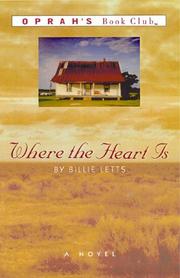
Where the Heart Is
Pregnant teen Novalee Nation is abandoned at a Sequoyah, Oklahoma Wal-Mart, where she gives birth to Americus and rebuilds life with town help.
2,352-word summary · 10 min read
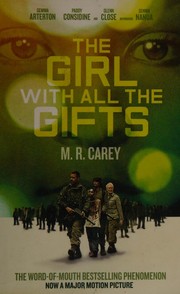
The Girl with All the Gifts
Hungry girl Melanie loves myths while teacher, soldier, and scientist use her.
2,203-word summary · 10 min read
Neuromancer
Washed Case hired Armitage run Wintermute cyberspace heist.
2,598-word summary · 12 min read
Jurassic Park
Hammond clones dinosaurs on Isla Nublar and invites Grant, Sattler and Malcolm to certify safety before opening.
2,388-word summary · 11 min read