
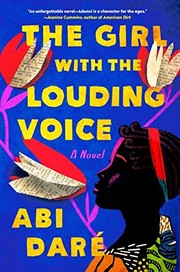
The Girl with the Louding Voice
2,010-word summary 9 min read 368 pages in the book
- First published
- 2020
- Publisher
- Dutton
- Pages
- 368
- ISBN
- 9781524746025
Reading options
What's inside (6 sections)
I heard about this book from a bookseller who said it made her cry on the train and she did not care who saw. That is a lot to live up to. The Girl with the Louding Voice, first published in 2020, debut novel by Nigerian author Abi Daré, does earn big feelings, but not in the easy way I feared. Adunni, fourteen when we meet her, narrates in broken English that grows stronger as she learns. I used the Dutton hardcover, 368 pages, ISBN 9781524746025. The voice is the reason to read, and also the reason some readers will need patience for the first fifty pages.
Adunni lives in a village in Nigeria with her father and two brothers. Her mother, who told her that education gives a girl a louding voice, meaning the ability to speak for herself and decide her future, has died. Her father, who needs bride price and believes girls marry rather than school, sells her as third wife to Morufu, an older local man desperate for a son. Adunni wants school. She gets marriage to a man with two wives already, Khadija and Iya, and a set of rules that leave no room for books.
Sold as a wife at fourteen
The early chapters are hard without being graphic for shock. Daré shows control through chores, through who eats first, through who may leave the compound, through threats that do not need to be carried out to work. Morufu wants an heir. When Adunni does not conceive quickly, blame falls on her. Khadija, younger than you expect a second wife to be, is kind in small hidden ways. Iya is harder, protecting her own position. Adunni tries to obey while hiding her schoolbooks and her plan to run.
Her mother stays present as memory. Songs, sayings, stories about what education allows. Adunni repeats them to herself when she is scared. I found those repetitions moving rather than repetitive because you can feel a child using what little she was given as armor. She also talks to her mother in her head when decisions come. Should she steal food to stay strong enough to study. Should she trust Khadija. Should she run now or wait for a better night.
The writing in broken English does a lot here. Sentences like Papa call me inside the parlor open the book. Verbs miss endings, articles drop, but meaning stays clear. Some readers worry this will be hard. It is not, after ten pages. Your ear adjusts. More important, the grammar carries story. When Adunni does not have the words for what Morufu wants, the gaps tell you what she cannot yet name. As she learns, first from a neighbor, later in the city, her sentences grow. You feel learning as power, not as decoration.
A tragedy forces Adunni to flee. I will not detail it because it lands hard and Daré stages it without excess. Adunni runs to Lagos with almost nothing, hoping for a better life, and finds the only option for a girl with no papers is domestic servitude. That turn, from wife to housemaid, could feel like more misery piled on. Instead it becomes the second half of the book, where Adunni finally gets near books.
Lagos and the Big Madam
In Lagos Adunni works for Big Madam, also called Mrs Bigs, a wealthy businesswoman married to Big Daddy. The house is large, gated, full of rules about uniforms, phones, food, and who may speak in which room. Two other staff, cook and driver and a fellow maid in some chapters, show Adunni how to survive. Keep your head down, do not eat the good fruit, do not answer back, send money home if you can.
Big Madam is not a simple villain. She is cruel in ways that come from pressure. Her business is shaky, her marriage is strained, her social standing depends on appearances, including charity appearances. She beats and humiliates Adunni, docks pay, locks doors, and also, in rare moments, notices Adunni's hunger to learn. Those moments do not excuse the rest. Daré is careful not to let a single kindness erase a pattern. But they make Big Madam human rather than a symbol, which makes the cruelty harder to dismiss.
Big Daddy is mostly absent and weak when present. He likes Adunni's cooking, asks about her village, promises help he does not give. His son Kayode is kinder, closer to Adunni in age, and becomes a fragile bridge to books. Through Kayode and through a neighbor, Tia, who runs a small informal school and lending library, Adunni starts to study in secret. She hides exercise books under mattresses, practices letters while cleaning, listens at doors when tutors come for the family's children.
Tia matters a lot. She is educated, outspoken, trying to help girls without getting them fired or worse. She lends Adunni books, corrects gently, tells her about scholarships and exams. Their scenes are the warmest in the novel. Adunni, who has been told she is nothing by words and deeds, hears for the first time from a woman with standing that she is bright. I cried at a small moment where Tia praises an essay and Adunni does not know where to put her hands.
Work details ground the Lagos half. Scrubbing floors on knees, washing piles of clothes by hand despite a machine for the family, cooking stews with exact pepper levels, waiting up late to open gates. Daré does not rush these chores. She shows how servitude steals time to think. Adunni studies at night when she should sleep, then makes mistakes from tiredness and gets punished. That cycle, exhaustion leading to error leading to punishment, felt painfully true.
Finding voice in English and in action
The louding voice idea grows across the book from slogan to practice. At first it means school. Then it means speaking in a whisper when a shout would get you beaten. Then it means singing, writing a letter for someone else, telling a nurse the truth, refusing to sign something you cannot read. Adunni learns that voice is not only volume. It is choice about when to use words and when to keep them for later.
One of the best sequences involves Adunni helping another girl in the house system. She realizes that standing up only for herself is not enough, in her mother's phrase, for the ones who came before and were lost and for the next girls who will follow. She finds resolve to speak however she can, in broken English, in song, until she is heard. Daré risks sentimentality here and mostly avoids it because Adunni pays for speaking. There are no free heroic speeches. Every truth costs food, sleep, safety.
The language growth mirrors this. Early chapters use present tense and simple connectors. Later chapters use longer sentences, past tense correctly, new words like opportunity and scholarship without italics or apology. I tracked a few favorite words. Louding itself, which is not standard English but is perfect. Koko, morning pap. Madam, with capital M when it means power. By the end Adunni still makes mistakes, and Daré lets her. Fluency is not the point. Willingness to be heard despite mistakes is.
For criticism, the middle Lagos section repeats a pattern. Big Madam explodes, Adunni suffers, Tia comforts, Adunni studies, hope rises, then another punishment resets. Three cycles in a row follow that shape. I started predicting when the knock would come. The book is 368 pages and could have lost thirty without losing heart. A subplot about Big Madam's business rival drags. A driver character appears and vanishes. I wanted more of Kayode and less of paperwork.
Also, some dialogue from wealthy Lagosians sounds explanatory, as if for foreign readers. A character will explain bride price or area boys in a way no Nigerian would need explained. That is a common debut choice when writing for a global market, and Dutton's edition leans into it. It did not bother me much, but you notice.
Still, the ending works because it does not promise rescue. Adunni does not get adopted into comfort. She gets a chance at education, a scholarship exam, people who will vouch, and a voice that will not go back to silence. The final pages, where she writes rather than only speaks, close the circle her mother opened. I believed her future would still be hard and still be hers, which is more honest than a fairy tale.
For who this is for. If you liked A Thousand Splendid Suns or I Am Malala style stories about girls fighting for school, but want a novel with humor and daily detail rather than only tragedy, try it. If broken English narration worries you, give it fifty pages. Your ear will catch. If you want a light book, wait. There are beatings, assault threats, and grief here, handled without lingering but without hiding. I finished grateful to the bookseller. I did cry on public transport, at the essay praise scene, and I did not care who saw either.
Village memory, city pressure, and how Adunni keeps herself whole
What stayed with me after the last page was how Adunni uses memory as method. She does not only miss her mother. She rehearses her. When Big Madam shouts about wasted rice, Adunni hears her mother on saving and on sharing, and she measures both women without hating either. When Morufu's compound felt airless, she recalled the exact path to the stream at home, the women washing, the talk that taught her more than school had yet. Those recalls are not nostalgia. They are tools. She pulls a memory forward to decide whether to eat, to hide a book, to trust Khadija or Tia.
The village chapters deserve more credit than they get in reviews that rush to Lagos. Daré shows a rural economy where bride price is not abstract custom but cash for a father's debt and sons' fees. Adunni's father is not a monster in every scene. He drinks, he shouts, he sells his daughter, and he also, in an early morning, shows shame he cannot name. That complexity made me uncomfortable in a useful way. It is easy to condemn from far away. Harder to see how poverty narrows choices until a terrible choice looks like the only one that keeps everyone fed for a season.
In Lagos the pressure is different but just as tight. Appearance rules. Big Madam must host, must dress, must donate visibly while her accounts wobble. Staff must be invisible except when needed as proof of generosity. Adunni learns to read rooms quickly. Who is performing for whom. When to pour and leave. When to stay because leaving would look like guilt. Those social readings are a kind of literacy as real as spelling. By the time she writes her essay, she has already been studying people for years.
I also noticed how Daré handles faith and ritual without making them props. Prayers before meals, church on Sundays for the family while staff work, a pastor called for show, a traditional remedy offered quietly by a neighbor. Adunni prays in her own words, often short, often while working. She does not debate doctrine. She asks for strength to remember spellings and for safety for Khadija. That plainness kept the book from turning pious or cynical. Belief is part of the day, like sweeping.
A practical reading note. Keep track of names early because several women are called by role more than name. Iya, Khadija, Big Madam, Tia, Ms Tia in some scenes. I made a small list on a bookmark. Mother dead, father in village, two brothers, Morufu plus two wives, Big Madam plus Big Daddy plus Kayode, Tia plus her household. Once I had that, the middle stopped blurring and the small kindnesses stood out more. Who slipped Adunni an extra boiled egg. Who lent a pencil and asked for nothing. Those are the real plot points underneath the punishments.
FAQ
What does louding voice mean?
Louding voice is her mother's phrase for the ability to speak for yourself and choose your future. Adunni grows it from school wish to whisper, song and written essay.
When was The Girl with the Louding Voice published?
Dutton published it in 2020. The hardcover runs 368 pages with ISBN 9781524746025.
Is the broken English narration hard to read?
Give it fifty pages. Early sentences drop articles and endings, then grow as Adunni studies. The gaps themselves tell what she cannot yet name.
Similar books

What Happened to Goodbye
Mclean has reinvented herself in four towns since her parents divorced. In Lakeview she uses her real name, and for the first time staying put becomes a choice.
2,796-word summary · 12 min read

Dumplin'
Willowdean Dickson enters her town's beauty pageant as a protest and discovers that confidence is harder to keep once she lets someone close.
1,922-word summary · 9 min read

The Diamond Age: Or, A Young Lady's Illustrated Primer
A stolen nanotech primer raises a poor girl in 22nd-century Shanghai, and Neal Stephenson turns her education into an argument about class, freedom, and who…
2,055-word summary · 9 min read

Five Point Someone: What Not to Do at IIT
Three friends at IIT drift to a five-point GPA, mock the system, and break into a professor's office for an exam paper.
2,458-word summary · 11 min read
One to Watch
A plus-size fashion blogger takes the lead role on a reality dating show to prove she belongs on television, and finds she might want what the cameras offer.
2,478-word summary · 11 min read
On the Come Up
Bri Jackson, a sixteen-year-old rapper in Garden Heights, chases a record deal while a viral song turns her into a symbol she never wanted to be.
2,034-word summary · 9 min read
Maame
Maddie Wright, 25, has spent years as the responsible one in her Ghanaian British family, and the year she finally tries to live for herself is the year…
2,108-word summary · 9 min read
Luster
Edie, twenty-three and adrift in New York, falls into an affair with an older white archivist in an open marriage, and into the orbit of his wife and adopted…
2,049-word summary · 9 min read
Erotic Stories for Punjabi Widows
A London law school dropout teaches a writing class that becomes an erotic storytelling group for Sikh widows, and uncovers the truth about a young wife's…
2,004-word summary · 9 min read

Since You've Been Gone
Shy Emily spends summer finishing her vanished best friend Sloane list of thirteen dares, finding Frank, Dawn, and courage.
2,566-word summary · 11 min read

The Interestings
Meg Wolitzer follows Jules Jacobson from 1974 arts camp into middle age, as friendship with Ethan and Ash turns into envy, money gaps, marriage strain, and…
2,990-word summary · 13 min read
Summer Sisters
Vix and Caitlin share Martha's Vineyard summers from age twelve into adulthood, through first love, grief, marriage, and a disappearance that still haunts Vix.
3,633-word summary · 16 min read

The Queen's Gambit
Orphan Beth Harmon rises in chess while pills and drink threaten to take her.
2,027-word summary · 9 min read
Purple Hibiscus
Kambili, fifteen, watches her devout factory-owner father rule the Enugu house through fear until a Nsukka visit teaches her speech and freedom.
2,595-word summary · 12 min read

Almond
Yunjae, born with alexithymia, navigates grief and friendship with troubled Gon after losing mother and grandmother.
2,088-word summary · 9 min read

Lola and the Boy Next Door
Costume maker Lola must choose between older Max and inventor Cricket while her two dads hold home steady.
2,045-word summary · 9 min read

I Am the Messenger
Nineteen year old Ed stops a robbery, then gets playing cards sending him to help strangers.
2,124-word summary · 9 min read

Always and Forever, Lara Jean
Senior year brings college letters, distance from Peter, and a dad wedding Lara Jean helps hold together.
2,037-word summary · 9 min read
The Absolutely True Diary of a Part-Time Indian
Fourteen-year-old Junior leaves his Spokane reservation school for an all-white farm town, drawing cartoons through grief, basketball, and divided loyalty.
3,224-word summary · 14 min read

Credence
An orphaned teen spends a mountain winter with her guardian and his two sons, and lines blur.
2,723-word summary · 12 min read

Better than the Movies
A rom com obsessed senior hires her annoying next door neighbor to win her crush, then finds real love is messier and kinder than any movie plot.
2,438-word summary · 11 min read

Anna and the French Kiss
Anna Oliphant is sent to Paris boarding school and falls for Etienne while misreading Bridget and Matt.
3,262-word summary · 14 min read

The Last Song
Angry teen Ronnie spends a summer in Wilmington with her pianist father, finding first love, family repair, and loss.
2,761-word summary · 12 min read

Speak
After calling police at a party, ninth grader Melinda stops speaking until art helps her tell.
2,073-word summary · 9 min read

The Bell Jar
Esther Greenwood wins a New York internship that should feel bright, then sinks into depression at home. Plath's 1963 novel follows her breakdown, treatment,…
2,504-word summary · 11 min read

The Fault in Our Stars
John Green's The Fault in Our Stars: Hazel and Augustus in Amsterdam, the unfinished manuscript, and how the novel handles illness, humor, and dying without…
2,192-word summary · 10 min read

The Idiot
A Turkish-American freshman at Harvard falls in love through email with a Hungarian math student and spends a summer in Hungary trying to turn correspondence…
2,019-word summary · 9 min read
Size 12 Is Not Fat
Former teen pop star Heather Wells investigates two dorm elevator deaths while juggling her ex, her crush, and a size-12 wardrobe.
2,805-word summary · 12 min read

Love Letters to the Dead
A fifteen-year-old writes letters to dead artists because they cannot ask questions, and slowly tells the one story she has been hiding about her sister's…
2,520-word summary · 11 min read
Brown Girl Dreaming
Jacqueline Woodson retells her childhood in verse, moving from Ohio to South Carolina to Brooklyn while the civil rights movement reshapes the world around her.
2,727-word summary · 12 min read