
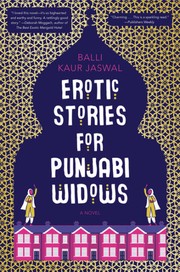
Erotic Stories for Punjabi Widows
2,004-word summary 9 min read 304 pages in the book
- First published
- 2017
- Publisher
- William Morrow
- Pages
- 304
- ISBN
- 9780062645128
Reading options
What's inside (10 sections)
- The writing class that is not a writing class
- Secrets, the Brothers, and a growing scandal
- The widows as people
- Kulwinder's marriage and the power of the stories
- Maya's death and the real villain
- Nikki, Mindi, and the family ledger
- What the novel is really saying
- What works and what does not
- Key takeaways
- FAQ
This is one of those novels that sounds like a joke and turns out to be a punch to the chest. The title promises something cheeky, and the book does deliver plenty of mischief, but underneath the laughs is a serious, angry story about honor killings, domestic violence, and the way immigrant communities can police their own women harder than anyone outside them. Balli Kaur Jaswal balances the two tones with unusual skill, so that a dirty joke and a murder investigation can share a chapter without either one feeling cheap.
The protagonist is Nikki, a twenty-two-year-old law school dropout living in West London, tending bar at a pub and trying to avoid her family's disappointment. Her father's death left the family short on money, and Nikki has spent most of her life distancing herself from the traditional Sikh community of her childhood. She is not hostile to it so much as allergic to its expectations, and she has not yet found a life of her own to put in their place.
The writing class that is not a writing class
The plot kicks off because of her sister. Mindi is traditional and wants a husband, and she asks Nikki to post a matrimonial ad on the bulletin board at the big Sikh temple in Southall. While there, Nikki sees a job posting for a creative writing instructor and impulsively applies. She wants, for once, to do something that matters.
She is interviewed by Kulwinder, an older woman who runs community activities at the temple and clearly disapproves of Nikki's modern manner. Kulwinder is the only person hiring and Nikki is the only applicant, so she gets the job. On the first day, she discovers the truth: the women who show up are not aspiring writers. They are widows, most of them middle-aged or elderly, many illiterate in English, and they signed up expecting literacy lessons.
Nikki buys supplies, and as a joke for her conservative sister she also buys a paperback of erotic stories. One of the students finds it, starts reading aloud, and the class dissolves into laughter and gossip. What Nikki understands in that moment is that these women, who are supposed to be invisible and finished, are full of desire, memory, and opinion. She stops trying to teach grammar and starts collecting their stories. The widows dictate in Punjabi into a tape recorder she buys for the class, and Sheena, the youngest of them and the only one fully literate in English, transcribes and translates.
That is the engine of the book. The stories are funny, filthy, and occasionally tender, and Jaswal threads them through the narrative as a chorus. There is a running one about a woman named Meera, her husband's younger brother's bride Rita, and a secret affair between the two women that scandalizes the class and delights the reader. The stories matter because they are the only place these women get to say what they actually want.
Secrets, the Brothers, and a growing scandal
Nikki knows they are taking a risk. A group of conservative young men called the Brothers patrol the temple grounds, appoint themselves the community's moral police, and hunt down young women who run away. The widows' project would be dangerous if it became public, and of course it does. Copies circulate hand to hand, translations spread, and soon Nikki's own mother and aunt are gossiping about the stories without knowing Nikki is behind them. The class keeps growing, and the danger grows with it.
Two other threads run alongside. The first is Jason, a Sikh man Nikki meets while sneaking a cigarette outside the temple. He is charming and mysterious, with phone calls he takes in private and an apartment he will not invite her into. Nikki likes him and suspects him in roughly equal measure, and the reasons behind his secrecy are more mundane and more sad than she fears, having to do with a recent divorce and a wish to protect her reputation.
The second thread is the death of Kulwinder's daughter Maya. Maya died under Tarampal's roof, in a house across the street from Kulwinder's, and the death was ruled a suicide. The official story is that Maya killed herself after her husband Jagdev discovered she was having an affair. Gatherings in the community repeat it as fact. But Tarampal tells Nikki it was suicide, other students hint that it was not, and Kulwinder has spent months quietly asking the police and lawyers for answers, only to receive threatening phone calls telling her to drop it.
The widows as people
The best thing about the novel is how it treats its older women. In the wider community, and in Nikki's initial assumptions, they are background figures. As the class continues, each of them gets a life. Tarampal disapproves of the erotica but has her own reasons. Manjeet reappears at inconvenient moments. Sheena carries a connection to the death of Karina Kaur, a young woman murdered in Southall years earlier whose killer was never caught, and that connection turns out to be one of the keys to the whole mystery.
Jaswal is not sentimental about them. They gossip, they judge, they are sometimes cruel to each other, and they also form the tightest support network in the book. When Nikki is in real danger at the end, it is these women who save her, not the police or the mysterious boyfriend. The image of a group of widows in white dupattas barreling across the street to break down a door is both funny and genuinely moving, and it pays off everything the novel has been building.
Kulwinder's marriage and the power of the stories
Kulwinder is the second protagonist, even though the book is told from Nikki's side. She is stuck in a marriage gone silent since Maya died. She and her husband Sarab sit with the curtains drawn so they do not have to look at Tarampal's house, and they do not talk. When Kulwinder travels to India, Sarab refuses to come with her, and she reacts by lying about her return date so she can come back early and spy on Nikki's class.
The moment she confiscates the binder of stories and fires Nikki is not simple censorship. Kulwinder is frightened, and she is also protecting something. But the novel then does something lovely. She reads the stories herself, and they rekindle something between her and Sarab. The book argues, without preaching, that the thing Kulwinder tried to suppress is the same thing that can bring her back to life. Her decision at the end to publish the stories rather than bury them, and to lobby the temple board for women's services, flows directly from that private revelation.
Maya's death and the real villain
The mystery resolves in a way that is darker than the comic frame prepares you for. Tarampal and Jagdev were lovers. Jagdev married Maya while he was involved with Tarampal, and when Maya found out, Jagdev killed her, claiming afterward that he was protecting Tarampal's reputation. Tarampal has been living with a version of events that protects her from the truth, and she is the one who lets Jagdev into Nikki's apartment, believing some lie about Kulwinder sending him.
Jagdev's plan is to destroy the class registration form, because Nikki has figured out that his handwriting on a different document does not match the supposed suicide note, which means he forged it. He beats Nikki and Tarampal, then sets the flat on fire, and Kulwinder and the widows arrive in time to pull Nikki out. Nikki and Kulwinder both end up in the hospital, and the police finally open a real investigation into Maya's death.
The ending is a mix of justice and repair. Nikki reenrolls in law school, aiming at social justice and at the other hidden deaths the community has quietly accepted. She and Kulwinder work together to get the erotic stories published. The widow who almost ruined everything spends the rest of her life in prison. And Jason writes Nikki a letter explaining himself, then leaves her the exact copy of a Beatrix Potter book she had admired years earlier in India, which is the most romantic gesture in a novel that has spent three hundred pages being rude about romance.
Nikki, Mindi, and the family ledger
A quieter thread that holds the whole book together is the relationship between the two sisters. Mindi follows the rules. She enrolls in a marriage preparation course, works with a matchmaker, and treats her own preferences as something to be negotiated after the wedding rather than before it. Nikki mocks the process, but the novel is fair to Mindi. She is not stupid, and she is not a victim. She is making a choice that her sister cannot respect, and she is honest enough to keep loving Nikki anyway.
Nikki, for her part, carries guilt about the timing of her father's death. She believes she caused it, and that belief is why she cannot simply accept her mother's disappointment as unreasonable. The book uses the small domestic scenes, phone calls, meals, the constant low-grade negotiation over what Nikki should do with her life, to keep the high drama grounded. The widows are Nikki's chosen community and her family is the one she did not choose, and by the end she is learning to hold both.
That is why the final image of Nikki back in law school lands. She has not abandoned the pub or the community center. She has found a way to turn her education toward the women she met, which is the kind of ending that actually fits a character who spent the whole book being told she was wasting her potential.
What the novel is really saying
Erotic Stories for Punjabi Widows is often described as a rom-com with a mystery, and that undersells it. The comedy is real, the mystery is serviceable, but the argument is serious. Jaswal is writing about the gap between the community's public face and its private life, and about who pays for that gap. The Brothers enforce a morality that lets men like Jagdev operate freely while punishing women for wanting anything, including each other. Kulwinder's husband's silence is its own kind of violence. And the widows, who are supposed to be past all of it, turn out to hold the most truth.
It is also a book about inheritance in the loosest sense. Nikki is caught between a British life she has not finished building and a Punjabi heritage she keeps pretending not to need. By the end she stops choosing and starts combining, teaching workshops and studying law and keeping the women who found her. That is not a dramatic transformation. It is a young person deciding that the community she fled is worth fighting for instead of avoiding.
What works and what does not
The strongest elements are the widows themselves, the sharp dialogue, and the tonal control that lets the novel move from a filthy punchline to a scene of domestic terror without losing the reader. The story-within-a-story device keeps the pace up, and Kulwinder's second act is the most satisfying arc in the book.
The weaknesses are mostly in the thriller mechanics. The Jason mystery is thin, and the reveal that he is simply divorced feels like a shrug after the suspense. The villain is a stock abuser, and some of the secondary characters exist mainly to move the plot. The narrative also has a tendency to explain the community's customs a little too helpfully for readers outside it, which can flatten the texture.
None of that stops the book from working. It is funny, it is furious, and it has one of the more memorable ensembles in recent fiction about diaspora life. If the title makes you expect nothing but titillation, the novel is happy to use that expectation against you.
FAQ
Is Erotic Stories for Punjabi Widows a romance?
It mixes several genres. There is a romance between Nikki and Jason, but the book is mainly a comic and mystery-driven novel about community and women's lives.
When was Erotic Stories for Punjabi Widows published?
William Morrow published it on March 14, 2017. The hardcover runs 304 pages with ISBN 9780062645128.
Was Erotic Stories for Punjabi Widows a Reese Witherspoon book club pick?
Yes. It was selected for Reese Witherspoon's Hello Sunshine book club, which helped make it a bestseller.
Similar books

Little Earthquakes
Four Philadelphia women meet during pregnancy and discover that new motherhood is nothing like the plan, while friendship becomes the thing that holds them…
1,997-word summary · 9 min read
One to Watch
A plus-size fashion blogger takes the lead role on a reality dating show to prove she belongs on television, and finds she might want what the cameras offer.
2,478-word summary · 11 min read
Between Sisters
Estranged sisters Meghann and Claire reunite in Washington when Claire announces a rushed wedding, then face their mother's desertion and a medical crisis.
2,467-word summary · 11 min read
The No-Show
Three women are stood up on Valentine's Day by the same man, but the timeline is not what it seems. O'Leary's warmest book with a knife in it.
2,127-word summary · 9 min read
The Girl with the Louding Voice
Sold as a wife at fourteen, Adunni flees to Lagos servitude and fights for school.
2,010-word summary · 9 min read
A Room of One's Own
Woolf argues a woman needs money and a locked room to write, touring history for lost sisters.
2,001-word summary · 9 min read

What Happened to Goodbye
Mclean has reinvented herself in four towns since her parents divorced. In Lakeview she uses her real name, and for the first time staying put becomes a choice.
2,796-word summary · 12 min read

Violeta
A woman born in 1920 writes her life story to her grandson, from one pandemic to another, through wealth, ruin, passion, and dictatorship in South America.
2,555-word summary · 11 min read

Size 12 Is Not Fat
Former teen pop star Heather Wells investigates two dorm elevator deaths while juggling her ex, her crush, and a size-12 wardrobe.
2,805-word summary · 12 min read
Alone With You in the Ether
Two people in Chicago agree to six conversations, and the experiment becomes a love affair that is also a study of bipolar disorder, obsession, and the shape…
2,713-word summary · 12 min read
The Only Woman in the Room
A novel about Hedy Lamarr's escape from an arms-dealer husband, her Hollywood career, and the frequency-hopping patent the Navy ignored.
2,067-word summary · 9 min read

Dumplin'
Willowdean Dickson enters her town's beauty pageant as a protest and discovers that confidence is harder to keep once she lets someone close.
1,922-word summary · 9 min read
The Secret of the Nagas
Shiva hunts the Naga who attacked Sati, discovers her hidden twin sister and lost son, and follows the trail to the Naga capital of Panchavati.
2,442-word summary · 11 min read
The Once and Future Witches
Three estranged sisters bring witchcraft back to an 1893 city where magic hides in nursery rhymes and the fight for the vote is also a fight for power.
2,132-word summary · 9 min read

Mrs. Everything
Two Jewish sisters in Detroit grow up, apart and together, across seven decades of American life, from the 1950s to the 2016 election.
2,362-word summary · 10 min read

Iron Widow
Wu Zetian enlists to avenge her sister, kills her pilot, and becomes an Iron Widow in a mecha Huaxia where the machines are built to kill women.
2,444-word summary · 11 min read

Infidel
Ayaan Hirsi Ali's memoir of a Somali childhood, a forced marriage, a Dutch asylum claim, and the political fight that followed the murder of Theo van Gogh.
2,041-word summary · 9 min read
Five Point Someone: What Not to Do at IIT
Three friends at IIT drift to a five-point GPA, mock the system, and break into a professor's office for an exam paper.
2,458-word summary · 11 min read
Shopaholic and Sister
Becky Brandon returns from a ten-month honeymoon to meet the half-sister she always wanted, then discovers that Jess is thrifty, prickly, and nothing like the…
2,591-word summary · 12 min read
Year of Yes: How to Dance It Out, Stand in the Sun and Be Your Own Person
Shonda Rhimes takes her sister’s accusation seriously and spends a year saying yes to the things that frighten her, from live television to her own reflection.
2,585-word summary · 11 min read

Sam's Letters to Jennifer
A grieving journalist reads her grandmother's letters and finds a decades-long love affair that changes how she sees her family.
2,310-word summary · 10 min read
Mr. Maybe
Libby Mason wants a rich husband, but the wealthy man who proposes is dull and the broke writer she cannot forget is not offering forever.
2,322-word summary · 10 min read
I Kissed Shara Wheeler
Shara Wheeler kisses her rival Chloe Green at prom and disappears, leaving a scavenger hunt that forces Chloe to rethink everything she knew about her.
2,083-word summary · 9 min read

Amy & Roger's Epic Detour
Amy Curry has not driven since the crash that killed her father. With Roger at the wheel and a box of maps between them, a cross-country trip becomes a slow…
3,034-word summary · 13 min read
The Storyteller's Secret
A New York journalist goes to India to learn why her grandmother loved a British officer, and why a family servant kept the truth for forty years.
2,270-word summary · 10 min read
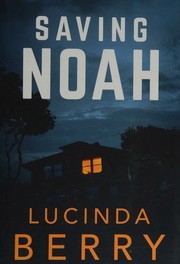
Saving Noah
A seventeen-year-old swimmer confesses to molesting two girls he coached, and his mother must decide what unconditional love is worth.
2,976-word summary · 13 min read
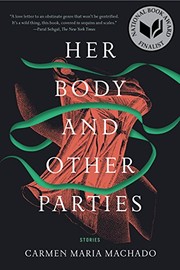
Her Body and Other Parties: Stories
Eight stories where bodies, medicine and old fairy tales get taken apart, with a green ribbon running through the whole book.
2,997-word summary · 13 min read
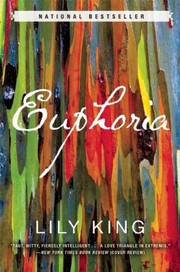
Euphoria
Three anthropologists in 1930s New Guinea turn fieldwork into a love triangle, and a real history breathes behind them.
2,048-word summary · 9 min read
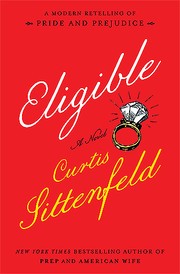
Eligible
Austen's Bennet sisters move to modern Cincinnati, where marriage is a reality show and the house is losing its value.
2,293-word summary · 10 min read

Dear Girls: Intimate Tales, Untold Secrets & Advice for Living Your Best Life
Ali Wong's debut collects fourteen letters to her daughters, covering sex, money, work, marriage, Vietnam, and being a working Asian American mother.
2,266-word summary · 10 min read