
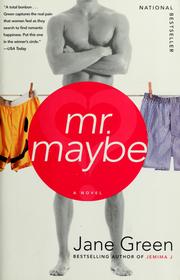
Mr. Maybe
2,322-word summary 10 min read 368 pages in the book
- First published
- 1999
- Publisher
- Broadway Books
- Pages
- 368
- ISBN
- 9780767905206
Reading options
What's inside (9 sections)
The first thing Libby Mason does in Mr. Maybe is make a list. She writes down the pros and cons of the man she is sleeping with, and the cons outnumber the pros by a comfortable margin. He has no money. He lives in a bedsit. He is left-wing. He likes pubs. She hates his friends. He is allergic to commitment. Under pros she writes that she fancies the pants off him, that he has the biggest, softest blue eyes she has ever seen, that he is affectionate, and that he is fantastic in bed. It is a funny scene, and it is also the whole novel in miniature: a woman who knows exactly what she wants, and who cannot decide whether she is allowed to want it.
Jane Green published Mr. Maybe in 1999, and it belongs to the first wave of British chick lit, the post-Bridget Jones boom of glossy covers and wine-soaked first-person narration. Libby is twenty-seven, works in public relations in London, and has a flat in Ladbroke Grove that she can barely afford. She is not rich, but she is stylish, and she has convinced herself that the solution to her problems is a rich husband. The book is about how that conviction survives contact with two very different men.
Nick, and the problem with chemistry
Nick is a writer. He is handsome in a scruffy way, he is funny, he is passionate about politics, and he is broke. He lives in a grotty bedsit and spends his evenings in pubs with friends Libby cannot stand. He is also honest about not wanting a relationship, which Libby hears as a challenge. She tells herself that he is a fling, that she can enjoy him without expecting anything, and she almost believes it.
The scenes with Nick are the best in the book. Green writes attraction well, and she writes the specific texture of an affair that is not going anywhere. Libby and Nick laugh in bed, argue about politics, and have the kind of sex that makes her forget she is supposed to be looking for a husband. Nick is not a fantasy figure. He is careless, self-absorbed, and occasionally cruel in the way that men who have decided they are not ready can be. But he sees Libby, and she knows it.
The problem is that seeing someone is not the same as choosing them. Nick has decided that commitment is a trap, and Libby has decided that poverty is a trap. They are both right about each other, which is what makes the relationship sad rather than romantic. Green does not pretend that love conquers all. She lets Libby enjoy Nick and then lets Nick end it, because he is too attracted to her and not ready for the relationship she is pretending not to want. The breakup is more convincing than the love.
Ed, and the seduction of security
Ed is everything Nick is not. He is a wealthy investment banker, he has a house in Regent's Park, he drives a Porsche, and he is ready to get married. He also has a bad moustache, a boring job, and no sense of humor. When he kisses Libby for the first time, she is repulsed. Too much tongue, too much saliva, too much moustache. She compares him to the spotty boys of her teenage years and decides that nothing, not even the Porsche, will make her kiss him again.
And then she keeps seeing him anyway. This is the most honest part of the novel. Libby does not fall for Ed. She falls for what Ed can give her: the restaurants, the gifts, the holidays, the diamond shopping, the feeling of being chosen by someone who can afford to choose anyone. Green is very good at the small corruptions of that life. Libby starts to enjoy the way the sales assistants look at her when she walks into a shop with Ed's credit card. She starts to imagine the wedding. She starts to tell herself that passion is overrated and that friendship, security, and a nice house are what grown women are supposed to want.
Her mother is no help. Mrs. Mason has spent Libby's whole life worrying about money and status, and she is thrilled by Ed. She sees him as proof that her daughter has finally done something right. Libby's best friend Jules is more skeptical, but Jules is married and secure, and Libby cannot quite hear the warning in her advice. The novel is full of women giving Libby contradictory instructions about what she should want, and the comedy comes from how cheerfully she ignores all of them.
The engagement, and the long rationalization
Ed proposes, and Libby says yes. The middle of the book is the engagement, and it is much darker than the cover suggests. Libby tries on dresses, chooses flowers, and listens to Ed talk about the future, and all the while she is cataloguing the things about him that make her skin crawl. The way he eats. The way he talks to waiters. The way he assumes that her life will rearrange itself around his. She makes excuses for all of it. She tells herself that every marriage involves compromise, that she is being shallow for caring about chemistry, that she should be grateful.
This is where Green's prose does its quiet work. The book is funny, but the humor has a bitter edge. Libby's friends squeal over the ring. Her mother cries with happiness. The wedding gets bigger. And Libby gets smaller. She stops seeing Nick, stops going out, stops doing the things that made her feel like herself. The novel is careful not to make Ed a monster. He is not violent or cruel. He is simply a man who has decided what he wants and expects the world to agree. That is enough to suffocate someone.
The diamond shopping is the set piece everyone remembers. Libby is taken to choose a ring, and the scene is written as a fantasy of consumption. The stones, the lights, the attention. For a few pages she is happy. Then the bill comes, metaphorically, and she realizes that the ring is a contract. She is not choosing a piece of jewelry. She is choosing a life in which she will be looked after and owned in roughly equal measure.
The break
The final movement is the reason the book still works. Libby goes to her mother and says the thing she has been avoiding: she does not love Ed. She is never going to love him. Her mother, who has spent the whole novel pushing her toward security, cannot answer. For once, Libby has said something that cannot be argued with. Then she ends the engagement.
What follows is not the wedding-day dash of the movies. Libby sees Nick again before the engagement collapses, at a party, with another woman on his arm, and the sight confirms what she has been refusing to admit. The reunion comes later, after both of them have had time to see what they lost. Nick admits that ending things was a mistake. Libby admits that she has been measuring men against a list instead of listening to herself. The novel closes with them together, and the happiness is earned less by plot mechanics than by the fact that Libby has finally told the truth.
That ending has divided readers. Some find it a cop-out, because the book spends three hundred pages arguing that security is a trap and then hands the heroine the man she wanted all along. Others find it honest, because Libby does not choose Nick instead of growth. She chooses him after she has learned to say what she feels. Both readings are defensible. What matters is that the choice is hers, and that she makes it after the ring, the dress, and the diamond have lost their shine.
The list, and the voice
The list is not a one-off joke. It comes back in different forms throughout the novel, because Libby thinks in columns. She evaluates men, flats, jobs, friends, and her own behavior, and she presents the results to the reader as if she were filing a report. The habit is funny, and it is also the thing that keeps her stuck. A list can compare salaries and shoes. It cannot measure whether you want to wake up next to someone.
Green's voice is the reason this works. Libby is funny in a defensive way. She makes jokes about her own shallowness before anyone else can, which means the reader is never quite sure whether she is self-aware or just well defended. The first-person narration puts us inside her rationalizations, so we watch her talk herself into Ed in real time. We hear the arguments she makes to herself, and we recognize them. That is more uncomfortable than a straightforward comedy about a woman who learns a lesson.
The novel also belongs to a specific moment in British publishing. Bridget Jones's Diary came out in 1996, and by the end of the decade the bookshops were full of pastel covers about single women in media jobs. Mr. Maybe arrived in 1999, near the peak of that boom. Green's contribution was to take the formula and push the middle of it toward discomfort. Her heroine gets the guy, but only after the book has made her earn it. The decision comes first, and the romance is the reward for telling the truth. That was unusual for the genre, and it is why the book is still discussed while many of its contemporaries have been forgotten.
There is a class dimension that the novel handles better than its reputation suggests. Nick's politics, Ed's money, and Mrs. Mason's anxiety about status are all connected. Libby is not poor, but she is precarious, and the book understands that precariousness. It knows that a bad relationship can look like a solution when the rent is due. It also knows that the solution can cost more than the problem. The novel does not resolve that tension. It just puts it on the page and lets Libby feel it.
The supporting cast exists to apply pressure, and most of them are thinner than they should be. Jules is further along the road Libby thinks she wants to take, and her advice is shaped by a life Libby cannot quite see. Olly, Libby's brother, is the one sensible man in the room, which makes him useful and a little boring. The flat in Ladbroke Grove is almost a character: small, expensive, and full of the life Libby is trying to afford. When she imagines giving it up for Ed's house, the loss is not just romantic. It is a loss of the self she has built, however imperfectly.
What the book gets right, and what it does not
The best thing about Mr. Maybe is its refusal to pretend that money does not matter. Libby is not a gold digger in a cartoon sense. She is a woman with an overdraft, a small flat, and a mother who has taught her that love is a luxury. Her desire for security is rational. The novel understands that, and it also understands that rationality is not enough. The scenes where she tries to talk herself into Ed are painfully recognizable. Anyone who has stayed too long in a relationship that looked good on paper will find something to wince at.
The worst thing is that Libby can be exhausting. She is self-absorbed, obsessed with brands, and prone to judging people by their shoes. Green writes her with affection, but she does not give her much curiosity about the world. The political material, especially Nick's left-wing friends and Libby's reflexive Conservatism, is played for laughs and dates the book badly. The supporting characters are thin. Jules exists to give advice, Mrs. Mason exists to apply pressure, and Olly, Libby's brother, exists to be the one sensible man in the room.
The prose is light and fast, which suits the voice, but it is not especially memorable. Green is good at dialogue and at the small humiliations of dating. She is less good at description, and the London of the novel is mostly a series of restaurants and flats rather than a city. If you are looking for a book that captures the texture of late-1990s London, this is not it. If you are looking for a book about the gap between what a woman is told to want and what she actually wants, it is sharper than its cover suggests.
Who should read it
Mr. Maybe is for readers who like their romance with a side of discomfort. It is a romantic comedy in form, but the comedy is about self-deception, and the romance spends most of the book offstage. If you want a happy ending without ambivalence, you will be impatient with the long detour through Ed. If you want a book that takes seriously the question of whether security is worth more than desire, and then lets its heroine answer it badly before she answers it well, you will find a lot to argue with.
I picked it up because I had heard it described as a classic of the genre, and I finished it thinking about my own list of pros and cons. That is the test of a book like this. It does not need to be beautiful. It needs to make you recognize the voice in your own head that tells you to settle for something that looks good. Libby's voice is louder and funnier than mine, but the argument is the same. She chooses the uncertainty, and then she chooses Nick. The novel lets her have both, and that is why it lasts.
FAQ
Does Libby end up with Nick in Mr. Maybe?
Libby calls off her engagement to Ed and later reunites with Nick. The novel ends with them together, after she admits that she does not love Ed.
Is Mr. Maybe a serious book or a light romantic comedy?
It is written as a romantic comedy, but much of the humor comes from Libby's self-deception about money, status, and what she actually wants.
When was Mr. Maybe published?
It was first published in 1999, and the Broadway Books paperback edition cited here runs 368 pages.
Similar books
Jemima J
Overweight London journalist Jemima Jones invents a slim online self for a California lover, starves to match the photo, then faces betrayal and learns to…
2,883-word summary · 13 min read
Bridget Jones: The Edge of Reason
Bridget doubts Mark, takes a job with Daniel, and lands in trouble in Thailand.
2,198-word summary · 10 min read

Size 12 Is Not Fat
Former teen pop star Heather Wells investigates two dorm elevator deaths while juggling her ex, her crush, and a size-12 wardrobe.
2,805-word summary · 12 min read
Shopaholic and Sister
Becky Brandon returns from a ten-month honeymoon to meet the half-sister she always wanted, then discovers that Jess is thrifty, prickly, and nothing like the…
2,591-word summary · 12 min read
Wedding Night
Lottie marries an old flame days after a breakup, then flies to a Greek island while her sister quietly works to sabotage the honeymoon. A farce about memory,…
2,213-word summary · 10 min read
Ghosts
At 32, food writer Nina Dean faces ghosting by Max and her father's dementia in London.
2,677-word summary · 12 min read
Twenties Girl
Dumped and flailing, Lara Lington is haunted by her great-aunt Sadie, a 1920s ghost who wants her lost necklace back.
2,938-word summary · 13 min read
Can You Keep a Secret?
Emma blurts every secret to a stranger on a turbulent flight, then finds him running her company.
3,114-word summary · 14 min read
Austenland
A New York graphic designer obsessed with Mr. Darcy inherits a trip to a Jane Austen theme park, where the fantasy of Regency romance collides with the men…
2,030-word summary · 9 min read
Bet Me
A sharp actuary agrees to dinner with a charming serial bettor, then spends the next month pretending the wager does not matter.
2,710-word summary · 12 min read
This Time Next Year
Two women give birth minutes apart on New Year's Day 1990, and one takes the other's lucky name. Thirty years on, their children meet again.
2,194-word summary · 10 min read
Eligible
Austen's Bennet sisters move to modern Cincinnati, where marriage is a reality show and the house is losing its value.
2,293-word summary · 10 min read

Big Swiss
A transcriptionist for a sex coach falls for one of his clients, the tall Swiss gynecologist she calls Big Swiss, in a funny novel about work and secrets.
2,523-word summary · 11 min read
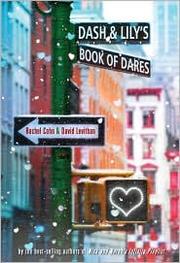
Dash & Lily's Book of Dares
Two lonely New York teenagers trade dares in a red notebook left at the Strand, falling for each other on the page before they meet.
2,228-word summary · 10 min read
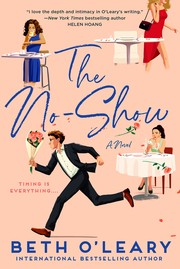
The No-Show
Three women are stood up on Valentine's Day by the same man, but the timeline is not what it seems. O'Leary's warmest book with a knife in it.
2,127-word summary · 9 min read
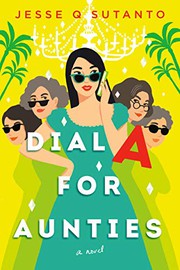
Dial A for Aunties
A wedding photographer accidentally kills her blind date, and her mother and three aunties help her hide the body during the biggest wedding of their careers.
2,076-word summary · 9 min read
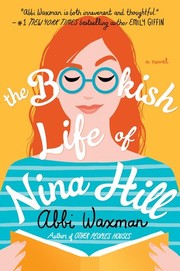
The Bookish Life of Nina Hill
Bookstore Nina gains a family and pub-quiz love in Los Angeles.
2,399-word summary · 11 min read
Shopaholic Ties the Knot
Becky Bloomwood plans two weddings at once while debts pile up and Luke's mother interferes.
2,218-word summary · 10 min read
You Deserve Each Other
Engaged and miserable, Naomi and Nicholas wage a prank war to force a breakup, then face money, mothers, and truth in Sarah Hogle's funny romance with a tender…
2,415-word summary · 11 min read
The Bromance Book Club
A Nashville pitcher joins a secret romance book club to save his marriage after his wife Thea asks for divorce. He trades pride for listening, chores, and…
2,932-word summary · 13 min read
Tangled
Told by a cocky businessman, a bet to win the new associate who rejects him turns into real pursuit, strict rules, a painful reveal and a wedding-level happy…
2,868-word summary · 13 min read
The Do-Over
Emilie relives awful Valentine Day with cheating boyfriend until Nick helps fix it.
2,071-word summary · 9 min read
Shopaholic and Baby
Pregnant Becky shops for the perfect nursery while Luke's ex becomes her obstetrician.
2,247-word summary · 10 min read
My Not So Perfect Life
Katie chases London creative life while her perfect boss Demeter hides cracks, until a farm trip flips roles.
2,300-word summary · 10 min read
Boyfriend Material
A tabloid-haunted charity worker fakes a romance with a straitlaced barrister in this funny 2020 London rom-com.
2,325-word summary · 10 min read
The Keeper of Lost Things
An old writer collects lost objects and leaves the quest to his housekeeper.
1,934-word summary · 9 min read
Get a Life, Chloe Brown
A chronically ill woman recruits her gruff handyman neighbor to help her finish a bold Get a Life list.
2,147-word summary · 10 min read
Someone Else's Shoes
A rich wife loses everything and a tired mom gains red heels when gym bags swap in London.
1,951-word summary · 9 min read
The Undomestic Goddess
A burned out London lawyer flees a career mistake and takes a housekeeper job she cannot do.
2,943-word summary · 13 min read
One Day in December
Laurie spots her dream man from a London bus, then meets him again as her best friend Sarah's new boyfriend.
2,513-word summary · 11 min read