
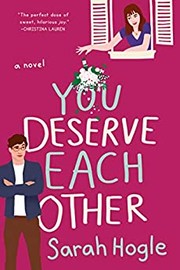
You Deserve Each Other
2,415-word summary 11 min read
- First published
- 2020
- Publisher
- G. P. Putnam's Sons
- ISBN
- 9780593085424
Reading options
What's inside (8 sections)
I bought You Deserve Each Other on a rainy Saturday because the cover promised a funny hate to love story and I wanted something light after two heavy novels in a row. Sarah Hogle published it with G. P. Putnam's Sons in April 2020, right as weddings everywhere were being canceled for reasons that had nothing to do with romance. That timing gave the book a strange second life. Here was a novel about a couple trying to get out of their wedding while everyone around them kept asking about napkins. I laughed a lot in the first hundred pages, winced in the middle, and ended up fonder of it than I expected, even though parts of it are deliberately unpleasant to read.
The premise is simple and mean in a fun way. Naomi Westfield and Nicholas Rose are engaged, living together, and miserable. They were sweet once. Now they circle the same small house like roommates who split the electric bill and nothing else. Naomi narrates, funny and tired, working a job that does not pay enough, fielding calls about the wedding, watching Nicholas play video games with his headset on while dishes pile up. Nicholas, from her view, has become a stranger who leaves socks on the floor, criticizes her cooking, and saves his charm for other people. She does not want to marry him. She also does not want to be the one who calls it off, because her mother has paid deposits, his mother Deborah has opinions about everything, and the social cost of canceling feels higher than the cost of staying.
An engagement gone cold
The opening chapters do a good job showing how love curdles without a single big betrayal. Hogle gives us routines instead. Nicholas comes home late and heats leftovers without asking if Naomi ate. Naomi stays up scrolling wedding boards she hates. They sleep on opposite edges of the bed. Sex has stopped. Conversation has narrowed to logistics. Who buys toilet paper. Who takes the car for an oil change. Whether his mother called.
Naomi's voice carries this stretch. She is sarcastic but not cruel yet, more exhausted than angry. She loves Nicholas's family in a complicated way, especially the idea of belonging to people who host holidays and remember birthdays, even if Deborah corrects her table settings and asks when she will get a real haircut. Naomi's own mother wants the wedding to happen, partly for joy and partly because she has told friends, put down money, imagined photos. Naomi does the math on deposits and venues and caterers and feels trapped by sums she cannot afford to lose. Anyone who has priced a wedding will recognize the panic. Canceling is not just breaking up. It is unwinding contracts.
Nicholas, as Naomi sees him, is no better. He works, games, withdraws. He makes jokes at her expense in front of friends. He forgets things she told him twice. He seems relieved when plans fall through. Naomi decides he must want out too but lacks the nerve to say it. That belief becomes the engine. If he wants out and she wants out, someone just has to blink first. She decides it will not be her.
The prank war to force a breakup
Naomi's solution is sabotage disguised as accident. She will make herself so impossible to marry that Nicholas will end the engagement, leaving her free and blameless. She starts small. She over salts his dinner. She shrinks his favorite shirt in the wash. She sets his alarm for 3 a.m. She replaces his coffee with decaf. She leaves glitter in his gaming headset. Each stunt is petty enough to deny, and she denies everything with wide eyes.
Hogle writes these scenes with sitcom timing. Naomi narrates her planning like a general, then botches the execution because she feels guilty mid act. The glitter incident ends with her vacuuming at midnight so Deborah will not see it during a drop by. The salted pasta ends with Naomi eating the ruined food herself so Nicholas will not know she did it on purpose, which defeats the point and gives her heartburn. I laughed out loud at the decaf week, where Nicholas wanders the house like a ghost and Naomi almost confesses on day three because she misses the alert version of him.
Nicholas retaliates, or seems to. Naomi's towels get bleached. Her plants get moved. Her favorite mug chips. Her meeting notes disappear from the fridge. She reads each event as proof he is playing too, which thrills her. Finally, progress. He wants out as badly as she does. The pranks escalate. He puts hot sauce in her shampoo, or she thinks he did. She puts plastic wrap under the toilet seat. He hides her phone charger before a work call. She eats the leftovers he labeled with his name in all caps. The house becomes a low stakes battlefield where neither soldier will admit there is a war.
This is the stretch where readers split. If you enjoy cringe comedy, the inventions keep coming and Naomi's commentary sells them. If you dislike watching people be unkind to someone they once loved, it starts to sting around the fifth or sixth stunt. Hogle knows it. She lets Naomi's triumph curdle quickly. Winning a round feels good for ten minutes, then Naomi sits in the kitchen and feels childish and tired. The book wants you to ask why two adults would rather wage glitter warfare than have a ten minute honest talk, and the answer, fear and money and mothers, is not as funny as the war.
Mothers, money, and the wedding machine
The wedding itself becomes a third character. Venue tours. Cake tastings Naomi dreads. A photographer who talks about golden hour while Naomi calculates hourly rates. Deborah Rose, Nicholas's mother, looms largest. Deborah loves her son in a fierce, narrow way. She has ideas about flowers, about the rehearsal dinner, about Naomi's dress, about whether Naomi's family will behave. She calls often. She drops by with magazines. She frames every suggestion as help while making clear there is a right answer, hers.
Naomi's mother is softer but no less pressing. She has dreamed about this day. She has paid for parts of it. She tells friends. She asks Naomi to be happy in a voice that makes unhappiness feel like ingratitude. Naomi's best friend listens to rants, offers wine and blunt advice, tells her to either fix it or end it, and watches Naomi do neither. Co workers ask to see the ring. Neighbors ask about dates. Every question tightens the trap. How do you tell a room full of people who bought plane tickets that you salted your fiance's eggs hoping he would dump you.
Money threads through all of it. Naomi and Nicholas are not rich. The wedding they are planning is the kind that eats savings. Deposits are nonrefundable. A venue change costs a fee. A smaller guest list still requires food minimums. Hogle is sharp on this. The couple's resentment is not only emotional. It is financial. They feel they bought a party they no longer want to attend and cannot afford to cancel. That pressure explains more of their bad behavior than either admits. It is easier to bleach a towel than to lose two thousand dollars and face your mother.
Amid the logistics, Hogle plants small flashbacks to better times. A road trip where they sang wrong lyrics. A first apartment with mismatched mugs. Nicholas bringing soup when Naomi had flu. Naomi defending Nicholas to a rude stranger at a bar. These memories arrive without warning and hit harder than the pranks. They remind you, and Naomi, that contempt was not the starting point.
The turn neither of them expected
About halfway through, the premise tilts. Naomi discovers that Nicholas is not just reacting. He has been playing his own game, on purpose, longer than she has. His coldness, his irritations, some of the sabotage, were tactics too. He also wants out but does not want to be the villain. He also did the math on deposits and mothers and decided to make her end it.
On paper this should make them even. In the book it devastates Naomi. Her private war was lonely but controlled. Learning she was also a target makes her feel foolish and exposed. She replays months of slights and recodes them. Was he ever tired, or always acting. Was the forgotten dinner a tactic. Was the joke in front of friends a push. Hogle handles the reveal without turning Nicholas into a monster. He is ashamed when confronted. He admits he felt stuck and chose a cowardly way out. He does not excuse it with charm.
The fight that follows is the best written scene in the novel. No pranks. Just two people in a living room saying true things badly. Naomi admits she stopped trying long before the pranks. Nicholas admits he stopped telling her what he needed because he assumed she did not care. They talk about money without euphemism for the first time. They talk about Deborah without Naomi performing gratitude she does not feel. They talk about sex, or the lack of it, without jokes. It is awkward and halting and more intimate than anything in the first half. I believed they had loved each other because I believed they could hurt each other this precisely.
After the blowup, they do what sensible people should have done chapters earlier. They pause the wedding planning. They tell their parents they need space, which goes over badly, especially with Deborah, who hears pause as failure and tries to fix it with more planning. They separate routines inside the same house for a while, then briefly apart, sleeping, thinking, talking to friends who finally stop joking and tell the truth. Naomi's friend tells her she became someone she would not like at brunch. A kind older relative tells Nicholas he confused being comfortable with being known.
Remembering why it worked
The rediscovery arc is slow and physical in small ways. Nicholas makes coffee the way Naomi actually likes it, not the way his mother said wives should make it. Naomi asks about his work project and listens past the first sentence. They walk instead of gaming. They cook together without scorekeeping. One night they do dishes side by side and laugh about the plastic wrap incident, which still horrifies Deborah when she hears about it later. Desire returns sideways, through kindness rather than grand gestures. Hogle trusts domestic detail here. A shared blanket. A remembered allergy. A hand on a back while carrying groceries.
There are set pieces too. A disastrous tasting where they finally tell a vendor they might postpone, and the relief is so strong they giggle in the car. A visit with Deborah where Naomi holds a boundary without cruelty and Nicholas backs her up, a first. A call with Naomi's mom where Naomi says she will not marry to protect deposits, and her mom, after a pause, says she just wants her happy, which makes Naomi cry in a parking lot. These scenes work because the stakes are clear. Every honest choice costs someone money or pride. They choose honesty anyway.
The book does not pretend the prank months did no harm. Trust rebuilds with checks. Naomi apologizes without asking for instant forgiveness. Nicholas does the same. They discuss what a wedding they actually want would look like, smaller, cheaper, theirs, or whether they want to marry at all right now. Hogle keeps the answer grounded. They love each other. They like each other again, which is different and harder. They decide to stay and to plan something that fits their life, not their mothers' albums. The final chapters give a happy ending that feels earned because it includes a smaller guest list, firmer boundaries, and two people who now know how to say they are unhappy before they reach for glitter.
Side characters get soft landings. Deborah does not transform into a different woman, which I appreciated. She remains opinionated and status aware, but she steps back enough to let her son choose. Naomi's mom adjusts. The best friend gets the last good one liner. Nicholas's father, quieter in the book, gets a nice moment of plain support that balances Deborah's noise.
What charms and what grates
What charms is Naomi's voice. She is funny on the page in a way that feels spoken, not written for quotes. Her asides about wedding industry language, about coworkers who treat engagements as promotions, about trying to look happy in photos while planning to ruin soup, land because they are specific. Hogle also writes physical comedy well without turning people into cartoons. You can see the glitter, smell the burnt garlic, hear the 3 a.m. alarm. The central idea, two cowards trying to force a breakup, sustains farce and then matures into something tender about how money and family can smother a good pair.
What grates is real too. The middle stretch stays mean longer than it needs to. Around the tenth prank, I wanted someone to shake both leads. Naomi narrates, so Nicholas reads as worse than he is for a long time, which makes the reveal feel like a trick even though it is seeded. The side cast is thin. Beyond Deborah, most friends and coworkers blur into functions, the supportive friend, the nosy vendor, the clueless boss. And the third act snaps toward sweetness quickly after so much sabotage. One honest fight, however good, cannot quite erase months of contempt, and Hogle hurries the repair because the genre requires a wedding shaped resolution.
Read it for what it is, a contemporary enemies to lovers comedy that lets its lovers be genuinely unlikable for a while. Go in knowing April 2020 Putnam published it as a romance, not as a manual. If you have ever priced chair covers while wondering if you even like your partner that week, you will feel seen and gently scolded. I closed it thinking less about pranks than about the quieter point Hogle makes. It is easier to wage a clever war than to say you are scared of a bill, a mother in law, a future. Naomi and Nicholas finally say it. The glitter settles. What is left is two people doing dishes, which turns out to be more romantic than any venue with string lights.
FAQ
When was You Deserve Each Other published?
G. P. Putnam's Sons published it in April 2020. It stands alone and is narrated by Naomi Westfield.
Do Naomi and Nicholas stay together?
Yes. After mutual sabotage and an honest fight, they pause the large wedding, set firmer boundaries, and choose a smaller future together.
Is the whole book just pranks?
No. The prank war fills the middle, but the heart is money pressure, family expectations from Deborah and Naomi's mother, and learning to talk plainly.
Similar books

Size 12 Is Not Fat
Former teen pop star Heather Wells investigates two dorm elevator deaths while juggling her ex, her crush, and a size-12 wardrobe.
2,805-word summary · 12 min read
The Ex Talk
Two rival public radio producers pretend to be exes for a dating show, then fall for each other while the lie grows.
2,389-word summary · 11 min read
Mr. Maybe
Libby Mason wants a rich husband, but the wealthy man who proposes is dull and the broke writer she cannot forget is not offering forever.
2,322-word summary · 10 min read
Eligible
Austen's Bennet sisters move to modern Cincinnati, where marriage is a reality show and the house is losing its value.
2,293-word summary · 10 min read

Big Swiss
A transcriptionist for a sex coach falls for one of his clients, the tall Swiss gynecologist she calls Big Swiss, in a funny novel about work and secrets.
2,523-word summary · 11 min read
Wedding Night
Lottie marries an old flame days after a breakup, then flies to a Greek island while her sister quietly works to sabotage the honeymoon. A farce about memory,…
2,213-word summary · 10 min read
Dash & Lily's Book of Dares
Two lonely New York teenagers trade dares in a red notebook left at the Strand, falling for each other on the page before they meet.
2,228-word summary · 10 min read
Dial A for Aunties
A wedding photographer accidentally kills her blind date, and her mother and three aunties help her hide the body during the biggest wedding of their careers.
2,076-word summary · 9 min read
The Bookish Life of Nina Hill
Bookstore Nina gains a family and pub-quiz love in Los Angeles.
2,399-word summary · 11 min read

Bridget Jones: The Edge of Reason
Bridget doubts Mark, takes a job with Daniel, and lands in trouble in Thailand.
2,198-word summary · 10 min read
The Takeover
An arrogant CEO and the sharp employee forced to staff his deal trade insults, trips and late nights across a long push-pull, until pride and jealousy force…
2,580-word summary · 11 min read
The Bromance Book Club
A Nashville pitcher joins a secret romance book club to save his marriage after his wife Thea asks for divorce. He trades pride for listening, chores, and…
2,932-word summary · 13 min read
Tangled
Told by a cocky businessman, a bet to win the new associate who rejects him turns into real pursuit, strict rules, a painful reveal and a wedding-level happy…
2,868-word summary · 13 min read
Jemima J
Overweight London journalist Jemima Jones invents a slim online self for a California lover, starves to match the photo, then faces betrayal and learns to…
2,883-word summary · 13 min read
Ghosts
At 32, food writer Nina Dean faces ghosting by Max and her father's dementia in London.
2,677-word summary · 12 min read
The Do-Over
Emilie relives awful Valentine Day with cheating boyfriend until Nick helps fix it.
2,071-word summary · 9 min read
My Killer Vacation
A teacher and a bounty hunter share a Cape Cod rental with a corpse and a growing attraction.
2,625-word summary · 12 min read
Boyfriend Material
A tabloid-haunted charity worker fakes a romance with a straitlaced barrister in this funny 2020 London rom-com.
2,325-word summary · 10 min read
Twenties Girl
Dumped and flailing, Lara Lington is haunted by her great-aunt Sadie, a 1920s ghost who wants her lost necklace back.
2,938-word summary · 13 min read
Get a Life, Chloe Brown
A chronically ill woman recruits her gruff handyman neighbor to help her finish a bold Get a Life list.
2,147-word summary · 10 min read
Beautiful Bastard
Chloe Mills battles her demanding boss Bennett Ryan in Chicago, until office rivalry turns into a secret relationship that tests both careers.
2,800-word summary · 12 min read
From Lukov with Love
Stalled skater Jasmine pairs with rude champion Lukov for one last season built on 5 a.m. ice.
2,013-word summary · 9 min read
Things We Left Behind
Lucian Rollins returns to Knockemout to bury his father's past and collides with librarian Sloane Walton.
2,777-word summary · 12 min read
The Kiss Quotient
Stella Lane hires escort Michael Phan to practice dating and learns logic fails where touch and family press in.
2,716-word summary · 12 min read
Can You Keep a Secret?
Emma blurts every secret to a stranger on a turbulent flight, then finds him running her company.
3,114-word summary · 14 min read

Better than the Movies
A rom com obsessed senior hires her annoying next door neighbor to win her crush, then finds real love is messier and kinder than any movie plot.
2,438-word summary · 11 min read
Twisted Hate
Jules Ambrose and Josh Chen turn years of hate into a risky arrangement that forces both to face old wounds.
2,557-word summary · 11 min read
Something Borrowed
Good girl Rachel loves her best friend's fiance through a summer of weddings and lies.
2,100-word summary · 9 min read
The Hating Game
Two executive assistants share an office, a rivalry, and a promotion neither will concede without a fight.
1,945-word summary · 9 min read
The Unhoneymooners
Olive Torres takes her sister's Hawaii honeymoon with enemy Ethan Thomas after food poisoning ruins the wedding.
2,864-word summary · 13 min read