
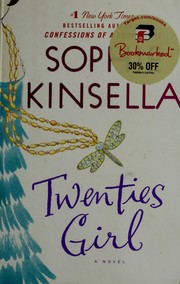
Twenties Girl
2,938-word summary 13 min read 435 pages in the book
- First published
- 2009
- Publisher
- Dial Press
- Pages
- 435
- ISBN
- 9780385342025
Reading options
What's inside (9 sections)
I picked this one up because I wanted something light after a run of heavy books, and a friend told me it was the funny one where the heroine gets haunted. That pitch is accurate, but it undersells how sad the book gets underneath the jokes. A woman who died at 105 comes back as her 23-year-old self and refuses to leave until someone finds her necklace. It sounds like a farce setup, and half the time it plays like one. The other half plays like a story about regret, about the version of your life you keep replaying because you never got an ending for it.
The book came out in 2009 from Dial Press, running 435 pages in the first hardcover, and it sits apart from the Shopaholic novels. Same comic DNA, same London, same heroine who talks too much when she is nervous. But there is no Becky Bloomwood safety net here. This one has a ghost in it, the only one Kinsella has written, by her own account, and the ghost steals every scene she is in.
The funeral where everything goes wrong
Lara Lington is 27, living in London, and having the kind of year where each problem invites its friends over. Her boyfriend Josh dumped her about two months back. Her best friend and business partner Natalie has run off to Goa, fallen for a beach layabout, and decided not to come home, which leaves their brand-new headhunting agency, L and N Executive Recruitment, entirely in the hands of Lara, who has no experience in headhunting and only joined because Natalie made it sound fun. Her parents fret. Her sister Tonya, a stay-at-home mother with a gift for cheerful cruelty, keeps finding ways to bring up Lara's failures in front of witnesses.
Into this mess comes a funeral. Lara's great-aunt Sadie Lancaster has died at 105. Lara has not seen the woman since she was in nappies. Her parents had half forgotten Sadie existed. Sadie lived in a nursing home since a stroke in her early eighties, left no children and no heirs, and the turnout is mostly duty plus curiosity. Lara's uncle Bill shows up with his wife Trudy and their teenage daughter Diamante, trailed by a documentary crew, because Bill founded Lington's Coffee some twenty years ago on what he calls two little coins and has since built a side career in motivational speaking and self-help books. He treats the funeral partly as content.
The service starts. And Lara starts hearing a voice. A young woman's voice, insistent, asking about a necklace, over and over. Lara looks around and spots her: a girl about her own age, dressed wrong for the room, pleats and beads and a bobbed cut straight out of the flapper years. This is Great-Aunt Sadie. Dead at 105, standing there at roughly 23, furious about jewelry.
Nobody else can see her. Nobody else can hear her, unless Sadie gets right up to someone's ear and shrieks, in which case people register a faint odd voice inside their heads and look confused. Lara is the sole audience. And Sadie has one demand. Her necklace is missing, and she cannot rest without it, and the funeral must be stopped until Lara finds it.
What follows is one of the best humiliation set pieces Kinsella has written. Lara, trying to obey a ghost no one else can perceive, first accuses the nursing home of murder, then fixes on a bearded stranger, then causes enough of a scene that the cremation gets delayed. She looks unhinged in front of her parents, her sister, and her smug uncle's camera crew. She does it anyway, because Sadie will not quiet down, and because Lara understands that this fierce little ghost is genuinely afraid of being sent off without the one thing she cares about.
Who Lara is when Sadie finds her
It helps to be honest about Lara at the start, because the book is honest about her. She is not coping. Josh broke up with her and she has responded the way many of us respond at 27: badly. She texts him constantly. He has changed his number to dodge her three-texts-a-day habit, and he has somehow managed to get her parents briefed on the situation, which is its own special shame. She keeps rehearsing explanations for why he left and schemes for getting him back, and she never quite stops to ask whether he was right for her at all.
Work is no better. L and N Executive Recruitment exists mostly as a name, a lease, and Natalie's old contacts. Lara sits in the office trying to sound like a headhunter on the phone. She dreads every call. The money going out exceeds the money coming in, and Natalie's postcards from Goa do not include rescue plans.
Her family does not refill the tank. Her parents love her and worry in the way that makes everything worse. Tonya loves her and scores points off her. Uncle Bill loves everybody in the abstract, preferably on camera, and his doctrine is that anyone can become anything starting from pocket change, which is easy to preach from inside a coffee empire. Lara is the family exhibit of someone who had promise and mislaid it.
This matters because Sadie arrives as the worst possible helper: pushy, vain, tactless, and uninterested in Lara's feelings. Sadie cares about the necklace, and everything else is a tool to get Lara moving. And yet she is exactly what Lara needs, because Sadie does not coddle. She watched Lara dither from beyond the grave for about five minutes before deciding that this girl requires management.
The necklace, and why it will not let Sadie go
The object itself is described with real affection. It was given to Sadie by her parents for her twenty-first birthday, back in the Jazz Age: strings of yellow beads and sparkling stones, and hanging from them a dragonfly pendant. By the time Sadie dies it has been hers for more than eighty years. She remembers the era around it as the happiest stretch of her life. She was young and admired. She went dancing. She was in love with a local artist, or so she tells it, and he with her, and the whole city seemed lit for her benefit.
Kinsella does something clever with the necklace. For a long stretch it functions as pure engine. Sadie wants it, so Lara must hunt it, so the plot moves. But slowly the jewelry turns into something else: evidence. Every person Lara questions about the necklace remembers a different Sadie. Old friends remember a beauty. Her estranged sister Maud remembers a rival. Lady Araminta and the other survivors of that circle remember slights and alliances Lara could never have guessed at. The necklace stops being a lost object and starts being a thread. Pull it and the whole knotted story of Sadie's youth comes with it.
Sadie, telling that story, is an unreliable narrator in the most human way. She polishes. She skips. She lingers on the artist she adored and goes vague on dates and quarrels. She talks about her twenties the way Lara talks about Josh: as a highlight reel with the bad parts edited out.
The ghost rules are played strictly for comedy and I respect the discipline. Sadie can pop wherever she likes just by thinking herself there, which she uses for spying and for showing up in Lara's office at catastrophic moments. She cannot touch things. She cannot be seen. She can, when furious, scream directly into a living person's ear and produce a reaction, a trick she deploys on Josh with results that are both triumphant and mortifying for Lara.
Detective work with a ghost sidekick
The middle of the book is a treasure hunt wearing a comedy costume. Lara, guided by Sadie's patchy memory, starts working through the list of people who might know where the necklace went. She visits Sadie's old flat and meets Edith, an elderly friend who offers the first real clues about Sadie's past. She goes to another funeral, that of Bertie, one of Sadie's ancient suitors, convinced by Sadie that he may have had the necklace, and spends the wake trying to search his belongings without getting caught. She fields Sadie's running commentary through all of it, which means she keeps answering out loud and looking strange in front of normal people who cannot see her companion.
This is where Ed comes in. He is handsome in a way Sadie immediately approves of, she has a weakness for a Valentino type, and he is connected to the family Lara keeps colliding with during her snooping. Their first meetings are disasters through no fault of his. Lara keeps glancing at empty air, laughing at jokes nobody told, and breaking off mid-sentence to argue with nothing. Ed is intrigued anyway, which tells you he is either patient or odd, and the book lets him be a bit of both. Sadie appoints herself matchmaker and pushes Lara toward him with total disregard for tactics or timing, while simultaneously running interference with Josh, because Sadie has opinions about both men and voices them at full volume.
The Josh thread is where the comedy curdles in an interesting way. Sadie uses her ear-screaming trick to pressure Josh into giving Lara another chance, and for a chapter or two it works, and Lara gets what she said she wanted. Sitting with those scenes felt itchy in a good way. Josh is the same person he was when he left. The thrill Lara feels is the thrill of winning, not of being loved. Sadie, who understands performance because she spent her youth performing desirability, sees through it faster than Lara does. The ghost who cannot stop talking about her own lost love becomes, almost by accident, the person who shows Lara that some lost things should stay lost.
Meanwhile the family satire keeps bubbling. Uncle Bill's documentary crew keeps filming. Diamante drifts through scenes like a bored teenager who knows exactly how rich she is. Tonya keeps needling. Lara's parents keep fretting that their daughter, who accused a nursing home of murder at a funeral, may be having some kind of breakdown. They are not entirely wrong.
Lara keeps having to perform grief for extremely old strangers while conducting a jewelry investigation under Sadie's direction. The etiquette collisions are endless: condolences muttered while casing a room, polite tea drunk while mentally cataloguing which drawer might hold an eighty-year-old necklace.
What Sadie's past actually looked like
Slowly, and this is the part of the book I admired most, the hunt forces Sadie's story into the open. The shining twenties she keeps describing start showing their seams. The artist she loved was charming and faithless, the kind of man who makes a girl feel chosen right up until he doesn't. The steady admirer she brushed off, Bertie among them in the older generation's telling, turns out to have loved her in a quieter register that Sadie was too young and too flattered by attention to value. There were quarrels with her sister that never healed. There were choices Sadie framed as romance that look, in daylight, like vanity or fear.
None of this is delivered as a twist. There is no villain unmasked, no letter that rewrites everything in the final act the way lesser mysteries do it. It comes out the way family truth usually comes out: a remark from Edith here, a correction from Maud there, a date that doesn't fit, a story Sadie tells twice with different details.
The necklace's history clarifies along with the rest. It was not simply misplaced. It passed through hands for reasons that made sense to everyone except Sadie, and by the time Lara traces it, the chain of custody reads like a small history of devotion and carelessness: people who kept it safe, people who forgot it, people who assumed someone else wanted it. Finding it requires Lara to understand what it meant to everyone who touched it, and not only where it ended up. That is a lot of weight for a dragonfly pendant, and the book knows it, and carries it anyway.
What moved me here is Sadie's reckoning. She has spent her afterlife, and arguably her whole long life, insisting on one version of her youth: beloved, sparkling, wronged by fate. Facing the fuller version costs her something. The artist was not the hero of her story. Her sister was not simply jealous. Sadie takes this the way a proud person takes any late truth, badly at first, then with a grace that feels earned because the book made us wait for it.
If that sounds heavy for a comic novel, it is, and Kinsella balances it by keeping Sadie herself light on her feet to the end. She never becomes a lesson. She stays vain about clothes, bossy about dancing, scandalized by modern manners. Her growth shows in what she stops insisting on, not in a personality transplant.
What drags, honestly
No book with this much farce escapes sag, and this one sags in the middle third. The necklace hunt has a repetitive rhythm for a while: Sadie remembers a lead, Lara chases it, social disaster ensues, lead goes cold. Taken one at a time the episodes are funny. Taken in a row they blur, and around the halfway mark I started skimming the transitions to get to the scenes where the story advances. A stricter edit could have cut one funeral or one flat search without losing anything.
The business plot also resolves too tidily. Lara inherits a failing agency she is unqualified to run, flails for most of the book, and then finds her footing with a speed that feels wished rather than worked. I bought the emotional turn, that she stops copying Natalie and starts choosing work on her own terms. I did not buy the timeline.
Josh gets a related complaint. The book wants his thread to read as Lara outgrowing a bad fit, and mostly it does, but some of her early behavior toward him is framed as cute persistence when it looks a lot like harassment. He changes his number to avoid her calls, and the book plays her refusal to accept it for laughs for a long time before letting her see it plainly.
And a smaller note: Sadie is such vivid company that the living characters dim beside her. Ed is charming but thin; we learn little about him beyond patience, looks, and good humor under bizarre circumstances. Natalie, off in Goa, is more premise than person. Tonya and Uncle Bill are satire figures with one setting each. This is a fair trade, a great comic ghost costs the ensemble some color, but readers who want a full romantic lead may find Ed more patient than present.
None of this sank the book for me. The highs are high: the funeral chaos, the ear-screaming scenes, Sadie's running critique of modern fashion and modern men, the slow leak of her real history. But go in knowing the middle wanders and the ending hurries, and you will enjoy it more.
Where Lara lands
The resolution earns its emotion because it pays off both girls at once. Lara recovers the necklace and sees it reach Sadie, not as loot but as acknowledgment: the shining years happened, the love in them was real even where it was flawed, and someone kept faith. Sadie, holding what she asked for, finally stops demanding and starts thanking, and her goodbye to Lara lands harder than anything in the Shopaholic books because it is not about shopping or schemes. It is about two people from different centuries who used each other badly at first and came to love each other anyway.
Lara's own ending follows from that rather than from a makeover. She does not become a new person. She becomes a slightly braver version of the person she was: willing to run her agency her own way instead of as Natalie's understudy, willing to let Josh stay gone, willing to be seen by Ed as the strange girl who talks to empty rooms. Ed, to his credit, stays.
There is a final grace note worth mentioning without spoiling it line by line. Lara keeps hearing Sadie's voice in her head after the ghost is gone: advice, commentary, the odd fashion ruling. It would be easy to read that as Kinsella hedging, keeping the mascot around. I read it as the truest thing in the book. The people who change us do not leave when they leave. They become part of the inner monologue, arguing with us forever. Sadie spent the book shouting into ears. She ends it as conscience, and Lara is louder and funnier and kinder for having been shouted at.
Would I press this on everyone? Not quite. Readers who want their romance grounded and their mysteries tight will find both a little loose here. But readers who like their comedy with an ache inside it, and who have ever mythologized an ex or a golden year until someone forced them to look again, will find a lot to recognize. I came for a ghost farce. I stayed for an old woman's reckoning and a young woman learning, at last, to choose her own life. That is more than I expected from a dragonfly on a string of beads, and I mean that as praise.
FAQ
Who is the ghost in Twenties Girl?
Sadie Lancaster died at 105 in 2009, but her ghost appears to Lara as the young flapper she was in the 1920s, bobbed hair, beads, and all.
Is Twenties Girl part of a series?
No, it is a standalone novel from 2009, separate from the Shopaholic books, though it shares their comic London style.
What necklace is Sadie looking for?
A dragonfly pendant on strings of beads and stones, given for her twenty-first birthday and tied to the happiest years of her youth.
Similar books
Wedding Night
Lottie marries an old flame days after a breakup, then flies to a Greek island while her sister quietly works to sabotage the honeymoon. A farce about memory,…
2,213-word summary · 10 min read
Can You Keep a Secret?
Emma blurts every secret to a stranger on a turbulent flight, then finds him running her company.
3,114-word summary · 14 min read

Size 12 Is Not Fat
Former teen pop star Heather Wells investigates two dorm elevator deaths while juggling her ex, her crush, and a size-12 wardrobe.
2,805-word summary · 12 min read
Mr. Maybe
Libby Mason wants a rich husband, but the wealthy man who proposes is dull and the broke writer she cannot forget is not offering forever.
2,322-word summary · 10 min read
Bridget Jones: The Edge of Reason
Bridget doubts Mark, takes a job with Daniel, and lands in trouble in Thailand.
2,198-word summary · 10 min read
Jemima J
Overweight London journalist Jemima Jones invents a slim online self for a California lover, starves to match the photo, then faces betrayal and learns to…
2,883-word summary · 13 min read
Shopaholic and Sister
Becky Brandon returns from a ten-month honeymoon to meet the half-sister she always wanted, then discovers that Jess is thrifty, prickly, and nothing like the…
2,591-word summary · 12 min read
Austenland
A New York graphic designer obsessed with Mr. Darcy inherits a trip to a Jane Austen theme park, where the fantasy of Regency romance collides with the men…
2,030-word summary · 9 min read
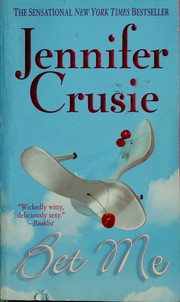
Bet Me
A sharp actuary agrees to dinner with a charming serial bettor, then spends the next month pretending the wager does not matter.
2,710-word summary · 12 min read
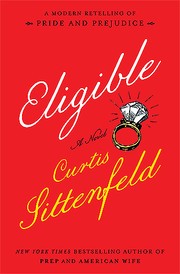
Eligible
Austen's Bennet sisters move to modern Cincinnati, where marriage is a reality show and the house is losing its value.
2,293-word summary · 10 min read

Big Swiss
A transcriptionist for a sex coach falls for one of his clients, the tall Swiss gynecologist she calls Big Swiss, in a funny novel about work and secrets.
2,523-word summary · 11 min read
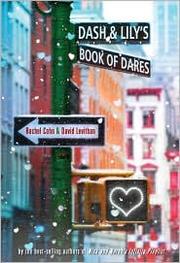
Dash & Lily's Book of Dares
Two lonely New York teenagers trade dares in a red notebook left at the Strand, falling for each other on the page before they meet.
2,228-word summary · 10 min read
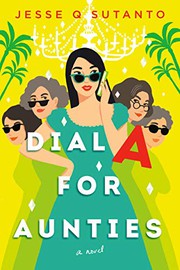
Dial A for Aunties
A wedding photographer accidentally kills her blind date, and her mother and three aunties help her hide the body during the biggest wedding of their careers.
2,076-word summary · 9 min read
The Bookish Life of Nina Hill
Bookstore Nina gains a family and pub-quiz love in Los Angeles.
2,399-word summary · 11 min read
You Deserve Each Other
Engaged and miserable, Naomi and Nicholas wage a prank war to force a breakup, then face money, mothers, and truth in Sarah Hogle's funny romance with a tender…
2,415-word summary · 11 min read
The Bromance Book Club
A Nashville pitcher joins a secret romance book club to save his marriage after his wife Thea asks for divorce. He trades pride for listening, chores, and…
2,932-word summary · 13 min read
Tangled
Told by a cocky businessman, a bet to win the new associate who rejects him turns into real pursuit, strict rules, a painful reveal and a wedding-level happy…
2,868-word summary · 13 min read
Ghosts
At 32, food writer Nina Dean faces ghosting by Max and her father's dementia in London.
2,677-word summary · 12 min read
The Do-Over
Emilie relives awful Valentine Day with cheating boyfriend until Nick helps fix it.
2,071-word summary · 9 min read
Boyfriend Material
A tabloid-haunted charity worker fakes a romance with a straitlaced barrister in this funny 2020 London rom-com.
2,325-word summary · 10 min read
The Dead Romantics
A ghostwriter who stopped believing in love goes home to bury her father and finds her editor's ghost waiting at the funeral parlor.
2,634-word summary · 12 min read
Get a Life, Chloe Brown
A chronically ill woman recruits her gruff handyman neighbor to help her finish a bold Get a Life list.
2,147-word summary · 10 min read
The Kiss Quotient
Stella Lane hires escort Michael Phan to practice dating and learns logic fails where touch and family press in.
2,716-word summary · 12 min read

Better than the Movies
A rom com obsessed senior hires her annoying next door neighbor to win her crush, then finds real love is messier and kinder than any movie plot.
2,438-word summary · 11 min read
Something Borrowed
Good girl Rachel loves her best friend's fiance through a summer of weddings and lies.
2,100-word summary · 9 min read
Shopaholic Ties the Knot
Becky Bloomwood plans two weddings at once while debts pile up and Luke's mother interferes.
2,218-word summary · 10 min read
Shopaholic Takes Manhattan
Becky and Luke move to New York where shopping fame tempts her to ruin both.
2,025-word summary · 9 min read
Shopaholic and Baby
Pregnant Becky shops for the perfect nursery while Luke's ex becomes her obstetrician.
2,247-word summary · 10 min read
My Not So Perfect Life
Katie chases London creative life while her perfect boss Demeter hides cracks, until a farm trip flips roles.
2,300-word summary · 10 min read
I've Got Your Number
Bride to be Poppy borrows stranger Sam phone and snoops wedding chaos.
2,078-word summary · 9 min read