
Reading options
What's inside (8 sections)
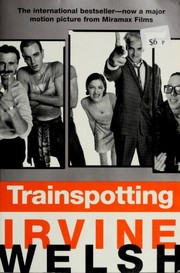
I came to Trainspotting late, after the film had already turned Choose Life into a poster. I expected the book to be the film with extra scenes. It is not. Irvine Welsh published it in 1993 with Secker and Warburg, a 344 page first novel set in Leith in the late eighties, and it reads less like a novel than a pile of stories told in pubs, flats, clubs and clinic waiting rooms. Some chapters are three pages. Some switch voices midstream. Most are in phonetic Scots. The first ten pages slowed me down to a walk. After that I stopped hearing the accent as difficulty and started hearing it as company.
That shift matters because the book is about company. Mark Renton, Sick Boy, Begbie, Spud, Tommy, Davie, Alison, Kelly, Lesley and a dozen others orbit each other through heroin, alcohol, football, scams, funerals and bad jobs. The plot, if you want to call it that, is Renton trying to get out and getting pulled back. The texture is everything else. Welsh was writing about Edinburgh at a time when guidebooks sold the castle and the Festival and left out the schemes, the HIV crisis, the dole queues and the flats where the heating never quite worked. He put those streets on the page without translating them for London.
People ask if you need to have seen the Danny Boyle film from 1996 with Ewan McGregor to read the book. You do not. The film takes the spirit and a handful of set pieces and gives them a cleaner arc. The book is messier, funnier in places, crueler in others, and more interested in minor characters. If you only know the film, the book will surprise you with how little Renton is sometimes present and how much time goes to people the film cut or shrunk.
How to read the Scots without quitting
The language is the first test. Welsh writes in Leith Scots and Scottish English, often phonetically. Cannae, dinnae, aye, wee, ken, shite, skag for heroin. Sentences drop letters the way speech drops them. Begbie sounds different from Spud. Renton sounds different when he is sober, when he is high, when he is trying to impress a college girl, when he is writing in his own head. One chapter might be close to standard English. The next is thick enough that you read it aloud under your breath.
My advice, learned the slow way, is to stop sounding out every word. Read for rhythm for the first thirty pages. You will miss a joke or two. Then your ear adjusts. Phrases repeat. Context fills gaps. By the time Spud tells a story about a job interview or a football trip, you understand him the way you understand a friend with a strong accent on the phone. You do not parse. You listen.
The structure helps once you accept it. There is no single straight line. Chapters rotate narrators. Renton gets the most pages, but Spud, Sick Boy, Begbie, Alison and others take turns. Some sections are titled like movements. Kicking, relapsing, leaving, returning. Time jumps. A character who is alive and joking in one story is sick or dead two stories later, and Welsh does not always pause to mark the loss. That can feel careless. It is meant to feel like life in that circle, where news arrives late and funerals interrupt drinking plans.
Welsh also changes distance. Sometimes you are inside Renton's head while he sweats through withdrawal, counting minutes, hating his parents' wallpaper. Sometimes you watch from outside while Begbie starts a fight over nothing. Sometimes a chapter is mostly dialogue in a pub. Sometimes it is interior, almost dreamlike. The effect is closer to linked stories than to a conventional novel, and it explains why some readers love the book in pieces but struggle to summarize it. You remember moments, not acts.
A note on swearing and slurs. The book is full of both. Welsh is reporting how these men talked, including racist, homophobic and sexist talk, especially from Begbie and Sick Boy. He does not clean them up to keep readers comfortable. That honesty is part of why the book hit hard in 1993. It can still make a modern reader flinch. I found it useful to separate Welsh from his characters. Renton notices the ugliness. Spud suffers from it. Begbie enjoys it. The book lets you hear the difference.
Renton and the cycle of getting clean
Renton is the center without quite being a hero. Mark Renton, called Rents, is clever, funny, self lacerating and addicted to heroin. He hates what the drug takes from him and hates the lectures about it almost as much. His famous opening riff, the Choose Life list, is a catalogue of jobs, flats, TVs, washing machines, mortgages and holidays that he rattles off with contempt. He wants none of it. He also wants to stop injecting. Both things are true at once, and the book lives in that split.
Much of the middle is Renton trying to stop. He tries cold turkey at his parents' house in one of the longest and most remembered sections. Welsh writes withdrawal as physical fact. Sweats, shakes, vomiting, diarrhea, itching, sleeplessness, hallucinations where old friends and dead babies crowd the bedroom. His mother brings soup. His father tries to be gruff and kind at the same time. Renton lies to them about progress while stealing from them in small ways. It is painful because love is present but useless against the craving. Anyone who has watched someone detox at home will recognize the mix of boredom and terror.
He gets clean for stretches. He moves to London for a time, works in a job he despises, tries to pass as normal. He drinks instead of using, then uses instead of drinking. He tells himself geography will fix him. London has its own dealers, its own pubs, its own lonely bedsits. Welsh is sharp on this point. Renton can describe exactly why heroin ruins his life while walking toward his dealer. Insight does not equal control. That gap, between what Renton knows and what he does, is the real subject of his chapters.
Work is another trap. Renton and his mates cycle through unemployment benefits, casual labor, petty theft and scams. One job after another ends with boredom or insult. Renton is educated enough to get office temp work and angry enough to sabotage it. He resents Thatcher era Britain with real specifics. Closed yards, vanished apprenticeships, estates where young men are expected to be grateful for nothing. The politics are never speeches. They show up as damp flats, as clinic queues, as a sense that the future advertised on television belongs to someone else.
By the final third Renton is planning to get out for good by getting in once more. A last heroin deal with Sick Boy and others promises enough cash to start over. Readers who know the film know the shape of what happens. Renton takes the money and leaves. In the book the theft feels less triumphant and more tired. He betrays men who betrayed each other for years. He walks toward Amsterdam and a blank page. Welsh does not present this as recovery. He presents it as escape, with the question of what Renton will do next left open. The sequel Porno, published in 2002, picks up that thread years later, and the prequel Skagboys, from 2012, fills in how they started. You do not need those books to feel the ending here. It is a door closing, not a cure.
Sick Boy, Begbie, Spud, Tommy and the women Welsh listens to
If Renton is the mind of the book, the others are its body. Simon Williamson, called Sick Boy, is handsome, funny and cold. He talks about Sean Connery the way other men talk about religion, with endless theories about what Connery would do in any situation. Under the chat is calculation. Sick Boy runs small cons, dreams of pimping and porn, uses friends as props. He can be charming in one scene and repellent in the next. Welsh lets him narrate just enough that you see how he justifies himself. Everyone else is weak. He is honest about appetite. It is a lie, but a well told one.
Franco Begbie is different. Begbie drinks, he does not inject, and he looks down on junkies even as he lives off their chaos. He is a psychopath in the clinical sense that small slights trigger extreme violence. A spilled pint, a wrong look, a joke about football, and he has a glass or a knife in his hand. His chapters are short, fast and frightening because Begbie enjoys fear. Welsh does not try to explain him with a sad childhood. Begbie is simply dangerous, and the group keeps him close partly from loyalty and partly because exile would be worse. Every pub scene with him has the same tension. When will it turn.
Spud is the opposite, and the reason many readers keep going. Danny Murphy, called Spud, is gentle, muddled, unlucky and kind. He steals books he cannot read properly, fails job interviews he tries hard to pass, goes to prison for petty theft and tries to stay cheerful inside. His narration is the thickest Scots and the warmest heart. Where Sick Boy schemes and Begbie threatens, Spud drifts and apologizes. Welsh gives him some of the funniest passages, especially around work schemes and football trips, and some of the saddest, because Spud understands he is falling behind and cannot stop it.
Tommy and Davie show two paths down. Tommy starts as the athletic, relatively stable friend with a girlfriend and a flat. When Liz leaves him, partly over his friends and his drinking, he slides. He starts using to fill time, shares needles, gets sick. His decline is one of the few straight lines in the book, and Welsh writes it without melodrama. One month Tommy is giving advice. A few months later he is thin, coughing, asking for favors. Davie Mitchell faces a different fear after unprotected sex and the long wait for test results during the AIDS crisis. His chapters capture a specific late eighties dread, when information was thin, stigma was high and a single night could feel like a sentence.
The women are often said to be marginal, and in terms of pages they get fewer chapters, but the best of them cut through the male noise. Alison is using, grieving, trying to mother while high, and she sees the lads more clearly than they see themselves. Lesley loses a baby, Dawn, in the book's most devastating episode, and her grief exposes how selfish the group can be. Kelly grows up faster than the men, working, raising a child, refusing some of their games. A young woman Renton pursues in London, Dianne, calls out his self pity in ways that stick because she is outside the Leith circle. Welsh does not always give these women full arcs. When he lets them speak, though, the tone changes. The jokes stop. The cost becomes concrete.
Football and pubs deserve mention as characters in themselves. Hibernian casuals, away days, train carriages full of singing and beer, fights arranged as much for boredom as for loyalty. Welsh writes these scenes with insider detail. Who stands where. Who pays. Who runs. For Renton and his mates, match days offer identity when jobs do not. They also offer violence as recreation, especially for Begbie. Readers who dislike sports writing may skim these parts. They are central to how these men prove worth to each other.
The episodes people remember
Because the book is episodic, most readers carry away scenes rather than plot. A few are worth naming so new readers know what they are walking into.
The baby. In one of the earliest and hardest chapters, Lesley's infant daughter dies while the group is in a drug haze in the flat. Welsh does not stage this for shock alone. He shows neglect as a series of small failures. Someone meant to check. Someone fell asleep. Someone assumed someone else had fed her. The aftermath is quieter than you expect. Guilt surfaces as jokes, then as silence, then as blame. It is the moral center of the book even though the characters keep using afterward. If you read only one chapter to understand what Welsh is doing, it is this one, and it is also the chapter that makes some readers put the book down for a week.
Withdrawal at the parents. Already mentioned, but worth stressing for its length. Welsh stays in that bedroom for pages, letting time stretch. Television murmurs. Parents knock. Renton hallucinates and sweats and bargains. It is the least glamorous depiction of getting clean I have read, and that is the point. No montage. No wisdom gained. Just a body resetting while the mind replays every bad decision.
The pub glassing and the football train. Begbie starts a fight that leaves a man badly cut over almost nothing. On another day the group travels to a match, drunk, loud, stealing and posturing, Spud trying to keep up, Renton watching himself from outside. Welsh writes group menace well. How laughter turns. How no one stops Begbie because stopping him marks you as next.
Tommy's fall. Told in fragments, Tommy losing his girlfriend, losing his fitness, starting to inject, getting ill. One visit he is joking. The next he is in hospital. Welsh does not give him a farewell speech. He gives him a slow fade that friends notice too late. In the context of the HIV epidemic in Edinburgh, where needle sharing spread the virus fast through housing schemes, these pages carry historical weight beyond one character.
London and Dianne. Renton in London, trying to live straight, meeting a younger woman after a club, lying about his age and life, then being seen through. These chapters are quieter and almost tender. Renton can be funny and attentive when he is not using. He can also be evasive in ways that make intimacy impossible. Dianne likes him and does not trust him, both correctly.
The final deal. After so much failure, the group stumbles into a real payday moving heroin. Old scores and paranoias surface. Who skimmed before. Who talked to police. Who deserves more. Renton, who has narrated so much self disgust, acts on it. He takes the cash and disappears. Welsh does not film this as slow motion triumph. It reads quick and a bit sordid. A man stealing from thieves, running for a ferry, telling himself this time is different. Whether you cheer or wince probably says more about you than about Renton.
There are lighter episodes too, often forgotten in summaries that stress misery. Spud's job interview, where he tries to sound responsible while high and well meaning, is pure comedy. Sick Boy's Connery monologues go on until even his mates tell him to stop. A bad curry, a nightclub scam, a disastrous attempt at cooking. The humor is filthy and fast, and it explains why these men stay together. They make each other laugh. Any honest account has to hold both truths. These are wrecked lives and they are often hilarious company.
What sags and who should pass
No book this confrontational works for everyone, and Trainspotting has real faults alongside its power.
The repetition wears. By design, the cycle is use, quit, relapse, joke, funeral, use again. After 200 pages some readers feel they have read the same story with different wallpaper. Welsh varies voices to fight this, but the underlying rhythm stays. If you need forward momentum, the middle will test you. I found taking it in chunks helped. This is not a book to binge for plot. It is a book to dip into for voices.
Begbie can feel cartoonish on the page in a way he did not on screen. Robert Carlyle gave him twitchy human fear in the film. In the book he is closer to a force, always ready to explode, with fewer quiet moments. After the third pub explosion you start to predict him. That predictability cuts his menace. Sick Boy has the opposite problem. He is so consistently amoral that his chapters blur. You get the point about exploitation early. Welsh keeps making it.
Women get less room than they deserve. Alison, Kelly, Lesley and others have sharp chapters, but they vanish for long stretches while the lads repeat themselves. A modern reader may fairly ask why Lesley's grief exists mainly to illuminate Renton's conscience, or why Kelly's competence is shown mostly in contrast to male failure. Welsh improved on this in later books, and defenders argue he was writing a specific male circle truthfully. Both can be true. The circle was male dominated. The novel still chooses where to point the camera.
The dialect, for some, will not stop being work. Most readers adjust. Some do not, especially if they read slowly or in short bursts where the ear resets each time. There is no shame in using the film or an audiobook read in Scots as a bridge. The audio, for many, is easier than the page because intonation carries meaning spelling hides.
Content warnings matter here more than usual. Heroin use in detail, including injecting and overdose. Alcoholism and extreme violence, including glassings and beatings. Infant death and neglect. HIV and AIDS, miscarriage, sexual content including transactional sex, homophobic and racist language. Animal cruelty in passing. If you are in early recovery, or grieving a drug related death, this book can feel less like art and more like an trigger. Skip it without guilt. There are other Scottish novels.
Finally, readers who want growth may hate the ending. Renton steals and runs. Sick Boy schemes on. Begbie rages on. Spud remains vulnerable. Tommy is gone. No one gives a speech about lessons learned. Welsh offers clarity without redemption. I found that honest. If you need a character to earn forgiveness, you will close the book angry.
Why it still lands
What keeps Trainspotting alive more than thirty years after Secker and Warburg took a chance on a first novel is not shock. Shock dates. What stays is the mix of anger and affection.
Welsh was angry at specific things. Mass unemployment dressed up as personal failure. Housing policy that stacked young people in estates with no work. A drugs policy that punished users while supply flowed. A media that treated Edinburgh as festival backdrop and ignored Leith. A health crisis where young men shared needles because clean works were scarce and stigma kept people from clinics. He put those facts inside jokes and stories rather than essays, which is why people who would never read a policy paper remember Tommy.
He was also affectionate toward his people without excusing them. Renton can be cruel and then tender to Spud. Spud can be hopeless and then suddenly clear about his own limits. Alison can be high and still name exactly what the men are doing wrong. The friendships are real even when they are transactional. Men lend money they will never see again. They visit each other in hospital. They laugh at funerals because the alternative is crying in front of Begbie. Anyone who grew up in a tight, poor, funny circle will recognize that loyalty, even if the drugs in their street had a different name.
The craft holds up too. Writing a whole novel in voices that stay distinct is hard. Welsh does it. Renton's interior chapters sound nothing like Begbie's bursts. Spud's malaprop warmth sounds nothing like Sick Boy's smooth contempt. The episodic form, which annoyed some critics in 1993 as formlessness, now looks like a choice that fits addiction. Life narrows to episodes. Highs, lows, pickups, paydays, court dates. A straight arc would have lied.
I would suggest reading it with two companions. First, a little history of Edinburgh in the eighties, even just the Wikipedia pages on HIV in Scotland and the film's production notes, to ground Tommy and Davie. Second, someone to talk to about the funny parts. This book needs a friend to quote Sick Boy badly to, or to argue about whether Renton did right to steal. It is a pub book. It wants talk.
If you try it, give it fifty pages before you judge. Let the Scots settle. Mark the chapters that hit you. Skim the football if you must. Stay for Spud. Stay for Alison. Notice how Welsh never asks you to admire heroin, even when his characters praise it. He asks you to sit with people most novels step around, long enough to hear them think. That invitation, blunt and compassionate at once, is why the book became a classic and why it still earns its arguments.
FAQ
When was Trainspotting published?
Secker and Warburg published it in London in 1993. The first edition runs 344 pages and the widely available Norton paperback uses ISBN 9780393314809.
Do I need to understand Scots to read it?
No. You adjust after thirty pages or so by reading for rhythm and letting context fill gaps. An audiobook in Scots can help if the spelling slows you.
Is it part of a series?
No. It stands alone. Welsh later followed the same circle in Porno in 2002 and in the prequel Skagboys in 2012.
Similar books
A Scanner Darkly
Undercover narc Fred is ordered to surveil a drug user named Bob Arctor in near-future Orange County, not realizing the man on the screen is himself.
2,251-word summary · 10 min read
The Queen's Gambit
Orphan Beth Harmon rises in chess while pills and drink threaten to take her.
2,027-word summary · 9 min read
Shuggie Bain
Sweet Shuggie loves his alcoholic mother Agnes through 1980s Glasgow poverty and pride.
2,081-word summary · 9 min read
Choke
A medical dropout fakes choking in restaurants to pay for his mother's care while stuck in a colonial park and sex addiction meetings.
2,044-word summary · 9 min read
Eleanor Oliphant Is Completely Fine
Eleanor keeps a rigid Glasgow routine until she and Raymond from IT help an old man who collapses in the street, and slowly remembers why.
2,277-word summary · 10 min read

Take My Hand
In 1973 Montgomery, a young nurse discovers that two sisters were sterilized without consent, and spends the rest of her life living with what she could not…
2,126-word summary · 9 min read

Little Earthquakes
Four Philadelphia women meet during pregnancy and discover that new motherhood is nothing like the plan, while friendship becomes the thing that holds them…
1,997-word summary · 9 min read

Less Than Zero
Clay returns to Los Angeles for Christmas and drifts through parties, drugs, and old friends, including one who is selling himself to survive.
1,926-word summary · 9 min read
The Diamond Age: Or, A Young Lady's Illustrated Primer
A stolen nanotech primer raises a poor girl in 22nd-century Shanghai, and Neal Stephenson turns her education into an argument about class, freedom, and who…
2,055-word summary · 9 min read
The Bookshop on the Corner
A Birmingham librarian loses her job, buys a van, and moves to the Scottish Highlands to run a mobile bookshop. Warm and bookish, with uneven pacing.
2,557-word summary · 11 min read
Once There Were Wolves
A biologist reintroduces fourteen wolves to the Scottish Highlands while protecting her traumatized twin sister, then finds a body in the snow that could…
2,682-word summary · 12 min read
Summer Island
A radio advice host hides a scandal, and the estranged daughter hired to write about it agrees to care for her at the family's island house.
2,325-word summary · 10 min read

Scar Tissue
Kiedis's memoir follows the Red Hot Chili Peppers from Hollywood house parties to fame, heroin, and the long work of staying clean.
2,217-word summary · 10 min read
Naked Lunch
Burroughs's banned 1959 collage novel follows Bill Lee through addiction, Tangier, and the nightmare bureaucracy of the Interzone.
2,082-word summary · 9 min read
Click, Clack, Moo: Cows That Type
Cows learn to type, demand electric blankets, and go on strike in a deadpan picture book about negotiation and withheld labor.
2,617-word summary · 12 min read
The Rooster Bar
Three law students buried in debt discover their for-profit law school is a scam, and decide the only way out is to con their way into practicing law before…
2,837-word summary · 13 min read
Infinite Jest
A film that kills its viewers, a tennis academy, a halfway house for addicts, and a future America where corporations name the years, all tangled together.
2,084-word summary · 9 min read
Life
The Rolling Stones guitarist tells his own story: a Dartford childhood, the band's first gigs, the drug raids, the tax years and Patti Hansen.
2,761-word summary · 12 min read
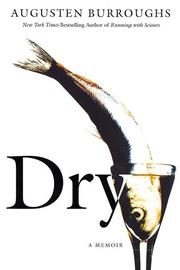
Dry
A memoir of drinking, rehab and relapse, and the strange business of getting sober one morning at a time.
2,643-word summary · 12 min read
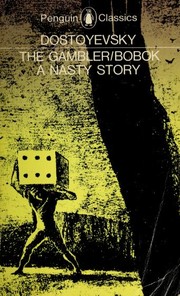
The Gambler
Dostoevsky's roulette novella: Alexei loses Polina, wins a fortune, loses everything, and promises himself one more bet tomorrow.
2,022-word summary · 9 min read

Marriage for One
Rose marries a cold lawyer to save her coffee shop, then discovers the arrangement was never only business.
2,032-word summary · 9 min read
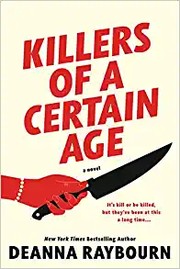
Killers of a Certain Age
Four sixty-year-old assassins discover their retirement cruise is a trap and turn their skills on the agency that trained them.
2,014-word summary · 9 min read
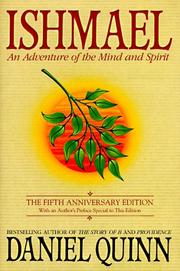
Ishmael: An Adventure of the Mind and Spirit
A gorilla named Ishmael teaches a disillusioned man that civilization is a story, and that humans may compete but must not wage war on other species.
2,015-word summary · 9 min read
In an Instant
After a family camper crashes down a snowy mountain, sixteen-year-old Finn watches from the afterlife as survivors make impossible choices and try to live with…
2,130-word summary · 9 min read
Hearts in Atlantis
Five linked stories follow Bobby Garfield, Carol Gerber, and their friends from a haunted childhood in 1960 to the long aftermath of Vietnam.
2,402-word summary · 11 min read
Days at the Morisaki Bookshop
Heartbroken Takako moves into her uncle's tiny secondhand bookshop in Jimbocho, and the shop and its regulars slowly give her back her life.
2,011-word summary · 9 min read

The Wasp Factory
Iain Banks's 1984 debut follows Frank Cauldhame, an isolated sixteen-year-old on a Scottish island, as his brother's escape and a family secret unravel his…
2,248-word summary · 10 min read
The Orphan Master's Son
Adam Johnson's Pulitzer-winning novel follows Pak Jun Do from a North Korean orphanage to a deadly identity swap, under a state whose loudspeakers never stop…
2,219-word summary · 10 min read
Olive, Again
Elizabeth Strout returns to Crosby, Maine, as Olive Kitteridge marries Jack Kennison, confronts her son, and faces old age, grief, and small-town judgment.
2,333-word summary · 10 min read