
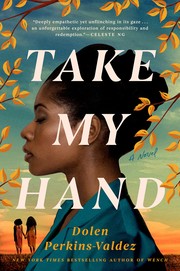
Take My Hand
2,126-word summary 9 min read 368 pages in the book
- First published
- 2022
- Publisher
- Berkley
- Pages
- 368
- ISBN
- 9780593337691
Reading options
What's inside (11 sections)
Two charts sit on a desk in a family planning clinic in Montgomery, Alabama, and the ages on them make no sense. Eleven and thirteen. Civil Townsend is a few months out of nursing school, she is Black, she has been hired to give injections, and nobody has told her why two girls who are not sexually active are scheduled for Depo-Provera. One of them has not even started her period. Civil asks the obvious question and gets an answer shaped like a procedure.
That is the whole book in miniature. Dolen Perkins-Valdez does not begin with a courtroom speech or a villain twirling a mustache. She begins with a young woman holding a file she was never meant to read closely.
The novel runs on two timelines. In 2016, Civil is an obstetrician in Memphis, and she drives back to Montgomery with her grown daughter, Anne, to tell her what happened in 1973. In 1973, Civil is the new nurse at that clinic, learning how the state quietly manages poor Black women's bodies. The 2016 drive is the container. Each stop along the road opens a door onto the past, and the past keeps insisting on being finished.
The clinic runs on forms and silence
The clinic is supervised by Mrs. Seager, a white woman who manages a staff of Black nurses. She is not written as a monster. She is written as an administrator, which is worse in some ways, because an administrator can hand you a schedule and call it care. The nurses give injections of Depo-Provera to a steady stream of women and girls, and the paperwork is the point. Consent is a signature. A signature is a formality. A formality is a thing you can get from someone who does not fully understand what she is signing, or from someone who was never asked in the first place.
Perkins-Valdez is very good at the ordinary texture of that building. The smell of it. The waiting room. The way a nurse learns to keep her face still. Civil is competent and quick, and she is also naive in the specific way of someone who believes that a clinic is a place where people are helped. The book lets her keep that belief for a while, long enough for the reader to feel how comfortable it is.
The injections themselves are the quiet crime. Depo-Provera was not approved by the FDA at the time, and Civil does not know that. She is told it is birth control. She is not told what happened to the animals in the testing. She is not told that the women receiving it are, in the eyes of the people who fund the clinic, a problem to be solved rather than patients to be treated.
Two sisters, one cabin, and a nurse who oversteps
India is eleven. Erica is thirteen. Their mother is dead, their father is Mace Williams, and the family lives in a cabin on a white farmer's land, which means they live at the pleasure of a man who can put them out. There is a grandmother in the house. There is very little else.
Civil does what a certain kind of helper does. She takes the girls to her own home to bathe them. She buys them clothes. She gets them back into school, she helps the family move into subsidized housing, and she finds Mace a job. These are real goods. A child who has been scrubbed clean and handed a new dress is not being harmed by the dress. But the book is smart enough to show the other side of it, which is that Civil is arranging a family's life according to her own idea of what a family should look like. She is not asking Mace what he wants. She is deciding for him, kindly, and calling it friendship.
This is where the novel's theme of the savior complex gets its teeth. Civil is not a villain either. She is a young woman with a job, a conscience, and almost no training in how to sit with people instead of fixing them. The Williams family is not a project, but she treats them like one, and the book knows it even when Civil does not.
The sisters themselves are the best thing in the novel. India is the younger one, watchful, funny, attached to Civil in a way that is both touching and a little dangerous. Erica is older and quieter, already learning what it costs to be a Black girl in a place that has plans for you. Their scenes together have the mess and shorthand of real siblings. They tease each other. They compete for attention. They are children, and the book never lets you forget that the state saw them as something else.
Dinner with the Ralseys
Civil's ex-boyfriend is Ty Ralsey, and his family is full of lawyers. Over dinner, in a house where the silverware matches, she mentions the injections the way you mention your day. What comes back at her is the fact that Depo-Provera is not FDA approved and that the animal testing produced serious side effects. It is not a dramatic revelation. It is a piece of information delivered between courses by people who assume everyone already knows it. That is how the novel handles most of its big turns, through ordinary conversation that happens to be devastating.
The librarian is the other source. Civil goes looking for answers and finds a record of how widely the government has sterilized poor women and women of color, a history that is not hidden so much as unindexed. The scene works because it is boring in the right way: microfilm, a desk, a woman who knows where the files are. Civil and her friend and fellow nurse Alicia stop giving the shots. It is a small rebellion with no press release attached. It costs them nothing yet.
The hospital
Then Mrs. Seager takes India and Erica to the hospital. The family is told the girls will get shots. What happens instead is surgery. The girls are sterilized without consent, and the word "without" is doing enormous work in that sentence, because there was no conversation in which consent could have been given or refused. There was a plan, and then there was a body.
Civil arrives and finds the girls in pain. She demands pain medication, which is its own indictment, since nobody had thought to manage it. She calls Mace. Then she gets in her car and drives, and the accident that follows is less a plot device than a physical rendering of what it feels like to have your understanding of the world break at speed.
Perkins-Valdez writes this section with restraint. She does not linger on the surgical details for shock. She stays close to the aftermath: the sisters' confusion, the family's helplessness, the way a hospital can absorb a crime into its own paperwork and come out looking tidy. The scene is the heart of the book, and it is the reason the book exists.
The case, and the lawyer who is not the one you expected
Civil and her father meet with Ty's parents, who are attorneys. They are busy. They pass the case to a young white lawyer named Lou Feldman, and Civil feels abandoned, because she has been. The people with the resources and the name have handed her to someone with neither, and she has to decide whether to trust him.
She does, eventually. Lou is earnest and out of his depth and willing to learn, and the novel is honest about how much of the case runs on Civil's stubbornness rather than his brilliance. Meanwhile Mrs. Seager blames Civil for the surgery. She implies that the girls were sexually active and that their father was abusing them, which is a familiar move: when a poor Black family is harmed by an institution, the institution reaches for a story about the family's morals. Civil is furious. She loses her job. She works on the case full time.
The history underneath all this is real. In 1973 in Montgomery, two young Black sisters, Minola and Mary Alice Relf, were sterilized without informed consent, and the Southern Poverty Law Center sued. The case, Relf v. Weinberger, exposed how federal money had been paying for the sterilization of poor women and girls. Perkins-Valdez has said she changed the ages and some details for the novel, which is worth knowing, because the fiction is doing something the record cannot: it puts you in the room with the nurse who handed over the file.
The drive back in 2016
The frame story is a road trip with a confession in it. Civil, now an obstetrician, picks up Anne and drives to Montgomery, and the drive is really a series of visits. She sees Alicia in Jackson, Mississippi. She sees Ty, who is now a college president at Tuskegee. She sees Lou Feldman. She sees Mrs. Seager's daughter, who insists her mother was a good person and does not get the absolution she came for. That scene is one of the sharper ones in the frame, because it refuses the easy resolution of a villain's child apologizing for the villain.
Then Civil visits India and Erica in the house the family moved into after leaving Montgomery. India has late stage cancer. Erica cares for her. They welcome Civil as family, which is generous in a way that the novel does not fully interrogate. After everything, the sisters are the ones who make room for the woman who could not protect them.
One thing the frame does well is withhold the sisters. Civil visits everyone else first. The reader waits through Alicia and Ty and Lou and the Seager daughter, aware that the person who matters most has not been seen yet. That delay creates real dread, and it means the reunion lands with weight when it finally arrives.
The frame ends with Civil telling Anne that she hopes her daughter learns from the past, and with Civil considering whether to rekindle things with Ty. It is a soft landing. It is also the part of the book that feels least necessary.
What the novel does well
The research is not worn as a badge. It shows up as procedure: what a nurse signs, what a clinic stocks, how a lawsuit gets filed, who answers the phone. The Williams family is drawn with real specificity, and the sisters never become symbols, even when the plot needs them to be. The book also does the harder structural work of connecting one family's catastrophe to a national practice, so that the sterilization of two girls in Montgomery is not an aberration but a line item.
I keep thinking about the small domestic scenes, the bathing and the clothes and the school enrollment, because they are where the novel's argument actually lives. Care and control use the same hands. That is the sentence the book keeps writing in different ways, and it earns it.
Where it strains
The 2016 strand is thinner than the 1973 story, and it often functions as explanation rather than drama. Civil tells Anne what happened, and the reader gets a summary of themes the novel has already dramatized better. Some of the visits feel like a checklist of closure.
Civil's guilt is the other problem. It is understandable and it is well written, but it takes up oxygen. India and Erica are the ones who were harmed, and the novel's emotional center keeps drifting back to the conscience of the nurse. A reader can finish the book knowing exactly how Civil feels and still wanting more of what the sisters thought, especially Erica, who is the quieter and more interesting of the two.
Lou Feldman is a type: the well-meaning young lawyer who learns on the job. Mrs. Seager is a type too, though a more useful one. And there are moments when the novel tells you what to feel instead of trusting the scene, particularly near the end, where the consolation arrives faster than the history justifies. The real case did not resolve into a warm kitchen.
The hand
The title is a gesture, not a metaphor, and the book is at its best when it remembers that. Somebody reaches for somebody else. Sometimes the reaching helps. Sometimes it takes.
What stays with me is not the verdict or the drive home. It is Civil in a doorway, being welcomed into a house by people she failed, and the awkwardness of that welcome, which the novel is honest enough to leave slightly unresolved.
FAQ
Is Take My Hand based on a true story?
Yes. It is inspired by Relf v. Weinberger, the 1973 case in which Minola and Mary Alice Relf, aged twelve and fourteen, were sterilized without consent in Montgomery. Perkins-Valdez changed the ages and some details.
Who is Civil Townsend?
She is a fictional nurse, later an obstetrician, who lived through the 1973 events and narrates them to her daughter on a drive back to Montgomery in 2016.
What happens to India and Erica?
They are sterilized without consent in 1973. In 2016 India has late-stage cancer, Erica cares for her, and the sisters welcome Civil into their home.
Similar books
Brown Girl Dreaming
Jacqueline Woodson retells her childhood in verse, moving from Ohio to South Carolina to Brooklyn while the civil rights movement reshapes the world around her.
2,727-word summary · 12 min read
The Power of One
A boy in apartheid South Africa decides to become welterweight champion of the world, and the novel follows every mentor, fight, and loss that gets him there.
2,145-word summary · 10 min read

Wide Sargasso Sea
Jean Rhys gives the first Mrs. Rochester a Caribbean childhood, a marriage built on money and suspicion, and a voice that Charlotte Bronte left in the attic.
2,021-word summary · 9 min read
Why I'm No Longer Talking to White People About Race
Reni Eddo-Lodge traces black British history and shows how institutions, culture, and everyday assumptions keep producing racial inequality.
2,071-word summary · 9 min read
The House of Eve
Two Black women in 1950s Philadelphia and Washington, one a pregnant teenager and one a doctor's wife who cannot carry a child, are pulled together by a…
2,270-word summary · 10 min read
Native Son
Richard Wright's landmark novel follows Bigger Thomas through one panicked night in Chicago and the manhunt, trial and reckonings that follow, exposing the…
2,265-word summary · 10 min read
The Water Dancer
An enslaved man with a strange power for travel fights to free himself and rescue those he loves.
2,910-word summary · 13 min read

The Tea Girl of Hummingbird Lane
A Chinese tea farming mother gives up a daughter who later seeks roots.
2,607-word summary · 12 min read
The Red Badge of Courage
Henry Fleming runs at Chancellorsville, then returns to stand.
2,486-word summary · 11 min read
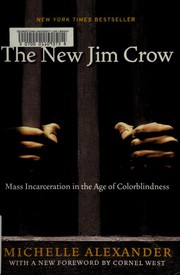
The New Jim Crow: Mass Incarceration in the Age of Colorblindness
How mass incarceration became a racial caste system after civil rights.
2,413-word summary · 11 min read
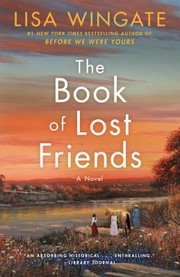
The Book of Lost Friends
Three women trace Lost Friends ads from 1875 to find stolen sons.
2,368-word summary · 11 min read
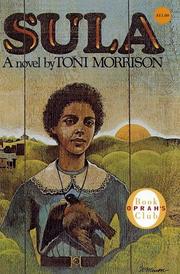
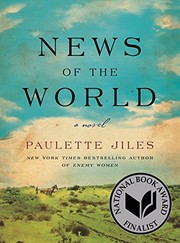
News of the World
Captain Kidd carries captive Johanna home across 1870 Texas.
2,571-word summary · 11 min read
Let the Great World Spin
A wire walker crosses the towers as Bronx lives collide below.
2,338-word summary · 10 min read
Anne's House of Dreams
Newlyweds Anne and Gilbert start in a seaside house with kind neighbors.
2,465-word summary · 11 min read

Song of Solomon
Milkman Dead leaves Michigan to hunt for family gold and finds instead the old song of his ancestor Solomon.
2,465-word summary · 11 min read
Roll of Thunder, Hear My Cry
In Depression-era Mississippi, nine-year-old Cassie Logan learns what her Black family's land costs and why they keep it.
2,273-word summary · 10 min read

Kane and Abel
Boston Kane and Polish Abel, born same day, build empires while hating across decades.
2,016-word summary · 9 min read

The Personal Librarian
Belle da Costa Greene builds J.P. Morgan's library into a world treasure while hiding that she is Black in a white world.
2,155-word summary · 10 min read

The Heaven and Earth Grocery Store
In a 1930s company town, Black and Jewish neighbors hide a deaf boy from the state and pay for it for years.
2,038-word summary · 9 min read

The Nickel Boys
Idealist Elwood and skeptic Turner endure Nickel reform school beatings, ledgers, and graves.
2,023-word summary · 9 min read
Small Great Things
A Black nurse faces trial after a white supremacist couple bans her from their baby.
2,221-word summary · 10 min read
An American Marriage
Newlywed Roy is wrongly imprisoned and Celestial loves Andre while waiting.
2,535-word summary · 11 min read
The Secret Life of Bees
Lily runs from her father with Rosaleen to Tiburon, finding shelter with beekeeping sisters.
2,207-word summary · 10 min read
The Help
Kathryn Stockett's The Help retold: Aibileen, Minny and Skeeter in 1962 Jackson, the interviews, and the book that breaks the town open.
2,592-word summary · 12 min read

Daisy Jones & The Six
Daisy Jones and The Six retold: band oral history, fame, songs, breakup after final show.
1,902-word summary · 8 min read
The Seven Husbands of Evelyn Hugo
Taylor Jenkins Reid's The Seven Husbands of Evelyn Hugo explained: the seven marriages, old Hollywood, Celia and John, and the twist in Monique's story.
2,239-word summary · 10 min read

Violeta
A woman born in 1920 writes her life story to her grandson, from one pandemic to another, through wealth, ruin, passion, and dictatorship in South America.
2,555-word summary · 11 min read
The Stationery Shop
Two teenagers fall in love in a Tehran stationery shop in 1953, are separated by the coup and a family deception, and meet again sixty years later.
2,024-word summary · 9 min read
The Orphan's Tale
A Dutch teenager rescues a Jewish baby from a death train and joins a German circus, where a Jewish aerialist teaches her to fly.
2,943-word summary · 13 min read