
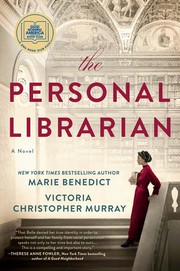
The Personal Librarian
2,155-word summary 10 min read 352 pages in the book
- First published
- 2021
- Publisher
- Berkley
- Pages
- 352
- ISBN
- 9780593101537
Reading options
What's inside (6 sections)
I picked up The Personal Librarian because the premise stopped me cold. A Black woman runs J. P. Morgan's famous library at the height of the Gilded Age while living as white, and almost no one around her knows. The book came out on June 29, 2021 from Berkley, a 352 page historical novel with ISBN 9780593101537, and it credits Marie Benedict on the list I worked from. In fact it was written by two authors, Benedict with Victoria Christopher Murray, and that partnership matters because the story sits right on the line between white society and Black family life. I went in expecting a heist story about art. What I got was slower and sadder, a workplace novel about taste and power wrapped around a family secret that never stops costing something.
The setup is true in its bones. Belle Marion Greener grows up in Washington in a well known Black family. Her father is Richard Greener, the first Black graduate of Harvard, a teacher and lawyer and civil rights advocate. Her mother is Genevieve Fleet, from a respected Washington family, clever and practical and tired of doors closing. Belle is light skinned, as are her siblings, and after the family moves north Genevieve makes a decision that splits the family. They will live as white. They change Greener to Greene, add da Costa, and tell New York they are Portuguese. Richard refuses to go along and leaves. Belle, her mother, her brother and sisters start over with new names and a story they have to keep straight every day.
When we meet adult Belle she is working in the library at Princeton, cataloging and learning fast. She is sharp about books, confident beyond her years, and already good at handling men who assume she knows less than they do. Through a Morgan family connection she hears that financier J. Pierpont Morgan is building a private library on Madison Avenue and needs someone to run it. She gets an interview. Morgan is blunt and used to being obeyed, and Belle is young and female and not at all what his friends expect, but he likes her nerve and her eye. He hires her. She is in her twenties and suddenly in charge of spending his money on some of the rarest books and art in the world.
A private library and a very public job
The library itself is a character. Morgan is building what will become the Morgan Library, a marble palace meant to hold manuscripts, early printed books, drawings, and paintings. He wants the best of everything and he wants it fast, and he hates being told no by dealers or auction houses. Belle becomes his buyer, his scholar, and his shield. She travels, she bids, she argues with dealers in London and Paris and Rome who try to overcharge the rich American, and she learns when to flatter Morgan and when to push him.
One thread I liked is how the authors show her learning the trade. At first she relies on nerve and hard study. She reads catalogs late, asks questions of trusted booksellers, and keeps careful notes on prices and condition. Soon she develops real judgment. She can spot a fine binding, a true first issue, a drawing with the right line. Morgan trusts her more each year, gives her raises, and tells other rich men to listen to her. Newspaper writers profile her as a rare career woman succeeding among men. That fame helps the library and helps Belle support her mother and siblings, but every article raises the risk. The more famous Belle da Costa Greene becomes, the more people ask where she came from.
The social scenes are well done. Belle dresses with care, and the book pays attention to clothes without turning into a catalog. A red dress here, the right gloves there, hair pinned just so. She learns to flirt a little to smooth a negotiation, to laugh at the right moment at dinner, to remember who collects what. At the same time she is always watching. A clerk who stares a second too long. A society woman who asks about her parents. Anne Morgan, J. P.'s daughter, who never quite warms to Belle and keeps circling back to questions about her background. Belle tells people her family is Portuguese, from old colonial stock, and she repeats it until it sounds easy. It never feels easy to her.
Passing and what it costs at home
The heart of the book is not the auctions. It is the split between Belle's two lives. At work she is Miss Greene, indispensable, witty, courted by dealers. At home she is Belle Greener's daughter, helping pay rent, worrying about her brother and sisters, listening to her mother warn her to be careful. The family cannot visit relatives in Washington the way they used to. They cannot correct people who say cruel things about Black people at dinner tables because to object too strongly might invite questions. They cannot marry freely. Belle knows that marriage could mean a child whose skin would give away the secret, and that knowledge shapes every romance she considers.
Her parents pull her in opposite directions. Genevieve believes passing was the only practical choice after Reconstruction promises fell apart. She lived through the reversal, schools and jobs opening and then closing again, mobs and insults when a Black professor tried to teach white students, and she decided her children would have safer lives if they could take them. Richard believes the choice betrayed the work he gave his life to. He stays away for long stretches, then writes or appears and asks Belle whether she is proud of who she is. Those scenes hurt. Belle loves her father and admires him, and she also loves the work that only her white identity lets her do. She wants both his approval and her mother's safety, and she cannot have both at once.
I found these family chapters stronger than the auction chapters. The authors, writing across their own backgrounds, let Belle feel angry at both parents without making either a villain. Genevieve is not cold. She is frightened and fierce, counting money, reminding Belle to burn letters, telling her which friends are safe. Richard is not a saint. He can be stern and distant, disappointed that his daughter will not stand with him openly. Belle moves between them, code switching in a deeper sense than speech, and the strain shows in headaches, sleepless nights, and a habit of checking rooms for listeners before she speaks plainly.
Berenson, Morgan, and the men who want her
Two relationships dominate Belle's adult life, and the book treats both as work problems as much as love stories.
Bernard Berenson is the famous art historian living in Italy, older, married, brilliant about Renaissance pictures. Belle grew up with one of his books, a gift from her father, so meeting him feels fated to her. He is in an open marriage and he pursues her, and for a while the affair feels like the one place she can be herself. He knows art the way she is learning to know books. They talk shop, they travel to see pictures, they write long letters. Then she becomes pregnant on a European trip, and he tells her to end it and stays away while she is ill in hospital for two days after a bad procedure. She goes back to New York alone. The book does not excuse him. Later, when he tries to return, Belle sees the pattern clearly. He wants her charm and her access and her body, but he will not risk anything for her. Breaking with him for good is one of the most satisfying turns in the novel.
J. P. Morgan is harder to read, and I think the authors mean him to be. He is gruff, generous, needy, and used to buying affection. He respects Belle's mind and he also enjoys showing her off. There is attraction between them, and the book allows one kiss after a long sought triumph, the acquisition of the Caxton edition of Malory's Le Morte d'Arthur that Morgan had wanted for years. Belle pulls back. She has watched him cycle through mistresses and she knows an affair would end her authority and possibly her job. After that his manner shifts. He becomes more jealous, more demanding, wanting her at family dinners and on trips, angry when dealers praise her instead of him. She manages him the way she manages fragile vellum, with patience and gloves, but it wears her down.
Anne Morgan keeps pressing from the other side. Anne asks about Belle's color, her parents, her past, sometimes in public. Belle learns that Anne herself has secrets, a close circle of women friends and companions that polite New York gossips about, and Belle uses that knowledge to call a truce. It is not her finest moment and the book knows it. She does what she has to do to protect her family, and she dislikes herself for it. Bessie Marbury, a powerful theater figure close to Anne, later helps broker a kind of peace between the two women after old Morgan dies, and that thread resolves better than I expected.
Morgan's death in 1913 changes everything and nothing. He leaves Belle $50,000 in his will, real security for her family at the time, and a sign of how much he valued her. His son Jack, less volcanic than his father, keeps her on. Jack listens when Belle argues that a private treasure house should become something the public can use. That argument takes years. Belle keeps buying, keeps cataloging, keeps showing the collection to scholars, and keeps pushing Jack toward opening the doors. The book ends with that win in sight, the Morgan becoming a public institution in the early 1920s, and with Belle burning her private papers so no letter can betray her after she is gone.
What lasts and what drags
There is a lot to admire here. The research feels solid without showing off. Prices, dealers, auction rooms, the physical feel of a reading room, the way a manuscript smells and cracks, all of it is concrete. The authors explain why a Caxton or a Rembrandt drawing mattered to Morgan without lecturing. They also show Belle's skill growing in a believable way, from nervous beginner who overpays or hesitates to a negotiator who can stare down a dealer and walk away. Her eye for beauty is the engine of the plot, and the book trusts it.
The pace is uneven, and readers should know that going in. The middle sags a little under the weight of acquisition after acquisition. Another trip, another dealer trying to cheat her, another triumph. Each scene is fine on its own, but together they blur. Some dialogue feels stiff, especially in exposition passages where characters tell Belle things she would already know so the reader can learn them. The suspense also has a built in limit. History tells us Belle was never exposed in her lifetime, so the close calls carry less fear than the book wants them to. Anne's questions, a reporter's curiosity, a Southern relative turning up at the wrong moment, these moments spike and then pass because they must.
I also wished for more interior mess. Belle presents as poised, funny, and controlled at work, which is historically apt. She had to be. But that mask sometimes keeps the reader out too. The strongest pages are when control slips, when she is sick and alone in Europe, when she fights with her mother about visiting family, when she tells her father she is tired of hiding and he tells her to keep going if the work matters. Those scenes breathe. Some of the society banter stays at the level of polish.
Still, the central question lands. Was Belle's passing a betrayal or a strategy that let her preserve culture for everyone? The book refuses a simple answer. Her work made the Morgan what it is, a public treasure that scholars and visitors use every day. Her choice cut her off from kin, from marriage, from open pride in her father. The final image of her destroying letters, hoping that someday people will know the personal librarian was a Black woman, stayed with me. It frames her not as a fraud but as a guardian who paid for her guardianship with her name.
If you like historical fiction about work, about women making room in male fields, about art and books as living things, this will hold you. Go in knowing it is more character study than thriller. The auctions thrill, but the quiet scenes, Belle counting money for her mother, Belle reading late to stay ahead of men with longer training, Belle deciding which man to trust and choosing herself, are the reason to stay.
FAQ
When was The Personal Librarian published?
Berkley published it on June 29, 2021. The first edition runs 352 pages and the ISBN is 9780593101537.
Who wrote The Personal Librarian?
Marie Benedict wrote it with Victoria Christopher Murray. The list credits Benedict, and the body notes Murray as co-author.
Is The Personal Librarian part of a series?
Yes. It stands alone, following Belle da Costa Greene from her hiring through the fight to open the Morgan Library to the public.
Similar books

Take My Hand
In 1973 Montgomery, a young nurse discovers that two sisters were sterilized without consent, and spends the rest of her life living with what she could not…
2,126-word summary · 9 min read
The Power of One
A boy in apartheid South Africa decides to become welterweight champion of the world, and the novel follows every mentor, fight, and loss that gets him there.
2,145-word summary · 10 min read

The Echo of Old Books
Barbara Davis's 2023 novel sends a rare-book dealer in 1984 New Hampshire hunting for the authors of two unpublished volumes that tell opposite sides of one…
2,491-word summary · 11 min read

Wide Sargasso Sea
Jean Rhys gives the first Mrs. Rochester a Caribbean childhood, a marriage built on money and suspicion, and a voice that Charlotte Bronte left in the attic.
2,021-word summary · 9 min read
The House of Eve
Two Black women in 1950s Philadelphia and Washington, one a pregnant teenager and one a doctor's wife who cannot carry a child, are pulled together by a…
2,270-word summary · 10 min read
The Water Dancer
An enslaved man with a strange power for travel fights to free himself and rescue those he loves.
2,910-word summary · 13 min read
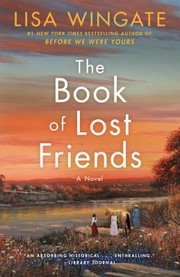
The Book of Lost Friends
Three women trace Lost Friends ads from 1875 to find stolen sons.
2,368-word summary · 11 min read

Song of Solomon
Milkman Dead leaves Michigan to hunt for family gold and finds instead the old song of his ancestor Solomon.
2,465-word summary · 11 min read

The Paris Library
Odile lands her dream job at the American Library in Paris as war closes in, then hides that past in Montana until teen Lily draws it out.
2,813-word summary · 13 min read
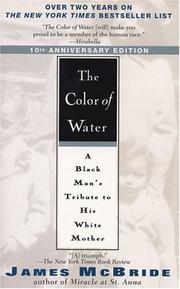
The Color of Water
A Black journalist presses his white mother about her hidden past, from a Virginia store to twelve college degrees.
2,457-word summary · 11 min read
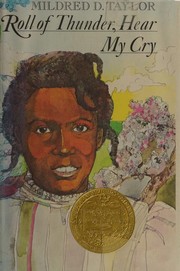
Roll of Thunder, Hear My Cry
In Depression-era Mississippi, nine-year-old Cassie Logan learns what her Black family's land costs and why they keep it.
2,273-word summary · 10 min read

Finding Me
Viola Davis traces her path from poverty in Rhode Island to Oscar night with blunt honesty about race and family.
2,823-word summary · 13 min read

Invisible Man
A nameless young Black man goes from a Southern college to Harlem, hunting for identity in a country that refuses to see him.
2,871-word summary · 13 min read

The Heaven and Earth Grocery Store
In a 1930s company town, Black and Jewish neighbors hide a deaf boy from the state and pay for it for years.
2,038-word summary · 9 min read
Dreams from My Father
Obama traces his Kansas and Kenyan families from Hawaii to Chicago community work to a first trip to Kenya.
2,053-word summary · 9 min read

The Book Woman of Troublesome Creek
Blue skinned Cussy rides Kentucky hollers delivering books in the 1930s.
2,184-word summary · 10 min read
Cloud Cuckoo Land
Kids across centuries bound by a Greek shepherd tale who would be bird.
2,146-word summary · 10 min read

The Giver of Stars
Alice Wright joins Kentucky packhorse librarians with Margery and faces marriage strain and a murder trial.
3,439-word summary · 15 min read
The Vanishing Half
Twin sisters split as one lives Black and one passes as white.
1,971-word summary · 9 min read
The Only Woman in the Room
A novel about Hedy Lamarr's escape from an arms-dealer husband, her Hollywood career, and the frequency-hopping patent the Navy ignored.
2,067-word summary · 9 min read

Violeta
A woman born in 1920 writes her life story to her grandson, from one pandemic to another, through wealth, ruin, passion, and dictatorship in South America.
2,555-word summary · 11 min read
The Stationery Shop
Two teenagers fall in love in a Tehran stationery shop in 1953, are separated by the coup and a family deception, and meet again sixty years later.
2,024-word summary · 9 min read

The Orphan's Tale
A Dutch teenager rescues a Jewish baby from a death train and joins a German circus, where a Jewish aerialist teaches her to fly.
2,943-word summary · 13 min read

The Long Winter
Dakota Territory, 1880: seven months of blizzards cut a town off from the railroad, and a family survives on twisted hay, ground wheat, and a dangerous wheat…
2,210-word summary · 10 min read

The Japanese Lover
A Polish refugee and the son of a Japanese gardener fall in love in San Francisco in 1939, then keep the affair secret for nearly seventy years.
2,286-word summary · 10 min read

The Idiot
A Turkish-American freshman at Harvard falls in love through email with a Hungarian math student and spends a summer in Hungary trying to turn correspondence…
2,019-word summary · 9 min read
The Art Forger
A disgraced Boston painter agrees to copy a Degas stolen from the Gardner Museum, then begins to suspect the original she is copying is itself a forgery.
2,117-word summary · 9 min read
Brown Girl Dreaming
Jacqueline Woodson retells her childhood in verse, moving from Ohio to South Carolina to Brooklyn while the civil rights movement reshapes the world around her.
2,727-word summary · 12 min read

Anatomy: A Love Story
In 1817 Edinburgh, a noblewoman who wants to be a surgeon disguises herself to study anatomy and falls for the grave robber who supplies her with bodies.
2,031-word summary · 9 min read

The Shadow Sister
Star D'Apliese steps out of her sister's shadow and follows a bookshop clue into the Edwardian life of Flora MacNichol, a woman who gave up love for duty.
2,260-word summary · 10 min read