
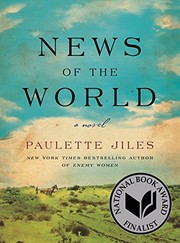
News of the World
2,571-word summary 11 min read 224 pages in the book
- First published
- 2016
- Publisher
- HarperCollins
- Pages
- 224
- ISBN
- 9780062409201
Reading options
What's inside (7 sections)
I picked up News of the World because I wanted a western that was short without feeling slight. Paulette Jiles published it with HarperCollins in 2016, a 224 page novel that later became a National Book Award finalist and then a film. It sounded like familiar ground. An old man escorts a child across dangerous country. I expected something sentimental. What I got instead was leaner and stranger, a road story about language, work, and who gets to decide where a child belongs.
The setup is plain and strong. It is 1870 in north Texas. Captain Jefferson Kyle Kidd is seventy one, a widower with grown daughters living elsewhere. He fought in two wars and lived through three. Now he makes a living as a news reader. Twice a year he travels from town to town with a stack of newspapers from around the world. People pay a dime to hear him read and explain the stories. He rents a hall, reads for an hour, takes questions, sells extra papers, and moves on. The job fits him. He likes the road, he likes being useful, and he does not want to settle into someone's spare room and grow old in public.
In Wichita Falls he gets an offer he does not want. The army has custody of a ten year old girl taken back from the Kiowa in a prisoner exchange. Four years earlier, Kiowa raiders killed her parents and sister near Fredericksburg and took her when she was six. She was raised among them after that and remembers almost nothing of her first family. Her German parents named her Johanna Leonberger. Among the Kiowa she had another name and another life. Now she speaks mainly Kiowa and a little broken English. She bites, kicks, runs, refuses shoes when she can, and sings Kiowa songs to herself. The army needs her delivered to relatives near San Antonio, an aunt and uncle she has never met. A clerk offers Kidd fifty dollars in gold to take her south. It is about four hundred miles through country that is still raw after the Civil War.
Kidd says no at first. Then he says yes. That reluctant yes carries the whole book.
What follows is a travel story in short bursts. Jiles writes in brief chapters, sometimes only two or three pages. The pair moves south by wagon and on foot, river by river, town by town. They eat beans and bacon. They sleep under the wagon. They ford creeks. They meet soldiers, freedmen, traders, German settlers, Mexican vaqueros, and drunks with opinions. Johanna tries to escape twice early on. She throws away the ugly shoes Kidd buys her. She refuses to answer to Johanna. Slowly, without any big speech about trust, they form a working deal. He feeds her and keeps her safe. She watches him and learns his habits.
The news reader and the girl with no English
The best early chapters are the readings themselves. Kidd is good at his trade. He does not just read headlines. He picks stories his audience will care about and explains the background. A mine collapse in England. Trouble in the German states. A new railroad bond. Prices for cattle. He knows farmers want weather and markets, shopkeepers want politics, young men want war. He reads in a clear voice and lets people argue afterward. The dime admission matters to him, but the respect matters more.
Johanna watches these performances with open suspicion. She does not understand most of the words. She understands that men grow quiet when Kidd speaks. That interests her. Jiles does a fine job showing a child who has lost one language and has not yet recovered another. Johanna remembers songs better than sentences. She counts on her fingers. She points. She repeats words with the wrong stress and gets angry when Kidd corrects her. Kidd, to his credit, does not treat her as stupid. He treats her as foreign. He speaks slowly, shows her coins, names objects, and waits.
Their ages shape everything. Kidd is not a young gunfighter. His back hurts. He cannot see well at night. He worries about money, about his daughters, about dying on the trail and leaving the girl alone. He carries a pistol and a rifle but he prefers talk. Johanna is ten going on much older in some ways and much younger in others. She knows how to find water, how to stay still, how to read weather. She does not know how to sit in a church or wear a dress without tearing it. The gap between them is wide, and Jiles lets it stay wide for a long time.
One small scene tells you a lot. Kidd buys her shoes and she drops them in the dust as soon as they leave town. He scolds her. She stares. Later he sees her feet are blistered from going bare and wraps them without comment. No lesson follows. That pattern repeats. He tries rules. She ignores them. He adjusts. It feels like real caretaking, not a movie montage.
Four hundred miles of bad road
The middle of the book is episodic by design. Each stop brings a new problem. A ferryman tries to overcharge them. A town drunk threatens Johanna. A patrol warns about raiders. A storm floods a crossing. A trader offers to buy Johanna outright, and Kidd has to get them away without starting a fight he cannot win. The threat level stays believable. This is not a shootout every ten pages. It is heat, mud, hunger, bad water, and men who see a lone old man with a girl as an easy mark.
Jiles knows Texas ground. She names rivers, towns, soil types, trees, and birds with an easy hand. The Brazos, the hill country limestone, cedar brakes, dust that gets into everything. Food matters here. Coffee, cornmeal, salt pork, dried apples. Kidd counts coins and reckons distances. Johanna learns to ride in the wagon without falling out and to stay close when Kidd tells her to. The physical detail keeps the story grounded when the plot could drift into parable.
The strongest danger comes from three white men who follow them hoping to sell Johanna to whoever will pay. They are not masterminds. They are drifters left over from the war, mean and careless. Kidd handles them with a mix of bluff and force, plus help from strangers at the right moment. One confrontation near a creek turns violent fast and ends badly for the attackers. Jiles does not linger on gore. She shows enough to make clear that Kidd can kill when he must and hates that he can.
There is also help along the way. A Black teamster shares a fire and warns Kidd about the road ahead. A Mexican family feeds them. These small kindnesses matter because they show Texas as mixed and lived in, not empty. People speak different languages at the table. Johanna, who already lives between languages, fits that world better than Kidd expects.
If there is a weakness here, it is that some episodes blur together. Two or three stops feel like variations on the same warning. Readers who want a tight plot may find the middle loose. I did not mind much because the miles themselves are the point.
Johanna and Captain Kidd learn each other
The heart of the novel is language coming back in pieces. Johanna starts with almost no English. Kiowa is her tongue for comfort, anger, and play. Kidd knows a few words of several languages from years of travel but not enough to hold a talk with her. So they invent a shared speech. He names things and makes her repeat them. Bread. River. Horse. Coin. She corrects his Kiowa when he tries. She laughs at him for the first time when he mispronounces a word for porcupine. That laugh changes the air between them.
Jiles is careful with memory. Johanna does not suddenly recall her German parents in a flood of tears. She remembers flashes. A song her mother sang. The smell of a kitchen. A sister's hands. Most of her childhood before capture is gone, and what remains sits beside her Kiowa childhood without fully replacing it. She dreams in Kiowa. She fears soldiers more than she fears storms because soldiers took her from the people who raised her. Kidd slowly grasps that from her view, he is part of a second kidnapping, not a rescue.
Kidd has his own memories pressing in. His wife is dead. His daughters are grown. He carries guilt about the wars he fought and the printing business he left behind. Reading the news is his way of staying connected without belonging anywhere. Taking Johanna south forces him to belong to someone again, at least for a while.
Their bond shows in work, not speeches. She learns to help with the horse and wagon. He learns to let her ride with her face to the wind instead of forcing her to sit still. He reads to her at night even though she cannot follow, because the sound calms her. She guards his coins when he sleeps. When she gets sick from bad water, he stays up and cools her head and talks to keep her awake. When he gets feverish and confused, she finds help. Neither calls it love yet. Both act as if losing the other would be unbearable.
I liked that Jiles does not make Johanna cute in a modern sense. She is difficult. She spits. She steals food. She wails. She soils herself when frightened and then glares as if daring Kidd to shame her. He does not. He cleans up and moves on. That restraint feels true to a man who raised children and buried some. It also avoids turning her into a mascot. She remains a person with a past that Kidd cannot reach.
What family means when no choice is clean
San Antonio brings the hardest part. The aunt and uncle, the Leonbergers by marriage, agree to take Johanna because duty says they must. The welcome is cold. The aunt sees a wild Indian child, not a niece. The uncle sees another mouth and a possible scandal. They talk about cutting her hair, scrubbing her, locking her in, beating the Kiowa out of her. Johanna clings to Kidd's coat and refuses to go inside. Kidd hands her over because the law and the papers say he must. He takes his gold and leaves.
That night is the moral center of the book. Kidd sits in a hotel room and cannot sleep. He knows the letter of the arrangement is done. He also knows the girl will be hurt in that house, maybe not with fists but with contempt, which lasts longer. He thinks about his own daughters, about promises, about what honor requires when the rules point one way and conscience points the other. By morning he has decided. He will take her back, even if it makes him a kidnapper in the eyes of Texas law.
The last section moves fast. Kidd collects Johanna, pays off what he must, and outruns the immediate search with help from friends made on the road. He does not return north to his old circuit. He heads for his land near San Antonio, a modest place he has mostly left alone. The idea is simple. If no one else will give her a home that respects who she is, he will. He is old, but he is steady, and he has daughters and neighbors who can help raise her.
Some readers may find this ending too neat. The aunt and uncle fold quickly. The law does not press hard. After so much patience on the trail, the hurry feels off. I wished for one more chapter showing the hard first winter, the school trouble, the stares, the nights Johanna still cries for her Kiowa mother.
Still, the choice rings true for Kidd. He started as a hired carrier. He ends as a father by decision. The novel argues that family is not only blood or papers. It is daily care repeated until it holds. That claim could sound soft in summary. In the story it feels earned because we watched him wrap her feet, share his plate, and stand between her and men with guns. When he says she belongs with him, we believe he will do the work.
Style, history, and fair criticism
Jiles writes plain sentences with weight. She favors concrete nouns and active verbs. She rarely explains feelings at length. A man pours coffee. A girl hides under a wagon. Silence does the rest. The short chapters help. You can read three in a break and feel you traveled ten miles. The news items Kidd reads give texture without slowing the plot. They remind us the wider world keeps turning while two people cross an empty stretch.
The history feels solid without showing off. Reconstruction Texas was under military rule, with federal troops and resentment among former Confederates. Railroads were coming. Settlers fought Kiowa and Comanche for land that had been Indigenous long before any deed. Jiles does not excuse the killing of Johanna's parents, but she does not turn the Kiowa into monsters either. Both acts left marks. The book lets that tension sit.
A fair criticism is point of view. We stay close to Kidd throughout. Johanna's inner life comes through behavior, songs, and a few translated lines, but we never fully enter her head. That is a defensible choice for a story about an old man's education, yet it means the most wounded person in the book remains partly at a distance.
Another limit is violence softened at the edges. The attack that killed Johanna's family happens off page and years past. Later fights end quickly. Jiles is not interested in grim detail, which suits the tone, but it can make danger feel managed.
Language choice deserves a note. Jiles renders Kiowa speech in English translation and marks German accents lightly. She avoids heavy dialect that would slow reading. It keeps pages turning, though it smooths over how lost Johanna must feel.
None of that spoiled the book for me. At 224 pages it does a lot without waste. It respects old age, treats a child as a person, and shows work as love. Kidd reading newspapers to strangers could have been a quaint hook. Instead it becomes a theme. News tells people what happened far away. Care tells a child what will happen next. Both reduce fear. Both require showing up again and again.
If you like spare westerns with moral pressure, this sits near True Grit in spirit, though less funny and more tender. If you want epic battles or long courtroom arguments about custody, look elsewhere. This is a small story about a long walk. Two lonely survivors start as a job and a burden. They end as kin. The miles do the arguing.
I finished it in two sittings and thought about it the next morning while making coffee. That is usually my test. A book that stays past breakfast did something right. News of the World did. It left me thinking about how children carry more than one home inside them, and how an old man with a stack of papers learned to listen better than he read.
FAQ
When was News of the World published?
HarperCollins published it in 2016. The first edition runs 224 pages and the ISBN is 9780062409201.
Who are the main characters?
Captain Jefferson Kyle Kidd, a seventy-one-year-old news reader, and ten-year-old Johanna Leonberger, taken by the Kiowa at six and being returned to relatives near San Antonio.
Is News of the World part of a series?
No. It stands alone, a 400-mile escort story from Wichita Falls to San Antonio that ends with Kidd choosing to keep Johanna himself.
Similar books

The Sisters Brothers
Two hired killers ride from Oregon to Gold Rush California to murder a prospector, and find their trade, their brotherhood, and the frontier myth coming apart.
2,095-word summary · 9 min read

The Tea Girl of Hummingbird Lane
A Chinese tea farming mother gives up a daughter who later seeks roots.
2,607-word summary · 12 min read
Anne's House of Dreams
Newlyweds Anne and Gilbert start in a seaside house with kind neighbors.
2,465-word summary · 11 min read

The Signature of All Things
Botanist Alma Whittaker grows up in Philadelphia trade wealth, studies mosses, marries distant Ambrose Pike, and sails to Tahiti seeking how species change.
2,535-word summary · 11 min read
One Thousand White Women: The Journals of May Dodd
May Dodd journals joining Cheyenne as a bride in an 1875 government swap, learning prairie life and loss.
2,036-word summary · 9 min read
Lonesome Dove
Two retired Texas Rangers drive cattle from Texas to Montana in a harsh and tender western epic.
2,410-word summary · 11 min read

The Fiery Cross
Jamie musters militia for Tryon while Brianna and Roger wed on the Ridge, ending at Alamance with a hanging that steals Rogers voice.
2,719-word summary · 12 min read

Drums of Autumn
Brianna crosses stones to save parents, finding love, assault fallout, and a home to build.
2,003-word summary · 9 min read

The Long Winter
Dakota Territory, 1880: seven months of blizzards cut a town off from the railroad, and a family survives on twisted hay, ground wheat, and a dangerous wheat…
2,210-word summary · 10 min read

The Japanese Lover
A Polish refugee and the son of a Japanese gardener fall in love in San Francisco in 1939, then keep the affair secret for nearly seventy years.
2,286-word summary · 10 min read

Take My Hand
In 1973 Montgomery, a young nurse discovers that two sisters were sterilized without consent, and spends the rest of her life living with what she could not…
2,126-word summary · 9 min read
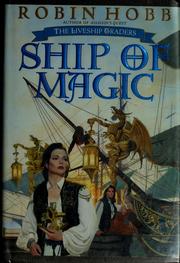
Ship of Magic
A sentient ship wakes when her captain dies, and the family that owns her starts to come apart over who gets to sail her.
2,026-word summary · 9 min read

The Shadow Sister
Star D'Apliese steps out of her sister's shadow and follows a bookshop clue into the Edwardian life of Flora MacNichol, a woman who gave up love for duty.
2,260-word summary · 10 min read

Little Town on the Prairie
In the spring after the Long Winter, fifteen-year-old Laura sews shirts, studies for a teaching certificate, and helps send her blind sister Mary to college.
2,071-word summary · 9 min read
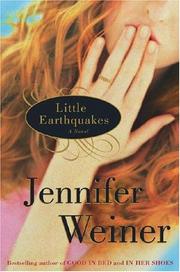
Little Earthquakes
Four Philadelphia women meet during pregnancy and discover that new motherhood is nothing like the plan, while friendship becomes the thing that holds them…
1,997-word summary · 9 min read

Mrs. Everything
Two Jewish sisters in Detroit grow up, apart and together, across seven decades of American life, from the 1950s to the 2016 election.
2,362-word summary · 10 min read
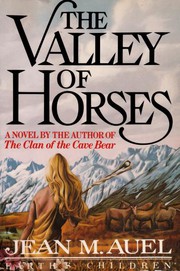
The Valley of Horses
Exiled from the Clan, Ayla survives alone in a hidden valley, tames a horse and a cave lion, and nurses a wounded stranger back to life.
2,311-word summary · 10 min read
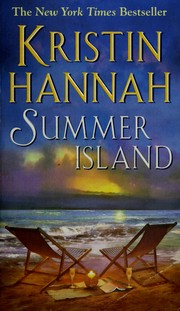
Summer Island
A radio advice host hides a scandal, and the estranged daughter hired to write about it agrees to care for her at the family's island house.
2,325-word summary · 10 min read

Ivanhoe
A disinherited Saxon knight, a great tournament, a besieged castle and a trial by combat. Scott's most famous novel, set in England in 1194.
2,834-word summary · 13 min read
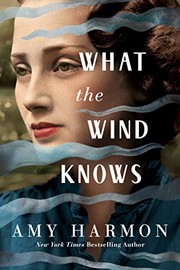
What the Wind Knows
Annie scatters her grandfather's ashes on Lough Gill and is pulled into 1921 Ireland, where she becomes the missing Anne Gallagher and falls for Dr. Thomas…
2,056-word summary · 9 min read

The Last of the Mohicans
During the French and Indian War, Hawkeye and two Mohican warriors try to save two British sisters from a Huron chief whose revenge will end the Mohican line.
2,017-word summary · 9 min read
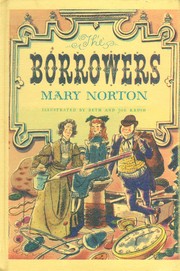
The Borrowers
A family of tiny people live under the floorboards of an English house, borrowing what they need until a lonely boy and a suspicious housekeeper change…
2,164-word summary · 10 min read

Saga, Volume 3
Marko, Alana, and Hazel hide on the planet Quietus with the reclusive author who inspired their romance, while assassins and a prince close in.
1,989-word summary · 9 min read

Old Yeller
Travis Coates takes in a stray yellow dog that protects his family on the Texas frontier, and learns about loyalty and loss.
2,165-word summary · 10 min read
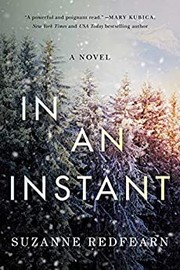
In an Instant
After a family camper crashes down a snowy mountain, sixteen-year-old Finn watches from the afterlife as survivors make impossible choices and try to live with…
2,130-word summary · 9 min read

Days at the Morisaki Bookshop
Heartbroken Takako moves into her uncle's tiny secondhand bookshop in Jimbocho, and the shop and its regulars slowly give her back her life.
2,011-word summary · 9 min read
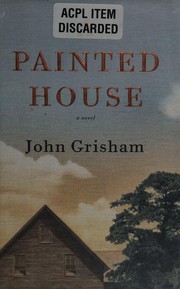
A Painted House
In 1952 Arkansas, seven-year-old Luke Chandler picks cotton with his family and learns how quickly poverty, violence, and adult secrets can end a childhood.
2,060-word summary · 9 min read

The Storm Sister
Ally D'Aplièse loses her father and her lover within weeks, then follows a brass frog and a Norwegian biography into Anna Landvik's music and the world of…
2,376-word summary · 11 min read
The Orphan Master's Son
Adam Johnson's Pulitzer-winning novel follows Pak Jun Do from a North Korean orphanage to a deadly identity swap, under a state whose loudspeakers never stop…
2,219-word summary · 10 min read
Olive, Again
Elizabeth Strout returns to Crosby, Maine, as Olive Kitteridge marries Jack Kennison, confronts her son, and faces old age, grief, and small-town judgment.
2,333-word summary · 10 min read