
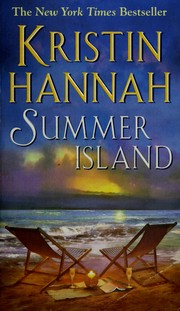
Summer Island
2,325-word summary 10 min read 319 pages in the book
- First published
- 2001
- Publisher
- Crown Publishers
- Pages
- 319
- ISBN
- 9780609607374
Reading options
What's inside (9 sections)
Early in Summer Island, Nora Bridge finishes a live radio broadcast, goes back to her office, and writes thank-you notes by hand to every caller. The show is syndicated, the column runs in more than two thousand papers, and she is famous enough that her handwriting has become part of the product. Still, she sits there with a pen. That detail is why I kept reading. It shows a woman who believes in the performance and also believes she owes something to the people who call in.
Kristin Hannah published the novel with Crown in 2001. The first edition runs 319 pages. It is a standalone, not part of any series, and it sits in the same territory as her other early family novels: a famous woman, a damaged daughter, a house that remembers more than either of them wants to.
The woman on the radio and the daughter in Los Angeles
Nora Bridge gives advice for a living. Her radio program is called Spiritual Healing with Nora, and her newspaper column is "Nora Knows Best." Listeners write to her about marriages, children, forgiveness, and the ordinary failures of love. She answers with warmth and certainty. The novel opens on one of these calls, a mother who cannot accept her daughter's engagement, and Nora talks her through it in a voice that sounds like a hand on a shoulder.
The voice is real. That is the difficult part. Hannah does not write Nora as a fraud who secretly despises her audience. Nora means what she says about family, and she is good at seeing the shape of other people's problems. She is also a woman who walked out on her husband and two daughters years earlier and has not spoken to the younger one in more than a decade. The gap between the advice and the life is the novel's engine.
The book is careful about how that gap works. Nora is not a hypocrite in the simple sense. She gives advice she wishes she had been able to take. She knows the cost of what she did, and she has organized her public life around not looking at it directly. The radio studio is the one room where her best self gets to speak.
Ruby Bridge is in her late twenties, living in Los Angeles, and running out of ways to pretend her career is about to start. She wants to be a comedian. What she has is a waitressing job she is about to lose, a recent breakup with a boyfriend she did not love, and an agent named Val who is kind enough to be honest with her.
Her comedy has one reliable subject: her mother. Ruby has built a small, bitter act out of being the daughter Nora Bridge abandoned, and the jokes are good enough to get her noticed for the wrong reasons. When a talk show host named Joe Cochran invites her on to discuss parent-child relationships, she thinks it is her break. It is an ambush. The scandal has just broken, and the host wants her reaction on camera.
The scandal is this: a former lover has sold nude photographs of Nora to the tabloids, along with the story of the affair. Nora's brand is moral authority, and the photographs take it apart. On her fiftieth birthday, the surprise party waiting for her turns out to be an empty room and a station lawyer. The station takes her off the air. The woman who tells other people how to live becomes a punchline.
Ruby learns about it on national television. She tries to make a joke and cannot. That scene is one of the novel's best, because it gives Ruby something more complicated than rage. She has spent years performing indifference toward her mother, and the camera catches the moment the performance fails.
The magazine offer arrives soon after. A glossy publication called Caché wants Ruby to write a tell-all about Nora, and they are willing to pay fifty thousand dollars for it, half in advance. Ruby says yes. She tells herself it is revenge, money, and a career, in that order. The reader knows it is also a chance to go home.
The accident and the bargain
Nora responds to the scandal by drinking and driving. She crashes her car, breaks her leg, and wakes up in a hospital with reporters outside and her oldest daughter, Caroline, standing at the foot of the bed.
Caroline is the good daughter, the one who stayed in touch, the one with a husband and children and a life that looks orderly from the outside. She is also exhausted. She has been managing her mother's image and her own household for years, and the scandal has made both jobs harder. She cannot take Nora home with her. She suggests the family's summer house instead.
Ruby arrives at the hospital intending to stay for a week. She tells herself she is there to gather material. She tells Nora something close to the truth, which is that she is there to help. The arrangement is a lie with a deadline attached, and the novel gets a lot of mileage from Ruby taking notes in her head while making soup.
Nora insists on the island. She wants the house on Summer Island, in Washington's San Juan Islands, where the family spent its best summers. Ruby does not want to go. The house is full of the version of her childhood she has spent years arguing with. She goes anyway, because the article needs a setting and because neither of them has anywhere else to be.
The house on the island
The house is the best thing in the book. It sits on the water, it has been in the family long enough to smell like itself, and it holds the specific clutter of summers that ended badly. Hannah is good at domestic texture: the groceries, the screen door, the sound of the ferry, the way a kitchen feels different when two people are trying not to talk.
Ruby and Nora begin with chores. They cook. They shop. They sit on the beach. The conversations start as arguments and turn into something slower. Nora asks about Ruby's life and Ruby answers in half sentences. Ruby asks about the past and Nora changes the subject. Then one of them stays in the room instead of leaving, and the next question gets a real answer.
Caroline comes for a night and admits that her marriage is in trouble. She has been the responsible one for so long that no one asks how she is. Nora listens, gives the kind of advice she gives on the radio, and for once the advice is for someone she loves. The scene is short, and it does more for Caroline than several chapters of backstory would have.
The house also makes the novel's central question physical. Nora left this place. Ruby grew up in it. Caroline has been maintaining it. Each woman has a different claim on the same rooms, and none of them can pretend the others' claim is imaginary.
The Sloans next door
Eric Sloan is dying. He has cancer, he has stopped treatment, and he has come back to the island to spend his last months in his family's house. His brother Dean arrives from San Francisco to be with him. The two men have been estranged for years, and neither of them has a clean explanation for why. Dean has spent his adult life avoiding the island. Eric has spent his last months refusing to make that easy.
Ruby and Dean were in love once. They were best friends with Eric, the three of them inseparable until the summer Nora left. Dean is rich now, successful in the way that looks like proof of something, and unhappy in the way that rich successful men in family novels usually are. He still wants Ruby. Ruby still wants him and is terrified of wanting him.
Their reunion is the novel's romantic plot, and it is the weakest of its threads. Dean is generous and patient, and his devotion is never in question. Ruby's fear of abandonment is real, but the book resolves it with a few conversations and a kiss on the beach. The Eric story is more affecting. A dying man asking his brother to sit with him, and a brother learning to do it badly and then better, gives the island a second family and a second kind of forgiveness.
Eric also functions as a bridge between Nora and Ruby. Nora is almost a mother to him. He loves Ruby like a sister. He has no patience for either woman's pride, and he says so from his wheelchair. Some of the novel's truest lines belong to him.
What Ruby learns
The article is supposed to be simple. Ruby will write about the scandal, the affair, the hypocrisy, and the daughter who survived it. Then she starts asking questions, and the story stops being simple.
She goes to see her father, Rand. He is not the wronged man she has been imagining. He was a soldier in Vietnam, and Nora wrote him letters that kept him alive. When he came home, he was changed. He cheated on Nora repeatedly, and she eventually caught him. The marriage had been breaking for years before she left.
Ruby brings this information back to the island, and Nora fills in the rest. During the marriage, Nora was severely depressed. She attempted suicide more than once. After one attempt she was hospitalized, and when she came out there was no home left to return to. She had an affair of her own. She left. She built a public life on the ruins of the private one.
This is the part of the novel that earns its tears. Hannah does not excuse Nora. The abandonment happened. The daughters were children. But the book insists that the story Ruby has been telling herself, the one where her mother chose fame over her, is too small to hold the woman who actually left. Nora was not choosing fame. She was trying to survive a life that had already broken her.
Ruby writes the article anyway. She includes the depression, the suicide attempts, the hospitalization. She tells herself it is the truth, and it is. It is also a betrayal, and she knows it before she sends it.
The article and the wedding
The deadline forces the novel's last act. Ruby tries to withdraw the piece. Her contract will not let her. Nora finds out what her daughter has written, and her first reaction is devastation. Then she does something unexpected: she tells Ruby to publish it, and she offers to go on the talk shows with her.
That decision is the best argument the book makes about forgiveness. Nora does not forgive Ruby in a speech. She forgives her by standing next to her in public and refusing to let the story be told without her. The media tour that follows is not a triumph. It is two women doing something hard together, badly, in front of cameras.
The novel is smart about what publicity does to a private mess. Nora has spent her career turning other people's confessions into usable lessons, and now her own life becomes material for a magazine and a television circuit. Ruby's article is a betrayal and also the first piece of writing in which she takes her mother seriously. That ambiguity is the best moral idea in the book, and it arrives late.
Eric dies shortly after they return to the island. Ruby and Dean marry in the island chapel a few months later, with the family that is left standing in the pews. The ending is happy in the way Hannah's early novels often are: the wounds are named, the right people apologize, and the house gets another summer.
What holds up
I understand why this novel has lasted. The radio scenes are excellent. The island house is vivid without being fussy. The depiction of depression is not decorative; it changes how you read every earlier scene with Nora. And Ruby's comedy gives the book a voice that is sharper than its plot, which keeps the sentiment from swallowing everything.
I also understand why critics were hard on it. Kirkus called it a mountain of mush and complained about syrupy platitudes. Publishers Weekly found it overheated and by the numbers. Those are fair descriptions of the last hundred pages, where every relationship gets a speech and every speech gets a resolution. Caroline's troubles are soothed in a single conversation. Dean's estrangement from Eric is healed in a handful of scenes. The geography is almost too convenient: everyone Ruby needs to reconcile with is already on the same small island.
The bigger problem is that the novel wants forgiveness to be both difficult and inevitable. It spends chapters establishing ten years of silence, then undoes much of that silence in a few weeks. Ruby's anger is real, and then it is manageable, and then it is gone. The speed is emotionally satisfying and psychologically thin.
Still, the book is honest about one thing that many family novels avoid. Nora's fame is not an accident. She is good at the work, and the work gave her a self she could live with. The tragedy is that she had to leave to survive, and that survival looked, from the outside, like ambition.
I closed the book thinking about the thank-you notes. A woman can be sincere in one room and absent from another. The novel's project is to make those two rooms the same size, and it does not entirely succeed. But it gets close enough that the house on the island stays with me, along with the sound of a ferry and the particular silence of a mother and daughter cooking dinner.
FAQ
Is Summer Island part of a series?
No. It is a standalone novel, published by Crown in 2001 and set mostly on a fictional island in Washington's San Juan Islands.
What is the radio show in Summer Island?
Nora Bridge hosts Spiritual Healing with Nora, a syndicated advice program, and writes the column Nora Knows Best.
Does Summer Island have a happy ending?
Most of the major relationships are repaired by the end, though Eric dies and the reconciliation between Nora and Ruby comes at a public cost.
Similar books
In an Instant
After a family camper crashes down a snowy mountain, sixteen-year-old Finn watches from the afterlife as survivors make impossible choices and try to live with…
2,130-word summary · 9 min read

The Tea Girl of Hummingbird Lane
A Chinese tea farming mother gives up a daughter who later seeks roots.
2,607-word summary · 12 min read
My Name Is Lucy Barton
Hospitalized for weeks, Lucy Barton is visited by her estranged mother, stirring memories of Amgash poverty, marriage, and becoming a writer.
2,934-word summary · 13 min read

The Storyteller
Baker Sage Singer is asked by old Josef Weber to kill him for his SS past, while her grandmother Minka's war story weighs on her.
2,174-word summary · 10 min read
Nineteen Minutes
Sterling High student Peter Haddon commits a school shooting and lawyer Jordan McAfee defends him while Josie Cormier hides truth.
2,267-word summary · 10 min read
Between Sisters
Estranged sisters Meghann and Claire reunite in Washington when Claire announces a rushed wedding, then face their mother's desertion and a medical crisis.
2,467-word summary · 11 min read
True Colors
Three Grey sisters split over love and duty after their father judges them.
2,596-word summary · 12 min read

Night Road
A crash on graduation night kills Mia Farraday and sends her friend Lexi to prison. Years later, mother Jude must face blame and grief to reach forgiveness.
2,969-word summary · 13 min read
Winter Garden
Two sisters keep a deathbed promise: hear their cold mother's Russian fairy tale to the end, and find besieged Leningrad inside it.
2,983-word summary · 13 min read

Little Earthquakes
Four Philadelphia women meet during pregnancy and discover that new motherhood is nothing like the plan, while friendship becomes the thing that holds them…
1,997-word summary · 9 min read
The Rumor
Two Nantucket best friends, Madeline and Grace, watch a summer of small indiscretions get retold into gossip that reshapes both their households.
2,017-word summary · 9 min read

The Girls in the Garden
Clare moves her daughters to a gated London garden where the community feels safe; at the midsummer party, twelve-year-old Pip finds her sister bleeding in the…
1,973-word summary · 9 min read

Where We Belong
Marian's orderly New York life cracks when the daughter she gave up for adoption arrives, and the search for the father forces her to tell the truth.
2,056-word summary · 9 min read
The Overdue Life of Amy Byler
A burned-out school librarian gets a summer to herself when her estranged husband returns, and discovers that being a mother does not have to mean losing…
2,055-word summary · 9 min read

Days at the Morisaki Bookshop
Heartbroken Takako moves into her uncle's tiny secondhand bookshop in Jimbocho, and the shop and its regulars slowly give her back her life.
2,011-word summary · 9 min read

Olive, Again
Elizabeth Strout returns to Crosby, Maine, as Olive Kitteridge marries Jack Kennison, confronts her son, and faces old age, grief, and small-town judgment.
2,333-word summary · 10 min read
Vanishing Acts
A search-and-rescue worker's perfect life cracks when her past and her father catch up.
2,799-word summary · 12 min read
The Reading List
A lonely widower and a teen library worker connect through a mysterious list of books.
2,810-word summary · 12 min read
The Most Fun We Ever Had
Four Sorenson sisters orbit perfect parents hiding old cracks.
2,590-word summary · 12 min read

The Identicals
Twin sisters swap Nantucket and Martha Vineyard lives for a summer.
2,556-word summary · 11 min read

The Accidental Tourist
Grieving Macon writes travel guides for haters of travel, then Muriel intrudes.
2,252-word summary · 10 min read

News of the World
Captain Kidd carries captive Johanna home across 1870 Texas.
2,571-word summary · 11 min read

Kitchen
Orphan Mikage finds home in a kitchen with Yuichi and Eriko after loss.
2,597-word summary · 12 min read

Anne's House of Dreams
Newlyweds Anne and Gilbert start in a seaside house with kind neighbors.
2,465-word summary · 11 min read
The Time Keeper
Mitch Albom's 2012 fable follows Dor, the first measurer of time punished in a cave, as he returns to guide a heartbroken teen and a dying businessman toward…
2,466-word summary · 11 min read

The Shell Seekers
Elderly Penelope Keeling must decide the fate of her father's treasured painting while her three children press her to sell.
2,592-word summary · 12 min read

Heart of the Matter
Two Boston mothers collide after a burn injury puts a single mom in the orbit of another woman's surgeon husband.
2,585-word summary · 11 min read

The Berry Pickers
A four year old vanishes from a Maine blueberry camp in 1962, and two families carry the loss for decades until Joe and Norma face the truth.
2,606-word summary · 12 min read
Change of Heart
Jodi Picoult's Change of Heart follows June Nealon, her ill daughter Claire, and death-row inmate Shay Bourne, whose wish to donate his heart forces a trial…
2,746-word summary · 12 min read