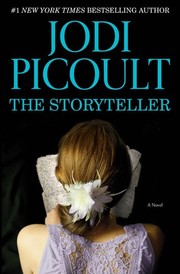
The Storyteller
2,174-word summary 10 min read 460 pages in the book
- First published
- 2013
- Publisher
- Atria
- Pages
- 460
- ISBN
- 9781439102763
Reading options
What's inside (8 sections)
I did not expect to stay up late for this one. I picked up The Storyteller because a friend who bakes for a living told me the bread scenes were the most honest she had read, and I stayed because the moral question would not let me put it down. Jodi Picoult published the novel in 2013 with Atria, and the hardcover runs about 460 pages. I read it slowly at first, then fast near the end, then I sat with the last fifty pages for a long time.
The setup sounds like a dare. A young woman who hides from the world is asked by a kind old man to kill him. He says he does not deserve to live. She says no. Then he tells her why he thinks she should say yes. The rest of the book is Sage trying to decide what a decent person does with that kind of knowledge. It is not a thriller in the usual sense. There are no chases. There is a bakery that smells of yeast at 3 a.m., a grief group in a church basement, an old woman who tells stories to stay alive inside her own memory, and an FBI agent who keeps saying the law has a clear answer even when people do not.
Sage Singer is twenty five and works nights as a baker in Westerbrook, New Hampshire. She wears her hair forward to cover scars on one side of her face. The scars came from a car crash that killed her mother. Sage was driving. Her father died earlier. Now she lives with a guilt she does not talk about except in sideways ways, and she has kept herself apart from dating and from close friendship. Baking gives her a place where touch matters more than looking. She likes the weight of dough. She likes that bread has rules and also forgives small mistakes.
The night bakery scenes carry much of the early feeling of the book. Sage shapes loaves while the town sleeps. She talks a little with Mary, her boss, who is warm without pushing. She goes to a grief support group not because she thinks it will fix her but because her therapist suggested it and because nights off feel too empty. That is where she meets Josef Weber.
Josef is in his nineties, widowed, polite in an old school way. He brings cookies. He listens. He seems lonely rather than frightening. Sage starts visiting him outside group. They talk about bread. He tells her about his wife. He learns a few words of comfort in a clumsy and sweet way. For a while he is the safest person in her life because he asks for nothing.
Then he asks for the one thing she cannot give lightly.
What pulled me in was how ordinary everything looks before that turn. Picoult spends pages on bus routes and bakery orders and Minka's kitchen with its chipped mugs. Sage drives an old car. She counts tips. She texts her sister with small jokes. This normal surface makes Josef's request feel worse, because he breaks a fragile peace Sage built with care after the crash. I kept thinking about how hard it is to start over after causing harm by accident, and how Josef wants Sage to help him escape that same hard work by a single violent act.
Sage Singer and the scars she bakes around
Sage does not see herself as brave. She sees herself as someone who caused a death and now tries to be useful in quiet ways. She wakes when others sleep. She proofs challah and mixes rye. She knows dough by feel. At home she avoids mirrors and old photos.
I liked how Picoult lets Sage be funny in dry bursts. She teases Mary about customers who want flavor without gluten. She loves her grandmother Minka with a loyalty that feels lived in. Minka raised Sage after their father died, and Sage still goes to her for soup and stories.
The book gives Sage a tentative bond with Leo Stein, who first appears in grief group and later says he works for the FBI on war crimes. Their early talks are awkward. He brings coffee. She pulls back. Picoult does not rush this. Sage has taught herself to refuse closeness, and Leo keeps showing up without making it a project. She asks Minka what she should have done that night in the car. Minka does not offer easy lines. She says you live with what you did and you try to feed people anyway. That idea runs through the novel. Sage feeds people for a living while keeping herself alone.
The scar detail worked for me because Picoult ties it to hiding rather than vanity. Sage thinks her face tells a story she does not want to explain to strangers. So she works nights and lets hair fall forward. When Josef looks past that without comment, she notices. That is why his request hits so hard. The one person who did not flinch now asks her to end his life.
Josef Weber asks for death
The middle of the present day plot turns on a single meeting at Josef's house. He shows Sage an old photograph. He tells her his real name is Franz Hartmann and that he served as an SS officer during the war. He says he has lived under a false name in America for decades. He says he wants Sage, who is Jewish, to kill him as a form of atonement. He frames it as mercy for him and as justice in a private sense.
Sage is horrified. She leaves and does not sleep. She thinks about calling police or telling Mary. She also thinks about her grandmother, and that stops her cold. How can she bring this to Minka without reopening wounds Minka spent a lifetime closing?
Josef does not threaten her. He apologizes for burdening her. He says he chose her because she understands guilt. He offers money and a gun. He says no one will know. Sage says she will not kill anyone. He nods as if he expected that answer and asks her to hear his full account.
Picoult keeps the focus on Sage's present bind rather than on past atrocities. We get an old man in a clean living room asking a young woman to carry his death for him. The strain sits in the request itself, in how he uses her kindness and her Jewish identity to ease his conscience. Sage feels used and also pities him, and she hates feeling both at once.
Minka and the story she tells to live
Sage's grandmother Minka Singer is a survivor who rarely speaks about the war. When Sage finally tells her a cleaned up version of Josef's claim, Minka goes quiet in a way Sage has never seen. Then Minka decides to tell her own story, at length, in her own order. This is the novel inside the novel, and it takes up a large share of the pages.
Minka grew up in Poland, clever and stubborn, the daughter of a baker. Picoult gives her a warm prewar life with school and family meals. Then occupation narrows that life. Minka loses her family and is sent toward the camps. Picoult handles this with restraint. She names loss without lingering on physical cruelty. The emphasis stays on how Minka used storytelling to keep herself and a friend mentally alive.
In camp Minka befriends Darija, who becomes like a sister. They share scraps of food and language. They tell stories at night to block fear. Minka invents a fable about a baker's daughter and a beast. It is about hunger and about refusing to become cruel when cruelty is the rule around you. Minka says she told it to remember who she was before numbers replaced names.
What matters for the present plot is that Minka names names and places. She remembers faces. She kept a photograph and dates in a margin. Her memory is not perfect, and she admits it, but it is specific where it counts. Sage realizes her grandmother is not a symbol. She is a witness.
Minka's storytelling habit reframes the whole book. Sage loved her tales without asking what they cost. Now she sees telling was survival and also protection. Minka told soft stories to give beauty without giving nightmares. Facing Josef forces her to decide whether to speak plainly at last.
Leo Stein and the limits of the law
Leo Stein enters as a possible boyfriend and stays as the voice of legal process. He works for the Justice Department unit that tracks former Nazis in the United States. He tells Sage private killing solves nothing and corrupts the killer. He wants evidence and testimony on record.
Sage likes Leo but resents his certainty. She asks what a trial gives Minka now. Cameras and lawyers picking at memory. Leo answers that trials are flawed and still better than secret revenge. A public finding matters for families and archives. Sage hears him and also hears Josef saying he cannot sleep.
Picoult stages strong talks between them in cars and kitchens. Leo asks for the photo. Sage refuses because she fears what Minka will face if it becomes public. Leo asks if she protects her grandmother or herself from choosing. That question lands. Sage has avoided choice since the crash. Now choice follows her from bakery to home to group.
The FBI thread shows how hard these cases are decades later. Witnesses die. Papers vanish. Names changed at ports. Leo needs corroboration, not only confession. He does not promise a clean win. He promises a process. He pushes too fast at times and uses closeness to get facts, then feels bad. Sage calls him on it.
What Sage chooses when killing feels easier
Spoilers follow, as they should in a full retelling. Sage does not kill Josef when he asks. She imagines it in plain terms and recoils. She thinks about her mother in the car and how a minute of inattention can define years. She decides she will not end a life on request, even a guilty life.
Instead Sage asks Minka for truth. Minka identifies Josef from the photo as the officer she remembers. She studies the face and says she is sure. Sage then faces a second choice. She can take this to Leo and expose Minka to press and defense attack. Or she can stay silent and let Josef die on his own schedule.
Sage chooses exposure. She gives Leo the material and asks Minka for permission, which Minka grants after fear and anger. Josef is arrested. Neighbors say he was kind. Some say Minka must be mistaken. Mary stands by Sage even when customers gossip.
The trial brings no catharsis. Josef's health fails. Motions drag. Minka testifies in a spare way. She states facts. Josef dies before full punishment lands as Leo hoped. Sage feels anger that justice feels thin and relief that she did not kill a man in his living room.
Where the book holds and where it slips
The Storyteller works best as a present day moral bind. Picoult is skilled at grief groups and kitchens and late night talks, and those skills serve the core question. What do you owe a guilty old man who asks for death. What do you owe your grandmother who survived him. Sage sits between those debts.
I admired the restraint around camp scenes. Picoult names horror without staging it for shock. Focus stays on memory and on food shared in secret and on stories told to keep language human. For a popular novel about this subject, that choice matters. It keeps attention on survivors rather than on perpetrators.
Criticism is fair too. The parable can feel too neat. Sage the atoning driver meets Josef the atoning officer meets Minka the witness, with Leo beside them like a tutor. Real life rarely arranges lessons so cleanly. If you dislike novels that teach, this one teaches openly.
Minka's beast fable also divides readers. Some find it moving. Others find it thin beside her direct memories. I felt both. The fable repeats images that feel familiar from fairy tales, and I wanted Minka herself more than allegory. Picoult lets Minka question the tale too, but those pages still slow the middle.
Picoult's formula shows. Multiple voices and research passages and a courtroom phase and a late twist. If you read her often, you know the rhythm. It held for me because Sage felt distinct. Her silence is tired and practical. Her growth is modest, like learning to face a room.
I closed thinking about bread. Dough needs time and warmth to rise, and rushing spoils texture. Sage learns conscience works the same. She proofs and waits and starts again. I still picture her at 4 a.m., flour on her arms, listening for the timer, deciding to live in the open a little more each day.
FAQ
Who is Josef Weber in The Storyteller?
He is an elderly man in Westerbrook who befriends Sage Singer in grief group, then admits he served as SS officer Franz Hartmann and wants Sage to kill him.
How long is The Storyteller and who published it?
Atria published it in 2013. The hardcover runs 460 pages with ISBN 9781439102763.
Is Minka's story part of the novel?
Yes. Sage's grandmother Minka Singer tells her own camp survival story inside the novel, and that account shapes how Sage judges Josef's request.
Similar books
More like The Storyteller →
The Pact
After Emily Gold dies from a gunshot, her boyfriend Chris Harte says it was a suicide pact and faces trial for murder.
2,873-word summary · 13 min read

Nineteen Minutes
Sterling High student Peter Haddon commits a school shooting and lawyer Jordan McAfee defends him while Josie Cormier hides truth.
2,267-word summary · 10 min read

My Sister's Keeper
Thirteen-year-old Anna sues her parents for medical emancipation so she can refuse to give her dying sister Kate a kidney.
2,332-word summary · 10 min read
The Measure
Small wooden boxes arrive for every adult, each holding a string that shows life length. Eight people decide if they will open theirs.
2,374-word summary · 11 min read

Olive Kitteridge
Thirteen linked stories orbit blunt Crosby teacher Olive, husband Henry and son Christopher through love, aging and Maine small-town life.
2,385-word summary · 11 min read

My Grandmother Sends Her Regards and Apologises
Seven-year-old Elsa loses her granny and best friend, then delivers apology letters to neighbours while holding onto fairy tales of Miamas and the Land of…
2,311-word summary · 10 min read