
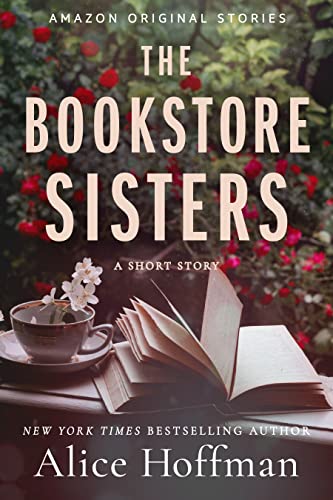
The Bookstore Sisters
2,335-word summary 10 min read 36 pages in the book
- First published
- 2022
- Publisher
- Amazon Original Stories
- Pages
- 36
- ISBN
- 9781662510502
Reading options
What's inside (9 sections)
I picked this one up because it kept turning up in my feed as a tiny book with an outsized emotional reputation. Thirty-six pages, a bestselling name on the cover, and a premise about two sisters and a bookstore. It was first published in 2022 by Amazon Original Stories, on November 1, and it opens what became a small run of Once Upon a Time Bookshop stories, though this one reads fine on its own. I expected something slight. What I got was a story that does a surprising amount of work in a very small space, and that also leaves you wishing it had taken a little more time over some of its feelings.
A woman who has made a career of forgetting
Isabel Gibson is thirty-two, divorced, and living in New York, where she walks dogs for a living. One of her regulars is a labrador named Hank. She has arranged her life so that very little from her childhood can get in. She does not read much anymore. She does not go home. Home, in her case, is Brinkley's Island, a small place off the coast of Maine, and a bookstore she grew up above.
Hoffman tells us early that Isabel has all but perfected the art of forgetting. That line is the key to her. She is not a woman who never thinks about the past; she is a woman who has practised not thinking about it, every day, for years. The dog walking, the city, the distance, all of it is a kind of maintenance work. She keeps the machinery of her old life from starting up again.
Then an envelope arrives. Inside is a single word, Help, and instructions to take the Wednesday ferry. Isabel tries to set it aside. She almost succeeds. But the letter comes from the one place she has spent years avoiding, and the one person she is least sure wants to see her, and by the time the ferry leaves she is on it. That is the whole engine of the plot: one word, one boat, one return.
I liked the quietness of that opening. There is no storm, no phone call from a dying relative, no legal summons. A niece wrote a note and an aunt got on a boat. Hoffman understands that the smallest prod can be enough to undo years of careful avoidance.
The island and the shop she left behind
To understand why the letter lands so hard, you have to know what Isabel left. She and her older sister Sophie were raised in a cottage attached to their father's bookstore, a shop called Once Upon a Time. Their mother died when they were young. Their father drank and struggled, and money was often short. The store was the family's living and its burden at the same time, and the two girls grew up inside it.
They were close once. Hoffman gives us enough glimpses of that earlier closeness to make the later silence hurt. They were the bookshop sisters, the pair who belonged to the shelves and the creaky floor and the island community that came in out of the weather. Then their father died, and the sisters fought over what to do with the place. Sophie wanted to keep it going, as a piece of family heritage and an anchor for the island. Isabel wanted to sell it. The fight went to court, and with the support of people on Brinkley's Island, Sophie won.
The legal battle is not the worst of it. The worst of it is what happened at the funeral of Sophie's husband, Matt. Isabel turned up late and unkempt, in a state that read as disrespect to a sister already nursing a grievance. Whether she meant any harm is almost beside the point. The damage was done, the relationship broke apart, and Isabel disappeared from Sophie's life entirely. By the time the story starts, the sisters have barely spoken in years.
This backstory is handed to us in pieces, which is the right choice for a story this short. We get the court fight, the funeral, the drinking father, the dead mother, and we get them as fragments surfacing while Isabel moves through the present. It keeps the reading brisk. It also means the estrangement never gets the sustained attention it deserves, something I will come back to.
The niece who wrote the letter
Stepping off the ferry, Isabel expects Sophie. Instead she is met by Sophie's daughter, Violet, a girl young enough to still be in childhood and old enough to have been running the household. Violet explains that her mother has broken a leg in a fall down the stairs and cannot manage the shop or the house. It was Violet who found Isabel's address and sent the plea for help. The child has been holding things together on her own, and she is not particularly pleased to have an aunt arrive to take over.
The reunion is awkward in a way that feels true. Sophie greets Isabel coldly. Violet makes no secret of her distrust and has a sharp line in her voice for almost everything Isabel says. Isabel, who has spent years being the woman who leaves, is suddenly the woman who has been summoned, and nobody has made her welcome. She stays anyway. She cleans, she cooks, she does the jobs that Sophie cannot do from a chair.
I found Violet the most interesting person in the story, partly because she is given the clearest motivation. She wrote the letter because she loves her mother and is tired of watching her struggle. She watches Isabel with suspicion because Isabel has been a story in her house for years, an absent sister, a figure of resentment. Watching that suspicion soften, slowly and without a speech, is one of the quiet pleasures here.
Baking as a way back in
The turn in the story comes through work. Isabel finds her late mother's box of recipes, and start baking from it. Cinnamon rolls, cakes, cookies, cupcakes. She and Violet begin selling the cupcakes in the shop, and people come in. The baked goods draw customers who might never have walked into a failing bookstore on their own, and Isabel notices that pairing food with books might be a way to keep the place alive.
This is where the book's warmth is most convincing. Isabel has returned as a woman who does not read and does not belong, and the first thing that reconnects her to the family is her mother's recipes. The recipes are not treated as a quaint prop. They are a practice, a set of motions she can repeat, a way of having her mother in the room without having to say anything about grief. Hoffman knows that people often repair relationships through tasks long before they are ready to talk about them.
Violet's arc runs alongside this. She has dismissed books, or at least pretended to. Isabel hands her children's classics, among them Half Magic and Mary Poppins, and the girl starts to get curious. By the end she is quietly setting aside fairy tale collections for herself. Shelves get rebuilt. Neighbours come back. The shop starts to sell both books and cakes, and for the first time in years it feels like it has a future.
The criticism I would make here is that the revival is tidy. A failing store turns around in a handful of pages because one woman bakes well and recommends the right children's books. That is a lovely idea, and it fits the scale of a short story, but it asks us to accept a lot of goodwill very quickly. The island community that sided with Sophie in court is now the same community crowding into the reopened shop. That is neat rather than earned.
Johnny Lenox and the kindness underneath
Isabel also reconnects with Johnny Lenox, a friend from her childhood on the island. He remembers the night of Matt's funeral, when he found Isabel in bad shape and looked after her. He reminds her that she once told him she loved him. Their conversations stir up feelings she thought she had buried, and the story allows a small romance to grow out of shared history rather than a new spark.
Johnny works because he is patient. He is not trying to win Isabel over with a grand gesture. He is simply still there, and still kind, and that steadiness is enough to make the island feel like a possible home instead of a place she escaped. Hoffman keeps the romance modest, which suits the rest of the book. It is less a love story than a reminder that Isabel was loved here once and might be again.
The detail that most changed my reading of Sophie comes a little later. Isabel learns that her sister secretly paid for her divorce lawyer, all those years ago, while they were barely speaking. It is a small act and a revealing one. Sophie resented Isabel and still looked out for her. The gesture does not erase the court fight or the funeral, but it makes it harder to read Sophie as simply the bitter sister who stayed behind.
That revelation is doing a lot of work in very few sentences. It is the moment the story asks us to reconsider everything we have seen of Sophie's coldness. I think it lands, but only just. A longer book could have let that kindness sit beside the resentment for a while, letting the two complicate each other. Here it arrives, lands, and moves on.
The notebook in the secret compartment
Near the centre of the story Isabel finds something their mother left hidden in the bookstore, a notebook tucked away in a secret compartment. Inside is a message written for her daughters, a mother's words of love meant to be read after she was gone. It asks them to hold on to each other and to her stories. For Isabel, who has built a life on forgetting, the discovery is almost too much. She grieves and is comforted at the same time.
That night she bakes her mother's Fall in Love Fruitcake and understands that the real secret ingredient is love. It is the sort of line that could be saccharine in another book. Hoffman gets away with it because the recipes have been doing emotional work for pages already, so the point feels arrived at rather than pasted on. The fruitcake is the closest thing the story has to a thesis, and it is delivered through an ordinary act of baking.
The climax is the grand reopening of the shop, now part bookstore and part bakery. A crowd of neighbours and dogs fills the place. Sophie works the coffee machine, Violet counts customers, Isabel serves the treats, and Johnny and his father help with the building work. The sisters read their mother's note together as the day closes. Isabel, who once defined herself by how well she could forget, decides she wants to remember. She will stay on Brinkley's Island and share the work of the shop with Sophie and Violet.
I have mixed feelings about the ending. On one hand, it is exactly the sort of payoff this kind of story promises: the estranged sister returns, the family heals, the little shop is saved. On the other hand, it arrives quickly, and the years of hurt between the sisters are mostly resolved by proximity and a dead mother's note. Isabel's choice to stay is framed as independence rather than retreat, which I appreciated, but I could have believed it more if the book had let her struggle with the decision for longer.
What a short book can and cannot hold
The obvious thing to say about The Bookstore Sisters is that it is small. That is both its strength and its limitation. In thirty-six pages Hoffman sets up a real family history, a believable estrangement, a niece who carries the emotional plot, a revived business, a mother's lingering presence, and a rekindled romance. Very few writers could fit all of that in without it feeling like a list. Hoffman manages it because she anchors everything in physical work: cleaning shelves, folding cupcake cases, reading a recipe card, turning the pages of an old notebook.
What stays with me is not the reconciliation itself but the way it happens. Isabel and Sophie do not sit down and settle their argument. They work side by side until the anger has somewhere else to go. The bookstore gives them a shared task, and the mother's recipes give them a shared memory, and somewhere in the middle of that the sisters remember that they used to be close. It is a gentler idea than most books about family estrangement offer, and it is a useful one.
For all that, this is a story that skims the surface of its own best material. The father's drinking, the court case, the funeral, the divorce, Sophie's secret payment, all of it is mentioned rather than explored. Readers who want a slow account of how a sisterhood breaks will not find it here. Readers looking for a warm, quick read about books, baking, and the stubborn pull of home will find a lot to like. I finished it in one sitting and thought about it for a day or two afterwards. For a book this short, that is a fair result.
I would hand it to someone who likes stories about families and bookshops, and to anyone who has ever tried to outrun a place and found that the place kept calling. I would be careful with a reader who wants the years of damage taken seriously. Hoffman is interested in the repair, not the wound. That is a legitimate choice. It also means the book can feel a little too easy, right at the moment when you want it to be harder.
FAQ
Is The Bookstore Sisters a novel or a short story?
It is a short story of about 36 pages, first published as an Amazon Original Story on November 1, 2022. It opens Hoffman's Once Upon a Time Bookshop stories but reads fine on its own.
What is the family bookstore in the story?
It is called Once Upon a Time and sits on Brinkley's Island, Maine. The Gibson sisters fought over it after their father died, and reopening it as a bookstore and bakery drives the ending.
Does the book have a happy ending?
Isabel stays on the island, repairs things with Sophie, grows closer to Violet, and rekindles a romance with Johnny Lenox. The repair arrives quickly, which some readers may find too easy.
Similar books
Between Sisters
Estranged sisters Meghann and Claire reunite in Washington when Claire announces a rushed wedding, then face their mother's desertion and a medical crisis.
2,467-word summary · 11 min read
The Switch
A burned-out consultant and her 79-year-old grandmother swap London and Yorkshire homes for two months, facing grief, dating apps, and village politics.
2,782-word summary · 12 min read
Magic Hour
A disgraced psychiatrist and her chief sister take in a feral girl.
1,970-word summary · 9 min read
Just for the Summer
Emma and Justin date to break a matching curse, then face sudden guardianship and illness on Lake Minnetonka.
3,090-word summary · 14 min read
Book Lovers
Sharp literary agent Nora Stephens gets dragged to small-town Sunshine Falls with her sister and keeps colliding with brooding editor Charlie Lastra.
1,952-word summary · 9 min read
Saving CeeCee Honeycutt
A twelve-year-old girl loses her mother and is packed off to Savannah, where a great-aunt, a housekeeper and a street of eccentric women teach her how to…
2,627-word summary · 12 min read
Lone Wolf
A wolf expert lies in a coma after a crash, and the son who left home years ago returns to end his life support while his sister fights to keep him alive.
2,761-word summary · 12 min read
Hollow Bones
On 11 September 2001, two-month-old Molly Fitzgerald loses her mother at the World Trade Center. She grows up planning for disasters, until a crisis in her new…
2,703-word summary · 12 min read
Dreamland
A teenager slips out of her perfect sister's shadow and into a relationship that turns from thrilling to dangerous, in Sarah Dessen's dark 2000 novel about…
2,823-word summary · 13 min read
The Mermaid Chair
Jessie Sullivan returns to her childhood home on Egret Island to care for her agoraphobic mother, then finds her marriage, her faith, and a monk's vow thrown…
2,237-word summary · 10 min read

Sam's Letters to Jennifer
A grieving journalist reads her grandmother's letters and finds a decades-long love affair that changes how she sees her family.
2,310-word summary · 10 min read
The House We Grew Up In
The Bird family of the Cotswolds breaks apart after a suicide and spends twenty years not talking about what happened.
2,198-word summary · 10 min read

At First Sight
Jeremy and Lexie are married and expecting a baby when anonymous emails tell him the child may not be his.
2,317-word summary · 10 min read

A Spool of Blue Thread
Four generations of the Whitshank family in Baltimore, and the silences, resentments and quiet love they hand down without ever saying so.
2,408-word summary · 11 min read

Delilah Green Doesn't Care
Delilah returns to Bright Falls to photograph her stepsister's wedding and falls for Claire, a bookstore owner and single mother, while a cruel bet threatens…
2,315-word summary · 10 min read
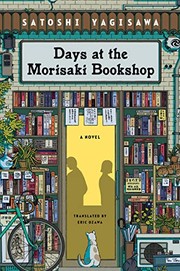
Days at the Morisaki Bookshop
Heartbroken Takako moves into her uncle's tiny secondhand bookshop in Jimbocho, and the shop and its regulars slowly give her back her life.
2,011-word summary · 9 min read
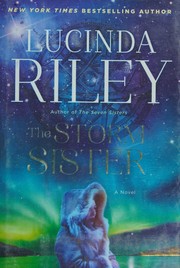
The Storm Sister
Ally D'Aplièse loses her father and her lover within weeks, then follows a brass frog and a Norwegian biography into Anna Landvik's music and the world of…
2,376-word summary · 11 min read
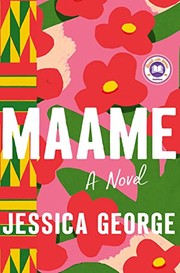
Maame
Maddie Wright, 25, has spent years as the responsible one in her Ghanaian British family, and the year she finally tries to live for herself is the year…
2,108-word summary · 9 min read
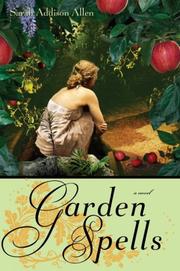
Garden Spells
Two sisters reunite in their family home in Bascom, North Carolina, where an apple tree shows anyone who eats from it the biggest event of their life.
2,030-word summary · 9 min read
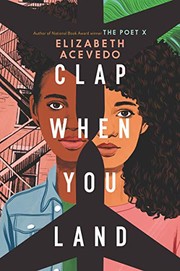
Clap When You Land
Two half sisters, one in Sosúa and one in Queens, discover each other after their father dies in a plane crash, in Elizabeth Acevedo's novel in verse.
2,890-word summary · 13 min read
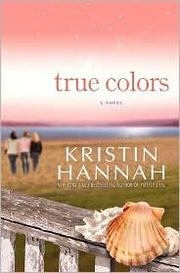
True Colors
Three Grey sisters split over love and duty after their father judges them.
2,596-word summary · 12 min read
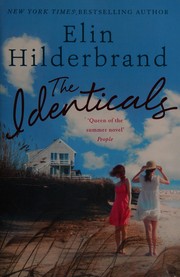
The Identicals
Twin sisters swap Nantucket and Martha Vineyard lives for a summer.
2,556-word summary · 11 min read
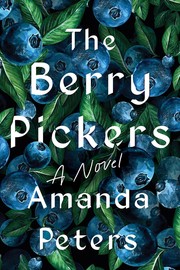
The Berry Pickers
A four year old vanishes from a Maine blueberry camp in 1962, and two families carry the loss for decades until Joe and Norma face the truth.
2,606-word summary · 12 min read
We Are All Completely Beside Ourselves
Rosemary tells of twin sister Fern, a chimp raised as family, and research fallout.
2,058-word summary · 9 min read
The Winners
Two years on, Beartown opens a new rink, welcomes Maya and Benji home, and faces money fights and a gun at the ice.
2,366-word summary · 11 min read
The Shipping News
At thirty-six, failed newsman Quoyle loses his cruel wife and flees to ancestral Newfoundland with his daughters, where a small-paper job slowly rebuilds him.
2,833-word summary · 13 min read

The Longest Ride
A stranded widower relives his marriage while a Wake Forest student and a bull rider test new love in North Carolina.
2,488-word summary · 11 min read
Transcendent Kingdom
A neuroscientist studies addiction in mice while mother prays at home.
2,020-word summary · 9 min read
The Last Anniversary
A single woman inherits island house and unknots a vanished baby story.
2,158-word summary · 10 min read
The Guncle
A sitcom star takes his niece and nephew for a summer and learns presence beats punchlines.
2,779-word summary · 12 min read