
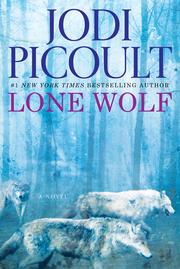
Lone Wolf
2,761-word summary 12 min read 421 pages in the book
- First published
- 2012
- Publisher
- Atria Books
- Pages
- 421
- ISBN
- 9781439102749
Reading options
What's inside (8 sections)
I picked this up because a friend said it was the one Picoult book she could not put down, and because the cover promised wolves. What I got was a long argument about a man on a ventilator, told by the people who loved him and resented him. The book opens with a line I still remember. Cara Warren is in a truck with her father when it is about to hit a tree, and instead of thinking about the crash she thinks about the first time she tried to save a life. That first time involved a wolf pup she named Miguen, who she called Feather. Lone Wolf came out in 2012 from Atria Books, the twentieth novel from Jodi Picoult, and it runs two kinds of story at once. There is the family story, set in a hospital and a New Hampshire courtroom. Then there are the wolf stories, told by the man in the bed, about what he learned living among animals that seem to understand family better than people do.
The man who chose the pack
Luke Warren is the man in the bed, and the wolf chapters are his to tell. Picoult gives him the prologue, in which he is a boy raised by people he thinks are his parents but who are really his grandparents. He spends his days in the woods, tracking animals and learning the habits of trees from the man he calls his father. He has a moment with a moose and her calf that tells you everything about where his loyalties will go. Later he learns that the woman he called Mom is his grandmother, and that a woman named Kiera, who has been in prison and has struggled with addiction, is his biological mother. It is a strange, lonely childhood, and it explains why he grows into a man who trusts animals more than people. Animals, in his telling, are honest in a way humans are not.
That distrust becomes a career. Luke goes to the Canadian wilderness and spends two years living with a gray wolf pack, not watching it from a blind but moving through it as a member, eating and sleeping and hunting with the animals. Some people think he is a genius. Others think he is insane. He comes home and writes books, gives lectures, and runs a wolf sanctuary in the White Mountains of New Hampshire. Picoult did real research for this material. She worked with Shaun Ellis, a British man who made his name living with wolves, and some of Luke's observations come straight out of that world. The details are specific and strange. Luke describes rolling in the mud with wolves named Sibo and Sobagw, keeping clear of Pekeda the beta, eating from a calf carcass with his hands and mouth bloody, and sleeping beside a pregnant female named Mestawe to convince her to choose him as nanny for her pups.
The sanctuary itself is a odd place, and Picoult makes the most of it. It sits at a roadside attraction called Redmond's Trading Post, Wild Kingdom and Dinosaur World, where the wolves share space with gibbons, falcons, an overweight lion, and a mechanical T. rex that roars on the hour. In March the theme park is empty and the T. rex roars to nobody. It is into this place that Cara moves at thirteen, after her parents separate. She lives in a trailer, goes to school, and hangs around the enclosures until a wolf named Bedagi gets used to her smell. She is her father's apprentice in a way his son never was. When Mestawe abandons her litter, it is Cara who helps pull the tiny pups from the den and tucks them into a cardboard box with a hot water bottle under a red plaid blanket. The runt of that litter, the one Cara keeps against her heart and names Feather, dies in her coat on the way to the vet. Luke tells her that in the wild the pup would never have lasted a day. It is the first time Cara learns what her father means by nature, and it is the memory the opening chapter reaches for before the truck hits the tree.
The son who left and the sister who stayed
Edward Warren is the other half of the book's engine. He is in his early twenties, living in Thailand and teaching English, when his mother calls to say there has been an accident. Luke has been in a crash on an icy New Hampshire road with Cara in the passenger seat. Cara is injured but will be fine. Luke has a severe brain injury, bleeding that required surgery, and now lies in a coma with very little chance of coming back. Edward gets on a plane and flies home to a family he has not spoken to in six years.
The family story behind that silence is told in pieces. Georgie, the mother, finally left Luke after years of being second to the wolves, and remarried a lawyer named Joe Ng. They have twins, Elizabeth and Jackson, and a comfortable house that Cara never quite feels at home in. So Cara chose her father and the trailer. Edward chose to disappear at eighteen, after a fight that everyone in the family believes was about him coming out as gay. Cara has hated him for it ever since, because his leaving seemed to break their parents' marriage and leave her to pick up the pieces. Georgie is caught between the children she raised and the man she could not keep. Joe, the stepfather, is the one steady and warm presence in the book, an outsider who can care about these kids without owing them anything.
When Edward returns, he goes straight to the hospital and sits with his father. Dr. Saint-Clare, the neurologist, is blunt about the prognosis. Luke is in a persistent vegetative state, and the chances of recovery are close to none. Edward finds two things that settle him in his decision. One is a handwritten statement Luke made years earlier, when Edward was only fifteen, giving his son the say over his medical care if he could not speak for himself. The other is Luke's driver's license, which says he is an organ donor. Edward decides that his father would not want to be kept on a machine, and that the right thing is to take him off life support and give his organs to people who need them.
A decision nobody should have to make
Cara is seventeen, which means she cannot legally make the call. That detail is what turns a family argument into a court case. As the elder child, Edward is the next of kin, and he moves quickly. He talks to the doctors, leans on the directive, and tells the staff he wants life support withdrawn and donation to proceed. Cara, still sore and on painkillers after the crash, is having none of it. She believes her father can still wake. She points out that she lived with him, learned from him, and understood him, while Edward walked away and has no right to decide anything. The fact that Luke once took a wolf into an enclosure with a girl who had been hurt, or that he spent nights saving a litter of pups, is to her proof that he is a fighter. She wants time for a miracle.
The family meeting the book builds toward is genuinely hard to read. Edward is certain he is protecting Cara from having to make the choice herself, and he tells the hospital staff that she has agreed to the plan when she has not. Cara bursts into the room as the staff are preparing to act, and the scene turns ugly. Edward, convinced this is his only chance to do what his father asked, pushes past a nurse and pulls the ventilator tube himself. The staff pull him away and reconnect the machine. Security arrests him. Georgie follows her son out of the room, which leaves Cara alone with the sense that everyone is against her. In that moment she decides she has to stop him by any means available.
That is how a grieving teenager ends up in the office of Danny Boyle, the county attorney, asking him to prosecute her brother for attempted murder. Boyle is skeptical at first, then interested, and Cara ends up testifying to a grand jury. To prove the malice the charge requires, she says Edward shouted that he wanted their father dead as he pulled the tube. It is a lie, and a stupid one, born of panic and the certainty that her brother intends to kill their father if she does not act. Joe takes Edward's case, which the book admits is a bit of a stretch for a divorce lawyer, and he gets him out on bail for the assault charge. When the attempted murder indictment comes, Edward has to spend a weekend in county jail and hates every minute of it. He is a man who cannot stand a cage, which Picoult quietly connects to his father's feelings about captivity. Joe finds the hole in Cara's testimony by listening to the recording and talking to the nurse Edward pushed, who confirms he said nothing at all. The charges are dropped. It is one of the few moments in the book where someone actually pays attention to what a person did rather than what a person claims.
The court case and the thing Cara cannot say
The hospital, unwilling to pick a side, asks for a temporary guardian, and a woman named Helen Bedd is appointed. She spends time with both siblings, reads Luke's own book about his years with the wolves, and tries to work out what kind of man they are fighting over. Cara, for her part, asks Boyle to recommend a lawyer and ends up with Zirconia Notch, a former prosecutor in Boyle's office who now does a good deal of work as an animal psychic. It is an odd choice that tells you something about Cara's state of mind. She is fighting for her father with the language and the people of the wolf world, because that is where she feels competent. The courtroom becomes a place where the family says out loud what it has kept hidden for years.
The biggest of those revelations is the real reason Edward left. The story everyone knows is that Luke rejected his son for being gay. The truth Edward has carried alone is that he walked in on his father with another woman and learned that Luke paid for an abortion. His own attempt to talk about who he was got pushed aside in the same ugly conversation. Eighteen years old, he chose to leave rather than expose his father and blow apart the family, and he let everyone believe the worst of Luke instead of telling what he had seen. That secret is the weight behind his insistence that Luke would not want this half-life on a machine. He knew his father's capacity for selfishness in a way Cara never had to. Cara learns it in court, and it shakes the story she has built about her brother.
There is a scene in the middle of the trial when Edward drops Cara at the hospital to visit Luke, and something happens that the book treats as a small miracle. Luke opens his eyes and follows her across the room with his gaze. Cara takes it as proof he is still there. Edward, who has spent the whole book arguing that his father is gone, has to sit with the possibility that he might be wrong. Picoult does not tell you what to make of it, and that uncertainty is the best part of the book. The scene lands because both siblings have a plausible reading of the same fact, and neither of them can be dismissed.
What happened on the road
The truth about the crash comes at the end, and it is smaller and sadder than the legal fight suggests. The accident was not a simple matter of black ice or a deer in the road. Cara was driving, or at least the crash happened on her watch, and in the immediate aftermath she tried to pull her father out of the wreckage. In doing so she dropped him. His head hit the pavement, and after that he stopped moving. The brain injury that put him on the ventilator came from that fall, not only from the collision. She has carried the knowledge that she let go of him, and that is why she could not bear to let him go now. Her whole campaign to keep him alive was a way of undoing a single moment she could not undo. When the police had information about the accident, they had information about her, and the book lets the reader sit with the fact that a seventeen-year-old in shock made a choice and then lived with it for months.
Helen Bedd recommends that Cara be made guardian, a recommendation that surprises people who have watched the girl lie under oath. But the judge gives permanent guardianship to Edward, on the grounds of birth order and the directive, and rules that Luke is in an irreversible state. The donation can proceed. In the last days, Edward and Cara go to the wolf enclosure together, and the book gives them a quiet scene among the animals their father loved. Luke dies, his organs are taken, and the fight that has held the family together for months is suddenly over. What strikes me is how little triumph there is in Edward's win. He gets what he wanted and it looks like a loss for everyone.
Barney, and the book's wilder claims
The final chapter belongs to someone the family has never met. Barney is a young man who has been on dialysis and receives one of Luke's kidneys. Picoult steps entirely out of the Warrens' story to follow him, and there is a wolf, a patch of cold woods, a hotel where people speak French, and a feeling he cannot shake that he is headed home. The reader is left to decide whether the animal is from Luke's old pack, whether it recognizes something of the dead man in the boy who carries his kidney, or whether the whole thing is a coincidence that means nothing. It is an open ending, and it is hard to know what to do with it. Some readers find it beautiful. I found it moving but a little self-conscious, a symbolic flourish after a book that had done its real work in rooms and hospital corridors.
The wolf material is where I would be honest with a friend about the book's limits. Some of the strongest pages are Luke's accounts of pack life, and Picoult writes them with real affection. But working wolf biologists have objected that the science is closer to myth than fieldwork, and critics such as Barbara King and L. David Mech have said so in print. The book speaks with great confidence about how wolves assign parts of a kill, or read the age of prey by smell, or study human beings, and some of that confidence is misplaced. There is also the matter of Cara's perjury, which is a contrivance that a courtroom novel can get away with only if the reader is willing. The trial has moments that feel engineered to produce the maximum amount of shouting.
For all that, the human story holds. Picoult is good on the particular kind of love that grows between siblings who each believe the other has abandoned the family, and she lets both Edward and Cara be right about something. Edward's secret is the best thing in the book, a slow reveal that changes how you read every argument he has. Cara's arc is messier, since she lies and lashes out and is still a child in the middle of an adult decision, and the book is fair enough to let her be all of those things without writing her off. If you want a novel about wolves, you may come away unsatisfied by the science. If you want a novel about a family deciding what it owes a man who is no longer able to decide for himself, this one gives you plenty to argue about, and that argument is the point.
FAQ
Is Lone Wolf based on a true story?
No. It is a 2012 novel, though Picoult researched wolf behavior with Shaun Ellis, a British man who lived with a wild wolf pack, and she built the wolf sanctuary sections from that work.
Why do Edward and Cara disagree about their father?
Edward believes Luke would not want to live on a ventilator and points to an old directive and his organ donor status. Cara, who lived with him, hopes he will wake and hides the truth about the crash.
What happens at the end of Lone Wolf?
A court gives Edward guardianship, life support is withdrawn and Luke's organs are donated. The last chapter follows Barney, a man who receives one of Luke's kidneys.
Similar books
A Spark of Light
A gunman takes a Mississippi abortion clinic hostage as a negotiator finds his own daughter inside.
2,486-word summary · 11 min read

Hollow Bones
On 11 September 2001, two-month-old Molly Fitzgerald loses her mother at the World Trade Center. She grows up planning for disasters, until a crisis in her new…
2,703-word summary · 12 min read
House Rules
Jodi Picoult's 2010 House Rules follows Jacob Hunt, a teen with Asperger syndrome accused in his tutor's death, as his mother Emma and brother Theo face police…
3,079-word summary · 14 min read

The Bookstore Sisters
A short, warm story about a woman who returns to her family's failing Maine bookstore and the sister she has spent years avoiding. Books, baking and old…
2,335-word summary · 10 min read
The Mermaid Chair
Jessie Sullivan returns to her childhood home on Egret Island to care for her agoraphobic mother, then finds her marriage, her faith, and a monk's vow thrown…
2,237-word summary · 10 min read

Sam's Letters to Jennifer
A grieving journalist reads her grandmother's letters and finds a decades-long love affair that changes how she sees her family.
2,310-word summary · 10 min read

A Spool of Blue Thread
Four generations of the Whitshank family in Baltimore, and the silences, resentments and quiet love they hand down without ever saying so.
2,408-word summary · 11 min read

Maame
Maddie Wright, 25, has spent years as the responsible one in her Ghanaian British family, and the year she finally tries to live for herself is the year…
2,108-word summary · 9 min read

The Deep End of the Ocean
A three year old vanishes at a Chicago hotel reunion, and nine years later the Cappadoras must face his return as a teen raised by someone else while grief…
2,951-word summary · 13 min read
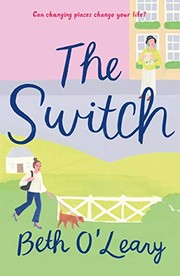
The Switch
A burned-out consultant and her 79-year-old grandmother swap London and Yorkshire homes for two months, facing grief, dating apps, and village politics.
2,782-word summary · 12 min read
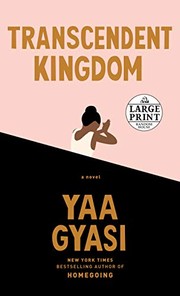
Transcendent Kingdom
A neuroscientist studies addiction in mice while mother prays at home.
2,020-word summary · 9 min read

The Wedding
Wilson Lewis courts his own wife again with Noah's help as daughter Anna plans her wedding.
2,076-word summary · 9 min read
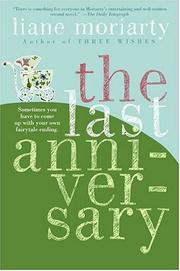
The Last Anniversary
A single woman inherits island house and unknots a vanished baby story.
2,158-word summary · 10 min read
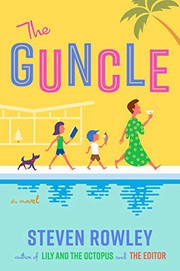
The Guncle
A sitcom star takes his niece and nephew for a summer and learns presence beats punchlines.
2,779-word summary · 12 min read
Home Front
A Guard pilot deploys, comes home wounded, while husband and daughters fight to heal together.
2,091-word summary · 9 min read
Golden Girl
A dead novelist watches her three kids for one summer with three nudges to help.
2,052-word summary · 9 min read
Forever, Interrupted
Elsie elopes in May, loses Ben nine days later, and learns grief beside the mother in law she never met.
2,051-word summary · 9 min read
For One More Day
A ruined ballplayer spends an impossible day with his dead mother.
1,989-word summary · 9 min read
Life's Too Short
A travel YouTuber facing possible ALS takes in baby Grace and falls for Adrian, the lawyer next door.
2,913-word summary · 13 min read
The Rescue
Volunteer fireman Taylor finds a crashed mother and son in a storm, then falls for them both.
1,939-word summary · 9 min read
Still Me
Lou spends a year in New York working for the Gopniks, torn between Josh, distant Sam, and the life she wants.
2,939-word summary · 13 min read
Without Merit
Merit Voss feels invisible in a crowded converted church home until Sagan, Luck, and a painful night force the truth out.
3,300-word summary · 15 min read

Just for the Summer
Emma and Justin date to break a matching curse, then face sudden guardianship and illness on Lake Minnetonka.
3,090-word summary · 14 min read
The Memory Keeper's Daughter
On a snowy night a doctor gives away his newborn daughter and tells his wife she died.
2,154-word summary · 10 min read

Dear John
A soldier and a student trade letters through war until duty and waiting pull them apart.
2,138-word summary · 10 min read
Reminders of Him
Kenna returns after prison to meet the daughter she lost, facing the family that blames her.
2,168-word summary · 10 min read
It Ends with Us
It Ends with Us from Lily's flower shop to her marriage: alternating past and present, Ryle's cycles of violence, and why the ending refuses a clean romantic…
2,381-word summary · 11 min read
Perfect Match
A Maine prosecutor shoots the priest she believes abused her son, then faces a trial that questions what justice can mean.
2,241-word summary · 10 min read
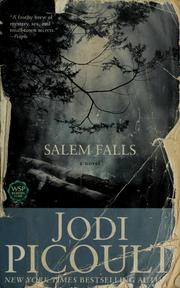
Salem Falls
A former teacher wrongly convicted takes a job washing dishes in a small New Hampshire town, where a new accusation stirs a modern-day witch hunt.
2,415-word summary · 11 min read
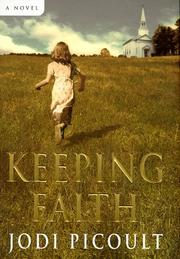
Keeping Faith
A seven-year-old girl starts reciting scripture and working cures, and her mother must fight a custody battle over whether the gift is real.
2,408-word summary · 11 min read