
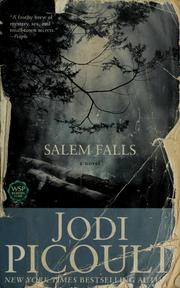
Salem Falls
2,415-word summary 11 min read 464 pages in the book
- First published
- 2001
- Publisher
- Atria Books
- Pages
- 464
- ISBN
- 9780743418713
Reading options
What's inside (8 sections)
The title did it for me. Salem Falls is a made-up dot on the New Hampshire map, the kind of place you would skim past without slowing down, but you cannot read those two words without hearing the other Salem somewhere underneath them. Jodi Picoult knew exactly what she was doing with that name. She spends the book asking what a town does when it decides a person is dangerous and then treats that decision as if it were a fact, and how hard it is for the person so labeled to set it down. This was her eighth novel, first published in 2001, and the Atria Books paperback I read runs 464 pages. It stands alone, no series to keep track of, and the story moves between what happened before and what happens now often enough that you have to mind the turns. I closed it with a headache and a strange amount of sympathy for people I had wanted to shake a chapter earlier.
A note on how it is told may help before I get going. Picoult passes the narration among several people, including Jack, Addie, Gillian, and Jordan, so you see the same event from the person living it and from the person judging it. That choice is doing real work here. So much of this book turns on who gets believed and why, and a single voice would flatten it. I will name the main players as they come up and keep the rest general, because the heart of the story belongs to a small set of people and I would rather not clutter it with strangers.
The man the town has not met
Jack St. Bride does not arrive in Salem Falls as a blank slate, though he would like to. Before the book opens on his new life, he was a star athlete and a history teacher at a girls' prep school in New England, well liked and good at his work. A student developed a crush on him, and that crush hardened into an accusation of statutory rape. On his lawyer's advice he took a plea bargain to a lesser charge, trading the risk of a trial for a fixed sentence. He served eight months. The record outlived the months, which is the part he cannot bargain away.
His mother refused to believe his side of it and cut him off. That hurt more than the prison, I think, because a sentence ends and a mother's verdict does not. Picoult gives us this backstory in pieces, and she is careful not to make Jack a plaster saint. He made a choice, a weak one by his own later account, and he has to live inside its consequences even though he did not do the thing he was accused of. That distinction between being innocent and being free is one the whole book leans on.
He came out with a few habits that the novel puts to use. He watches Jeopardy! with the devotion of a man who likes questions with answers, and his knack for trivia becomes a small running thread. He also learned to talk his way out of a bad corner in prison, facing down a threatening inmate named Mountain Felcher with a flat warning that the man was not going to break him. It reads a little tall, that scene, but it tells you what kind of survivor Jack is: not a fighter, not a rule breaker, just a man who has found out that a steady voice can sometimes hold a room.
Dishwasher at the Do-Or-Diner
He drifts into Salem Falls, New Hampshire, and takes a job washing dishes at the Do-Or-Diner, which is run by Addie Peabody and her father, Roy. He says nothing about where he came from. Addie is a woman carrying her own grief. Her young daughter, Chloe, died of bacterial meningitis at six, and the loss sits in the diner like a fourth person at the table. Jack keeps his head down, works, and slowly becomes someone Addie can lean on. The romance builds in the quiet way it does in Picoult's books, through small kindnesses and long silences that turn comfortable, until the two of them are something neither one planned.
Then the law catches up. As a convicted sex offender, Jack has to register with the local police, and a registered name in a small town is not a private thing. The news moves through Salem Falls the way news moves through any small town, faster than the facts and with more relish. Addie's father and neighbors get wary. Amos Duncan, who runs the largest pharmaceutical company in town and happens to be the father of one of the girls in the story, becomes the loudest alarm raiser. A "dangerous rapist" is loose, and the town starts looking at every man with a past until the eyes land on Jack.
What I kept noticing here is that Addie does not change. She knows what he is registered for, and she keeps seeing the man who washes dishes and waits for her after closing. That refusal to update her opinion is the book at its most generous. It is also where the reader can start to see the trap being set, because a woman who will not believe the worst about one man is exactly the kind of person a lie can hurt the most.
Four girls and a book of shadows
The other thread follows four teenage girls who have been experimenting with Wicca. Gillian Duncan is the one who matters most, the daughter of Amos and a girl with a history that the book only fully explains at the end. Around her are Chelsea, Whitney, and Meg. They cast spells, trade secrets, and treat their little coven as a place where they are powerful and adults cannot reach them. Picoult writes these chapters with a teenage sharpness that rings true, all cliques and grudges and the fierce certainty that nobody understands you.
One night, after a fight with Addie, Jack stumbles into the woods and comes across the four of them celebrating Beltane. He has been drinking. He is not clear about where he was or what he did that night, and that gap in his own memory is the hole the plot drops through. Gillian accuses him of sexually assaulting her. This is the second accusation leveled at him, and now it is not statutory, it is a claim of rape, backed by physical evidence that seems to point his way. The timing strained credibility for me, I will admit. A man with his record happening to wander onto a coven's gathering on the exact night a charge gets made asks a lot of coincidence. Picoult seems to know this, because she spends the rest of the book making the coincidence pay off.
Jordan McAfee takes the case
Jack is defended by Jordan McAfee, a lawyer Picoult readers will recognize from other books of hers, including The Pact and Nineteen Minutes. Across the aisle is the prosecutor, Matt Houlihan. The trial is where the novel is most confident. Kirkus, reviewing the book, singled out Picoult's handling of the legal process and her explanation of DNA evidence, and I think that praise holds up. She walks through what a blood sample can and cannot prove without talking down to the reader, and the science becomes a real part of the argument rather than decoration.
Jordan's job is to make Gillian's account less certain. He finds that her story has soft spots. Members of her circle had been taking hallucinogens; an initial blood screen came back clean, but a private toxicologist Jordan hires finds a large amount of a hallucinogen in the samples. Gillian's psychiatric records describe a girl who lied compulsively after her mother died. Each of these chips away at her, and Picoult lets the defense work feel like work, with false starts and arguments over what the jury is allowed to hear.
Then Meg complicates things from inside Addie's own life. She tells Addie that she remembers Jack touching her in a sexual way. Addie, trying to do the right thing, takes Meg to report it to the police officer on the case, Charlie, who is Meg's father. That detail lands hard once you know more about Charlie, but at the time it just looks like a father doing his job and a girl being believed. The tide seems to turn again.
The break comes from an unexpected place. Chelsea, uneasy with what the group has done, mails The Book of Shadows, the coven's handbook and proof that the girls were part of something together, to Jordan's son Thomas, who brings it to his father. Jordan uses the book to show that the girls had a reason to fabricate and a shared story to coordinate. Jack is found not guilty. The courtroom close is satisfying in the way a good defense argument is satisfying, even if you can see the seams of the setup from a few pages off.
What the verdict leaves open
Picoult is not finished when the jury is. The aftermath is where the book tells you that a legal answer and the truth are not the same object. Meg admits to her father that Gillian talked the others into the whole thing as a game, a test of whether they could ruin a man's life, and that the reason was plain and ugly: Gillian was drawn to Jack, and he had turned her down. The touch Meg reported was no assault at all. Jack had caught her as she slipped and his hand landed where it should not have. The machinery of the accusation, once you see it from the inside, is almost casual.
Addie has a revelation of her own that recontextualizes the diner years. She tells Jack that she was gang-raped at sixteen by Charlie and Amos, the policeman and the pharmaceutical executive, and that because of it she never knew who Chloe's father was. For a reader, that information folds back over everything: the ease with which Charlie could take Meg's statement, the way Amos pushed the rumor about Jack, the grief Addie carried for a child whose origin was itself a violation. It is a heavy few pages, and it is the point where the small-town story becomes something larger and meaner.
Jack asks Addie to come with him to New York, where he hopes to make peace with his mother. Addie agrees, and the two of them head toward a life that might be theirs at last. Then Picoult saves her last move for the final paragraph. Amos has been sexually abusing Gillian since she was a small child, and the seminal fluid found on Gillian's thigh that nearly sent Jack back to prison is most likely his. The girl who manufactured a rape to punish a man for rejecting her was living inside a real one. It is a brutal ending, and it makes the not guilty verdict feel less like a clean win and more like a door shut just in time.
A witch hunt with modern tools
For all its darkness, the book is most alive when it is showing how a rumor travels. Salem Falls works as a small-town novel because Picoult understands that people in a place like this do not need proof to act, they need a story that explains a feeling they already have. The witch-trial echo in the title is not decorative. A community that fears what it cannot name will pick a person, tell itself a version of events, and then read every detail to fit. Jack's Jeopardy! habit, his politeness, his registration, the fact that he was in the woods drunk, all of it gets fed into a machine that had already decided he was guilty. Watching that happen is the strongest thing here, and it is why the book still gets passed around in book clubs and why a film adaptation followed years later.
The criticism has to be honest, though. Kirkus pointed out that some of the resolutions feel contrived, and I agree that the ending piles coincidence upon coincidence to get where it is going. The Book of Shadows arriving through the lawyer's son at exactly the right moment is convenient. The final paragraph, for all its shock, asks the reader to accept a great deal that was barely prepared. When Picoult reaches for lyrical language, the prose can stumble; one review quoted a first kiss described as tasting of coffee and loneliness, and it is easy to see what they meant. The intent is clear, but the phrase draws attention to itself. The book is at its best in the courtroom and in the diner, not in its metaphors.
That unevenness is worth naming because it affects who will love this. A reader who wants a tight legal puzzle may enjoy the trial and then feel shortchanged by the late twist. A reader who wants a clean moral fable will find the ending too messy to settle anything. But a reader who likes a novel that argues with itself, that lets a just outcome and a sickening revelation sit side by side, will find plenty to chew on. Picoult is interested in people who have been labeled and cannot get the label off, and she is willing to make the innocent person flawed and the victim complicated so that nobody gets an easy aisle to stand in.
What has stayed with me since I put it down is not the verdict or even the last-paragraph reveal. It is Addie, standing by a man everyone else has recast as a monster, because she has been on the other side of a story told about her and knows how much damage a room full of certain people can do. Salem Falls is a book about how quickly a town can turn a suspicion into a sentence, and about the people who refuse to go along. It is not a subtle book, and it does not pretend to be. It is loud and often unfair to its own best ideas, but it knows what it wants to say about fear and the stories we build to excuse it, and it says it with enough force that I still hear that other Salem humming under the name.
FAQ
Is Salem Falls part of a series?
No. It is a standalone novel, first published in 2001, even though lawyer Jordan McAfee reappears in other Jodi Picoult books such as The Pact and Nineteen Minutes.
What is the witch-trial echo in the title about?
The title points to a modern-day witch hunt, where a New Hampshire town turns a rumor and a label into a shared conviction about one man. Four teenage girls practicing Wicca and a coven handbook drive that parallel.
Does Jack commit the second assault he is accused of?
No. Gillian fabricates the accusation as revenge after Jack rejects her, and the physical evidence ultimately points to her father, Amos, who has been abusing her. Jack is found not guilty at trial.
Similar books
House Rules
Jodi Picoult's 2010 House Rules follows Jacob Hunt, a teen with Asperger syndrome accused in his tutor's death, as his mother Emma and brother Theo face police…
3,079-word summary · 14 min read
Th1rt3en
A former con artist turned defense lawyer takes a celebrity murder trial while a serial killer sits on the jury, steering the verdict.
2,254-word summary · 10 min read
The Litigators
Two Chicago ambulance chasers and a burned-out Harvard Law graduate take on a drug giant, only to find the case sliding toward disaster.
2,244-word summary · 10 min read
Rogue Lawyer
A street lawyer with a bulletproof van and a gun takes on clients no one else will defend, from a wrongly accused teenager to a mobster on death row.
2,353-word summary · 10 min read

4th of July
Lindsay Boxer shoots two armed teenagers in self-defense, faces a wrongful-death trial, and spends her leave chasing a string of throat-slashing murders in…
2,192-word summary · 10 min read

Worth Dying For
Reacher stops for one night in rural Nebraska and finds a family that runs the county, a missing girl and a shipment worth killing for.
2,021-word summary · 9 min read

Say You're Sorry
A widowed prosecutor defends the teenager accused of killing her babysitter, uncovering a small town's secrets and a killer hiding in plain sight.
2,116-word summary · 9 min read
Finlay Donovan Knocks 'Em Dead
Someone has put a contract on Finlay Donovan's ex-husband, and the novelist and her nanny have to find the hitman before the school pickup.
1,990-word summary · 9 min read
The Survivors
Kieran Elliott returns to Evelyn Bay twelve years after a storm killed his brother, and a young woman's murder forces the town to face what it has concealed.
2,571-word summary · 11 min read
The Last Juror
A young editor buys a dying Mississippi paper and covers the murder trial that defines his town for a decade. Grisham's small-town novel about race, juries,…
2,528-word summary · 11 min read
Blindsighted
Sara and Jeffrey hunt a killer staging women in small-town Georgia.
2,400-word summary · 11 min read
Sycamore Row
Jake Brigance returns to defend a contested will that leaves a fortune to a Black housekeeper in racially tense Clanton.
2,017-word summary · 9 min read
The Truth About the Harry Quebert Affair
A blocked writer tries to clear his mentor Harry Quebert after a girl missing since 1975 is found buried with his famous manuscript.
2,192-word summary · 10 min read
The Rainmaker
Broke rookie Rudy Baylor sues an insurer over a denied transplant and faces Leo Drummond at trial.
3,040-word summary · 14 min read
All Good People Here
A journalist returns home to care for her uncle and reopens a 20 year old child murder tied to a new abduction.
2,006-word summary · 9 min read
The Runaway Jury
A tobacco trial in Biloxi is quietly rigged from inside the jury box and by a woman offering to sell the verdict.
2,920-word summary · 13 min read
A Time to Kill
Lawyer Jake Brigance defends a father who killed his daughter's attackers.
2,064-word summary · 9 min read
A Good Girl's Guide to Murder
Pip reopens a closed murder case for a school project and finds the town wanted it shut.
2,621-word summary · 12 min read
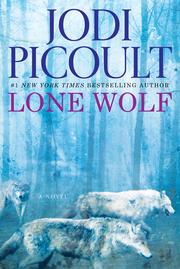
Lone Wolf
A wolf expert lies in a coma after a crash, and the son who left home years ago returns to end his life support while his sister fights to keep him alive.
2,761-word summary · 12 min read
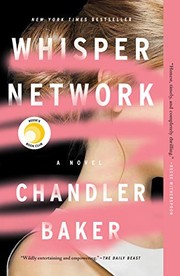
Whisper Network
Four women at a Dallas sportswear company decide to name their boss in an anonymous spreadsheet of bad men, and the office turns on itself.
2,152-word summary · 10 min read
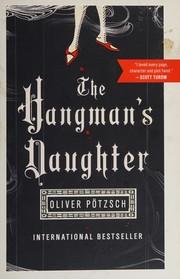
The Hangman's Daughter
In 1659 Bavaria, a hangman ordered to torture an innocent midwife instead investigates the deaths of children marked with a strange tattoo.
2,523-word summary · 11 min read
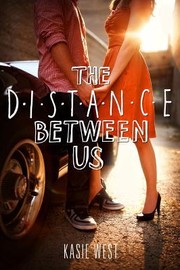
The Distance Between Us
Seventeen-year-old Caymen Meyers distrusts rich people, then a wealthy boy keeps proving her wrong while her mother's doll shop struggles to survive.
2,231-word summary · 10 min read
The 5th Horseman
Two linked cases pull Lindsay Boxer and the Women's Murder Club into a hospital full of strange deaths and a luxury-car murder spree.
2,609-word summary · 12 min read
Make Me
Reacher drifts into a quiet Midwestern town and finds a missing investigator, a trail of killers, and a deep web secret.
2,352-word summary · 10 min read
Forever Odd
Six months after Stormy's death, Odd Thomas tracks a kidnapped friend to a decaying hotel and faces a cultist who wants his gift.
2,308-word summary · 10 min read
Zero Day
Army investigator John Puller is sent alone to a West Virginia coal town to solve a colonel's murder, and finds a much larger secret buried nearby.
3,434-word summary · 15 min read
The Word Is Murder
A fictionalised Anthony Horowitz is talked into chronicling a prickly ex-detective's case: a woman murdered hours after planning her own funeral. A clever…
2,296-word summary · 10 min read
The Unquiet Grave
In Dervla McTiernan's fourth Cormac Reilly novel, a body found in a Galway bog turns out to be a missing school principal, and the case opens into something…
2,253-word summary · 10 min read
The Summons
A law professor is summoned home to find his judge father dead and more than three million dollars hidden in the house.
2,265-word summary · 10 min read
The Running Grave
In the seventh Cormoran Strike novel, Robin goes undercover inside a Norfolk cult while Strike digs into a child's death from decades earlier.
2,615-word summary · 12 min read