
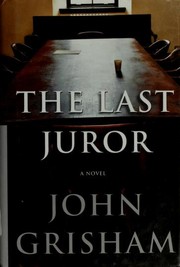
The Last Juror
2,528-word summary 11 min read 368 pages in the book
- First published
- 2004
- Publisher
- Doubleday
- Pages
- 368
- ISBN
- 9780385510431
Reading options
What's inside (10 sections)
My relationship with John Grisham is complicated in a way that only readers of airport books understand. I read The Firm and The Pelican Brief in high school and moved on, convinced I knew what he did: lawyers, money, a car chase of a plot with a courtroom in the third act. Then a friend who grew up in rural Mississippi handed me The Last Juror and told me it was the Grisham book for people who think they are done with Grisham. I read it, and an hour in, I realized there had not been a single courtroom scene yet and I did not care.
The book came out in 2004, and I read the Doubleday hardcover. It is set in Clanton, the fictional Ford County seat Grisham has used in several novels, including A Time to Kill. But this is not a thriller that happens to have a small town attached. It is a small town novel that happens to contain a trial, and the difference matters. The courtroom business is over by the middle of the book. The rest is about a young outsider becoming a local, a Black family becoming his family, and a county learning that it convicted the right man and then blamed an innocent woman for the sentencing math.
It is also the only Grisham novel I know of with a journalist for a protagonist, which, given that Grisham runs a newspaper now, reads like a very early confession of a second career.
A kid buys a newspaper
The book opens in 1970 with Willie Traynor, twenty-three years old, a college dropout with long hair, a Triumph Spitfire, and a bad attitude about authority, working as a reporter at the Ford County Times. The Times is dying. The editor, Wilson Caudle, known to everyone as Spot, has let the place slide into bankruptcy, and the paper's best days are behind it in the same way that a dried creek has a good season behind it.
When the paper hits auction, Willie buys it. He is not rich. He is a kid with a suburban upbringing, a rich grandmother named BeeBee in Memphis, and enough of an outsider's eye that he can see what the town is rather than what it tells itself. He puts up $50,000 that he mostly does not have, hires back the skeleton crew, and starts running the Times as a one-man band of ambition and instinct. The early chapters are a small newspaper procedural, and they are more gripping than they have any right to be: circulation numbers, print runs, the office in a converted old building, the drunk reporter Baggy Suggs, the pressman Hardy, the secretary Margaret, the photographer Wiley Meek.
Willie's voice carries the whole novel. He is not quite a narrator you trust completely, because he is telling this story years later with the benefit of hindsight, and he has favorite characters he cannot help stacking the deck for. But the voice is dry, specific, and patient, and it never once sounds like a lawyer explaining a case to a jury, which was my main concern going in.
The murder that changed the paper
The crime at the center of the book is ugly and fast. A young widow named Rhoda Kassellaw, with two small children asleep in the house, is raped and killed by Danny Padgitt, a member of the county's most dangerous family, who runs a private compound everyone calls Padgitt Island and treats the law the way other families treat school traffic. Rhoda had rejected Danny's advances at a nightclub. He hid in her closet, waited, and killed her when the noise woke her. Her dying words, overheard by her children and a neighbor, put his name in the air, and he was arrested the same night after he crashed his truck trying to get home.
Willie runs a front-page photograph of Padgitt spattered with blood, and the story that follows, his first big one as owner, doubles the paper's circulation and turns the Times into a real force in the county. That decision makes him an enemy. The Padgitts have been fixing things in Ford County for a century: arson, bribery, threats, a cousin in every office that matters. Within months, there is a bomb found at the Times office by an old janitor named Piston, and Wiley Meek, the photographer, gets beaten so badly he walks with a limp for the rest of the book. Willie's lawyer friend and fixer, Harry Rex Vonner, the meanest divorce lawyer in three counties, hands him a pistol and teaches him to shoot, which Willie wears like a borrowed coat.
The bomb and the beating are not the point of the book, but they are the texture of it. By the time the trial comes, you understand the economics of fear in a county like this one. The Padgitts do not always have to win. They only have to make winning expensive enough that people stop trying.
Miss Callie
Between the crime and the trial, Willie writes a two-part feature about a local woman named Calia Ruffin, known to everyone as Miss Callie, who raised eight children in a house off the square with her husband Esau, a carpenter and preacher. Seven of the eight children hold doctorates. The series is a hit, the kind of story small town papers live for, and afterward Miss Callie starts inviting Willie to Thursday lunch.
That standing lunch becomes the spine of the novel. Willie, who lost his own mother young and has an eccentric recluse for a father, is slowly absorbed into the Ruffin family: the sons and daughters by blood and phone call, the Christmas dinners, the way Esau teases him and Miss Callie feeds him and nobody asks him to be anyone other than who he is. For a book that opens with a murder, it is remarkable how much of it is lunches.
This is where the novel earns its reputation among Grisham's fans as the one that is secretly Not a Thriller. Miss Callie is a great character, and the book knows it. She is proud, funny, bossy, devout, and the most competent person in any room she enters, and when the plot eventually drags her toward its machinery, it does so with the dread of watching someone you love walk toward a bus they cannot see.
The trial of Danny Padgitt
The trial is the best-sustained set piece in the middle third. Danny's lawyer is Lucien Wilbanks, a sharp old defender with a drinking problem and no fear, and he first drags Willie onto the stand during a change-of-venue fight purely to humiliate him for the coverage, then drops the motion. The district attorney, Ernie Gaddis, over Lucien's objections gets an unusually large, secret jury pool, because everyone in the room knows the Padgitt family buys jurors, or knows how to make them afraid enough to be worth less than buying.
Jury selection is the origin of the title. Miss Callie Ruffin is drawn into the pool and becomes the first Black person ever to serve on a Ford County jury, and because of a quirk in the selection, she is the last juror seated, the twelfth, everyone else having been struck by one side or the other. There is an argument to be made, and the book lets you make it, that both lawyers let her through for their own reasons. What matters is what the plot does with her afterward.
The evidence is strong and then it becomes overwhelming, because the defense makes the classic mistake of resting a fake alibi on people who have reasons to unravel it. A woman named Lydia Vince testifies that she was with Danny the night of the murder; on cross-examination, Gaddis strips her story down to a paid lie, and then her estranged husband, Malcolm Vince, testifies that her alibi is nonsense and that their marriage ended over her affair with Rhoda's sister. The defense case collapses. And then Danny, against Lucien's advice, insists on testifying in his own defense, loses his temper, and turns to the jury and tells them, in a voice the whole room hears, that if they convict him, he will get every single one of them.
The jury convicts quickly. Then it deadlocks on the death penalty, and the judge, Judge Loopus, has to sentence Danny Padgitt to life imprisonment. Nobody tells the jury that in Mississippi at that time, a life sentence could mean release in under twenty years. That arithmetic is the fuse the second half of the book burns along.
The wrong person gets blamed
The county is furious about the sentence, and a good chunk of the anger lands on Miss Callie, because she was the last juror picked and the face of the jury and she was Black and this is rural Mississippi in 1971. The math is simple: one Black juror, lenient sentence, she must have held out for leniency. It is wrong, and the book makes you sit in the wrongness and watch it do damage to her health, her standing, her family. Willie, who knows the ballot, can only do so much.
Around the trial the novel folds in the rest of the early seventies: desegregation arriving in Clanton schools within a six-week deadline, with all the ugliness that entails and one long, funny, painful football subplot; the killing of Malcolm Vince by an unknown sniper, a case the county never solves, which is its own commentary on the limits of small town justice. And the Ruffin family's own crisis: Miss Callie's youngest son, Sam, is sixteen, which is old enough to have started an affair with a white woman named Iris Durant, which is young enough to have no idea what the town will do about it. Her state trooper husband rides around with a shotgun. Sam flees, gets drafted, and, with the family's blessing and Willie as the dishonest mailman, ends up in Canada. The Sam passages are where the book's affection for this family stops being charming and starts being costly.
Nine years later
The back half of the novel jumps into 1977 and 1978 and becomes a parole story. Danny Padgitt, quietly transferred to a country-club prison camp with work release, gets exposed in the Times, which is exactly the kind of story Willie built the paper for, and gets shipped back to hard time. Then comes the parole hearing, held in secret against state law, with Willie as the only witness speaking against release. The first hearing denies parole by a hair. A later one, attended by the reform sheriff McNatt, frees him, roughly nine years after the murder. Everybody knows the Padgitts bought a state senator named Theo Morton, and nobody can prove it.
Then the jurors start dying. Lenny Fargarson, a man who impressed Willie with his faith, is shot by a sniper. Eleven days later, Mo Teale is shot too. The county organizes armed watches around the surviving jurors, Miss Callie's house turns into a fortress, and every front porch remembers Danny's farewell speech to the jury. Miss Callie, breaking jury secrecy, shows Willie the vote list. Only three jurors opposed the death penalty: Fargarson, Teale, and Maxine Root. The victims are exactly the holdouts. The town spent eight years blaming Miss Callie for the sentence, and the list proves she voted with the majority all along.
A package arrives for Maxine Root, and a part-time deputy, showing off, shoots it on her porch. It is a bomb. The injuries are terrible and so is the public rage, and the sheriff finally does what he should have done months earlier and gets a warrant. Danny Padgitt surrenders peacefully, of all things, with Lucien Wilbanks beside him, which unsettles everyone. At the bail hearing, as Danny takes the stand, he is shot and killed by a sniper. The shooter is found in the courthouse and the county learns the last big secret of the book.
It was Hank Hooten, an assistant prosecutor at the original trial, who everyone said was secretly Rhoda Kassellaw's lover, who had been rumored to be unstable for years after a breakdown where he sniped up and down downtown Clanton. He barricaded himself in the courthouse tower and killed himself. The man the county has been reading as the juror killer, Danny Padgitt, murdered Rhoda and was innocent of everything that came after. Hooten did the killings, out of grief and madness, punishing the three jurors he believed had let Rhoda's murderer live. I did not see it coming the first time, and on a second read every odd thing Hooten does in the trial section is load bearing.
The last obituary
The last chapters are the ending the whole book has been walking toward. On June 25, 1979, Willie sells the Ford County Times to a newspaper chain for one and a half million dollars, a sum the kid who bought it with borrowed money would not have believed. Around the Fourth of July the Ruffin family reunion fills his old house with thirty-five Ruffins. And shortly after, Miss Callie, whose health the book has been quietly spending for three hundred pages, dies at home with her family around her, including Sam, home from Canada and headed for law school.
Willie writes her obituary himself. It is the last piece he files for the paper, and the novel closes on the friendship rather than the crime, which is the most honest thing it does. The Padgitt story is a hell of an ending for a newspaper. The obituary is a better one for a man.
Where this sits among the Grisham books
The Last Juror was a number one bestseller and it mostly got the reception of a good middle-period Grisham: praised by the New York Times as a thoughtful and atmospheric thriller, reviewed more coolly by Entertainment Weekly, and never adapted, which is strange because it would film beautifully. The criticism worth repeating is the gentle one: as a mystery, it is loose, and readers who come for a tight courtroom thriller may wonder why the middle of the book is lunch with Miss Callie. I think that is the point. The crime and the punishment take up less of the book than the community that has to live around them, and the trial, when it comes, is won by ordinary competence and lost by ordinary corruption, with no heroics anywhere.
If you have never read Grisham and want to know why he sold so many millions of books, do not start here, because the machinery is hidden. But if you have written him off, this is the one to test the verdict against. It has a real journalistic eye for class and race in a place that is still not over its own history, and it has one of the warmest found families I have seen in a book about a murder. I put it down thinking less about Danny Padgitt than about Thursday lunch.
FAQ
Is The Last Juror a sequel to A Time to Kill?
It shares the fictional Clanton and Ford County setting and characters like Lucien Wilbanks and Harry Rex Vonner, but it is a separate story set in the 1970s. You can read it without having read A Time to Kill.
Who is the last juror in the title?
Miss Callie Ruffin, the twelfth and final juror seated on the Danny Padgitt jury and the first Black juror in Ford County history. The book is named for her seat.
Did Danny Padgitt kill the jurors?
No. Danny Padgitt committed the murder of Rhoda Kassellaw but was innocent of the juror killings, which were carried out by Hank Hooten, an assistant prosecutor tormented by grief.
Similar books
The Chamber
Young Chicago lawyer Adam Hall defends his grandfather Sam Cayhall on Mississippi death row as a gas chamber date nears.
2,828-word summary · 13 min read
The Rainmaker
Broke rookie Rudy Baylor sues an insurer over a denied transplant and faces Leo Drummond at trial.
3,040-word summary · 14 min read

4th of July
Lindsay Boxer shoots two armed teenagers in self-defense, faces a wrongful-death trial, and spends her leave chasing a string of throat-slashing murders in…
2,192-word summary · 10 min read
Defending Jacob
A Newton prosecutor defends his fourteen year old son after a classmate is stabbed in the park.
2,994-word summary · 13 min read
The Brethren
Three disgraced judges run a blackmail scam from a federal prison and accidentally trap a presidential candidate, pulling the CIA into their scheme.
1,967-word summary · 9 min read
Gray Mountain
A Manhattan associate furloughed after the financial crash takes a year of unpaid legal aid work in Appalachian coal country, and finds the case of her life…
2,026-word summary · 9 min read
The Racketeer
A jailed lawyer trades a judge murder secret for freedom and revenge.
2,434-word summary · 11 min read
The Judge's List
Lacy Stoltz hunts a sitting judge who murders off his list.
2,513-word summary · 11 min read
The Guardians
A innocence lawyer reopens a prison murder where the wrong man waits on death row.
2,564-word summary · 11 min read
The Street Lawyer
Michael Brock survives a hostage morning at his rich D.C. firm, then quits for a street clinic after learning a buried eviction file cost a mother and kids…
2,745-word summary · 12 min read

The Partner
A Biloxi lawyer fakes his death, steals $90 million, and hides in Brazil until hired muscle drags him home to trial.
2,221-word summary · 10 min read
Sycamore Row
Jake Brigance returns to defend a contested will that leaves a fortune to a Black housekeeper in racially tense Clanton.
2,017-word summary · 9 min read
The Whistler
A Florida judicial investigator takes a bribery tip that leads to a crooked judge, a tribal casino, and murder.
2,935-word summary · 13 min read
The Runaway Jury
A tobacco trial in Biloxi is quietly rigged from inside the jury box and by a woman offering to sell the verdict.
2,920-word summary · 13 min read
The Pelican Brief
Law student Darby Shaw writes a brief on murdered justices and becomes a target, fleeing with a reporter.
2,994-word summary · 13 min read
The Firm
Young lawyer Mitch joins a Memphis firm with great pay, then learns clients die and the FBI watches.
2,079-word summary · 9 min read
A Time to Kill
Lawyer Jake Brigance defends a father who killed his daughter's attackers.
2,064-word summary · 9 min read

The Beach House
A young valet is beaten to death at a Hamptons party, and his law-student brother spends a year building a case against the family that covered it up.
2,049-word summary · 9 min read
How the Light Gets In
Gamache investigates the murder of the last Ouellet quintuplet while the Sûreté he served is dismantled from inside by the man who took his protégé.
2,279-word summary · 10 min read
Bury Your Dead
Recovering from a failed raid that killed his officers, Gamache investigates a murder in a Quebec City library while Beauvoir reopens a case in Three Pines.
2,022-word summary · 9 min read

3rd Degree
The third Women's Murder Club novel follows a San Francisco terror cell and a three-day killing schedule, and it costs the club a member.
2,685-word summary · 12 min read

Worth Dying For
Reacher stops for one night in rural Nebraska and finds a family that runs the county, a missing girl and a shipment worth killing for.
2,021-word summary · 9 min read

Say You're Sorry
A widowed prosecutor defends the teenager accused of killing her babysitter, uncovering a small town's secrets and a killer hiding in plain sight.
2,116-word summary · 9 min read
A Rule Against Murder
Gamache's anniversary at a remote lodge turns into a closed-circle murder when the family statue kills Julia, and everyone at the Manoir had a reason.
2,201-word summary · 10 min read
The Survivors
Kieran Elliott returns to Evelyn Bay twelve years after a storm killed his brother, and a young woman's murder forces the town to face what it has concealed.
2,571-word summary · 11 min read
The Talented Mr. Ripley
A small-time con man is sent to bring a rich man's son home from Italy and decides to become him instead. Highsmith's amoral classic of the first antihero.
2,074-word summary · 9 min read

The Club
A luxury island resort for the rich turns deadly when secrets, staff and guests collide.
2,386-word summary · 11 min read
Blindsighted
Sara and Jeffrey hunt a killer staging women in small-town Georgia.
2,400-word summary · 11 min read
The Body in the Library
A strange girl found dead in a library pulls Miss Marple into lies about dance halls and film.
2,017-word summary · 9 min read
Presumed Innocent
Rusty Sabich must solve coworker Carolyn Polhemus's murder while hiding his affair with her, then stands accused himself in Turow's 1987 Kindle County debut.
2,726-word summary · 12 min read