
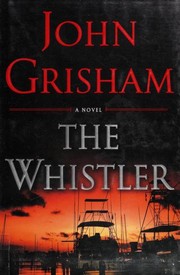
The Whistler
2,935-word summary 13 min read 384 pages in the book
- First published
- 2016
- Publisher
- Doubleday
- Pages
- 384
- ISBN
- 9780385541190
Reading options
What's inside (8 sections)
I came to The Whistler sideways. A coworker saw me rereading The Pelican Brief on lunch breaks and said if I liked Grisham when he writes women who do the work, I should try the one with the judicial investigator in Florida. I had no memory of it from 2016, which is strange because Grisham books used to be events in my house. My dad bought them in hardcover the week they came out. This one must have slipped past while I was busy with other things. I found a used Doubleday hardcover, the 2016 edition that runs 384 pages, and read it over a long weekend with a sore neck from falling asleep on the couch.
What pulled me in was how unglamorous the setup feels at first. Lacy Stoltz does not argue in front of juries. She does not give closing speeches while the gallery holds its breath. She works for the Florida Board on Judicial Conduct, the small state office that looks into complaints against judges. Most of her files are sad and small. A judge who drinks at lunch. A judge who yells at clerks. A judge who falls asleep during testimony. She is good at the job because she is patient and organized, and because she can interview a scared clerk without making the person shut down. Her colleague Hugo Hatch rides with her on bigger cases. He used to play college football, he is large and easy with people, and he has four kids and a mortgage that come up whenever money gets discussed. Their boss is Michael Geismar, who tries to keep the office out of politics and mostly succeeds until this case lands.
If you want the shape of it before we get into the turns, this is a story about a judge who rents out her courtroom to criminals, and about the two state investigators who stumble into something far above their pay grade. There is a murder that sets everything off, a car crash in the middle that changes the tone, and a long last stretch where the FBI takes over. I liked the middle more than the start, and I had real problems with parts of the ending, which I will get to. Still, I finished it fast.
Lacy has the quiet job until she does not
The first chapters spend time on what the Board on Judicial Conduct actually does, and I found that oddly calming. Lacy and Hugo drive around Florida, take statements, write memos, close files that go nowhere. Lacy lives alone in Tallahassee and runs in the morning when the heat allows it. She has a brother named Gunther who calls once a week and asks if she is eating right. Hugo talks about his kids constantly. He drives an old Bronco because the state mileage rate does not cover a new car, a detail that matters later in a painful way.
Then a message comes through that does not fit the usual pattern. A man says he has information about a judge who is taking large bribes, and that the corruption goes back years and involves millions of dollars. He will not talk on the phone. He wants a face to face meeting. He picks St. Augustine. Geismar tells Lacy to take Hugo and go listen, with low expectations. Most tips like this shrink when you put a table between you and the person telling them. This one grows.
I appreciated that Grisham lets Lacy be skeptical for a while. She has heard big talk before. She asks about proof, about dates, about who else can confirm it. She takes notes instead of gasping. Hugo does the thing he does well, which is to sit back and let people fill silence. The man across from them clearly enjoys having an audience after years of being ignored, but he also has paper. Or he says he does. That is enough to get Lacy to keep listening past the point where she would normally close her notebook.
The man on the boat
The source calls himself Greg Myers. He lives on a boat, moves marinas when he feels watched, and speaks like a lawyer even though he says he is done with the law. His real name, it turns out, is Ramsey Mix, a lawyer from Pensacola who was disbarred after a messy history with money and clients. He changed his name and dropped out of sight. Now he is back with a proposition that is selfish in the open, which I almost liked. Under Florida law, people who help the state recover money taken through fraud can collect a share of what comes back. Greg says he represents a whistleblower close to the judge, a person who knows where bodies and bank accounts are buried, and that he wants the reward. He is not pretending to be noble. He wants millions and he says so.
His story centers on Judge Claudia McDover, who sits in Florida's 24th Circuit. On paper she is respected, efficient, re elected without drama. Greg says she has spent close to twenty years protecting a criminal group called the Coast Mafia. The head of the group is a man named Vonn Dubose, patient in public and quick to order violence when paper stops working. The connection point is a casino run by the Tappacola Nation, a small tribe in the Florida panhandle with a gambling operation on reservation land. The casino brought jobs and money to people who had very little before, and it also brought the kind of cash flow where stealing is easy to hide.
Greg lays out the shape of the take. Cash skimmed off the casino floor before it gets counted. Construction and land deals around the reservation where money gets padded and kicked back. Legal trouble that disappears when it reaches McDover's courtroom. In return, the judge gets bribes and sweet deals on condos and land, the kind of wealth that does not show up as a bag of cash but as a comfortable life that her salary cannot explain. Lacy keeps asking how he knows. Greg keeps saying his client sits close enough to Claudia to see the paper move. He will not name that client yet. He says if he names her too early, she dies.
There is also a murder inside the story, and it is what makes Lacy stay after she wants to walk away. Son Razko, a member of the Tappacola Nation who opposed the way the casino was being run, was killed. Another tribe member, Junior Mace, was convicted for the killing and sent to death row after a trial where McDover presided. Greg says Junior did not do it. He says a hitman for the Coast Mafia did it, and that the trial was managed to make the problem go away. That claim, if true, lifts the case out of bribery and into something Lacy has never touched. She tells Geismar she needs time to check property records, campaign filings, and case assignments before she decides whether Greg is running a con.
Claudia McDover and the casino money
The next stretch follows Lacy and Hugo as they poke at the edges without filing anything formal. They cannot subpoena bank records the way the FBI can. They can request files, visit courthouses, ask clerks why certain cases landed with certain judges. Grisham is good at this part because he used to practice law in small places where everyone knows the clerk. He shows how much you can learn from seating charts, assignment logs, and who has lunch with whom. Claudia McDover looks clean if you glance. If you stare, her docket looks tilted. Cases tied to Dubose business keep finding her. Developers tied to the casino keep winning motions they should lose. Appeals take forever while concrete gets poured.
Lacy and Hugo drive out toward the reservation and the casino. Grisham describes the place as bright and busy, with a hotel tower that seems too large for the roads around it. The Tappacola people are split about it. Some see school money and repaired houses. Others see outsiders getting rich while tribal meetings get tense. Son Razko belonged to the second group. People who knew him describe a stubborn man who asked where the monthly payments went and who got the construction contracts. Junior Mace was his friend, less polished, easier for police to paint as angry. The trial file reads too neat to Lacy. Witnesses who should have been pressed were not pressed. McDover kept control of the room and moved things along.
I thought these chapters were the strongest in the book. There is a scene where Lacy interviews a former tribal constable who still carries guilt about not protecting Razko, and it has more weight than most of the action later. The man does not give a speech. He talks about patrol shifts and who was supposed to lock a gate. Hugo, who is usually joking, goes quiet and takes extra notes. You start to see why Lacy keeps going even though her office has no guns, no wiretaps, no protection detail. She believes Junior Mace is on death row for someone else's crime, and that belief sits on her like a coat she cannot take off.
A fair complaint belongs here too. Grisham explains casino skimming and land flipping at length, sometimes twice, as if he worries readers will get lost. A few conversations repeat the same math with different names. I skimmed a couple of pages where lawyers explained percentages to other lawyers who should already know them. Readers who love procedure may enjoy the repetition. I found it slowed the build right when I wanted Lacy to move faster.
The crash on the reservation road
About halfway through, the book turns cold. Lacy and Hugo get a call from someone who claims to have seen something near the reservation and wants to meet on a remote road. They drive out, talk to a nervous man who gives them little, and head back feeling they wasted fuel. On the way out, a truck hits them head on. It is not an accident. The truck aims for them. Hugo dies. Lacy wakes up in a hospital with broken bones and a concussion, angry at everyone, including the doctors who will not let her stand.
I remember putting the book down for a minute here. Hugo had become the warmth of the story, the person who called his wife between interviews and worried about mileage money while following millions in bribes. Losing him felt abrupt in a way that was probably intended. Grisham does not stretch the crash into a long action passage. It happens, it is over, and then there are bland hospital lights and police questions. Lacy blames herself for agreeing to the meeting. Geismar blames himself for letting two unarmed investigators poke a violent group. The FBI, which had been watching from a distance, steps in fully.
What follows is police work more than legal work. The young mob man assigned to the hit made mistakes. He stopped at a convenience store where a camera caught him. He left traces at the scene that tied the truck to people tied to Dubose. With help from that former Tappacola constable, agents pick up the killers and press them until one agrees to talk. The deal brings records of money movement and confirmation that Lacy and Hugo were targeted because the Board was asking questions. Lacy, still hurt and using a cane for a while, has to sit in meetings where federal agents use words like RICO and mean it. She hates being the victim in the file. Geismar has to tell her to rest, and she ignores him in small ways that felt true to me.
This is also where my criticism sharpens. After Hugo dies, Lacy becomes less distinct for a stretch. Grief flattens her into determination, which is understandable but less interesting to read. Pages focus on warrants and flips and surveillance logs. Those passages are competent and clear, and Grisham keeps them moving, but the friend level texture thins out. I missed Hugo the way Lacy did. As a reader I needed someone in the room to crack a tired joke when the files got thick.
Who the Whistler turns out to be
Greg Myers has been promising a whistleblower, and the book finally delivers her. She is JoHelen Hooper, Claudia McDover's longtime court recorder, the woman who sat a few feet from the judge for years. Nobody looks at the recorder. That is the point. JoHelen saw schedules bend and paper that did not match testimony. She kept copies when she could. Fear kept her quiet, then anger at what happened to Junior Mace pushed her to reach Greg through a careful chain.
Once Dubose and Claudia realize someone close is leaking, JoHelen has to run. Greg has a rough plan ready. She hides for a time near Panama City Beach, in the kind of rental where people pay cash and do not ask for last names. Vonn's men find the trail anyway. Lacy, still recovering, gets to her in time with help. Lacy takes JoHelen to her brother Gunther's lakeside cabin in North Carolina to wait while the FBI closes in. Those cabin chapters breathe. Gunther cooks, JoHelen sleeps, Lacy tries not to check her messages every ten minutes.
The endgame is federal. The FBI arrests Claudia and Vonn and builds a case against the Coast Mafia under the RICO law, which lets prosecutors tie many crimes into one pattern. Junior Mace gets cleared of the murder after years on death row, a moment Grisham does not oversell, which I appreciated. Vonn gets a death sentence for Hugo's murder. Claudia gets twenty five years in prison for bribery and related counts. Greg Myers gets his payday talk with the government, though Grisham leaves him seedier than heroic. JoHelen has to start over with the knowledge that she did right and that doing right cost almost everything around her.
I had mixed feelings about JoHelen as the reveal. On one hand it makes sense and plays fair. Grisham plants her early without spotlighting her, so the answer feels earned. On the other hand she arrives late as a full person, and I wanted more time with her before she had to run. A few more scenes of her watching Claudia in court, noticing small lies, deciding to copy a page she should not copy, would have made her choice hit harder. As written, she works as a solution more than as a friend you fear for, except in those cabin pages where she finally gets room.
What holds up and what sags
What holds up best is Lacy herself, even with that flat stretch after the crash. She is not a genius who sees what nobody sees. She is thorough. She writes things down. She knocks on doors people have stopped knocking on. I believed her as a state employee with limits, someone who knows she cannot order a wiretap and has to make do with interviews and records. Her partnership with Hugo gave the first half its heart, and her stubbornness gives the second half its spine. The casino setting also holds up. Grisham treats the Tappacola Nation with more care than I expected, showing both the money the casino brought and the split it caused, without turning tribal members into background. The former constable and the memory of Son Razko keep the human cost in view when the finance talk threatens to take over.
What sags, for me, was the handling of Claudia and Vonn. They are scary in concept and a bit thin on the page. Claudia barely gets scenes where she is a person rather than a problem. We hear about condos and rulings, but we rarely sit with her long enough to feel her charm or her threat. Vonn is closer to a function than a man. Grisham has written richer villains elsewhere. Here he keeps them at a distance, probably to preserve suspense about the leak, but the cost is that the final arrests feel procedural rather than personal. Years of corruption get compressed into charges and numbers. Junior's release deserved more air.
Who should read this? If you like Grisham in his investigator mode, patient interviews and paper trails more than car chases, this will suit you. Readers who care about Florida politics, tribal gaming, and how small courts can be bent will find plenty to chew on. If you need constant twists or a romance to carry you, look elsewhere. There is almost no love story here, and the big reveal is satisfying rather than shocking. I would also warn readers who are sensitive about the death of a decent character. Hugo's loss sits at the center and the book does not soften it.
Grisham later brought Lacy back in The Judge's List, which follows her into another inquiry about a judge. You do not need that book to finish this one. The Whistler closes its main case fully, with Junior free and Claudia in prison. I closed my copy feeling tired in a good way, the way you feel after a long drive with the windows down. It is not my favorite Grisham, which remains The Firm for the sheer pressure of its early chapters. But it is a solid thriller about unglamorous work that turns dangerous, and about a woman who keeps asking questions after she has been told to stop.
FAQ
When was The Whistler published?
Doubleday published it on October 25, 2016. The first US hardcover runs 384 pages with ISBN 9780385541190.
Who are the main characters?
Lacy Stoltz and Hugo Hatch of the Board on Judicial Conduct, Judge Claudia McDover, fixer Greg Myers, mob boss Vonn Dubose, and recorder JoHelen Hooper.
Is The Whistler part of a series?
No, it stands alone here. Grisham later brought Lacy Stoltz back in The Judge's List, which follows her into another case about a judge.
Similar books
The Brethren
Three disgraced judges run a blackmail scam from a federal prison and accidentally trap a presidential candidate, pulling the CIA into their scheme.
1,967-word summary · 9 min read
Gray Mountain
A Manhattan associate furloughed after the financial crash takes a year of unpaid legal aid work in Appalachian coal country, and finds the case of her life…
2,026-word summary · 9 min read
The Racketeer
A jailed lawyer trades a judge murder secret for freedom and revenge.
2,434-word summary · 11 min read
The Judge's List
Lacy Stoltz hunts a sitting judge who murders off his list.
2,513-word summary · 11 min read
The Guardians
A innocence lawyer reopens a prison murder where the wrong man waits on death row.
2,564-word summary · 11 min read
The Street Lawyer
Michael Brock survives a hostage morning at his rich D.C. firm, then quits for a street clinic after learning a buried eviction file cost a mother and kids…
2,745-word summary · 12 min read

The Partner
A Biloxi lawyer fakes his death, steals $90 million, and hides in Brazil until hired muscle drags him home to trial.
2,221-word summary · 10 min read
The Rainmaker
Broke rookie Rudy Baylor sues an insurer over a denied transplant and faces Leo Drummond at trial.
3,040-word summary · 14 min read
The Pelican Brief
Law student Darby Shaw writes a brief on murdered justices and becomes a target, fleeing with a reporter.
2,994-word summary · 13 min read
The Firm
Young lawyer Mitch joins a Memphis firm with great pay, then learns clients die and the FBI watches.
2,079-word summary · 9 min read

The Beach House
A young valet is beaten to death at a Hamptons party, and his law-student brother spends a year building a case against the family that covered it up.
2,049-word summary · 9 min read

4th of July
Lindsay Boxer shoots two armed teenagers in self-defense, faces a wrongful-death trial, and spends her leave chasing a string of throat-slashing murders in…
2,192-word summary · 10 min read
Presumed Innocent
Rusty Sabich must solve coworker Carolyn Polhemus's murder while hiding his affair with her, then stands accused himself in Turow's 1987 Kindle County debut.
2,726-word summary · 12 min read
The Rooster Bar
Three law students buried in debt discover their for-profit law school is a scam, and decide the only way out is to con their way into practicing law before…
2,837-word summary · 13 min read
The Broker
A disgraced Washington lobbyist is pardoned and hidden in Bologna, where the CIA uses him as bait to find out who wants a stolen satellite.
2,211-word summary · 10 min read
The Last Juror
A young editor buys a dying Mississippi paper and covers the murder trial that defines his town for a decade. Grisham's small-town novel about race, juries,…
2,528-word summary · 11 min read
The Testament
John Grisham's The Testament sends washed-up lawyer Nate O'Riley to the Brazil Pantanal to find missionary heir Rachel Lane and settle her…
2,731-word summary · 12 min read
Sycamore Row
Jake Brigance returns to defend a contested will that leaves a fortune to a Black housekeeper in racially tense Clanton.
2,017-word summary · 9 min read
The Chamber
Young Chicago lawyer Adam Hall defends his grandfather Sam Cayhall on Mississippi death row as a gas chamber date nears.
2,828-word summary · 13 min read
Camino Island
A Princeton manuscript heist pulls a blocked young writer into spying on a charming Florida bookstore owner who may hold the loot.
2,984-word summary · 13 min read
The Runaway Jury
A tobacco trial in Biloxi is quietly rigged from inside the jury box and by a woman offering to sell the verdict.
2,920-word summary · 13 min read

The Client
Eleven-year-old Mark Sway learns a mob secret in Memphis and hires lawyer Reggie Love for one dollar.
2,536-word summary · 11 min read
A Time to Kill
Lawyer Jake Brigance defends a father who killed his daughter's attackers.
2,064-word summary · 9 min read

What She Knew
Rachel lets her eight-year-old son run ahead in a Bristol park, and the nine-day search turns her into a suspect in the public eye.
2,952-word summary · 13 min read

Six Years
A professor who promised to forget the woman he loved sees her husband's obituary and discovers that the wedding, the marriage, and the woman herself may never…
2,076-word summary · 9 min read

The Trespasser
A Dublin Murder Squad detective investigates a staged dinner-party killing and finds a cover-up that reaches into her own department.
2,051-word summary · 9 min read

Rules of Prey
Minneapolis detective Lucas Davenport hunts a killer who leaves a new rule at every scene and treats murder as a game of wits.
1,914-word summary · 9 min read

The Late Show
Exiled to the LAPD night shift after accusing her supervisor, Renée Ballard keeps two cases that were meant to be handed off at dawn: a brutal assault and a…
2,563-word summary · 11 min read

The Camel Club
Four Washington misfits witness a murder on Roosevelt Island and stumble into a conspiracy that reaches the Oval Office, with a hostage president and a nuclear…
2,354-word summary · 10 min read
Persuader
Reacher goes undercover in a Maine crime family to find a missing DEA agent and the man he once failed to kill, and Lee Child keeps the whole thing tight,…
2,278-word summary · 10 min read