
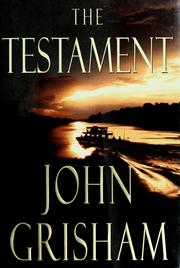
The Testament
2,731-word summary 12 min read 435 pages in the book
- First published
- 1999
- Publisher
- Doubleday
- Pages
- 435
- ISBN
- 9780385493802
Reading options
What's inside (8 sections)
I came to The Testament on a long flight when I wanted a Grisham I had missed. I had read the courtroom ones, the firms and juries and rainmakers, and I assumed this would be another trial story. It is not. It starts with a trial of sorts, a will reading, and then it leaves the courtroom behind for rivers and chapels and rehab prayers. Published in 1999 by Doubleday, it runs 435 pages, and it reads like Grisham trying to write about greed and grace at the same time. I finished it tired in the way you feel after travel, which suited the book.
The setup is simple and brutal. Troy Phelan is a billionaire, old, sick, and fed up with his family. He has built an empire in media and industry. He has married several times. He has children who are grown and, in his view, spoiled and grasping. They wait for him to die. They hire lawyers. They count shares. Troy watches all of this with cold clarity. On a winter day in Washington, he calls his lawyers together, makes them watch, and jumps from his office balcony. Before he jumps, he leaves a signed will that cuts out almost everyone they expected to inherit. The fortune is about eleven billion dollars. The heir is a daughter almost no one knew he had.
That daughter is Rachel Lane, an illegitimate child Troy fathered years earlier. She is now a missionary living in the Pantanal region of Brazil, working among Indigenous villages with a small church group. She has no interest in money. She did not attend the funeral. She may not even know the full size of what Troy left. The will names her as the sole beneficiary of the bulk of the estate, with backup terms if she cannot or will not take it. The legitimate Phelan children are left with far smaller sums, enough to insult them. They react exactly as Troy predicted. They hire litigators. They claim he was insane. They demand exams, records, and delays.
The fall of Troy Phelan
Grisham opens with Troy, not with the hero, and that choice matters. Troy is not likable, but he is sharp to the end. He sits in his high office and looks down at the city. He thinks about his wives and his children and the lawyers circling. He has doctors telling him he does not have long. He has pain he hides. He decides to write his own ending in both senses. He has his trusted lawyer Josh Stafford prepare documents in secret. He orders psychiatric exams on himself in the days before his death, knowing his children will attack his mind after he is gone. He videotapes a statement. He smiles for the camera in a way that chills the room.
The suicide scene is staged without gore and without romance. Troy steps out, the lawyers shout, and then the office is quiet except for phones ringing. Grisham lingers on the aftermath: the police, the press, the children arriving separately and asking about the will before they ask about the body. Josh Stafford, a steady D.C. lawyer who has served Troy for years, takes charge of the papers. He reads the will to a room full of angry heirs. Rachel Lane's name lands like a stone in water. One son laughs. One daughter cries. All of them call their lawyers within the hour.
What I liked here is how Grisham shows wealth as a kind of weather. It changes how people speak in rooms. Secretaries stand straighter. The Phelan children, six of them from different marriages, each have their own style of hunger. One is a real estate operator always close to broke. One is angry in a quiet way. Grisham does not give them all full backstories, but he gives each a lawyer, and the lawyers soon outnumber the family. The estate freezes. The contest begins. The only way forward is to find Rachel Lane and get her signature, or prove she is dead, or prove Troy was mad. Josh needs someone who can go and not quit.
Nate O'Riley gets the job
Enter Nate O'Riley, the actual center of the book. Nate is a well known trial lawyer in Washington who has burned out his talent with drink and pills. He has been to rehab three times. He is starting a fourth stay when Josh finds him. His marriage has failed. His kids are distant. His liver is tired. He owes apologies he cannot yet make. He is not the man you would send into a swamp to find a missing heir, which is exactly why Josh picks him. Nate has nothing left to lose, and he knows how to keep going when a case turns ugly.
Josh visits Nate in rehab and lays out the offer. Find Rachel Lane in Brazil. Confirm she is alive. Explain the will. Bring back a signed acceptance or refusal that will hold up in court. The firm will pay expenses and a fee that could restart Nate's life. Nate says no at first. He is sick, shaking, trying to sit through group sessions without lying. Then he says yes, because work has always been the one structure that held him, and because Josh promises to watch over his treatment when he returns. The scenes in rehab are some of the most direct Grisham has written. No clever cross examination. Just men in chairs telling the truth late.
Grisham gives Nate a dry voice that carried me through slower stretches. He notices the cheap carpet in the law office, the bad coffee, the way Josh keeps his desk clean because clean is control. Nate agrees to a plan: medical clearance, Portuguese lessons, contacts in Brazil, a local guide. He also agrees to stay sober on the trip, one day at a time, with phone check ins. Everyone in the room knows the odds. His doctor signs off with worry. His ex wife wishes him luck without warmth. He boards a plane with a briefcase full of copies, bug spray, and fear he does not name.
I appreciated that Grisham does not make Nate instantly noble. On the flight and in his first days in Brazil, Nate is still calculating. He thinks about fees. He thinks about how finding Rachel fast could impress a judge. He drinks too much coffee and sleeps badly. He calls his sponsor and lies a little about how steady he feels. That dishonesty felt true. Recovery in this book is not a straight line. It bends every time Nate is tired or lonely or proud.
Into the Pantanal
The middle of The Testament moves to Brazil, and the pace changes. Nate lands in Sao Paulo, then travels west toward the Pantanal, a vast wetland of rivers, tall grass, and sudden storms. Grisham describes the heat as a weight. Clothes stick. Paper curls. Boats move slow past banks where cattle stand knee deep. Nate hires a local pilot and a guide, stocks antibiotics, and learns that Rachel was last seen upriver near mission stations that shift with the seasons. Priests and nuns in Corumba and nearby towns know her name. They speak of her with respect. They also warn Nate that she does not want visitors.
This search takes up many pages, and Grisham fills them with travel detail. Nate gets sick. He gets bitten. He gets lost in paperwork at a mission office where a tired priest keeps records in three languages. He sits through a service he barely understands and finds himself moved despite himself. He meets an American doctor who has stayed too long and a Brazilian boatman who reads the water like a street map. He learns a little Portuguese, enough to ask for help and to apologize. He loses weight. He sweats through shirts. He stays sober, barely, by counting days and calling home when lines work.
There are strong scenes here. A storm that turns a river brown in minutes. A night when Nate feverishly dreams about courtrooms and wakes to frogs and dogs. A village where children play soccer with a patched ball while Nate waits for a priest who never comes. These moments give the search texture. They also slow the plot. Twice I found myself flipping ahead to see when Nate would actually meet Rachel.
Nate's body gives out before his will does. He contracts a fever that turns into something worse, likely dengue, and nearly dies in a riverside hut. A local woman nurses him. A priest says prayers Nate would have mocked a year earlier. When he recovers, he is thinner and quieter. He tells Josh on a crackling call that he wants to finish the job, not for the fee but because he told Rachel's friends he would not quit. It is the first clean promise he makes in the book.
Rachel Lane refuses
When Nate finally reaches Rachel Lane, Grisham handles the meeting with care. Rachel is not mysterious in a movie way. She is plain, calm, and busy. She lives simply in a hut near the mission. She treats wounds, teaches reading, prays with families. She knows who her father was and feels little about it. She left that world on purpose. She speaks to Nate kindly but without room for bargaining. She listens to his explanation of the eleven billion dollars as if he is describing weather on another planet.
Nate shows her copies. He explains taxes, trusts, and the family contest. He tells her she can give it all away, fund missions for a century, build hospitals. Rachel answers that money on that scale would poison the work. She has seen what sudden cash does to small villages. She has seen missions bend toward donors. She tells Nate she is settled, that she has enough rice and medicine for this week, and that next week will be met as this one was. She refuses the inheritance in clear terms and signs nothing that would take it. She asks Nate only to tell the family she forgives them, though she doubts they will understand.
These chapters are the heart of the book and the reason the title fits. Rachel does not argue law. She argues life. She takes Nate to see a child she treated, a roof she helped fix, a grave she dug with others after a flood. She does not preach at him, but her routine preaches. Nate, who came to close a file, finds himself sitting through evening prayers because he wants to, not because it helps the case. He helps carry water. He reads to a boy with a broken arm. He sleeps without pills for the first time in years. Grisham writes these days in short, plain scenes. No miracles are claimed. The change is in Nate's appetite. Food tastes better. Mornings feel possible.
I found Rachel convincing as a person even when I questioned her as a plot device. She is not given many doubts. She never wavers, never asks what eleven billion could do for vaccines or wells. Some readers will wish Grisham had let her wrestle more with the choice. I wished for one scene where she admits the refusal costs her something. Still, her steadiness gives Nate something to lean on. He tells her about his drinking, his children, his shame. She listens the way good missionaries and good sponsors listen, without fixing. She tells him he can start again. He believes her for an hour, then for a day, then for longer.
The return and the reckoning
Nate leaves the village with a signed refusal, or with proof of Rachel's intent that lawyers can use, and with a body still weak from illness. The trip out is harder than the trip in. Rains swell rivers. Planes cannot land. He loses papers and finds them. He calls Josh from a town with one working phone and reads the key lines twice. Josh understands at once what this means for the contest. If Rachel will not take, the backup terms of Troy's will control. The Phelan heirs, who spent months calling Troy insane, must now argue about what those backup terms mean and who benefits.
Grisham brings the story back to Washington for the close. Courtrooms return, but Nate sees them differently. He attends hearings clean shaven and on time. He testifies about finding Rachel, about her competence, about her clear refusal. The heirs' lawyers try to paint Rachel as pressured or confused. Nate holds firm. He describes her work, her hut, her daily ledger of supplies. He says she knew exactly what she was refusing. The judge listens. Josh moves papers. The family that once looked united starts to split over settlement shares.
Rachel's own fate after Nate leaves is handled without melodrama. Word comes downriver that she has fallen ill. Help arrives late, as it often does in that country. Grisham does not stage a long deathbed scene. He lets the news reach Nate in a short call that leaves him sitting still for a long time. The effect is stronger for being spare. Rachel lived as she chose and died where she chose. The money question, which once seemed huge, now feels small next to that fact. Nate grieves in the way sober men grieve, by showing up for the next task.
The final turn concerns the fortune and Nate's place in it. I will keep this general to avoid spoiling the exact mechanics, but Grisham resolves the eleven billion in a way that denies the greedy and rewards steadiness. Nate does not walk away rich. He walks away employed, sober, and useful. Josh keeps him close. Old debts are addressed. His children take a first careful step back toward him. The last images are not of vaults but of Nate in a meeting, speaking honestly, staying after to stack chairs. For a Grisham hero, that is a radical ending.
What drags and what holds
The Testament is not tight in the way A Time to Kill is tight. The jungle middle sags. Grisham repeats the pattern of travel, fever, rest, travel until the search feels longer than it needs to be. At 435 pages, a hundred of them are river and waiting. Some readers will love that immersion. I liked parts of it and skimmed others. A firmer edit could have kept the sweat and cut the repeats. The Phelan heirs also blur. Apart from two or three, they function as a chorus of want. Their lawyers have more personality than they do.
There are also fair questions about viewpoint that the book does not fully answer. Rachel's mission work among Indigenous people is shown mostly through Nate's admiring eyes. The villagers themselves get few names and fewer speeches. Their lives frame Nate's change more than they stand on their own. Some readers will read that as a white savior shape, where Brazil exists to heal an American lawyer. I felt that pull at times, especially when Nate's sobriety milestones get more pages than the clinic's needs. Grisham clearly respects the missionaries, but respect is not the same as attention.
The sobriety story can also feel preachy if you are allergic to that tone. Meetings, prayers, and slogans recur. Nate's progress is marked in days counted and steps named. For me, this was the most honest part of the book, because Grisham allows slips and tired thinking. Nate does not get cured by the river. He gets a start. But readers who want law and twists may find these passages slow. This is not a thriller that sprints. It walks, rests, and walks again.
What holds is the central pair. Troy's cold will and Rachel's warm refusal make a clean moral frame without making the book simple. Nate between them has to move from one kind of hunger to another. His journey from fourth rehab to riverside hut to honest testimony is drawn with patience. I believed his fear of relapse, his care for Rachel, and his refusal to cash in at the end. When he stacks chairs after a meeting, I felt Grisham had earned the image. If you can accept a slow middle and a earnest tone about faith and drink, The Testament offers a full account of money failing to buy what one tired lawyer finally finds.
FAQ
Who is Rachel Lane in The Testament?
She is Troy Phelan's illegitimate daughter, a missionary in Brazil's Pantanal who refuses his eleven-billion-dollar will.
Does Nate O'Riley stay sober?
He struggles but keeps going one day at a time, and the river search gives his recovery a steadier start.
Is The Testament a courtroom thriller?
It starts with a will contest but spends most pages on travel, faith, and recovery rather than trial twists.
Similar books
Gray Mountain
A Manhattan associate furloughed after the financial crash takes a year of unpaid legal aid work in Appalachian coal country, and finds the case of her life…
2,026-word summary · 9 min read
The Rooster Bar
Three law students buried in debt discover their for-profit law school is a scam, and decide the only way out is to con their way into practicing law before…
2,837-word summary · 13 min read
The Racketeer
A jailed lawyer trades a judge murder secret for freedom and revenge.
2,434-word summary · 11 min read
The Judge's List
Lacy Stoltz hunts a sitting judge who murders off his list.
2,513-word summary · 11 min read
The Street Lawyer
Michael Brock survives a hostage morning at his rich D.C. firm, then quits for a street clinic after learning a buried eviction file cost a mother and kids…
2,745-word summary · 12 min read

The Partner
A Biloxi lawyer fakes his death, steals $90 million, and hides in Brazil until hired muscle drags him home to trial.
2,221-word summary · 10 min read

The Rainmaker
Broke rookie Rudy Baylor sues an insurer over a denied transplant and faces Leo Drummond at trial.
3,040-word summary · 14 min read

The Pelican Brief
Law student Darby Shaw writes a brief on murdered justices and becomes a target, fleeing with a reporter.
2,994-word summary · 13 min read

The Client
Eleven-year-old Mark Sway learns a mob secret in Memphis and hires lawyer Reggie Love for one dollar.
2,536-word summary · 11 min read

The Beach House
A young valet is beaten to death at a Hamptons party, and his law-student brother spends a year building a case against the family that covered it up.
2,049-word summary · 9 min read

4th of July
Lindsay Boxer shoots two armed teenagers in self-defense, faces a wrongful-death trial, and spends her leave chasing a string of throat-slashing murders in…
2,192-word summary · 10 min read
Presumed Innocent
Rusty Sabich must solve coworker Carolyn Polhemus's murder while hiding his affair with her, then stands accused himself in Turow's 1987 Kindle County debut.
2,726-word summary · 12 min read

Inferno
Dan Brown's Inferno retold: Robert Langdon wakes in Florence with lost memory, follows Dante's clues with Sienna Brooks from Palazzo Vecchio to Venice and…
2,395-word summary · 11 min read
Dark Matter
Abducted from his Chicago family, Jason Dessen wakes in a life he never chose and fights through worlds to return.
2,707-word summary · 12 min read
The Perfect Marriage
A defense lawyer defends her husband accused of killing his mistress.
2,084-word summary · 9 min read
The Da Vinci Code
Dan Brown's The Da Vinci Code retold: a Louvre murder, Sophie Neveu, the Grail cryptex, and the chase to Rosslyn.
2,590-word summary · 12 min read

Angels & Demons
Dan Brown's Angels & Demons explained: a murdered physicist, the Illuminati, four missing cardinals, and Robert Langdon racing through Rome to stop an…
2,548-word summary · 11 min read

The Broker
A disgraced Washington lobbyist is pardoned and hidden in Bologna, where the CIA uses him as bait to find out who wants a stolen satellite.
2,211-word summary · 10 min read
The Brethren
Three disgraced judges run a blackmail scam from a federal prison and accidentally trap a presidential candidate, pulling the CIA into their scheme.
1,967-word summary · 9 min read

The Guardians
A innocence lawyer reopens a prison murder where the wrong man waits on death row.
2,564-word summary · 11 min read

Sycamore Row
Jake Brigance returns to defend a contested will that leaves a fortune to a Black housekeeper in racially tense Clanton.
2,017-word summary · 9 min read
The Whistler
A Florida judicial investigator takes a bribery tip that leads to a crooked judge, a tribal casino, and murder.
2,935-word summary · 13 min read
The Runaway Jury
A tobacco trial in Biloxi is quietly rigged from inside the jury box and by a woman offering to sell the verdict.
2,920-word summary · 13 min read
The Firm
Young lawyer Mitch joins a Memphis firm with great pay, then learns clients die and the FBI watches.
2,079-word summary · 9 min read
A Time to Kill
Lawyer Jake Brigance defends a father who killed his daughter's attackers.
2,064-word summary · 9 min read

What She Knew
Rachel lets her eight-year-old son run ahead in a Bristol park, and the nine-day search turns her into a suspect in the public eye.
2,952-word summary · 13 min read

Six Years
A professor who promised to forget the woman he loved sees her husband's obituary and discovers that the wedding, the marriage, and the woman herself may never…
2,076-word summary · 9 min read

Rules of Prey
Minneapolis detective Lucas Davenport hunts a killer who leaves a new rule at every scene and treats murder as a game of wits.
1,914-word summary · 9 min read
Persuader
Reacher goes undercover in a Maine crime family to find a missing DEA agent and the man he once failed to kill, and Lee Child keeps the whole thing tight,…
2,278-word summary · 10 min read

61 Hours
A bus crash strands Jack Reacher in a snowbound South Dakota town where a drug gang, a corrupt police force, and a single witness are on a collision course.
2,227-word summary · 10 min read