
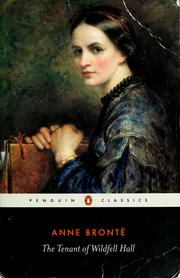
The Tenant of Wildfell Hall
2,838-word summary 13 min read
- First published
- 1848
- Publisher
- Thomas Cautley Newby
- ISBN
- 9780140434743
Reading options
What's inside (8 sections)
I started The Tenant of Wildfell Hall expecting a quiet romance and found a courtroom in a diary instead. A friend who loves the Brontes warned me this one preaches and also bites. She was right on both counts. The Tenant of Wildfell Hall by Anne Bronte was first published in June 1848 in three volumes by Thomas Cautley Newby under the pen name Acton Bell, with the Penguin Classics edition carrying ISBN 9780140434743. It is told mostly as letters from farmer Gilbert Markham to his friend Jack Halford, with a long diary at its center kept by Helen Huntingdon. I read it slowly over a week, often annoyed, often moved, which seems a fair way to meet this book.
The shape matters before plot. Gilbert writes from the country years after events, looking back at his young self. He tells Halford about a mysterious tenant who came to ruined Wildfell Hall with a small boy and a servant. Then he hands over Helen diary, which runs for hundreds of pages. Then he picks up his own story again. That double frame slows the start and tests patience. It also lets Anne Bronte show how village talk hears a woman, then lets the woman speak for herself at length. Once I settled into that design, the slow open paid off.
Gilbert is twenty four, a farmer with education and temper, living with his mother, brother Fergus, and sister Rose. He fancies himself blunt and honest. He flirts with the vicar daughter Eliza Millward until someone more interesting arrives. Halford, his reader, is mostly silent, a friend who married Rose by the time Gilbert writes. Knowing Gilbert writes to impress a brother in law helps you read him. He polishes his motives. He admits faults only after defending them. That unreliability makes him human even when he irritates.
Letters from the farm
The novel opens in autumn 1847 in the country around Linden Car. Gilbert writes to Halford with gossip and weather and family jokes. Fergus teases. Rose plays peacemaker. Mrs Markham quotes the vicar. Life is small and talkative. Then Wildfell Hall, empty for years, gains a tenant. A widow called Helen Graham moves in with her son Arthur, about five, and her servant Rachel. She keeps apart. She paints to earn money, which surprises neighbors. She avoids church sociability and refuses visits.
Village talk fills the gap. Jane Wilson and Eliza Millward trade hints. The vicar shakes his head. Farmers at market add guesses. Gilbert first joins the curiosity, then defends Helen, then seeks her out. He likes that she reads, that she speaks plainly about drink and schooling, that she does not flatter him. He starts calling. She stays cool. That coolness pulls him more.
Two misunderstandings drive this part and show Gilbert at his worst and most ordinary. He grows jealous of Frederick Lawrence, a quiet gentleman farmer who helps Helen and seems close to her. Gilbert sees them walking, hears whispers that little Arthur looks like Lawrence, and decides Lawrence is a lover. He also nurses wounded pride when Helen refuses to explain herself. At a meeting on the road, Gilbert strikes Lawrence with a whip handle and knocks him from his horse. It is a shameful scene, sudden and stupid, and Gilbert tells it with excuses that do not hide much. Lawrence, to his credit, stays dignified and does not press charges at once.
Helen response to all this is to set a boundary. She will not marry Gilbert. She will not be courted while rumors fly. When he accuses her of loving Lawrence, she does something bold for fiction of 1848. She hands him her diary and tells him to read before judging. That handoff ends the first movement. Village comedy turns. Private record begins.
This opening drags in places. Letters repeat jokes. Eliza malice circles. Mrs Markham moralizing tires. But the drag has purpose. Anne Bronte wants you to feel how a small place watches a lone woman. Every walk is noted. Every sale of a painting is counted. A widow who earns, who locks her door, who keeps a boy from rough play, becomes a problem to solve. Gilbert, for all his talk of independence, breathes that air. His jealousy is not only love. It is ownership learned at home.
The widow at Wildfell Hall
Before the diary takes over, Helen on the surface deserves a closer look because first impressions mislead. She is not meek. She is guarded for cause. She teaches her son Arthur firmly, keeps him from drink and coarse talk, and corrects him in front of guests without apology. She paints the old hall and the moors, labels one picture with a false manor name to hide her trail, and sells work through her brother in secret. Rachel, who has served her since birth, guards the door and the boy with fierce loyalty. The pair live like people in hiding, because they are.
Gilbert courts her clumsily. He brings books. He argues about child rearing. He admires her mind and also wants to manage it. He sulks when she keeps distance. He charms little Arthur to reach the mother. Some scenes are sweet. Gilbert mending a toy. Arthur asking blunt questions. Helen laughing despite herself. Other scenes jar. Gilbert presses for answers she cannot safely give. He treats no as a puzzle. Reading now, his pursuit feels possessive even when he means it as love. Anne Bronte does not excuse him fully. She lets Helen name it. You want to claim me, her manner says, before you know me.
Lawrence mystery clears only later, but hints sit here. He lends money. He rides over at odd hours. He warns Gilbert off without explaining. Villagers read romance. The truth is kinship, which the book holds back to show how fast eyes judge. Little Arthur favoring Lawrence is not proof of scandal. It is proof that a kind uncle draws a child starved of gentle men. I guessed the tie halfway, but the delay still worked because it exposed Gilbert.
A short aside on houses. Wildfell Hall is damp, lonely, and unglamorous. No ghosts. No secret wife in an attic. Just leaking roofs and cold rooms that suit a woman with little coin. Grassdale Manor, Helen husband estate, and Staningley, her uncle house, hover in talk as richer places with darker histories. Linden Car farm, Gilbert home, is warm and noisy and judgmental. Setting maps morals without speeches. Cold hall for exile. Loud farm for talk. Fine houses for rot.
Helen diary and a bad marriage
The diary, which runs from 1821 forward, is the heart of the book and the reason it shocked readers. Young Helen Lawrence, living with her aunt and uncle at Staningley after her mother death, is eighteen, talented, devout in her own way, and sure she can do good by marrying a flawed man. She meets Arthur Huntingdon, handsome, witty, lively at parties, already fond of drink and praise. Older voices warn her. Her aunt pleads. She trusts love and duty over advice. She marries him in December 1821, believing gentle influence will reform him.
Marriage starts with hope and slides fast. Huntingdon wants admiration, not change. He flirts with Annabella Wilmot before marriage to make Helen jealous, then keeps old habits after vows. After their son Arthur is born in late 1822, Huntingdon grows jealous of the baby claim on Helen time. He drinks more. He fills Grassdale with friends for long bouts of revelry. Lord Lowborough, gloomy and struggling with drink and opium, tries to steady and fails. Ralph Hattersley, loud and bullying, mistreats his meek wife Milicent, who is Helen friend. Mr Grimsby sneers. Walter Hargrave, Milicent brother, watches Helen with hungry politeness. Annabella, now Lady Lowborough, pursues Huntingdon openly.
Helen writes these scenes with painful clarity. Dinners that turn coarse. Songs that turn foul. Cards and bottles till late. Men daring each other lower. She tries reason, then pleading, then coldness, then prayer. Huntingdon mocks each tool. He calls her strict. He calls her cold. He promises reform after each shame and breaks it by weekend. One passage where he brings drink to little Arthur and teaches him to swear to amuse guests made my stomach turn. Helen sees her son being shaped into another Huntingdon and knows she must act.
The diary also records Walter Hargrave pressure. He is not drunk like the rest, which he uses as credit. He offers sympathy, then hints Helen needs a protector, then presses closer when she is low. Helen senses danger and keeps him off, but his presence shows how narrow her options are. A bad husband at home. A soft predator at the side. Law that gives wives no property, no divorce for cruelty in practice, no claim to children if she leaves. Milicent, married against her will to Hattersley and told to endure, is the warning of what endurance costs.
Critics call this part preachy, and they have a point. Helen moralizes and repeats that duty means saving Huntingdon soul. Anne Bronte knows that belief fails. The diary tests it till it breaks. Helen goodness does not reform Huntingdon. That lesson, learned at high cost, is why many now call this one of the first feminist novels in English.
London ruin and flight
The middle of the diary moves between country and London seasons and the tone darkens. Huntingdon affair with Annabella Lowborough becomes certain. Hargrave tells Helen in a scene that mixes help and self interest. Helen confronts her husband. He denies, then sneers, then refuses separation. He will not grant a divorce. He claims his rights over house, wife, and child. Annabella cruelty sharpens the pain. She flaunts favor. Lowborough suffers and at last seeks divorce after proof, then leaves for a quieter life. Hattersley continues loud and rough, though later years will soften him more than Huntingdon.
Helen plans escape not for herself alone but for her boy. She writes that she wants to save Arthur from becoming such a gentleman as his father, a line that lands harder each time I recall it. She means drink, oaths, contempt for women, idleness dressed as charm. She starts painting in earnest to earn bread, hiding sales. She writes to her brother Frederick Lawrence for help. Rachel agrees to go. Then Huntingdon finds the diary, reads private plans, and burns her tools. That violation, a husband destroying work that legally counts as his under coverture, is one of the ugliest moments. Helen art, which had been self and income both, is treated as stolen goods when she tries to use it to leave.
Escape, when it comes in October 1827, is plain and brave rather than romantic. No chase on horseback. A quiet departure with help from Lawrence, Benson the butler pity, and Rachel steady hands. Helen takes her mother maiden name Graham for cover and settles at Wildfell Hall, the place where she and Frederick were born, now empty and cheap. She lives as a widow because a runaway wife has no safe name. She sells pictures through Lawrence. She schools Arthur. She locks doors. She refuses callers. Every choice that made villagers call her proud in Gilbert part now reads as survival.
I admired how Anne Bronte handles money here. Helen counts coins. She worries about rent. She mends. She fears winter. Independence is not a speech. It is budgets and cold fingers and a boy asking why they cannot go home. The diary makes clear that leaving an abusive marriage under early nineteenth century law meant poverty and disgrace by design. Helen breaks both social rule and law to protect her child. The book does not hide the price.
A note on faith fits this section. Helen holds to universal salvation, the hope that even the worst may at last be redeemed. She will not use it to excuse Huntingdon. That stance offended some readers then and puzzles some now.
Illness, death, and waiting
Gilbert resumes narration after reading the diary, chastened and still impulsive. Helen asks him to leave her because she is not free. He obeys, badly, with sulking and long walks. News comes that Huntingdon is gravely ill after a fall from a horse while drunk and long decline from drink. Helen returns to Grassdale to nurse him, from duty rather than love, and Gilbert must watch the woman he wants go back to the man who harmed her. His jealousy flares again, mixed with admiration he does not want to feel.
Deathbed chapters are grim and refuse comfort. Huntingdon is frightened, in pain, thirsty, angry. He wants Helen to stay, to pray for him, to go with him in some way to plead his case. He will not repent in any full sense. He blames others. He begs for comfort without owning harm. Helen tends him, reads, cools his forehead, speaks plainly about conduct, and will not lie that all is well. He dies in December 1828, terrified, unreconciled in the way Helen hoped. She grieves the waste more than the man. I found these pages hard and honest. Anne Bronte, who watched illness at home, does not grant a tidy conversion to excuse chapters of cruelty.
After death, law and money twist. Huntingdon was nearly penniless despite show. Helen holds property from her own family line and at last inherits Staningley from her uncle near the end, which lifts her far above Gilbert in income. Mourning customs require waiting. Gilbert waits, farming, quarreling with his mother, trying not to hope. Lawrence, now reconciled with Gilbert after the whip blow, marries Esther Hargrave, the bold younger sister who refused a forced match. That wedding, which Gilbert at first mistakes for Helen wedding from garbled rumor, gives the book one of its few light gatherings before the final test.
Gilbert final pursuit shows both growth and old faults. He travels to Staningley, learns Helen is wealthy, and shrinks. Chance brings Helen, her aunt, and young Arthur on a walk. They reconcile and marry in August 1830, after Helen mourning ends. The book closes as letter ends in June 1847.
Readers should note how much waiting the book demands. Double frame means starts and stops. Yet the waiting mirrors Helen position. She waited years for change that never came, then waited months to be free to choose again.
Reunion and what wears
Stepping back, what lasts is not the love plot but Helen stand. She marries hoping to save a man, learns goodness cannot force change, protects her son by flight, earns by art, nurses without forgiving falsely, and chooses again only when free. For 1848, under Acton Bell, that arc shocked. A wife slams her bedroom door against her husband. A mother denies a father access to save a child. A woman sells paintings to live apart. Reviewers called it coarse. Charlotte Bronte later blocked republication for years, which kept it less read than work by her sisters. Time has moved it forward again as readers value its bluntness about drink, cruelty, and law.
What wears thin needs plain naming. The double frame slows momentum. Gilbert letters open with village comedy that runs long. Eliza and Jane gossip loops. Fergus jokes repeat. The diary, powerful at its core, preaches. Helen lectures Huntingdon, Hargrave, Milicent, and the reader in turn. Some lectures repeat the same point about influence and duty. Gilbert possessiveness, though checked by Helen, never fully leaves. He polices her friendships, sulks when denied, and frames her story as his education. Even the happy end, with inheritance raising Helen and marriage restoring her to wife, can feel like freedom folded back into custom. Anne Bronte pushes far, then stops where her world allowed.
Still, I closed the book with respect. Scenes stay. Helen adding tartar emetic to her son wine in tiny doses to make drink nauseating, a desperate mother trick to undo father teaching. Huntingdon burning brushes. Rachel standing at doors. Lawrence quietly paying. Lowborough choosing a plain kind second wife after ruin. Hattersley learning, late, to be tender. Esther refusing a bought marriage. Gilbert struck by shame after the whip. Helen at a sickbed telling truth instead of comfort. These are not vague impressions. They are staged acts with names and costs.
If you try it, give the frame time. Skim nothing at first, then allow the diary its length. Read Gilbert as a young man learning, not as a hero. Notice how often Helen chooses Arthur the child over Arthur the husband, work over pity, truth over peace. This June 1848 Newby novel, told as Markham letters to Halford with Helen diary inside, earns its place by refusing to look away from marriage as law made it. It is slow, stern, and at times possessive in its telling, but Helen voice inside holds steady. A tenant in a cold hall, painting for bread, guarding a boy, writing to stay sane, she leaves stronger proof than most heroines of her age.
FAQ
When was The Tenant of Wildfell Hall published?
It was first published in June 1848 in three volumes by Thomas Cautley Newby as Acton Bell. The Penguin Classics edition uses ISBN 9780140434743.
Is it part of a series?
No. It is a standalone novel told through Gilbert Markham letters to Jack Halford with Helen diary at the center.
Is it hard to read today?
Yes, though slowly. The double frame drags, the diary preaches, and Gilbert can sound possessive even as Helen stays clear.
Similar books

Fathers and Sons
Arkady brings the nihilist Bazarov home to his father's estate, and a generational argument turns into love, a duel, and an early death.
2,192-word summary · 10 min read
Anne's House of Dreams
Newlyweds Anne and Gilbert start in a seaside house with kind neighbors.
2,465-word summary · 11 min read

Lady Tan's Circle of Women
Ming physician Tan Yunxian treats bound feet and births with midwife Meiling, defying male medicine rules.
2,330-word summary · 10 min read
On the Way to the Wedding
Gregory chases the wrong friend while Lucy fights a forced engagement.
1,938-word summary · 9 min read
The Hunchback of Notre-Dame
Quasimodo loves Esmeralda from the bells while Frollo lusts and Gringoire watches Paris burn in 1482.
1,939-word summary · 9 min read
Mansfield Park
Fanny Price loves Edmund amid Crawfords theatricals at Mansfield.
2,389-word summary · 11 min read

The Color Purple
Celie writes letters to God and to her sister, surviving abuse in the rural South to find her own voice.
2,053-word summary · 9 min read

What Happened to Goodbye
Mclean has reinvented herself in four towns since her parents divorced. In Lakeview she uses her real name, and for the first time staying put becomes a choice.
2,796-word summary · 12 min read

The Long Winter
Dakota Territory, 1880: seven months of blizzards cut a town off from the railroad, and a family survives on twisted hay, ground wheat, and a dangerous wheat…
2,210-word summary · 10 min read

The Japanese Lover
A Polish refugee and the son of a Japanese gardener fall in love in San Francisco in 1939, then keep the affair secret for nearly seventy years.
2,286-word summary · 10 min read

Make Way for Ducklings
A pair of mallards raise eight ducklings on the Charles River and lead them across Boston to the Public Garden, with a little help from a friendly policeman.
2,044-word summary · 9 min read

The Shadow Sister
Star D'Apliese steps out of her sister's shadow and follows a bookshop clue into the Edwardian life of Flora MacNichol, a woman who gave up love for duty.
2,260-word summary · 10 min read

Little Town on the Prairie
In the spring after the Long Winter, fifteen-year-old Laura sews shirts, studies for a teaching certificate, and helps send her blind sister Mary to college.
2,071-word summary · 9 min read

Howards End
Forster's 1910 novel follows two families, a house in Hertfordshire, and a burned note, asking whether money and feeling can ever be connected.
2,187-word summary · 10 min read

Ricochet
Lily Calloway tries to stay celibate for ninety days while Loren is in rehab, leaning on Rose, Connor, and Ryke as therapy forces her to face her childhood.
2,575-word summary · 11 min read
Under Locke
Iris Taylor moves to Austin broke and wary, takes a front-desk job at a tattoo shop, and spends the book learning that Dex Locke’s blunt cruelty and unexpected…
2,591-word summary · 12 min read

Sam's Letters to Jennifer
A grieving journalist reads her grandmother's letters and finds a decades-long love affair that changes how she sees her family.
2,310-word summary · 10 min read

Act Your Age, Eve Brown
Eve Brown crashes into a Lake District bed and breakfast, breaks the owner's arm, and talks her way into his kitchen. A grumpy-sunshine romance about work,…
2,474-word summary · 11 min read
The Rumor
Two Nantucket best friends, Madeline and Grace, watch a summer of small indiscretions get retold into gossip that reshapes both their households.
2,017-word summary · 9 min read
Two by Two
Sparks's twentieth novel turns from first love to a marriage breaking up: Russell Green loses his wife and his job, then rebuilds his life around his…
2,192-word summary · 10 min read

The Chosen
A shattered pair of glasses in a 1944 Brooklyn softball game starts a friendship between a Hasidic boy and his Orthodox neighbor, and their fathers pull them…
2,443-word summary · 11 min read
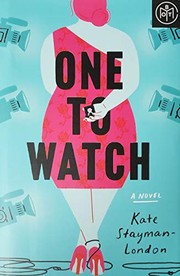
One to Watch
A plus-size fashion blogger takes the lead role on a reality dating show to prove she belongs on television, and finds she might want what the cameras offer.
2,478-word summary · 11 min read
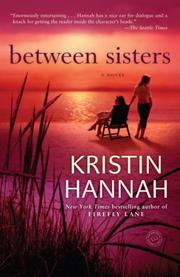
Between Sisters
Estranged sisters Meghann and Claire reunite in Washington when Claire announces a rushed wedding, then face their mother's desertion and a medical crisis.
2,467-word summary · 11 min read

Ivanhoe
A disinherited Saxon knight, a great tournament, a besieged castle and a trial by combat. Scott's most famous novel, set in England in 1194.
2,834-word summary · 13 min read

At First Sight
Jeremy and Lexie are married and expecting a baby when anonymous emails tell him the child may not be his.
2,317-word summary · 10 min read

2 States: The Story of My Marriage
A Punjabi boy from Delhi and a Tamil Brahmin girl from Chennai meet at IIM Ahmedabad, and turn a love marriage into a campaign to convince two families.
2,634-word summary · 12 min read

Wide Sargasso Sea
Jean Rhys gives the first Mrs. Rochester a Caribbean childhood, a marriage built on money and suspicion, and a voice that Charlotte Bronte left in the attic.
2,021-word summary · 9 min read
Where We Belong
Marian's orderly New York life cracks when the daughter she gave up for adoption arrives, and the search for the father forces her to tell the truth.
2,056-word summary · 9 min read
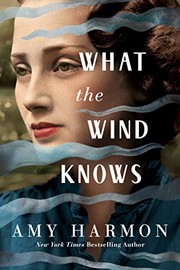
What the Wind Knows
Annie scatters her grandfather's ashes on Lough Gill and is pulled into 1921 Ireland, where she becomes the missing Anne Gallagher and falls for Dr. Thomas…
2,056-word summary · 9 min read

This Is How You Lose Her
Yunior cycles through love affairs and betrayals in nine linked stories, tracing the damage he does and the family history behind it.
2,195-word summary · 10 min read