
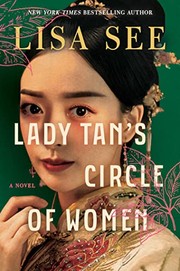
Lady Tan's Circle of Women
2,330-word summary 10 min read 368 pages in the book
- First published
- 2023
- Publisher
- Scribner
- Pages
- 368
- ISBN
- 9781982117085
Reading options
What's inside (6 sections)
I read Lady Tan's Circle of Women right after Island of Sea Women and admired how Lisa See returned to women's medicine from a different shore. Set in Ming China, it follows Tan Yunxian, elite girl taught healing by her grandmother, who practices with midwife Meiling despite footbinding, seclusion, and male doctors who scorn. At 368 pages it is rich with remedies and constraints, respectful of a real physician's casebook while inventing a full life around sparse records.
Yunxian learns healing
Yunxian grows in an elite Xu? Actually Tan family in 15th century Jiangnan with bound feet, embroidery lessons, and a grandmother Ru who was a rare female doctor. Grandmother teaches pulse reading, herb gathering, moxibustion, and the Four Examinations though father forbids as unladylike. Yunxian learns in secret with maids as lookouts, grinding ink for notes hidden in dowry chests. Meiling, midwife's daughter close in age, becomes friend and hands. Where Yunxian cannot go as elite miss, Meiling goes as worker. Where Meiling cannot read prescriptions, Yunxian writes. That partnership across class gives the book its heart and its method. Medicine needs both book learning and touch. Neither girl alone suffices. Together they can enter inner quarters and birthing rooms closed to male doctors.
Footbinding is described without flinching or fetishizing. Binding at five, bones breaking, flesh rotting, beauties praised for lotus gait that cripples. Yunxian endures and later treats infections from bindings she cannot condemn openly as daughter in law. See shows how mothers bind daughters from love mixed with survival math. Unbound girls do not marry well. Bound girls cannot walk to escape bad marriages. That bind mirrors medical bind. Women need care but cannot be touched by men outside family, leaving them to suffer modesty deaths male doctors lament without changing rules. Yunxian's work exists in that gap. She can see what men cannot, but cannot publish or charge openly as they do. Healing as quiet rebellion within walls.
What hooked me is grandmother Ru's casebook that frames chapters with real Ming remedies. Ginseng for qi, mugwort for moxa, ginger for nausea. Doses, pulses, outcomes noted without miracle claims. Yunxian adds her own cases in margins as she grows, building a women's text inside patriarchal medicine. See based Yunxian on the real Tan Yunxian (1461 to 1554) whose Miscellaneous Records of a Female Doctor survives with 31 cases. That scant source becomes full life through invention that respects what is known and admits what is imagined in afterword. I appreciated the transparency. History as scaffold, not straitjacket.
Marriage at fifteen to the Yang family moves Yunxian from learning to practice under harder rules. Mother in law enforces seclusion, husband Yang is kind but weak against family, concubines compete for favor through sons. Yunxian must treat household women behind screens with Meiling as hands and mouthpiece. Success brings jealousy as well as gratitude. Failure risks blame that falls on women, not disease. Those household politics, described with novelistic patience for meals, visits, and new year rites, show how elite women's lives narrow after marriage even as skills grow. Freedom contracts while competence expands. That paradox defines Yunxian's middle years.
Meiling and women's work
Meiling, midwife's daughter turned skilled birth attendant, deserves co lead status though history would erase her as illiterate worker. Bright, blunt, unafraid of blood, she carries Yunxian into homes where elite miss cannot go alone. She negotiates fees, calms screaming mothers, and buries stillborns with prayers Yunxian cannot voice as Confucian daughter. Their friendship crosses class through work rather than sentiment. They argue about money, about risking punishment to treat poor boat women for free, about Meiling's marriage to a man who fears her skill. Arguments end in shared meals rather than rupture because need binds tighter than rank. That bond is the book's circle of the title more than any formal society. Two women holding each other up across a wall neither built.
Midwifery detail shines without romanticizing. Breech turns with oiled hands, hemorrhages packed with cloth, infected cords cut with boiled knives. Meiling teaches Yunxian what books omit. How to breathe with a laboring woman, when to wait and when to reach, how to mourn a mother lost while saving child. Yunxian teaches Meiling pulse lore and herb letters to expand repertoire beyond apprenticeship. Exchange runs both ways, a model of knowledge sharing patriarchy blocks among men who guard texts. Women, excluded from academies, teach in kitchens and birth rooms with open hands because survival demands it. See honors that pedagogy with procedural clarity that never turns gory for thrill. Birth as work, not miracle or horror.
Smallpox and bound foot infections test the pair beyond childbirth. A village outbreak forces them to inoculate with scabs though male doctors call it folk danger. They succeed enough to earn grudging referrals, then lose credit to a male physician who publishes their method as his observation. That theft, based on real patterns where women's remedies entered male texts unattributed, angers without turning the book into polemic. Yunxian notes it in her book with names and dates, a quiet revenge of record. Write it down, grandmother taught. Paper remembers when men forget on purpose. That lesson drives Yunxian to complete her manuscript despite risks of being called unfilial for publishing as woman.
A fair note is pacing through domestic repetition. Births blur after a dozen cases with similar pulses and herbs. Readers wanting court intrigue may skim middle births. Stay for how each case teaches a rule that later saves in palace. Pattern as plot is See's method across books. Learn slowly, use suddenly when stakes peak. It rewards patience with competence porn of the best kind. Women being good at work they were forbidden to learn.
Palace, plague, and book
A summons to the palace to treat an imperial consort forces Yunxian into public medicine she was raised to avoid. Eunuchs escort, screens separate, male physicians watch to catch error. She diagnoses correctly through pulse taken through silk, prescribes gently, and succeeds where men failed by listening to maid descriptions they dismissed. Reward brings danger. Envy from court doctors, scrutiny of her bound feet walk, rumors about Meiling's low birth in palace halls. Success as woman in public invites punishment as lesson to others. Yunxian navigates with grandmother's maxims. Speak little, write all, credit the family that allows you out. Humility as armor rather than virtue.
Plague chapters Solution? Actually a regional epidemic forces broader action beyond palace. Yunxian and Meiling inoculate villages with variolation, facing mobs who fear spreading disease and officials who want quarantine without care. They negotiate with magistrates using Yunxian's elite name and Meiling's practical crew. Some villages accept and live. Others refuse and die. See does not simplify resistance as ignorance. People watched prior campaigns fail and distrust outsiders with reason. Trust builds through staying after needles, sharing rice, burying dead without fee. Medicine as presence, not just technique, is the theme. Show up after to change before minds.
The book she writes, Miscellaneous Records, becomes the finale's focus rather than a battle. Yunxian, aging and widowed, compiles cases with Meiling's help, bribing printers and defying sons who call publishing unseemly for a mother. She includes failures alongside cures to teach honestly, a choice male texts rarely make. When the book circulates and saves a granddaughter's labor through a midwife who read it, the circle closes across generations. Women teaching women through paper when bodies cannot meet. See ends not with triumph parade but with Yunxian teaching girls pulse in her courtyard while Meiling's daughters assist. School without permission that will outlast bans because need outlasts law. That quiet school is the revolution. Learn, write, share though forbidden. Health follows literacy when women hold both.
Read it if you liked Island of Sea Women for labor respect, Snow Flower for sworn sisterhood, or books like The Midwife of Venice for historical birth work. At 368 pages it moves steadily with remedies to note and rites to learn. It will make you grateful for antibiotics and angry that footbinding lasted a millennium because beauty was defined by men who never felt it. Yunxian's circle offers alternative definition. Beauty as skill that heals, feet that carry midwives to doors, hands that write books though brushes were denied. Join that circle a while. Leave knowing more about pulses, including your own.
Grandmother Ru's book and sons
Grandmother Ru's casebook, Miscellaneous Records passed down though custom says women should not write medicine, gives the novel its spine and its title's circle. Thirty one cases in the real Tan Yunxian's text become hundreds in fiction as Yunxian adds margins. Each entry notes pulse, tongue, pain location, prescription, outcome without miracle claims. Failures recorded alongside cures to teach. When Yunxian faces a difficult breech male doctors call hopeless, she recalls Ru's note about turning with oiled hands and patience. Success comes not from secret herb but from waiting longer than men will when fees tick by hour. Time as medicine is a theme the book returns to without romanticizing delay. Wait when safe, act fast when bleeding. Judgment grows through cases logged honestly over decades.
Sons and husbands in the Yang family show patriarchy's costs to men as well as women, though unequally. Husband Yang Yifeng, kind and weak, loves Yunxian but cannot defend her practice against mother and brothers who call it shameful. He studies for exams that never come while drinking with friends who mock doctor wives. His kindness without courage helps less than cruelty would harm less? Actually it harms through inaction that leaves Yunxian to fight alone while he sympathizes from bed. Sons raised to value rank over skill report mother's publishing as unfilial to tutors seeking favor. They love her and betray her for status in ways they will regret too late to recall books burned in fear. See does not excuse, but explains how systems recruit even loved ones as enforcers. To be a good son in Ming is to police mother. That bind breaks families as surely as binding breaks feet.
Meiling's daughters, trained by Yunxian in pulse though illiterate at start, carry the circle forward beyond bloodlines that favor sons. They learn characters for herbs first, then for symptoms, then write their own cases in simple hand that Yunxian corrects without condescension. When officials later seek women doctors for palace overflow, these girls go where Yunxian cannot as bound elite aging. Their success proves teaching outside family lines matters more than passing secrets mother to daughter alone. Knowledge shared widely survives bans that target famous names. Burn Yunxian's book and copies live in midwives' bags across provinces. That distributed survival is the revolution's quietest victory. Learn, write, share though forbidden has already worked before censors arrive.
Midwives' bags as libraries deserve a final image. Cloth rolls with dried herbs labeled in charcoal, needles wrapped in silk, notebooks greased from use. Meiling carries one across bridges and through gates where guards wave her as lowly and therefore unthreatening. That underestimation is her power. Lowly passes where elite are searched. Yunxian learns to pack her own bag for palace visits though ladies carry nothing. To carry tools is to claim work. When the two walk together, one with silk bag hidden in sleeve, one with canvas bag open, they model two ways to survive scrutiny. Hide skill or flaunt need. Both work at different gates. Remember which gate you face and pack accordingly. That practical wisdom, more than any single cure, is what the circle teaches daughters who will face new gates with old bags mended.
Grandmother Ru's casebook, Miscellaneous Records passed down though custom says women should not write medicine, gives the novel its spine and its title's circle. Thirty one cases in the real Tan Yunxian's text become hundreds in fiction as Yunxian adds margins. Each entry notes pulse, tongue, pain location, prescription, outcome without miracle claims. Failures recorded alongside cures to teach. When Yunxian faces a difficult breech male doctors call hopeless, she recalls Ru's note about turning with oiled hands and patience. Success comes not from secret herb but from waiting longer than men will when fees tick by hour. Time as medicine is a theme the book returns to without romanticizing delay. Wait when safe, act fast when bleeding. Judgment grows through cases logged honestly over decades.
Sons and husbands in the Yang family show patriarchy's costs to men as well as women, though unequally. Husband Yang Yifeng, kind and weak, loves Yunxian but cannot defend her practice against mother and brothers who call it shameful. He studies for exams that never come while drinking with friends who mock doctor wives. His kindness without courage helps less than cruelty would harm less? Actually it harms through inaction that leaves Yunxian to fight alone while he sympathizes from bed. Sons raised to value rank over skill report mother's publishing as unfilial to tutors seeking favor. They love her and betray her for status in ways they will regret too late to recall books burned in fear. See does not excuse, but explains how systems recruit even loved ones as enforcers. To be a good son in Ming is to police mother. That bind breaks families as surely as binding breaks feet.
Meiling's daughters, trained by Yunxian in pulse though illiterate at start, carry the circle forward beyond bloodlines that favor sons. They learn characters for herbs first, then for symptoms, then write their own cases in simple hand that Yunxian corrects without condescension. When officials later seek women doctors for palace overflow, these girls go where Yunxian cannot as bound elite aging. Their success proves teaching outside family lines matters more than passing secrets mother to daughter alone. Knowledge shared widely survives bans that target famous names. Burn Yunxian's book and copies live in midwives' bags across provinces. That distributed survival is the revolution's quietest victory. Learn, write, share though forbidden has already worked before censors arrive.
FAQ
When was Lady Tan's Circle of Women published?
Scribner published it in 2023. It runs 368 pages with ISBN 9781982117085.
Is it part of a series?
No. It is a standalone novel inspired by real Ming physician Tan Yunxian's casebook.
Who are the leads?
Tan Yunxian, elite girl taught medicine by grandmother, plus midwife Meiling who carries her into homes.
Similar books
The Tea Girl of Hummingbird Lane
A Chinese tea farming mother gives up a daughter who later seeks roots.
2,607-word summary · 12 min read
The Tenant of Wildfell Hall
Helen flees a cruel marriage, hides as Helen Graham at Wildfell Hall, and tells her full story through a long diary young Gilbert Markham must read before…
2,838-word summary · 13 min read
The Bonesetter's Daughter
A ghostwriter translates her mother's hidden Chinese memoir and learns the truth about Immortal Heart, Precious Auntie, and a family curse.
2,720-word summary · 12 min read
Moloka'i
Seven-year-old Rachel Kalama is sent to Kalaupapa leprosy settlement in Hawaii, growing into a full life of love and loss.
2,190-word summary · 10 min read
The Good Earth
Wang Lung, a poor farmer in 1920s China, rises with his wife O-lan through famine and wealth, holding to land above all else.
2,125-word summary · 9 min read
The Island of Sea Women
On Jeju island, haenyeo divers Young-sook and Mi-ja share decades of friendship strained by war and massacre.
2,204-word summary · 10 min read
Shanghai Girls
Two Shanghai sisters flee war and face Angel Island to start over in Los Angeles.
1,914-word summary · 9 min read
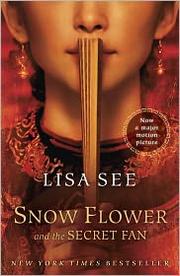
Snow Flower and the Secret Fan
Footbound Lily and Snow Flower share laotong bond through 19th century Hunan hardship.
2,557-word summary · 11 min read

The Long Winter
Dakota Territory, 1880: seven months of blizzards cut a town off from the railroad, and a family survives on twisted hay, ground wheat, and a dangerous wheat…
2,210-word summary · 10 min read

The Japanese Lover
A Polish refugee and the son of a Japanese gardener fall in love in San Francisco in 1939, then keep the affair secret for nearly seventy years.
2,286-word summary · 10 min read

The Shadow Sister
Star D'Apliese steps out of her sister's shadow and follows a bookshop clue into the Edwardian life of Flora MacNichol, a woman who gave up love for duty.
2,260-word summary · 10 min read

Little Town on the Prairie
In the spring after the Long Winter, fifteen-year-old Laura sews shirts, studies for a teaching certificate, and helps send her blind sister Mary to college.
2,071-word summary · 9 min read
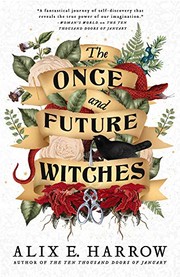
The Once and Future Witches
Three estranged sisters bring witchcraft back to an 1893 city where magic hides in nursery rhymes and the fight for the vote is also a fight for power.
2,132-word summary · 9 min read
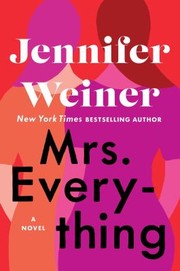
Mrs. Everything
Two Jewish sisters in Detroit grow up, apart and together, across seven decades of American life, from the 1950s to the 2016 election.
2,362-word summary · 10 min read

Fathers and Sons
Arkady brings the nihilist Bazarov home to his father's estate, and a generational argument turns into love, a duel, and an early death.
2,192-word summary · 10 min read

Wide Sargasso Sea
Jean Rhys gives the first Mrs. Rochester a Caribbean childhood, a marriage built on money and suspicion, and a voice that Charlotte Bronte left in the attic.
2,021-word summary · 9 min read
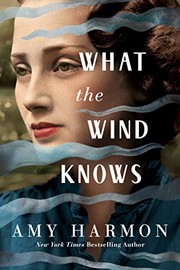
What the Wind Knows
Annie scatters her grandfather's ashes on Lough Gill and is pulled into 1921 Ireland, where she becomes the missing Anne Gallagher and falls for Dr. Thomas…
2,056-word summary · 9 min read
The Silence of the Girls
Briseis, queen of Lyrnessus, is captured by Achilles and narrates the Trojan War from inside the Greek camp, where women are prizes and survival is its own…
2,098-word summary · 9 min read
The Birth of Venus
A Florentine merchant's daughter trains as an artist, marries a man who hides a secret, and survives Savonarola's bonfire of the vanities.
2,404-word summary · 11 min read
A Painted House
In 1952 Arkansas, seven-year-old Luke Chandler picks cotton with his family and learns how quickly poverty, violence, and adult secrets can end a childhood.
2,060-word summary · 9 min read

The Storm Sister
Ally D'Aplièse loses her father and her lover within weeks, then follows a brass frog and a Norwegian biography into Anna Landvik's music and the world of…
2,376-word summary · 11 min read
The War That Saved My Life
Ten-year-old Ada has never left her London flat, hidden away because of her clubfoot. Wartime evacuation sends her to Kent, where a reluctant guardian and a…
2,252-word summary · 10 min read
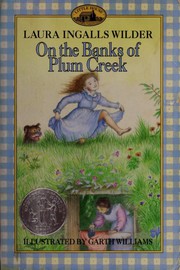
On the Banks of Plum Creek
The Ingalls family trades their horses for a dugout on Plum Creek and bets a single wheat harvest on a house above ground, in Wilder's fourth Little House book.
2,090-word summary · 9 min read

Cold Sassy Tree
In 1906 Georgia, fourteen-year-old Will Tweedy watches his widowed grandfather marry a much younger woman three weeks after his grandmother's funeral.
2,154-word summary · 10 min read
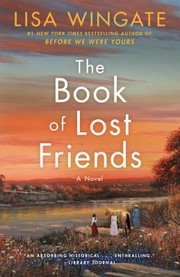
The Book of Lost Friends
Three women trace Lost Friends ads from 1875 to find stolen sons.
2,368-word summary · 11 min read
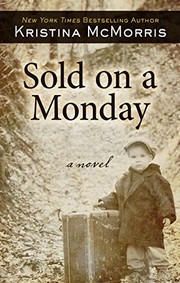
Sold on a Monday
A reporter hides a Depression photo of children for sale and must face the cost.
2,501-word summary · 11 min read
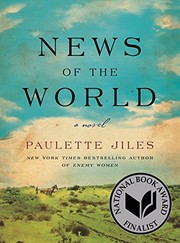
News of the World
Captain Kidd carries captive Johanna home across 1870 Texas.
2,571-word summary · 11 min read
Esperanza Rising
Esperanza trades ranch life for farm labor camps in California.
2,338-word summary · 10 min read
Anne's House of Dreams
Newlyweds Anne and Gilbert start in a seaside house with kind neighbors.
2,465-word summary · 11 min read
The School for Good Mothers
A mother sent to a reform school fights to keep her daughter under cold surveillance and strict rules.
2,114-word summary · 9 min read