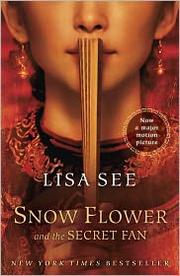
Snow Flower and the Secret Fan
2,557-word summary 11 min read 272 pages in the book
- First published
- 2005
- Publisher
- Random House
- Pages
- 272
- ISBN
- 9781400060283
Reading options
What's inside (8 sections)
I picked up Snow Flower and the Secret Fan because a friend told me it was about a secret language only women could read. That sounded like a puzzle novel to me. It is not. The book was published in 2005 by Random House and runs 272 pages in the hardcover edition. It is a life story told by a very old woman who is trying to explain herself before she dies. That voice caught me in the first pages and held me even when I wanted to shake her.
The narrator is Lily. She is eighty years old in 1903 when she starts writing. She looks back to her childhood in Tongkou, a small farming village in Hunan province in southwest China. She was born in 1823, in the Qing dynasty, in a time when a girl had almost no path except marriage. Lily grows up in a house with her mother, father, older brother, younger sister called Beautiful Moon, an aunt who married in, and a grandmother who rules the upstairs women's chamber. The family rents land and works hard. They are not starving, but they are not secure either. From the start Lily understands that her worth will be measured by her feet, her obedience, and the marriage she can make.
Bound Feet and the Matchmaker
Lily is six when her footbinding begins. See does not look away here, and I had to put the book down once during these pages. Lily's mother soaks her feet in hot water with herbs, bends the toes back except for the big toe, and wraps the feet tight in long cloths. Every few days the bindings are removed, dead skin is scraped, the arch is forced higher, and the cloths are pulled tighter. Infection, pus, tears. Lily cannot walk without help. She cries and her mother cries with her, but neither stops the process because a small foot, the ideal three inch golden lily, decides whether a girl can marry up.
What changes Lily's fate is that her feet turn out unusually well. They are small, high arched, narrow, with good flesh that heals clean. Her whole family starts to hope she might marry above them. Then Madame Wang arrives. Madame Wang is the local matchmaker, a widow with bound feet herself, sharp eyes and a freedom married women never have. She travels between villages, arranges marriages and laotong matches, and carries news for the women's chambers. When she sees Lily's feet and hears her birth date, her eight characters used for fortune telling, she takes notice.
Madame Wang tells Lily's parents that Lily shares the exact same birth day and hour as another girl in Puwei village, a girl named Snow Flower. In the local custom a laotong, which means old same, is a formal sworn friendship between two girls who match in age, birth signs, foot size, and character. It is rarer and in some ways more binding than marriage. A husband can die or be replaced by concubines. A laotong is supposed to last for life. The fathers sign a contract. The girls exchange gifts. From that point Lily and Snow Flower belong to each other.
I liked how See shows this as business as well as feeling. Lily's father wants the match because Snow Flower's family seems refined. Snow Flower's father wants it because Lily's feet promise a good future connection. The girls are seven or eight and barely understand. But they are told this bond will outlast parents, husbands, and children. That weight sits on everything that follows.
The Fan and Women's Words
Soon after the contract Lily receives a fan from Snow Flower. It is paper on bamboo ribs, painted with a bird or flowers on one side. On the other side are columns of strange thin characters. That is nu shu, the women's script of Jiangyong county in Hunan. For generations, local women who were never taught men's written Chinese used this phonetic script to write letters, songs, prayers, and Third Day Missives given to brides. Men could not read it. Mothers taught daughters. Sworn sisters wrote back and forth.
Lily and Snow Flower use the fan as a private letter that never ends. Snow Flower writes an introduction on her fan. Lily answers. Then Snow Flower sends the same fan back with a new message, and Lily answers again. Over years the ribs fill up with ink, small additions squeezed between older lines. They also exchange handkerchiefs with embroidered messages, stories about food, scoldings, comfort. Because they live in different villages they meet only a few times a year at first, at temple festivals or New Year visits, and the writing has to carry the friendship.
The upstairs chamber is where much of this happens. In Lily's house the women climb a ladder to a cramped upper room when the men are out working. There they sew shoes, spin thread, sing bridal laments, and repeat the rules that keep women alive. Obey your father, then your husband, then your son. Bear sons. Do not shame the family. Lily's aunt and grandmother drill these rules into her. Snow Flower teaches Lily nu shu songs and tells her stories about women who suffered and were praised for it.
Their early visits are sweet in a way that made me lower my guard. They compare bindings, wash each other's feet, oil them, rewrap them. They promise they will never let husbands come between them. They eat melon seeds and whisper about marriage. Snow Flower is slender, quick to laugh, good at music and verse. Lily is plainer, steadier, proud of her perfect feet.
Married Out in Different Directions
At seventeen Lily is married up, which is the dream of every mother in Tongkou. Madame Wang arranges a match with the Chen family, the most powerful family in Tongkou village. Lily leaves her natal home in a red sedan chair and enters a large house with courtyards, servants, and a mother in law who watches everything. Her husband is decent and mostly absent. What matters is that Lily produces sons. She has four children, three sons who live and a daughter. She manages the household, gains influence, and later is called Lady Chen.
Snow Flower goes the other way. Though she comes from a family that once had scholars and manners, her father has lost money and standing, something Lily does not fully understand as a girl. Snow Flower is married down to a butcher in Jintian, a poor mountain village. A butcher is low work in that world, bloody and crude, and her husband turns out to be harsh and violent. Snow Flower bears children who sicken and die. She lives in a leaking house with little food. She endures beatings. She keeps writing to Lily on handkerchiefs and in the Third Day book Lily gives her at her wedding, but her messages grow shorter and sadder.
This split is the heart of the book. Lily rises and Snow Flower sinks, and the laotong bond has to stretch across that gap. Lily rides in a chair to see Snow Flower and is shocked by the dirt floor and the smell of blood from her husband's work. Snow Flower visits Lily and feels small among the servants. They still exchange the fan. Lily sends gifts of rice and cloth. Snow Flower sends thanks in careful nu shu. But envy and shame creep in. Lily starts to lecture Snow Flower on obedience, repeating what her own mother in law tells her. Snow Flower starts to hide things, especially about her husband and about a traveling musician she befriends.
I found these chapters painful. See shows how quickly care turns into control. Lily thinks she is helping when she tells Snow Flower to submit more sweetly, to stop singing sad songs, to think of her sons. Snow Flower hears judgment from the one person who was supposed to never judge her. They write around it on the fan in polite phrases while the real feelings pile up unread.
Rebels, Hunger and the Mountain
When the women are in their late twenties the Taiping Rebellion reaches their part of China. The Taipings rose in Guangxi in 1851 and swept through Hunan and beyond. For villagers like Lily and Snow Flower the politics matter less than the terror. Soldiers from both sides steal grain, burn houses, kill men, and seize girls. Rumors fly that rebels harm any woman caught outside.
Lily's family and Snow Flower's family flee together to the mountains. They live in crude shelters, eat wild greens and roots. Lily suffers but has stores of rice and silver hidden by her husband's family. Snow Flower has nothing to fall back on. Her children weaken. One son dies of fever and hunger on the mountain. For a time the two women are close again in shared misery. They cook thin gruel together, nurse each other's children, sleep side by side for warmth.
Famine follows the war. Even after they return to the villages there is little to eat. Dogs disappear. Fields lie unplanted. Tax collectors still come. Lily's standing helps her get grain. Snow Flower must beg or accept charity, which shames her in a culture where a woman's dignity depends on not asking outside the family. Lily offers help but does it clumsily, in front of others, with lectures attached. Snow Flower refuses help she desperately needs because accepting it from her laotong feels like proof she has failed.
There is a long stretch here about footbinding pain returning, about swollen feet in cold, about infections when bindings cannot be washed. Women give their own rice to sons and then faint in the courtyard. See interviewed descendants of nu shu writers and read local histories, and it shows in small facts. How a Third Day book is sewn. How a mother in law inspects stitching. How matchmakers are paid in pork and cloth. These details kept me reading when the plot slowed.
The Break Between Laotong Sisters
The break does not come from one fight. It comes from years of small misreadings that curdle. Lily, now a respected lady, hears stories that Snow Flower has grown too close to a male musician, that she sings love songs meant only for women, that she complains about her husband outside the chamber. In Lily's world a virtuous woman never speaks against her husband and never walks alone with an unrelated man. Lily believes the gossip partly because she is jealous of Snow Flower's ease with words and music, and partly because she fears Snow Flower will stain Lily's own reputation.
Snow Flower, for her part, reads Lily's letters as cold and proud. When Lily writes advice about endurance, Snow Flower reads it as blame. When Lily sends money with instructions, Snow Flower reads it as charity meant to show rank. Both are partly right and partly wrong, which is what makes it sad rather than simple. The fan, which once carried love, starts to carry reproach in polite code. A phrase about wind through bamboo means loneliness. A phrase about a withered flower means illness or shame. They know the code so well they can wound precisely without ever writing a hard word.
The worst moment comes when Snow Flower is truly desperate. Her husband beats her, her remaining children are starving, she herself is ill with long weakness from childbirth and hunger. She asks Lily for help in a letter that Lily finds disrespectful in tone. Lily, angry and hurt and convinced Snow Flower has broken womanly virtue, withholds the extra help that might have saved her. She sends a smaller gift. She stays away.
Snow Flower dies in her early forties, worn out, poor, coughing, still loving Lily in her own way. Lily learns too late how much Snow Flower suffered and how many rumors were false. Snow Flower's daughter later brings Lily letters that show Snow Flower never stopped calling Lily her laotong. Lily also rereads the fan with older eyes and sees tenderness where she once saw insult.
Deaths pile up around this too. Husbands die. Friends from the chamber die in childbirth or fever. Lily lives on, healthy and honored, which feels like punishment rather than reward. She keeps Snow Flower's fan, now fragile and ink blurred, in a chest.
Old Lily and What I Keep Turning Over
The whole story is framed as Lily at eighty writing her account to set the record for her family and for Snow Flower in the afterworld. She knows younger women will read her words, including her granddaughters who live in a China already changing with foreign trade and new ideas. She admits she was wrong about Snow Flower. She admits she loved rank more than she loved her friend at the key moment. She writes not to excuse herself but to warn girls not to repeat her mistake. That framing changes the book from romance to confession.
I admire what See tried here. The research into nu shu is real and respectful. Nu shu was a true script used by women in Jiangyong county, passed mother to daughter, used on fans and cloths well into the twentieth century. The footbinding detail, the bridal laments, the rules for widows and matchmakers, all feel lived in. The friendship feels specific too. Not legend, but two real girls who grow into women with unequal power and fail each other.
What wore me down is how long Lily refuses to ask a plain question. For page after page she suspects, sulks, writes a coded hint, and waits. Snow Flower does the same. I understand this was the custom. Direct speech could shame a family. Women had to speak sideways. But as a reader I wanted someone, anyone, to say what do you need and are you safe. When Lily finally understands, Snow Flower is already dying. That delay is the point, and See wants us to feel frustrated, yet the middle third sags under repeated scenes of visit, slight, letter, silence. A shorter middle would have hit harder.
The book is also bleak in a way readers should know before starting. Almost every birth risks death. Almost every marriage includes pain. Sons matter more than daughters. Hunger never fully leaves. There is warmth in the women's chamber, in shared food and songs, but the larger world offers little mercy. If you want uplift, this is not that book. If you want to understand how women kept love alive inside a system built to use them, it gives a great deal.
I closed it thinking about the fan itself, ink layered over ink until the paper softens. Lily spent her old age reading those layers and finding meanings she missed when her eyes were young. That feels true to how friendships fail in any century. Not from one betrayal, but from pride, from reading the worst into a short message, from sending help with a lecture instead of just sending help. Snow Flower forgave Lily sooner than Lily forgave herself. Lily writes so Snow Flower might hear in the afterworld and still call her laotong. I did not love Lily by the end, but I believed her, and I have not stopped thinking about what she chose not to see.
FAQ
Is Snow Flower and the Secret Fan based on true history?
Nu shu was a real phonetic script used by women in Jiangyong county, Hunan. Footbinding, bridal laments and the Taiping Rebellion are also real, though Lily and Snow Flower themselves are fictional.
What is a laotong in the book?
A laotong is a formal sworn friendship between girls matched by birth date, foot size and character. It was meant to last for life and could matter as much as marriage.
Why do Lily and Snow Flower stop speaking?
Pride, gossip and coded fan messages keep them from speaking plainly. Lily judges Snow Flower for supposed misconduct and withholds help when Snow Flower is poor and ill.
Similar books
More like Snow Flower and the Secret Fan →
My Brilliant Friend
Elena and Lila grow up in 1950s Naples bound by rivalry and love.
2,584-word summary · 11 min read

The Kite Runner
Khaled Hosseini's The Kite Runner retold: Amir and Hassan in Kabul, the alley, the escape to America, and the return to find Sohrab.
2,584-word summary · 11 min read

A Thousand Splendid Suns
Splendid Suns retold: Mariam and Laila share Kabul house, war, Rasheed, escape and return.
1,957-word summary · 9 min read

Things Fall Apart
Proud Igbo wrestler Okonkwo rises in 1890s Umuofia, then loses standing through hard exile, a son's conversion, and British missionaries and courts remaking…
2,518-word summary · 11 min read

The Three Musketeers
Young dArtagnan joins Athos, Porthos and Aramis to recover the queens diamonds and face Milady.
2,569-word summary · 11 min read

Homegoing
Half sisters Effia and Esi lines span Ghana to America across centuries.
2,552-word summary · 11 min read