

The Land in Winter
2,265-word summary 10 min read 384 pages in the book
- First published
- 2025
- Publisher
- Europa Editions
- Pages
- 384
- ISBN
- 9798889661566
Reading options
What's inside (9 sections)
I have a weakness for novels in which the weather is a character, and this one is almost entirely weather. Andrew Miller sets his story in the West Country of England between December 1962 and February 1963, the stretch Britons still call the Big Freeze, one of the coldest winters on record. The book first appeared in Britain in 2024 from Sceptre, an imprint of Hodder & Stoughton, and came out in the United States from Europa Editions in 2025 at 384 pages. I read the American edition, and what struck me first was how little the book seems to want from a plot. It is willing to sit with four people in a cold house and watch what happens to them.
That sounds like a complaint, and for some readers it will be. Miller has said that writing this book felt liberating because he stopped worrying about themes and concentrated on forward energy, letting his four main characters see out their parts in whatever way felt right to them. He put it bluntly: no one was going to be shoved around by plot. You can feel that freedom on the page. The weather, the confinement and the slow build-up of small humiliations do the work that incident would normally do. Whether that is a strength or a test of patience depends a great deal on what you want from a novel.
Four people who landed in the wrong lives
The book follows two young married couples thrown together by proximity and by the cold. Irene Parry came from London and now lives in a country cottage with her husband Eric, one of the area's two general practitioners. She is bored, isolated and plainly out of place in the countryside. She did not choose this life so much as arrive in it, and Miller is very good on the particular loneliness of someone who has moved to a place where nobody speaks her language.
Rita Simmons and her husband Bill live on a nearby dairy farm. Bill left Oxford without a degree and bought the farm on a rash impulse. He is overwhelmed and badly prepared for the work, and the place is slowly getting the better of him. Rita was formerly a dancer in a Bristol club and is just as displaced as Irene, though in a different way. She has gone from bright lights and late nights to mud, cold and a house that never quite warms up.
The friendship between the two women begins with a gift of eggs. It is a small, almost nothing moment, and it is typical of how Miller builds relationships here. Both women are newly pregnant, which binds them further and sharpens the sense that their lives are about to change in ways neither fully understands. They are not confidantes who tell each other everything. They are two people who recognize something in each other and take what comfort they can from it.
The men are drawn with the same care. Eric is competent in public and restless in private. Bill is a man quietly failing at something he chose for himself. Neither is presented as a villain, and neither is let off the hook. Miller's sympathy is distributed evenly, and that evenness is one of the book's quiet achievements. He seems interested in people at the moment when their lives have settled into a shape they did not intend.
Because Eric is one of only two general practitioners in the area, his work follows him everywhere. He is needed by the people around him, and that usefulness gives him a standing that the others envy. It also gives him opportunities. The affair with Alison grows out of that proximity rather than out of some grand passion, and Miller makes the ordinary mechanics of it quite clear. A doctor visits a patient. A patient depends on a doctor. Over time, the roles shift in ways that are hard to name and harder to stop.
The Boxing Day party
The central event of the novel is a party on Boxing Day in 1962 at the Parrys' home. Eric is conducting an affair with Alison, one of his married patients, and Alison and her husband are among the guests. On paper this is a recipe for a domestic explosion, and Miller does not entirely avoid one. As the guests drink and the conversation sharpens, buried resentments and desires rise to the surface. Things are said that cannot be taken back.
What makes the scene work is that it is not staged like a thriller reveal. Nobody produces a letter or makes a dramatic accusation in front of everyone. The tension comes from tone, from who is leaning toward whom, from the way a remark lands differently on different listeners. Miller writes social discomfort with unusual precision. You can feel the temperature of the room drop as the evening goes on, and not only because of the weather outside.
While the party plays out, a great blizzard gathers beyond the windows. The storm is gathering in the colder sense too: the pressures building in these four people are about to meet something vast and indifferent. Miller cuts between the human scale and the natural one without making a speech about it. The snow is not a symbol he stops to explain. It is simply there, getting deeper, closing roads, keeping people inside together.
By the time the evening ends, nothing has been resolved. That is the point. The party exposes the fault lines but does not redraw them. The characters go on living with the same problems, only now they know that the other people in the room know too. Miller is far more interested in that lingering state than in a clean confrontation, and the book is stronger for it.
What the cold is doing to everyone
The winter is not background scenery. It shapes every decision in the story. Roads become difficult, the farm becomes harder to manage, and the cottage becomes a place people cannot easily leave. Proximity forces interactions that might otherwise have been avoided, and the cold strips away the small courtesies that make ordinary life bearable. Miller understands that confinement does not create new people. It turns up the volume on whoever they already are.
The freeze of 1962 and 1963 was one of the coldest stretches in British recorded history, and the book makes you believe it. This is not a single dramatic snowfall but a long, grinding condition that settles in and refuses to lift. Days blur into one another. The same conversation gets had three times in different rooms. Miller is patient about this, and the patience is what convinces. You come to feel that these people have been indoors together for months, which is exactly the sensation he is after.
There is a physical quality to the descriptions that I liked a great deal. You get the sense of layers of clothing, of rooms that hold heat badly, of breath hanging in the air. The book is full of the practical business of keeping warm and keeping going, and those details give the emotional material somewhere to land. When a character feels exposed, it is often because the weather has literally found a way in.
This is also where the book's pacing becomes unusual. Very little happens in the conventional sense. There are no chases, no discoveries that change everything, no single scene in which the whole story turns. Instead, pressure accumulates. A look, a silence, a small kindness, a small cruelty, all of it adding up over weeks of cold. Readers who measure a novel by its twists may feel that nothing is happening. I think the opposite is true, but it asks for a different kind of attention.
The war that is never quite mentioned
One of the most interesting things about the book is how it handles the recent past. The Second World War and the Holocaust are barely mentioned in direct terms, and yet both loom over the story. Rachel Seiffert, writing in The Guardian, made exactly this point: Miller makes only spare reference to the war and the Holocaust, and still they are everywhere. The book suggests that a history does not have to be discussed openly to shape the way people live.
That history sits in the habits of the characters, in what they do not say and in the standards they inherited. This is a novel about people trying to be modern in a place that has not let go of older ways, and the shadow of the 1940s explains why the change feels so difficult. The past is not a topic in this book. It is the atmosphere the present moves through, much like the snow.
Miller keeps this subtle enough that a careless reader could miss it entirely. There is no speech in which someone explains what the war meant, no convenient character whose job is to deliver the theme. The book trusts you to notice the small traces. When it works, and it mostly does, that restraint is what gives the story its weight. The things nobody say are often the things the novel is most interested in.
Marriage, desire, and a change in the air
The tension in the marriages is handled with a similar lightness. Jude Cook, writing in the Times Literary Supplement, singled out the intimacy with which Miller moves his couples from socially traditional behavior toward sexual boldness. That transition supplies much of the book's charge. These are people who have been taught to behave one way and are discovering, in the middle of a freezing winter, that they want something else.
The danger of an affair is present from early on, but Miller treats it as a symptom rather than a scandal. Eric's relationship with Alison says something about his marriage, but it also says something about a man who has found a role that gives him standing and wants more than the role allows. Irene's boredom is not solved by jealousy. It is part of a larger problem about a life that does not fit her, and the book is patient enough to let that be the real subject.
Lucy Scholes in the Financial Times emphasized the tenderness of the characterization and what she called the incredibly satisfying attention to inner lives. That seems right to me. Miller is not interested in judging these people for wanting more. He is interested in what it costs them to want it, and in how hard it is to say openly what they feel. Even the affair is written without sensationalism, as one more thing happening in a house where everyone is trying to stay warm.
The pregnancy of both women adds another layer. It makes the future feel close and physical, and it raises the question of what kind of lives these children will inherit. The book does not push that question hard, but it is there in the background, giving the domestic material a longer reach.
The prizes, the praise, and the reservation
The book won the 2025 Walter Scott Prize for Historical Fiction. The judges said it painted big themes on a subtle canvas of tiny detail, and praised prose they described as softly dazzling, like the snow of the 1962 and 1963 winter. It was also shortlisted for the 2025 Booker Prize, whose judges called it a dazzling chronicle of the human heart. Those are strong endorsements, and after reading the book I can see what they were responding to. This is a novel that finds large meanings in very small moments.
The chief reservation reviewers raise is the one I felt myself. Very little happens in conventional terms. This is a quiet, interior novel of weather, waiting and marital unease, and anyone expecting a dramatic payoff should know that the blizzard is an atmosphere rather than a catastrophe. The book builds and builds and then simply stops, having revealed what it wanted to reveal about these four people. For some readers that will feel honest. For others it will feel like a story that never quite arrives.
I would put myself in the first group, but with a caveat. There are passages where the stillness goes on a little too long, and I found myself wanting one scene in which somebody said plainly what they meant. Miller withholds that on purpose. His commitment to restraint is the source of both the book's beauty and its occasional stiffness. It is a trade I am willing to make, though I understand why a reader might not be.
Who should read it
This is a book for people who like their fiction close to the bone and slow on the surface. It rewards attention to small shifts in tone and to the things characters avoid saying. If you want a historical novel with a driving plot and a clear resolution, look elsewhere, because Miller has deliberately chosen a different path. He wants the accumulated pressure of a winter, not the relief of a single dramatic event.
What I took away from it was the idea that a life can change shape without anything officially happening. The snow locks these people together, and in being together they see one another more clearly than they did before. That is a modest ambition for a novel, and Miller achieves it with a care that is easy to underestimate. It is a short book in effect, even at 384 pages in the American edition, and it leaves a surprising amount behind.
FAQ
When and where is The Land in Winter set?
It is set in the West Country of England from December 1962 to February 1963, during the Big Freeze, one of Britain's coldest winters on record.
Is this a plot-driven historical novel?
No. Miller builds through weather, confinement and small domestic details, and the story has very little in the way of conventional dramatic incident.
Did the book win any awards?
Yes. It won the 2025 Walter Scott Prize for Historical Fiction and was shortlisted for the 2025 Booker Prize.
Similar books
On Chesil Beach
Two newlyweds spend one terrible night on Chesil Beach in 1962, and the rest of their lives is decided by it.
2,456-word summary · 11 min read
Seascraper
In a rain-swept English coastal town, a young shrimp scraper is drawn in by a stranger claiming to be a film director scouting locations.
2,544-word summary · 11 min read

My Policeman
In 1999 a retired teacher writes a confession to the dying man her husband once loved, unpacking a 1950s Brighton love triangle that cost three people…
2,450-word summary · 11 min read
A Reliable Wife
In a cold Wisconsin town a lonely rich man sends for a mail-order bride, and the woman who arrives has come with poison and a plan.
2,300-word summary · 10 min read

Howards End
Forster's 1910 novel follows two families, a house in Hertfordshire, and a burned note, asking whether money and feeling can ever be connected.
2,187-word summary · 10 min read
The Boleyn Inheritance
Three women narrate Henry VIII's fourth and fifth marriages: a foreign bride who survives, a teenage queen who does not, and the widow who opens the door.
2,391-word summary · 11 min read
Bring Up the Bodies
Thomas Cromwell sets out to destroy Anne Boleyn, building a case from rumor and revenge while Henry VIII waits to marry Jane Seymour.
2,066-word summary · 9 min read
Trust
Four rival accounts of one Wall Street fortune collide: a 1930s novel, a tycoon's memoir, a secretary's story, and a wife's diary.
2,217-word summary · 10 min read
Ethan Frome
In snowy Starkfield, farmer Ethan Frome falls for his wife's young cousin Mattie, and one sled ride ends any hope of escape.
2,558-word summary · 11 min read
Middlemarch
Idealistic Dorothea marries dry scholar Casaubon while ambitious doctor Lydgate marries Rosamond, and a Midlands town watches both marriages strain.
2,883-word summary · 13 min read

The Story of a New Name
Married Lila and student Elena grow apart and collide again across shops, Ischia, and Pisa.
2,523-word summary · 11 min read
The South
A seventeen-year-old moves to his family's failing fruit orchard in 1990s Malaysia, where a summer love affair unfolds as the household and the land around him…
2,903-word summary · 13 min read
The Rest of Our Lives
A law professor drives his daughter to college, then heads west instead of home, testing a private promise he made twelve years ago.
2,238-word summary · 10 min read

Of Love and Other Demons
In colonial Cartagena, a twelve-year-old girl bitten by a rabid dog is locked in a convent, where the priest sent to exorcise her falls in love.
2,258-word summary · 10 min read
Three Days in June
A Baltimore mother loses her job, and her ex-husband turns up with a rescue cat, in Anne Tyler's short, funny novel about the three days around her daughter's…
2,867-word summary · 13 min read
Theft
Gurnah traces three linked lives in Tanzania, where a servant's accusation of theft opens a family history of love, duty and quiet betrayal.
2,454-word summary · 11 min read

The Zahir
A bestselling novelist's wife vanishes from their Paris home, sending him on a search that becomes a reckoning with his own marriage and attention.
2,433-word summary · 11 min read
The Vacationers
A New York family's two-week stay in Mallorca turns into a comedy of exposed secrets when a magazine editor's affair and a son's debts come to light.
2,324-word summary · 10 min read
The Shoemaker's Wife
Two young Italians meet in the Alps, are separated by fate, and find each other again in New York before war pulls them apart, in a saga drawn from Adriana…
2,261-word summary · 10 min read
The Pull of the Stars
Over three days in a Dublin maternity ward in 1918, a nurse, a suffragette doctor on the run and a young volunteer face the flu, childbirth and unexpected love.
2,578-word summary · 11 min read
The Portrait of a Lady
A young American woman inherits a fortune, refuses two suitors, and marries a polished expatriate who makes her independence a trap. James watches her mind at…
2,903-word summary · 13 min read
The Paying Guests
A widowed mother and her unmarried daughter take in lodgers in 1922 south London, and a secret affair between Frances and Lilian pulls them into a murder case.
2,661-word summary · 12 min read
The Luminaries
Eleanor Catton's Booker-winning novel drops a young prospector into an 1866 New Zealand gold town where twelve men untangle a web of hidden gold, murder and…
2,949-word summary · 13 min read

The Kitchen God's Wife
Amy Tan's second novel pairs a San Jose speech therapist with her Chinese mother, whose account of war, an abusive husband, and a narrow escape comes out in a…
2,896-word summary · 13 min read
The Distant Hours
A letter posted in 1941 reaches Edith Burchill in 1992 and draws her to Milderhurst Castle, where three elderly sisters still guard the secret of a stormy…
2,261-word summary · 10 min read
The Children Act
A High Court family judge weighs whether a dying teenage boy can refuse a blood transfusion while her own marriage quietly comes apart.
2,399-word summary · 11 min read
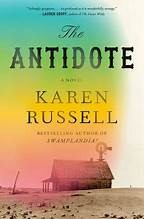
The Antidote
In a Dust Bowl town where a woman stores her neighbors' unwanted memories inside her own body, a storm blows the bank away and leaves a tangle of debts and…
2,707-word summary · 12 min read
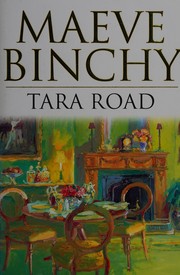
Tara Road
After her husband admits to an affair, a Dublin woman swaps houses for the summer with a grieving American, and each begins to heal inside the other's life.
2,020-word summary · 9 min read
Possession: A Romance
A London Library discovery sends two scholars chasing a secret Victorian love affair, in a Booker-winning novel of invented letters, poetry and the race to own…
2,394-word summary · 11 min read

Our Wives Under the Sea
A marine researcher returns from a deep-sea dive changed, and her wife must decide whether to hold on or let go.
2,286-word summary · 10 min read