
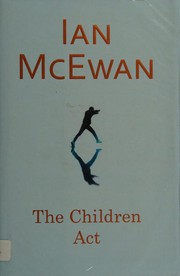
The Children Act
2,399-word summary 11 min read 224 pages in the book
- First published
- 2014
- Publisher
- Jonathan Cape
- Pages
- 224
- ISBN
- 9780224101998
Reading options
What's inside (7 sections)
I picked this up with a fairly simple expectation. McEwan writes about people under pressure, and I assumed a novel about a High Court judge would be a clean, cold procedural with a moral knot at its centre. What I got was stranger. The book is short, barely over two hundred pages, and it keeps swerving away from the case everyone is waiting for and back toward a marriage that is quietly falling apart in the next room. By the end I was less interested in who won the courtroom argument than in what it cost the woman arguing it.
Fiona Maye is a judge in the Family Division of the High Court, living and working in Gray's Inn Square in London. She is good at her job, respected, and tired in a way that has settled into her bones. The novel opens with her husband Jack coming to her with an unusual request. He tells her that their marriage has become celibate, that he misses physical intimacy, and that he would like to have what he calls a perfect affair with a twenty-eight-year-old statistician, with Fiona's blessing. It is a proposition delivered with a kind of wounded reasonableness, and it lands badly. Fiona is horrified and refuses. The scene sets the whole book in motion, because the argument about the affair and the argument about the boy in court are really two versions of the same question: what do we owe the people who depend on us, and how much of ourselves are we allowed to hold back?
The case that changed her
To understand Fiona's horror, the book reaches back to an earlier case. She once presided over the separation of conjoined twins, ruling that the operation could go ahead even though it meant one of the two girls would die on the table. Her peers praised the elegance of the solution. The law, as she framed it, allowed one life to be saved at the cost of another, and the judgment was admired as a piece of clean reasoning. Fiona was privately troubled by it in a way she never shared with Jack. She carries that decision like a physical wound, and McEwan links it directly to her revulsion at Jack's request. The woman who could calmly order a body divided now cannot bear the thought of her husband's body desiring someone else. It is a neat bit of characterization, and it gives the marriage a history that the opening scene alone would not have supplied.
Fiona also thinks about her childlessness. She chose her career, or rather her career chose her, and the years of work left no room for a family. The novel is candid about the bargain. She is not a woman who was denied children by fate; she is a woman who arrived at a position of authority by accepting a certain barrenness, and the book keeps returning to the question of whether that was a fair exchange. When the phone rings in the middle of the fight with Jack, she is pulled back into the working part of her life before she has time to answer any of it.
Adam Henry
The emergency case concerns a seventeen-year-old boy named Adam Henry, who has leukaemia and refuses a blood transfusion because he is a Jehovah's Witness. He is three months short of eighteen. The hospital wants to treat him; his parents oppose the treatment on religious grounds; and the law has to decide whose will prevails. Fiona hears the arguments and then does something a judge is not supposed to do. She goes to the hospital to see the boy for herself, to judge whether he understands what he is refusing.
The visit is the best part of the book, and it is easy to see why critics singled it out. Adam is not the sullen, brainwashed teenager the legal briefs imply. He is precocious and kind, reads poetry to Fiona, and plays his violin while she sings along in an encore. The scene is almost unnervingly tender. Two people who should have nothing in common, a secular judge in her sixties and a religious boy facing death, find a small island of shared pleasure in a hospital room. McEwan is very good at this kind of sudden intimacy, and he makes you understand why Fiona, who has spent her life keeping feeling out of her judgments, would be undone by it.
Back in court she finds the legal route that lets the hospital proceed. Because Adam is still a minor and, in her finding, not fully competent to refuse treatment given his youth and the influence of his parents, she rules that the transfusion can go ahead. The reasoning is the sort of thing this novel is fascinated by: a way of phrasing a decision so that the right outcome arrives through an acceptable door. She does not say the boy is wrong about his faith. She says he is not yet the kind of person the law will let be wrong in this particular way. She walks home elated, and when she gets back she finds that Jack has returned, ashamed of his attempt to leave. Her first feeling is disappointment. She had been looking forward, for once, to being alone.
Letters from a boy
Months pass, and the marriage stays tense. Then letters begin to arrive, first at Fiona's chambers and later at her flat. They are from Adam. He writes that he is grateful for her ruling, that he has seen the hypocrisy of his parents, and that he has become disillusioned with the religion he was raised in. Fiona ignores every one. This is where the book starts to feel less like a legal novel and more like a study of avoidance. She made a decision that saved a life, and the person whose life was saved now wants to hand her the rest of his life as well. She does not want it, and she will not even read about it properly.
The letters accumulate, and then Adam turns up in person. Fiona travels to Newcastle to oversee local cases, and there he is, desperate to talk to her. He has left home. He wants to live with her. It is an impossible request, and she refuses it, tells him to call his mother, and arranges a taxi and a train ticket. What happens next is the hinge the whole novel turns on. She leans in to kiss him on the cheek, and the kiss lands on his lips. McEwan gives this moment no grand treatment. It is a small, flustered mistake, and Fiona's reaction is panic. She calls Jack at once and arranges dinner for when she gets home, and from that point the marriage begins, awkwardly, to repair itself.
I found this the hardest part of the book to accept. Not the kiss itself, which is believable as a moment of confusion, but the speed and the neatness with which it rearranges Fiona's emotional life. She panics, calls her husband, and suddenly the machinery of reconciliation is in motion. There is a deliberate irony in the fact that the judge who cannot keep her own feelings in order is the one who decides other people's fate. But the connection between the courtroom plot and the marriage plot felt to me more arranged than discovered, and I am not the only reader who thought so.
What Adam believed
Adam is not finished with her, though. Another letter comes, this time a religious poem, and its implication is dark: he thinks of Fiona as Satan, the tempter who drew him away from his faith, and he has returned to the fold. Fiona ignores this one as well. Her refusal to engage with what the letters say is a real flaw in her, and the novel treats it as such. She wants the boy to be fine, wants the ruling to have worked, and wants the complication of his actual feelings to go away. It is the same habit that made her change the locks on her own front door after the fight with Jack, an act she knows is illegal, done in the middle of the night on impulse. Fiona is a woman who believes in the ordered resolution of conflicts, and who keeps making disorderly ones in her private life.
The ending arrives at the Christmas concert Fiona has been preparing for. She is to perform before her colleagues, and the night before, she and Jack reconcile with a kiss and promise to dedicate themselves to each other anew. Then, just before she goes on, she is told that Adam is dead. His leukaemia returned, and now that he is of age he refused treatment again, and this time the law let him. Fiona performs, and then runs home. When Jack returns she tells him everything: the case, the kiss, the death, her conviction that she caused it by turning the boy away and sending him back to his religious certainty. She falls asleep crying in her own bed, and when she wakes Jack has followed her and promises to love her as she pours out the rest of her guilt.
I wanted to dislike this ending, and parts of me did. The dying boy, the timely death just before the concert, the husband's final embrace, all of it arrives with a precision that feels engineered. Several reviewers made exactly this complaint when the book came out, arguing that McEwan strains to force the material into the shape of a novel and loads the dice against religion to do it. There is some justice in that. Adam is less fully realized than Fiona, more a vessel for an argument than a person, and the book is at its weakest when it treats his faith as something to be explained away rather than inhabited.
The law and the life
For all that, I think the novel succeeds at the thing it most wants to do. McEwan is interested in the gap between the clean language of a judgment and the messy life it has to govern. Fiona can write a decision that saves a boy and cannot write a note to her husband that saves a marriage. She can rule on the separation of twins and still flinch from the body. The book keeps setting the abstract against the particular, and it never pretends the abstract wins. The title points at the Children Act 1989, the law that puts the child's welfare first, and the whole novel asks what happens when the law's idea of a child's welfare and a person's idea of their own salvation are not the same thing. McEwan has said that the prose of real judgments, which he encountered at a dinner with judges, struck him as clean and precise and strangely like the work of a novelist. You can feel that interest in every page. The judgments are the bones of the book; the piano playing and the poetry and the kiss are what make it breathe.
The book is also a portrait of a specific kind of British life. Gray's Inn Square, the chambers, the concerts, the quiet authority of a woman who has spent decades being right in public and uncertain in private. McEwan writes this world with the assurance of someone who has thought about it for a long time, and the research into family law never feels pasted on. There are moments when the legal digressions slow the book almost to a halt, and I understood the reviewers who found the flow halting. But I would rather have the digressions than a thinner book. They are the texture of Fiona's days, and the texture is the point.
Music runs through the novel as a quiet counterargument to the law. Adam's violin and the poem he reads in the hospital, Fiona's piano playing at the concert she has been preparing for, the singing in that one improbable encore. These are the moments when the book stops explaining people and lets them be together. McEwan has always trusted art to do what argument cannot, and here the trust feels earned rather than decorative. The judge who lives by controlled language is moved by sounds she cannot cross-examine. It is no accident that the novel gives her the most live, physical scene of the book in a hospital room with a boy who is dying, and gives her the coldest prose when she is alone in her own flat.
I should say something about where this sits among McEwan's books, because the comparison will occur to anyone who has read him before. It is everywhere described as his best novel since On Chesil Beach, and I can see why. It has the same tightness, the same focus on a single consequential choice that two people cannot quite talk about. It is also, in its way, a book about Bleak House, and the reviewers were right to notice the echo of Dickens in the opening pages, with its fog and its courts and its slow exposure of a system that grinds people down. That lineage suits McEwan. He is at his best when he is writing about institutions and the individuals who get caught in them, and the Family Division gives him both. The novel is short enough to read in an evening, but it kept me turning things over for days afterward, which is a fair test of whether a book has done its job.
What I took away from it, in the end, was not a verdict on the boy or on his faith. It was the picture of a woman who can decide anything for anyone except herself. Fiona ends the novel in bed, confessing, forgiven, and still not someone who has figured out how to live with the things she has done. That is a more honest ending than the embrace suggests at first glance. The marriage may be repaired, but the judge is still divided, and the book is better for leaving it that way. I closed it wanting to reread the hospital scene, which is worth the whole price of admission, and then wanting to argue with the last fifty pages, which is a fairly good way to feel about a short novel.
FAQ
What does the title refer to?
It points to the Children Act 1989, the UK law that puts a child's welfare first. The novel asks what happens when that legal idea clashes with a person's own beliefs.
Is The Children Act based on a true story?
No. McEwan invented Fiona and Adam, though he drew on real family law cases and on the prose of judgments he discussed with judges at a dinner.
Is there a film adaptation?
Yes. A 2017 film directed by Richard Eyre stars Emma Thompson as Fiona and Stanley Tucci as her husband Jack.
Similar books
Perfect Match
A Maine prosecutor shoots the priest she believes abused her son, then faces a trial that questions what justice can mean.
2,241-word summary · 10 min read
The Zahir
A bestselling novelist's wife vanishes from their Paris home, sending him on a search that becomes a reckoning with his own marriage and attention.
2,433-word summary · 11 min read
Tara Road
After her husband admits to an affair, a Dublin woman swaps houses for the summer with a grieving American, and each begins to heal inside the other's life.
2,020-word summary · 9 min read
The Most Fun We Ever Had
Four Sorenson sisters orbit perfect parents hiding old cracks.
2,590-word summary · 12 min read
Freedom
A St. Paul couple and their grown children strain marriage, loyalty, and ideals in 2000s America.
2,678-word summary · 12 min read
On Chesil Beach
Two newlyweds spend one terrible night on Chesil Beach in 1962, and the rest of their lives is decided by it.
2,456-word summary · 11 min read
The Rest of Our Lives
A law professor drives his daughter to college, then heads west instead of home, testing a private promise he made twelve years ago.
2,238-word summary · 10 min read

The Land in Winter
In the West Country during the Big Freeze of 1962, two young couples are shut in together, and the cold draws out every buried want.
2,265-word summary · 10 min read
Left Neglected
A busy mother suffers left neglect after a car crash, forcing her family and her own attention to rebuild a slower life.
2,201-word summary · 10 min read
Women
Charles Bukowski's semi-autobiographical novel of Henry Chinaski at fifty, drinking heavily and sleeping his way through Los Angeles while fame arrives late.
2,124-word summary · 9 min read
Three Days in June
A Baltimore mother loses her job, and her ex-husband turns up with a rescue cat, in Anne Tyler's short, funny novel about the three days around her daughter's…
2,867-word summary · 13 min read
Theft
Gurnah traces three linked lives in Tanzania, where a servant's accusation of theft opens a family history of love, duty and quiet betrayal.
2,454-word summary · 11 min read
The Vacationers
A New York family's two-week stay in Mallorca turns into a comedy of exposed secrets when a magazine editor's affair and a son's debts come to light.
2,324-word summary · 10 min read
The Reluctant Fundamentalist
In a Lahore cafe, Changez tells a nervous American how Princeton and a New York career gave way to anger after September 11.
2,340-word summary · 10 min read
The Portrait of a Lady
A young American woman inherits a fortune, refuses two suitors, and marries a polished expatriate who makes her independence a trap. James watches her mind at…
2,903-word summary · 13 min read
The Litigators
Two Chicago ambulance chasers and a burned-out Harvard Law graduate take on a drug giant, only to find the case sliding toward disaster.
2,244-word summary · 10 min read
The Housekeeper and the Professor
A single mother becomes housekeeper to a mathematician who can remember nothing for more than eighty minutes, and builds a life with him around baseball and…
2,141-word summary · 10 min read
Our Wives Under the Sea
A marine researcher returns from a deep-sea dive changed, and her wife must decide whether to hold on or let go.
2,286-word summary · 10 min read
My Policeman
In 1999 a retired teacher writes a confession to the dying man her husband once loved, unpacking a 1950s Brighton love triangle that cost three people…
2,450-word summary · 11 min read
Lone Wolf
A wolf expert lies in a coma after a crash, and the son who left home years ago returns to end his life support while his sister fights to keep him alive.
2,761-word summary · 12 min read
King of Ashes
A Virginia crematorium, a debt owed to the Black Baron Boys and a family secret pull Roman Carruthers back into a war where everything burns.
2,229-word summary · 10 min read
Black and Blue
A nurse leaves her abusive police-officer husband and vanishes into small-town Florida with her son, where a new name buys years of peace and a fear that never…
2,456-word summary · 11 min read
Audition
Kitamura's Booker-shortlisted fifth novel tells the same lunch twice, with a young film student who believes he is the actress narrator's son. Two versions…
2,315-word summary · 10 min read
American Pastoral
Roth's Pulitzer winner follows a Newark glove maker's son whose perfect family life is broken by his daughter's antiwar bombing, retold by a narrator who…
2,660-word summary · 12 min read
A Reliable Wife
In a cold Wisconsin town a lonely rich man sends for a mail-order bride, and the woman who arrives has come with poison and a plan.
2,300-word summary · 10 min read
The Mermaid Chair
Jessie Sullivan returns to her childhood home on Egret Island to care for her agoraphobic mother, then finds her marriage, her faith, and a monk's vow thrown…
2,237-word summary · 10 min read
The King of Torts
A public defender is bribed into hiding evidence about a violent experimental drug, then rides a wave of mass-tort settlements to fame and a spectacular crash.
2,283-word summary · 10 min read
Keeping Faith
A seven-year-old girl starts reciting scripture and working cures, and her mother must fight a custody battle over whether the gift is real.
2,408-word summary · 11 min read
Revolutionary Road
A Connecticut couple who believe they are too good for the suburbs plan to move to Paris, and the plan slowly exposes everything they cannot say to each other.
2,085-word summary · 9 min read
Lisey's Story
Two years after her novelist husband dies, Lisey Landon follows a trail of clues into his childhood and the other world that made him a writer.
1,998-word summary · 9 min read