

The Cellar
2,551-word summary 11 min read 368 pages in the book
- First published
- 2014
- Publisher
- Sourcebooks Fire
- Pages
- 368
- ISBN
- 9781492600978
- Series
- The Cellar (#1)
Reading options
What's inside (8 sections)
I picked this one up on a rainy afternoon with no real idea what I was in for, and I finished it a few hours later with a knot in my stomach. The Cellar is Natasha Preston's first novel, and it started life on Wattpad before Sourcebooks Fire brought it out as a paperback in March 2014. Sourcebooks marketed it as a ripped-from-the-headlines thriller, and it has since been called a New York Times bestseller, which still surprises me a little given how grim the story is. The blurb sold it as a kidnapping thriller about a girl named Summer locked in a basement with three strangers. That is true, but it does not prepare you for how the book keeps tightening its grip, or for how much of the horror comes from ordinary details rather than gore.
Let me be upfront: this is a hard read. It deals with abduction, sexual assault, and suicide, and Preston does not look away from any of it. If that kind of thing upsets you, this may not be the book for your week. I read it because I wanted to understand why so many people had been gripped by it, and by the end I thought I understood the appeal. It is a taut, almost suffocating story about a young woman who loses control of every part of her life and has to find a way to hold on to who she is.
A normal night that ends in a white van
The story opens in July 2010 in Long Thorpe, a small English town where sixteen-year-old Summer Robinson lives with her parents and her eighteen-year-old brother, Henry. School is over, and Summer is heading out to meet friends at the local club to celebrate. Her boyfriend Lewis offers to give her a lift, but she insists on walking the few blocks herself. She has liked Lewis since she was eleven, and they have been together for a year and a half, so there is an easy warmth in the little domestic details Preston gives us before anything goes wrong. Summer is a confident girl who thinks nothing of walking alone at night past the graveyard.
At the club, her friend Kerri pulls her aside. Their friend Rachel has run off, upset over her on-and-off boyfriend Jack, and Kerri wants everyone to search for her. The two girls split up. Summer walks into a nearby park, and that is where a man in his late twenties or early thirties grabs her. He forces her into a white van, takes her phone, and drives away. It happens quickly, and Preston does not dress it up. One minute Summer is looking for a friend; the next she is fighting for her life in the back of a stranger's vehicle, hitting her head against the van until blood makes the man recoil. He makes her clean herself up with a tissue and hand sanitiser, a small, fussy detail that tells you more about him than any shouting would.
When they arrive at a remote house with no other buildings in sight, he leads her to a hidden entrance and takes her down into a cellar. It is not what you might picture. The room is painted blue and furnished like a comfortable flat, with a table, a sofa, four single beds in a pink bedroom, and vases of flowers. Summer's shock turns to something close to disbelief when three young women come forward to welcome her. She has not been taken to a lone captor's den. She has been brought into a household.
The house of Flowers
The three women have been given flower names, and so has Summer. The one who has been there longest, Rose, explains the arrangement to her in a flat, practised voice. Her real name is Shannen. Poppy was Rebecca, and Violet was Jennifer. Summer is to be Lily now. She is the second Lily, because the first one died. Rose says never to let their captor hear her say she is not Lily. He calls himself Clover, and he wants a perfect family of Flowers, clean and quiet and grateful.
This part of the book is genuinely unsettling, and it is not because of anything graphic. It is the way Clover has built a whole domestic world underground and then convinced himself it is kindness. He chooses their clothes, makes them shower twice a day, expects them to be washed and made up by eight in the morning, and joins them for breakfast. He brings pizza, books, films, and yarn for knitting. He hates mess and germs, and he panics when Violet spits in his face during his first visit, shrieking until Poppy wipes it away with hand sanitiser. Then he pulls a knife and makes Violet beg for forgiveness and say she is grateful to be kept safe. That scene is a small masterclass in how quickly his politeness curdles into something else.
Summer wants to fight. She wants to find a way out. The others warn her off, because people have tried before. The first Lily tried to overpower him and paid for it with her life. There are rules here, and the rules are the only thing standing between them and worse. Rose has learnt to manage the household and to manage Clover's moods, and her caution is not cowardice. It is knowledge bought with years of living in this room.
The four women sleep in a pink bedroom with matching covers and lamps. Razors have been taken away and replaced with waxing strips, and nothing sharp is left within reach. Preston is careful about these details, and they do more to establish the suffocating control Clover has than any speech could. Summer is trapped in a place that looks almost like a home, run by a man who thinks he is making a family.
The rules of a "perfect family"
What makes the book so uncomfortable is that Clover does not see himself as a monster. Through flashbacks, we learn his real name is Colin Brown, and that his obsession with purity and his hatred of sex workers grew out of something that happened in his childhood. His mother discovered his father's affair, and she began killing sex workers, whom she blamed for the destruction of marriages. After her death, Colin was lonely. He turned the cellar into a flat for four women who would be his family, choosing those he saw as lovely and pure, like flowers. He also took up his mother's work of ridding the world of women he considered vile.
The backstory is given in pieces, which is the right choice. Knowing exactly where Colin's ideas came from does not excuse them, and Preston never asks us to forgive him. It explains the shape of his obsession, the flowers, the cleanliness, the fixed roles. It also makes him more frightening, because a man with a private logic is harder to predict than one who is simply cruel.
The other women have histories too, and Preston gives them just enough to make them people rather than props. Poppy was eighteen and living on the streets when Clover took her, estranged from her family. Rose, whose name was Shannen, had been with him the longest, and seems to have made a life inside the rules, which Summer cannot understand at first. Each of them copes differently. Some comply because it is safer. Some hold on to small acts of care for the others. Summer measures her days against the life she left outside, and the memory of Lewis becomes both a comfort and a wound.
Outside the cellar, Summer's disappearance sets off a search. Her mother stays at home in case Summer calls, while Lewis, Henry, and her father go out looking. The police get involved, and the community organises. Preston cuts between the two worlds, and the contrast is sharp: above ground, hundreds of people are trying to find a girl; below ground, that girl is being told to smile at breakfast.
A new Violet and a tightening noose
The middle of the book is where the pressure ratchets up. Violet, the first one, decides she has had enough and tries to attack Clover to take the key to the cellar door. It goes badly. Clover is not the sort of man who can be overpowered by a frightened girl, and he stabs and kills her. Summer watches this happen, and from that point on the rule against fighting becomes something she understands in her bones.
Six months pass. Summer turns seventeen down there. Clover's behaviour shifts; he brings more supplies, more little comforts, and then he announces that he is bringing in a new Violet, a young woman named Layal. Summer is made to understand that the family can be reassembled, that a dead girl can be replaced like a cut flower. Soon after Layal arrives, Clover takes Summer to a room under the stairs, and the book deals with what happens there in a way that is brief but impossible to miss. Those pages are the hardest to read, and I think Preston handled them with restraint, but they are not easy.
Layal tries to fight him too, and is badly beaten, left with broken ribs. The women care for her as best they can. Summer's own fear grows heavier with each month, and she starts to understand that Clover's idea of a family has an ending written into it. These girls are not being kept forever. They are being kept until he decides they are no longer useful, or no longer obedient.
Meanwhile, the investigation above ground starts to produce results, though not in the way anyone expects. Clover kills a colleague at work after discovering she is having an affair with a married man, and he dumps her body in the canal as he has with others. Summer's phone turns up near the water, police dredge the canal, and they find bodies. Unnerved, and angry that the search for Summer is still going, Clover does something that struck me as chilling: he joins the community search himself, wanting to know what the authorities know. The man who took Summer is out there walking alongside the people looking for her.
Lewis follows the wrong clues
Lewis is the one who keeps the search alive in a personal way. He meets Colin when Colin volunteers to help look for Summer, and something about the man bothers him. Colin shows no sympathy for the missing girl, and Lewis notices. Then he sees him carrying bags of books and yarn, the same supplies Clover brings to the cellar. It is a small thing, the kind of detail that only someone who already suspects would register, and it is what pushes Lewis toward Colin's house.
Through the windows, Lewis spots boxes of New Look shoes, a women's brand. He and Henry go back and break in, and they find make-up, tampons, and newspapers covering Summer's disappearance. This is the moment the story clicks into gear as a thriller rather than a study of captivity. Detective Michael Walsh agrees to question Colin, and when police see him trying to dispose of women's clothes and phone chargers, they have enough for a warrant.
Preston does a good job of making the investigation feel both frustrating and urgent. The clues are mundane: shoe boxes, phone chargers, a bag of yarn. No one believes the missing girl is alive in a basement under a remote house, because who would think of such a thing? The ordinary nature of the evidence is what makes it convincing. I also liked that Lewis and Henry are not detectives. They are a boyfriend and a brother doing the only thing they can think to do, which is to follow the one man who makes them uneasy.
As the net closes in, Clover's control starts to come apart. He becomes distracted and unpredictable, lashing out at the women and obsessing about the life Summer had outside. He tells the Flowers that people are coming to separate them, and that he knows a way they can always stay together. That line is the signal for the final, violent turn.
The ending, and what it costs
In the last chapter, Colin goes down to the cellar and attacks Poppy and Layal with a knife. Summer fights back, punching him, and he throws her into a brick wall. The police arrive at that moment and burst in. The women are rescued, and Colin is taken into custody. It is a narrow, messy escape, and Preston does not pretend it is a clean victory.
The aftermath is where the book surprised me most. In hospital, Summer feels detached from her parents and from Lewis. She asks first for the women she was locked up with, not for her family. The reunion is not the joyful snap you might expect from a thriller's final pages. Lewis reaches her by using his old nickname for her, Sum, and that small, familiar word is what begins to bring her back. It is a quiet, clever choice, and it fits a book that has been about identity and the names people are forced to wear.
Not everyone makes it out whole. Layal dies from her wounds. Rose, who had survived years in the cellar, dies by suicide, overdosing on stolen medication. She could not face the life outside, and that outcome is heartbreaking precisely because it follows from everything we have learnt about her. Poppy, whose real name is Becca, survives, and she and Summer grow close in the weeks after their rescue. Summer hears from Walsh that Colin is responding well to treatment in a psychiatric facility, and that he will not stand trial. That detail bothered me, given what he did, but it is also realistic in the context of the story and it kept the ending from feeling tidy.
Summer says she will seek therapy, and that she knows she is not immediately okay. She starts to spend time with friends and family again, and she and Becca visit the graves of the women they lost. The last movement is about ordinary life resuming in pieces, with the knowledge that captivity has changed her. I appreciated that Preston refused to wrap everything up with a bow. A book this dark owes its reader an honest ending, and this one is honest about what survival actually costs.
Would I recommend it? With real hesitation. As a piece of suspense, it works. The pace is steady, the chapters shift between Summer's viewpoint and the search outside, and the disturbing details accumulate until you feel as trapped as she is. The character work is better than I expected, especially Rose and Becca, whose reactions to captivity are carefully observed. But it is a bleak book that asks a great deal of a reader, and the sexual violence is not something I would want to spring on someone casually. If you know what you are in for and you can stomach it, The Cellar is a gripping, well-made thriller that earns its place on the shelf. If you cannot, there is no shame in skipping it.
FAQ
Is The Cellar part of a series?
Yes. It is the first book in The Cellar series by Natasha Preston, published by Sourcebooks Fire in 2014, and the story continues in a second book.
Is The Cellar suitable for younger teenagers?
It is sold as young adult fiction, but it contains abduction, sexual assault, murder and suicide. The publisher lists an age range of 16 and up, and that warning is worth taking seriously.
Does Summer escape at the end?
Police rescue Summer and the surviving women after Colin attacks them, but the ending is far from cheerful. Two of the four women die, and Summer needs time and therapy to reconnect with her old life.
Similar books
More from The Cellar first, then related titles.

Still Missing
A realtor is abducted at a Vancouver Island open house and held for more than a year. Told through therapy sessions, the novel follows her escape and the hunt…
2,466-word summary · 11 min read

You Are Not Alone
A lonely New Yorker witnesses a subway suicide and falls in with the dead woman's friends, where a makeover and a framed murder hide a hidden mastermind.
2,588-word summary · 12 min read

The Maid's Diary
A cleaner who snoops through her wealthy clients' lives finds a secret that could destroy them, while a detective investigates a bloody waterfront house with…
3,459-word summary · 15 min read

The Flight Attendant
A flight attendant wakes in a Dubai hotel beside a dead man she may have killed, and spends the rest of the novel lying to everyone who could help her.
2,496-word summary · 11 min read

What She Knew
Rachel lets her eight-year-old son run ahead in a Bristol park, and the nine-day search turns her into a suspect in the public eye.
2,952-word summary · 13 min read

The End of Her
A sleep-deprived mother of twins faces a stranger's accusation that her husband murdered his first wife in Shari Lapena's domestic suspense novel.
2,383-word summary · 11 min read

The Widow
A widow of a suspected criminal faces reporters and police while hiding what her marriage really cost.
2,599-word summary · 12 min read

The Therapist
A couple moves to a gated street where the previous therapist was murdered in their house.
2,437-word summary · 11 min read
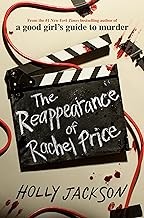
The Reappearance of Rachel Price
Bel films a doc when her missing mother walks back after years.
2,254-word summary · 10 min read

The Night Swim
A true crime podcaster covers a rape trial while probing an old drowning in a small town.
2,260-word summary · 10 min read
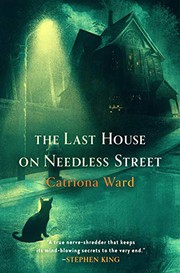
The Last House on Needless Street
A lonely man, a cat and a mysterious neighbor pull you into a house full of buried trauma.
2,627-word summary · 12 min read
The Girl Who Was Taken
A survivor returns alone while a reporter digs for her lost sister.
2,261-word summary · 10 min read

In My Dreams I Hold a Knife
College friends reunite ten years after a murder with a trap set.
2,252-word summary · 10 min read

Kill Joy
Pip hosts a 1920s murder mystery party with her friends, solves the fake case, and feels a real scare that points toward A Good Girl's Guide to Murder.
2,537-word summary · 11 min read

Twenty Years Later
A TV host reinvestigates a 20-year-old murder after a 9/11 victim ID names the accused, and the case pulls her own hidden past into view.
2,726-word summary · 12 min read

Reconstructing Amelia
A grieving lawyer mother reopens her teen daughter's alleged suicide at an elite Brooklyn school, uncovering bullying and secrets.
2,032-word summary · 9 min read

The Good Lie
A psychiatrist and a grieving lawyer reopen a closed serial killer case in California and find the profile points somewhere painful.
2,964-word summary · 13 min read

The Wives
A woman who sees her husband only on Thursdays tracks down his other wives and learns her marriage is not what she believed.
2,454-word summary · 11 min read

The Good Girl
Taken from a bar, Mia vanishes into a snowy cabin winter while police read absences.
2,017-word summary · 9 min read
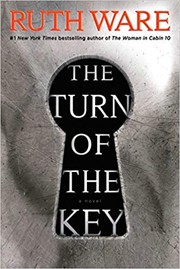
The Turn of the Key
A nanny writes from prison about a smart Highland house, four girls, and the night one child died.
3,207-word summary · 14 min read
Before I Go to Sleep
Christine wakes each day with no memory, and her secret journal reveals her husband lies.
2,577-word summary · 11 min read

Into the Water
A drowning pool, eleven narrators, and sisters divided in Hawkins's murky second thriller.
2,598-word summary · 12 min read

The Couple Next Door
After a dinner next door, Anne and Marco find baby Cora gone and every neighbor has a motive.
2,053-word summary · 9 min read

Verity
Colleen Hoover's Verity explained: Lowen, injured Verity Crawford, the hidden autobiography, and the letter that flips everything.
2,593-word summary · 12 min read

The Silent Patient
Alex Michaelides's The Silent Patient retold: Alicia's silence, Theo's obsession, the Alcestis clue, and the final flip.
2,412-word summary · 11 min read

The Girl on the Train
Paula Hawkins's The Girl on the Train retold: Rachel's commute, Jess and Jason, Megan missing, and what really happened that night.
2,391-word summary · 11 min read

Gone Girl
Gillian Flynn's Gone Girl fully retold: Nick and Amy Dunne, the diary, Desi, the treasure hunt, and why the ending stays ugly.
2,334-word summary · 10 min read
Wayward
With Ethan Burke now sheriff, Wayward Pines runs on cameras, fear and a founder's private plan, until a murder forces him to choose between order and the truth.
2,252-word summary · 10 min read
The Moonlight Child
On a cold January night, Sharon Lemke sees a child washing dishes in a neighbour's kitchen and decides she cannot ignore it.
2,169-word summary · 10 min read

The Atlantis Gene
A geneticist and an intelligence operative chase two kidnapped boys through a global conspiracy about human evolution and a weapon built to cull humanity.
2,369-word summary · 11 min read