
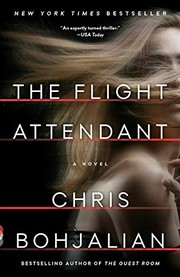
Reading options
What's inside (10 sections)
I picked this up after seeing the HBO show, curious how much of that wisecracking, hallucination-heavy version actually came from the page. Chris Bohjalian published the novel in 2018 with Doubleday, and I read the 368 page hardcover. The short answer is that the book is stranger and less funny than the series. It is a thriller about a woman who cannot trust her own memory, and it keeps circling back to the same awkward question: what did she do while she was drunk?
The setup is well known enough that I can keep it brief, but the particular details matter. Cassandra Bowden works first class on a long haul flight to Dubai. She is close to forty, has been flying since college, and drinks the way people do when the job makes it easy and the hours make it necessary. On this flight she flirts with Alex Sokoloff, an American hedge fund manager with Russian roots and oligarchic connections. When the plane lands, she goes back to his hotel room. A woman named Miranda turns up with more vodka. The next morning Cassie wakes with a pounding head, a slick pool of blood on white sheets, and Alex beside her with his throat cut.
She does not call the police. She is a single woman alone in a hotel room far from home, and she tells herself that waiting until she is back in New York is the sensible choice. So she slides out of the room, joins the other flight attendants and pilots in the van to the airport, lies on the shuttle, lies again while working the first class cabin on the leg to Paris, and lies a third time to the FBI agents who meet her at the gate in New York. By then the lying has become a habit with a momentum of its own. Her walk through the hotel lobby was caught on a security camera, which means the official record disagrees with her almost immediately. That camera is the first piece of evidence the book puts against her, and it is not even trying to be fair.
A woman named Cassandra
Bohjalian did not pick the name by accident. Cassandra is the prophetess nobody believes, and Cassie spends the book telling the truth as best she knows it while everyone around her assumes she is covering something up. The neat part is that she really is covering something up, just not necessarily the murder. Kirkus pointed this out in its review, and it is the hinge the whole novel turns on. Her blackouts are not a cute quirky detail. They are the reason the investigation cannot get traction and the reason she cannot exonerate herself.
What surprised me on a reread is how little Cassie likes herself. The hangovers arrive with self-loathing attached, and she is used to the feeling. Bohjalian writes her morning routines with a kind of dull precision: the counting of minutes until the crew shuttle leaves, the careful movement so as not to aggravate her head, the glance at the man she spent the night with. The prose is at its best in these small physical moments. It is much less sure of itself when it starts explaining what her drinking means.
The publisher's description promised a story about how an entire life can change in one night, and that is a fair pitch. The book is built around a single before and after. What I did not expect was how much of the after is paperwork and waiting: statements, interviews, a lawyer's office, the slow accumulation of details that do not fit together. Bohjalian is good at the boring parts of a crisis. He understands that a person in Cassie's position spends most of her time sitting in rooms trying to look normal.
Two versions of the same night
The novel cuts away from Cassie to Elena, a Russian assassin for hire who had introduced herself as Miranda in Alex's hotel room. Elena was there to kill Alex, and Cassie's presence in the bed thwarted her. She came back to finish the job and decided not to make a passed-out bedmate collateral damage. That choice turns out to be a mistake her handler, a man named Viktor, expects her to correct. Those chapters do something interesting to the suspense. When we are inside Elena's head, we know things Cassie does not, so her fumbling attempts to reconstruct the night play as dramatic irony rather than pure mystery.
I am of two minds about this structure. On one hand, it keeps the book moving and gives the Russian plot a pulse of its own. On the other, it deflates the central question too early. If we already know a professional killer was in the room, the possibility that Cassie killed Alex shrinks considerably, and the novel has to work harder to make us care about her fear. Bohjalian seems aware of the problem, because he keeps returning to the gaps in her memory rather than to new forensic evidence. The result is a book more interested in how a person lives with uncertainty than in who pulled the knife.
There is a nice symmetry in the way the two women are trapped. Cassie cannot remember what she did, while Elena remembers exactly what she was sent to do and cannot finish it. One is imprisoned by a blank, the other by a task. Neither can walk into a police station and explain herself. The book does not push this comparison too hard, which is to its credit, but it is there in the structure if you look for it.
The people who try to help
Cassie is not alone, though she spends a lot of time acting as if she is. Her lawyer, her union, and the FBI agents who question her all try, in their different ways, to keep her from making things worse. This is one of the sharper ideas in the book. Most of the people around her are not enemies. They are frustrated rescuers, and the frustration is real because she keeps drinking and slipping out of the story just when they need a straight answer. A union representative wants to protect a member. A lawyer wants a client who will listen. The agents want a coherent statement. None of them gets it.
That dynamic gives the middle of the novel its shape. The investigation is less a chase after a killer than a series of attempts to get Cassie to tell one consistent story. She lies to protect herself, then lies to protect other people, then lies because the earlier lies need covering. By the time she understands what actually happened, the truth sounds like another invention. I found this believable. People who black out do not get clean narration, and the book takes that seriously even when the thriller machinery wants a neater confession.
The agents who meet her at the gate are patient in a way that made me uneasy on her behalf. They have a job to do and a pile of reasons to doubt her. Cassie reads their politeness as a trap, and maybe it is, but the book never lets us settle into the idea that they are the bad guys. That refusal to hand out a villain is one of the reasons the novel holds up. The people with badges are doing their work. The people trying to help are doing theirs. Cassie is the one who cannot get out of her own way.
The Russia problem
Alex is not a random victim. His Russian roots and his oligarchic connections drag the story out of the hotel room and into a much larger and nastier world, where money moves quietly and jobs get done by people like Elena and Viktor. Bohjalian does not spend pages drawing a corporate diagram, which is wise. He gives us enough to understand that Alex was killed for reasons that have nothing to do with Cassie, and that her bad luck was being in the wrong bed at the wrong time. That is a more interesting engine for a thriller than a personal grudge would have been.
The risk of this setup is scale. Once the book opens up into international money and hired killers, the intimate worry of a woman who cannot remember her own night starts to shrink. Bohjalian handles it by keeping the two plots in the same room whenever he can. The best scenes are the ones where the Russian plot arrives at a very ordinary American location: an airport gate, an office, a kitchen table. The contrast is what makes the threat feel close. A hit woman is scarier when she is standing in a hotel lobby than when she is described in a dossier.
The novel also benefits from not pretending Cassie is a detective. She stumbles into the truth because people come looking for her, not because she follows clues. That passive quality frustrated me in places, but it fits the idea of a woman whose own memory is unreliable. If you cannot trust your account of last night, you cannot investigate it. You can only wait for the next person to tell you what happened.
Where the thriller slows down
Here is the fair criticism, and I am not alone in it. Kirkus called the middle of the novel flabby, and I think that is right. Once addiction becomes the main subject, the international conspiracy stalls. There are long stretches of Cassie drinking, regretting it, and drinking again, with the Russian plot waiting offstage like a patient caller. The book is at its best when those two strands press against each other, as in the scenes where she has to sit in an FBI office with a hangover and answer questions about a night she cannot see. It is at its worst when one strand takes over for thirty pages.
There is also a tonal problem. Bohjalian clearly wants us to sympathize with Cassie, but he cannot resist judging her. The narration sometimes sounds like a well meaning lecturer explaining why her choices are bad, which flattens a character who is much more interesting when she is simply acting on impulse. Readers who want a clean, sympathetic heroine may find this annoying. Readers who have known someone who drank this way will probably recognize the mix of affection and exasperation immediately. I fall into the second group, so the judgment did not bother me as much as the pacing did.
The ending answers who killed Alex, and it does so through the assassin's plot rather than through a recovered memory. That is the right choice for this book. A sudden, perfect recollection would have undone everything the earlier chapters argued about how memory works. The answer arrives the way real answers often do, from other people's actions rather than from inside your own head. It is a quieter resolution than the thriller setup promises, and I respect it even though I wanted the last hundred pages to move faster.
The view from forty thousand feet
The airline setting is more than window dressing. Bohjalian knows the rhythm of the job: the crew van, the gate, the first class service, the hours in a hotel that feel like a country of their own. Dubai works as a place where a woman alone might reasonably fear the local police, which makes her decision to stay quiet plausible rather than stupid. New York works as the place where the lie finally catches up with her, and the contrast between the two gives the book its geography. Most of the damage happens in the space between a hotel room and an interrogation room.
The title refers to more than a job description. A flight attendant is trained to give instructions that passengers ignore, to stay calm when people are frightened, and to perform competence on demand. Cassie does all of that professionally while her private life comes apart. That gap is the book's quiet subject. She can talk a cabin through an emergency water landing and cannot talk herself through a morning. When Maureen Corrigan called it the ultimate airplane read in the Washington Post, she was mostly praising the behind the scenes detail. I think the phrase also fits because the book is built out of the small humiliations of travel: the shuttle, the layover, the badge, the lie told to a stranger in uniform.
Bohjalian had already written books such as The Guest Room and The Sleepwalker before this one, and you can feel a novelist's habit of looking at the rooms people put themselves into. The plane is one room. The hotel is another. The FBI office is a third. Cassie moves between them carrying the same problem, and each space lets her hide a different part of it. That is a clean way to build a book, and it is why the novel stays readable even when the plot drags.
The show and the book
Kaley Cuoco's production company optioned the novel before it was published, and the HBO Max series arrived in 2020. The show moved the layover from Dubai to Bangkok, changed the tone to dark comedy, and gave Cassie a recurring inner chorus of versions of herself. It ran two seasons and ended in 2022. If you came to the book from the show, expect a different experience. The novel is darker about drinking and far less interested in jokes. It is also a single, closed story, while the series kept inventing new plots after the first season's mystery was solved.
That divergence is worth noting because the two versions make different promises. The show says a disaster can be funny if you keep the camera moving. The book says a disaster is mostly a series of bad decisions you have to live with afterward. Neither is wrong, but they are not the same object. I liked the show and I respected the book, and I would not recommend one as a substitute for the other.
Who should read it
Give this to someone who wants a thriller with a messy, unreliable lead and a real question about what a blackout costs. It suits readers who like their crime fiction with a moral argument attached, and it suits anyone interested in how the airline industry actually looks from the cabin. Skip it if you want a tight puzzle with a clever reveal, or if you want the comic tone of the television series. The ending ties up the killer, but the emotional argument keeps going after that, which is where the book earns its length.
If you read it on a flight, pay attention to the parts between the murders: the shuttle rides, the cabin service, the way a hangover can turn into an alibi. Those are the passages that stayed with me after I knew who killed Alex.
FAQ
Who is Cassandra Bowden and what happened in Dubai?
Cassie is a flight attendant nearing forty who blacks out after a night with hedge fund manager Alex Sokoloff. She wakes to find his throat cut beside her and cannot recall whether she did it.
Is The Flight Attendant based on a true story?
No. It is a 2018 novel by Chris Bohjalian, published by Doubleday. The HBO Max series that followed is a separate adaptation that moved the layover to Bangkok.
Is the book as funny as the TV show?
Not really. The novel is a straighter thriller with a harsher view of addiction, while the series leans into dark comedy and changes the setting to Bangkok.
Similar books
Before I Go to Sleep
Christine wakes each day with no memory, and her secret journal reveals her husband lies.
2,577-word summary · 11 min read

You Are Not Alone
A lonely New Yorker witnesses a subway suicide and falls in with the dead woman's friends, where a makeover and a framed murder hide a hidden mastermind.
2,588-word summary · 12 min read
The Maid's Diary
A cleaner who snoops through her wealthy clients' lives finds a secret that could destroy them, while a detective investigates a bloody waterfront house with…
3,459-word summary · 15 min read

The Cellar
Abducted in her small English town, sixteen-year-old Summer is locked in a cellar with three other girls. Their captor calls himself Clover and wants a perfect…
2,551-word summary · 11 min read
Blood Orange
A criminal barrister with a drinking problem takes on her first murder case and finds the defendant's story mirroring her own crumbling marriage in this sharp…
2,469-word summary · 11 min read

What She Knew
Rachel lets her eight-year-old son run ahead in a Bristol park, and the nine-day search turns her into a suspect in the public eye.
2,952-word summary · 13 min read

Still Missing
A realtor is abducted at a Vancouver Island open house and held for more than a year. Told through therapy sessions, the novel follows her escape and the hunt…
2,466-word summary · 11 min read
The End of Her
A sleep-deprived mother of twins faces a stranger's accusation that her husband murdered his first wife in Shari Lapena's domestic suspense novel.
2,383-word summary · 11 min read

The Widow
A widow of a suspected criminal faces reporters and police while hiding what her marriage really cost.
2,599-word summary · 12 min read
The Therapist
A couple moves to a gated street where the previous therapist was murdered in their house.
2,437-word summary · 11 min read
The Night Swim
A true crime podcaster covers a rape trial while probing an old drowning in a small town.
2,260-word summary · 10 min read
The Last House on Needless Street
A lonely man, a cat and a mysterious neighbor pull you into a house full of buried trauma.
2,627-word summary · 12 min read
In My Dreams I Hold a Knife
College friends reunite ten years after a murder with a trap set.
2,252-word summary · 10 min read
Twenty Years Later
A TV host reinvestigates a 20-year-old murder after a 9/11 victim ID names the accused, and the case pulls her own hidden past into view.
2,726-word summary · 12 min read
The Good Lie
A psychiatrist and a grieving lawyer reopen a closed serial killer case in California and find the profile points somewhere painful.
2,964-word summary · 13 min read
I Found You
A man with no memory on a beach, a vanished husband, and a 1993 holiday collide in a seaside town.
2,990-word summary · 13 min read
The Wives
A woman who sees her husband only on Thursdays tracks down his other wives and learns her marriage is not what she believed.
2,454-word summary · 11 min read
The Turn of the Key
A nanny writes from prison about a smart Highland house, four girls, and the night one child died.
3,207-word summary · 14 min read
Into the Water
A drowning pool, eleven narrators, and sisters divided in Hawkins's murky second thriller.
2,598-word summary · 12 min read
Verity
Colleen Hoover's Verity explained: Lowen, injured Verity Crawford, the hidden autobiography, and the letter that flips everything.
2,593-word summary · 12 min read
The Silent Patient
Alex Michaelides's The Silent Patient retold: Alicia's silence, Theo's obsession, the Alcestis clue, and the final flip.
2,412-word summary · 11 min read
The Girl on the Train
Paula Hawkins's The Girl on the Train retold: Rachel's commute, Jess and Jason, Megan missing, and what really happened that night.
2,391-word summary · 11 min read
Gone Girl
Gillian Flynn's Gone Girl fully retold: Nick and Amy Dunne, the diary, Desi, the treasure hunt, and why the ending stays ugly.
2,334-word summary · 10 min read
Wayward
With Ethan Burke now sheriff, Wayward Pines runs on cameras, fear and a founder's private plan, until a murder forces him to choose between order and the truth.
2,252-word summary · 10 min read
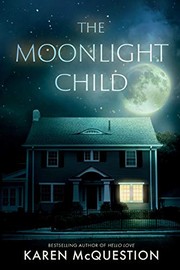
The Moonlight Child
On a cold January night, Sharon Lemke sees a child washing dishes in a neighbour's kitchen and decides she cannot ignore it.
2,169-word summary · 10 min read

The Atlantis Gene
A geneticist and an intelligence operative chase two kidnapped boys through a global conspiracy about human evolution and a weapon built to cull humanity.
2,369-word summary · 11 min read

The 5th Horseman
Two linked cases pull Lindsay Boxer and the Women's Murder Club into a hospital full of strange deaths and a luxury-car murder spree.
2,609-word summary · 12 min read

State of Terror
A new secretary of state and her team unpick a web of attacks across Pakistan, Afghanistan, and Iran in this 2021 political thriller.
2,307-word summary · 10 min read
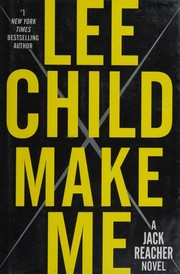
Make Me
Reacher drifts into a quiet Midwestern town and finds a missing investigator, a trail of killers, and a deep web secret.
2,352-word summary · 10 min read
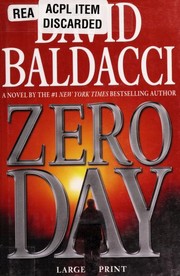
Zero Day
Army investigator John Puller is sent alone to a West Virginia coal town to solve a colonel's murder, and finds a much larger secret buried nearby.
3,434-word summary · 15 min read