

The Foxhole Court
2,319-word summary 10 min read 262 pages in the book
- First published
- 2013
- Publisher
- Nora Sakavic
- Pages
- 262
- ISBN
- 9781301529049
- Series
- All for the Game (#1)
Reading options
What's inside (10 sections)
I did not expect much from The Foxhole Court. It has a reputation as a book people either adore with alarming intensity or abandon in confusion, and the cover does not suggest a quiet, well-made novel. Nora Sakavic first published it herself in 2013, and the original edition runs about 262 pages. It opens the All for the Game series and follows a teenager who plays a made-up sport called Exy while hiding from his father, a crime lord known as The Butcher. I read it expecting a sports story with a slow romance. What I got was a loud, violent, character-driven book about a boy who wants a home badly enough to stand still for it, even though standing still might get him killed.
The story is told close to Neil Josten, which means you learn things when he does and often learn less than you would like. Neil is short, fast and very good at Exy. He is also living under an assumed name, with forged documents and cash kept within reach, because he has spent eight years running from a man who wants him dead. Spoilers follow, including the ending.
Eight years of running
Neil's childhood ended when his mother was killed. His father, the man called The Butcher, ran a criminal organisation, and Neil and his mother disappeared into a life of false names, new schools and packed bags. By the time the book starts, Neil is finishing high school in Arizona. He dyes his hair, keeps his past behind a stack of lies and sleeps in the school gym because there is nowhere else to sleep. A coach notices him playing Exy, sees what he can do with a racquet, and sends a tape to college recruiters.
That coach is David Wymack, and he runs the Palmetto State University Foxes. Wymack offers Neil a contract, a bed until the dorms open and a place on a team with a terrible reputation. Neil knows that signing a contract means putting his face in front of crowds and cameras. His whole survival plan depends on not being recognised. He accepts anyway, because Exy is the one thing in his life that has never required him to pretend he is someone else. That decision, more than any fight on the court, is the engine of the book.
The small details of Neil's life on the run are the best part of the opening chapters. He measures how close he can stand to a stranger so he has time to dodge a blow. He keeps a bag packed. He flinches at sudden movement and then gets angry at himself for flinching. Sakavic does not explain these habits in a paragraph of background and move on. They sit in the prose, awkward and specific, and you piece together the life that made them.
Exy and a court full of cast-offs
Exy is a sport Sakavic invented, a fast game played with racquets inside an enclosed court, with a soccer-sized field, a hard ball and the kind of body contact you would expect from ice hockey. It is co-ed, which matters because the Foxes include women who hit as hard as the men. Players wear padded gear and carry racquets that can do real damage. The author clearly loves the game, even if the rules sometimes feel like they were invented on the spot to justify whatever the scene needs.
Wymack's team is a home for players nobody else wanted. His pitch to Neil is about second chances, third chances, fourth chances, however many someone needs. That idea is the warm centre of a book that is otherwise full of teeth. The Foxhole Court itself becomes a place Neil can imagine returning to, which is new for him. He is used to rooms he can leave in a hurry.
The roster arrives in a rush of names and nicknames. There is Kevin Day, the celebrated former Raven everyone calls the son of Exy, whose right hand was deliberately broken by his old teammate Riko Moriyama. There is Andrew Minyard, the goalkeeper, small and pale and openly dangerous, who takes a court-ordered medication and dislikes being touched. Andrew's twin Aaron, their cousin Nicky Hemmick, captain Dan Wilds, Matt Boyd, Seth Gordon, Allison Reynolds and Renee Walker fill out the side. Renee is a former pacifist with a calm that reads as stranger than everyone else's rage. I needed a page or two to keep them straight, and the book does not help much. Names get repeated, then vanish for chapters.
The Foxes bite
Neil's first meeting with the team is a welcome worth remembering. He walks into the locker room and Andrew hits him across the face with a racquet, hard enough to leave a mark. Andrew has been pretending to be Aaron, testing the new recruit to see what he is made of. It is a brutal introduction, and nobody apologises. The message is that this team sorts itself out through violence and then lives with the results.
What follows is a long stretch of practices, bus rides, arguments and late-night meals in which the Foxes work out where Neil fits. They bet on him, bait him, and try to work out why a fast kid with a fake name is so nervous. Seth tells him he cannot talk until he can score. Andrew watches him constantly. Neil keeps his answers short and his bag close. The banter is sharp and often very funny, and Sakavic has a gift for making people who behave terribly sound like people you might miss.
The team's dysfunction is not presented as quaint. They fight each other as readily as opponents, and Wymack mostly lets them, then punishes the whole group with drills. Some readers will find that exhilarating. Others will see a coach with no control and a sport with no sense. I hovered between the two. The Foxes are compelling precisely because they are bad at being a team, and the book keeps asking whether that can still count as a family.
Wymack is the steadiest thing in the book, a gruff man who knows exactly what he is doing even when he looks like he is doing nothing. He gives Neil a place to stay and refuses to pry into the forged papers, which is both a kindness and a gamble. On the bus to away games he mostly lets the noise wash over him, and when he does speak the players listen. There is a warmth in those scenes that the locker room fights cannot cancel out. He has assembled a team of people the world has written off, and he keeps insisting they deserve a court to play on. That stubborn faith is the closest thing the novel has to a moral centre, even if the man himself would be embarrassed to hear it said.
Kevin, Riko and the shadow of the Ravens
The real threat comes from Kevin's past. Riko Moriyama, Kevin's former teammate on the Edgar Allan Ravens, belongs to the Moriyama crime family. Riko broke Kevin's hand on purpose and still treats him as something he owns. When the Ravens are moved into the Foxes' district, a match between the teams goes on the schedule, and Kevin's old life arrives in the same city.
Neil knows more about the Moriyamas than he admits. His father had dealings with Riko's father, and the name means something to him that it does not mean to the others. That shared knowledge creates a wary bond between Neil and Kevin. Kevin drives Neil hard in practice because he sees talent, and because he wants proof that his own damaged hand can still win games. Their scenes are among the most focused in the book. Both boys are chasing something the other one understands without having to explain it.
The confrontation that changes everything happens on television. Kevin and Neil appear on a show hosted by Kathy Ferdinand, who springs Riko on them as a surprise guest. Riko uses the cameras to humiliate Kevin and suggest his career is finished. Neil refuses to sit through it. He says, in front of a national audience, that Riko is afraid of Kevin coming back. The moment is thrilling and stupid in equal measure. Neil has just handed a dangerous man a reason to look into who he really is.
Backstage, Riko turns violent and Andrew steps between them. From that point, the threat stops being theoretical. Neil has embarrassed a man with the money and the patience to find out exactly who he is, and the safety of his false name is down to hours rather than years.
A night out that goes badly
Andrew's circle takes Neil to a nightclub in Columbia as a kind of initiation. Someone puts a drug in his drink. Neil loses chunks of the evening, and Nicky kisses him without permission while he is in that state. He wakes up the next morning with gaps in his memory and no idea what he agreed to. He gets himself back to campus, shaken and furious, and the incident sits uneasily in the book ever since.
This is the part of The Foxhole Court that most divides readers. Andrew later offers protection and honesty, but the drugging is not made harmless by that. Sakavic does not ask us to forgive it exactly. She asks us to keep reading, and the group's behaviour becomes part of the case against them as much as part of their appeal. The Foxes protect their own with alarming methods, and being inside that circle is dangerous even when it is also the only place Neil has ever wanted to be.
The clue that finally loosens Neil's tongue is Andrew's medication. Andrew stops taking the drugs he is court-ordered to take before games, and the team covers for him. When he pushes Neil for the truth about his past, Neil gives him part of it: the Moriyama connection, the years on the road, enough to explain why he runs. Andrew accepts the partial answer and agrees to keep it. Neither of them is being fully honest. It is the closest thing to trust this group manages.
Two goals and a key
The season opener against the Breckenridge Jackals is where Neil proves himself. Seth is hurt early, Neil goes in and scores twice, and the Foxes still lose. The goals matter less than the fact that he was seen doing it. Every appearance on the court puts his face somewhere it should not be, and the publicity that follows his performance is a problem as much as a triumph.
After the television confrontation, Andrew makes Neil an offer. Stay with the Foxes for one year, back Kevin, and Andrew will protect him from the Moriyamas. Neil has time to leave, and he nearly does. He comes back and accepts. That choice to stay is the real ending of the book, and it is a quieter, braver thing than winning a match.
Then Seth dies, from what looks like an overdose. Andrew suspects Riko arranged it, but the book does not settle the question. The last image is a key. Andrew gives Neil a key to his house in Columbia, a small piece of metal that means Neil now has somewhere he is allowed to return to. He has spent his whole life ready to leave at a moment's notice. A key is the opposite of that. The novel closes with the danger intact and Neil choosing to stay anyway.
What grates
The writing takes some getting used to. Sentences are short and flat, and the book often tells you what a character is rather than letting you see it. Whole chapters are taken up with Exy plays that go on past the point of interest. The sport itself is shaky if you think about it too hard: no reserve players, teams that seem to train without coaches, and a level of violence that would empty a real roster by halftime. I enjoyed the games while I was in them and struggled to explain them afterwards.
The handling of mental illness and trauma bothers me more. Medication is treated as a plot device, diagnoses are thrown around casually, and the book uses slurs and jokes that a lot of readers will not find funny. There is a great deal of drug use, violence, death and coercive behaviour, and the blur between a found family and a group that hurts each other is not always drawn carefully. If you want a romance, be warned: Neil and Andrew share an intense, slow-burn dynamic, but this first book gives you very little in the way of an actual relationship. The feelings are clearly being built for later books.
Reading it now
What kept me going was the question the book keeps asking: what would it take for someone like Neil to stop running? The answer it offers is not safety or even love. It is a team, a court, a key and a group of people who are awful to each other but might, on a good day, be awful alongside him. That is a strange kind of comfort, and I can see why it has such a hold on people. I can also see why it puts plenty of readers off.
The Foxhole Court ends with Neil's larger problems unsolved, which is fair for a first book in a trilogy. The Raven King follows, and the thread about Riko and Kevin is clearly left open on purpose. I finished it wanting to know what Neil does with that key, more than I wanted to know who wins the next game. That is a good place for a series to leave you, even if the book itself is messier than its best moments.
FAQ
What is Exy in The Foxhole Court?
It is an invented racquet sport played on an enclosed court, mixing a soccer-sized space with the physical violence of ice hockey. The Foxes play it at Palmetto State University on the Foxhole Court.
How does the first book end?
Neil accepts Andrew's offer of a year of protection if he stays with the Foxes and backs Kevin, and Andrew gives him a key to his house. Seth's apparent overdose and Riko's threat are left unresolved for the next book.
Is The Foxhole Court a romance?
Not really. Neil and Andrew have an intense slow-burn dynamic, but this 2013 first book concentrates on Neil joining the team and Kevin's conflict with Riko.
Similar books
More from All for the Game first, then related titles.
The Survivor Wants to Die at the End
The third They Both Die at the End novel follows two nineteen-year-olds who would rather not be alive, and the contract they sign to live for Begin Days…
2,986-word summary · 13 min read

Nick and Norah's Infinite Playlist
Rachel Cohn and David Levithan trade chapters as two music-obsessed teenagers spend one long New York night together, from a five-minute fake date to something…
2,355-word summary · 10 min read

Wilder Girls
At a quarantined boarding school off Maine, three girls with strange mutations search for a missing friend and learn what the adults have hidden.
2,594-word summary · 12 min read

We Are Okay
Marin fled San Francisco after her grandfather vanished and stopped answering anyone. When Mabel visits her college dorm, she has to say what happened.
2,253-word summary · 10 min read
The First to Die at the End
On the night Death-Cast launches, a boy with a bad heart meets a model with everything ahead of him, and one of them gets the call.
2,908-word summary · 13 min read
Saving the World and Other Extreme Sports
Max and the flock split in two to take down the lab behind their lives, one half in California and the other in Europe.
2,175-word summary · 10 min read

Aristotle and Dante Dive into the Waters of the World
Ari and Dante return for senior year in El Paso, navigating first love, AIDS, family grief, and the cost of being openly gay in 1987 Texas.
2,188-word summary · 10 min read
Wayward Son
Simon and Baz road trip America after the war to decide what normal means.
2,505-word summary · 11 min read

Loveless
Georgia starts university sure she wants love, then learns she is aro-ace.
2,539-word summary · 11 min read
Radio Silence
Head girl Frances loves a secret podcast made by shy Aled, and both crack under A-levels in Oseman's warm 2016 story of friendship, fandom, family and choosing…
2,778-word summary · 12 min read
Consider Me
An NHL star pursues a teacher who keeps turning him down, and must earn trust through family, friends, and steady proof.
2,926-word summary · 13 min read
What If It's Us
Two teens meet by chance at a New York post office and try to turn missed connection into first love.
2,033-word summary · 9 min read

Will Grayson, Will Grayson
Two Chicago teens with one name collide, with Tiny Cooper's musical stealing every scene.
2,742-word summary · 12 min read
They Both Die at the End
Two teens called as dying meet through an app and share one full day.
1,968-word summary · 9 min read

Aristotle and Dante Discover the Secrets of the Universe
Two Mexican American boys in 1987 El Paso become inseparable and learn what love asks of family.
2,093-word summary · 9 min read
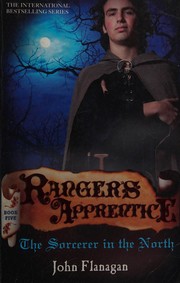
The Sorcerer in the North
A young Ranger posted to a quiet fief goes undercover as a jongleur to investigate a supposed sorcerer haunting a wood and a poisoned castle.
2,246-word summary · 10 min read

The Distance Between Us
Seventeen-year-old Caymen Meyers distrusts rich people, then a wealthy boy keeps proving her wrong while her mother's doll shop struggles to survive.
2,231-word summary · 10 min read
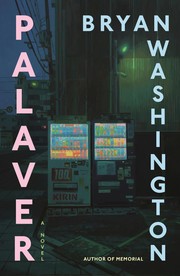
Palaver
A mother shows up uninvited at her estranged son's Tokyo apartment, and the two spend the weeks before Christmas talking their way toward something like…
2,465-word summary · 11 min read

Wolfsong
Ox Matheson grows up believing he is worth nothing. Then the Bennett family moves in next door, werewolves with a secret, and a boy named Joe begins to howl…
2,823-word summary · 13 min read
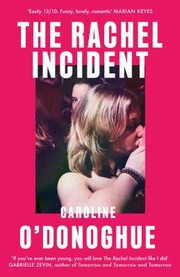
The Rachel Incident
A funny, sharp novel about two twenty-somethings in recession-era Cork whose bookshop friendship, tangled romance and a married professor's lie leave a secret…
2,346-word summary · 10 min read
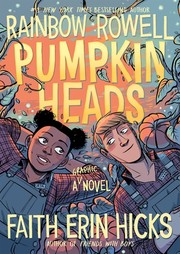
Pumpkinheads
Deja and Josiah have worked the Succotash Hut together every autumn. On their last Halloween shift, she pushes him to chase a crush and they discover something…
2,409-word summary · 11 min read
Oathbound
Bree Matthews has exiled herself from the Legendborn Order to protect the people she loves, but an unbreakable bargain with a shapeshifting demon has bound her…
2,751-word summary · 12 min read

Impulse
Three teenagers in a Reno residential hospital tell in free verse how they arrived there after suicide attempts and what recovery costs.
2,030-word summary · 9 min read

Girls in Pants: The Third Summer of the Sisterhood
The four friends face their last summer before college, with art school, an old flame, a guilty conscience and a new baby in the balance.
2,382-word summary · 11 min read

Flawless
A's texts turn the four Rosewood friends against Toby Cavanaugh in the second Pretty Little Liars novel, where the truth about Jenna's fire finally surfaces.
2,811-word summary · 12 min read
Finding Audrey
A fourteen-year-old who cannot leave the house or remove her dark glasses finds her way back through therapy, a film project and a patient new friend.
2,559-word summary · 11 min read
Dear Martin
Nic Stone's debut follows Justyce McAllister, a scholarship student at a mostly white Atlanta prep school, who starts writing letters to Dr. King after a…
2,596-word summary · 12 min read
Counting by 7s
A gifted twelve-year-old who counts by sevens loses her parents in a car crash and gradually builds a new family with help from a counselor, a taxi driver, and…
2,306-word summary · 10 min read

Cinderella Is Dead
Two centuries after Cinderella, a Black teenager in love with another girl flees her kingdom's forced marriage ball.
2,250-word summary · 10 min read

13 Little Blue Envelopes
A seventeen-year-old follows thirteen letters from her dead aunt across Europe, with no phone, no journal and no spare cash, and learns who she is on her own.
2,515-word summary · 11 min read