
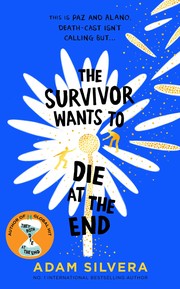
The Survivor Wants to Die at the End
2,986-word summary 13 min read 720 pages in the book
- First published
- 2025
- Publisher
- Quill Tree Books
- Pages
- 720
- ISBN
- 9780063240858
- Series
- They Both Die at the End (#3)
Reading options
What's inside (9 sections)
I picked this up already knowing how Silvera's world works, and that made the premise land harder rather than softer. The title is blunt about what it promises, but I was not ready for how much time the book spends simply sitting beside the wish to be gone before it offers any reason to stay. The Survivor Wants to Die at the End was published on 6 May 2025 by Quill Tree Books, an imprint of HarperCollins Children's Books, and it runs 720 pages in the American hardcover. It is the third novel in the They Both Die at the End series. It is also a big, uneven, deeply sincere book that is willing to spend hundreds of pages with two young men who would rather not be alive.
Let me say what I mean by uneven, because I intend it as a fair description and not a dismissal. This is not a slick novel. It keeps coming back to the same questions, about death and choice and whether anyone is truly steering their own life, and it does not always trust that the reader caught the point the first time around. With 720 pages to work with, it has plenty of room to circle. Often that circling feels like the whole design, a patient and repeated pressing on a bruise. At other times it feels like the book is explaining something that was already plain. I had both reactions, sometimes within the same stretch of pages, and I never entirely settled on one of them.
The world where a phone call tells you the day
Anyone coming from the earlier books will recognise the setup right away. In this world a company called Death-Cast rings people on the day they will die. That call is the announcement of an ending, with no appeal and no room for error as far as anyone in the story can tell. The whole society has reorganised itself around it. People wait for the call, fear the call, or try to live as though the call will never come. Silvera uses that one idea as a machine for forcing characters to decide what a life is for when its length is known in advance.
The book is set about ten years after The First to Die at the End, and the two leads here were introduced in that earlier novel as nine-year-olds. They are nineteen now. That gap matters more than the bare fact suggests. These are not strangers dropped into a premise for the first time; they are people the author has already spent a book with, now grown into harder and more complicated versions of themselves. The story gives enough context to follow them on their own, but it also leans on the weight of that earlier childhood. There is an assumption that you remember those kids and care about what became of them. I did, and it coloured nearly every scene.
I have a soft spot for how the series treats the Death-Cast idea less as a gimmick and more as a condition of growing up. The call is a piece of technology, but what it really does is strip away the usual excuse that there is plenty of time. In a world like this, every ordinary day is either borrowed or numbered. That pressure is exactly what pushes both of the central characters to the edge, and it is why the book's title is about wanting death rather than receiving the news of it. One of these boys is waiting for a call that never arrives, and the other has every reason to dread the one his own family business might deliver.
Paz Dario and the call that never comes
Paz Dario is the first of the two leads, and his history is the heaviest thing in the book. When he was a child, he killed his abusive father on the first Death Day, doing it to save his mother. That act did not read as rescue to the world outside his family. He was publicly condemned as a villain. A boy who protected his mother was recast, in the public eye, as a murderer, and the story has not let him go since.
That is the wound Paz carries into adulthood. He lives with depression and with suicidal thoughts, and he has recently been diagnosed with borderline personality disorder. His acting career has stalled, and the reason given is brutal in its simplicity: casting directors now see him as a murderer, so the roles stop coming. I found this part of the book hard to read in the way that a true thing is hard to read. It is not only that Paz is sad. It is that a single act from his childhood has been frozen into an identity other people refuse to let him outgrow. He is a person, but to the industry and to the public he is a headline that happened fifteen years ago.
The plot puts him in a painful kind of limbo. Paz stays awake waiting for a Death-Cast call that never comes. He cannot move forward into a life, because he is convinced the call is the only thing waiting for him, and the call refuses to arrive. After another rejection, he decides to end his life. That decision is the starting gun for the whole novel. Everything that follows is the story of what happens when another person walks into that moment and interrupts it.
I want to be careful here, because the book is careful too. It does not treat Paz's pain as a twist or a prop. The depression, the diagnosis, the ruined career and the public hatred are the conditions he wakes up inside, described plainly and without much ornament. There is no coy suggestion that his suffering will turn out to be noble. It is simply where he is, and the book asks what could possibly count as a reason to stay when a person has been taught, over and over, that the world would be better off without him.
Alano Rosa, the heir who wants out
The person who interrupts Paz is Alano Rosa. Alano is the son and heir of the founder of Death-Cast, which makes him a strange mirror to Paz. Where Paz is treated as a criminal by a public that knows his name, Alano is treated as property by a father who controls the terms of his existence. He feels no real control over his own life under that roof. The company that tells the world when it will die is, for him, the family business he is expected to inherit, and the man who runs it is his own father.
There is a violent group in this world called the Death Guard, and Alano is threatened by it. That fear is part of why he is kept close, watched, and guarded. The security detail around him is there for a reason, but to Alano it feels like another cage. He slips away from his family's security detail and finds Paz at the exact moment Paz has decided to die. The timing is almost absurdly neat, and the book does not hide that it is neat. I read it as the kind of coincidence that fiction allows because the alternative, two people meeting by chance on an ordinary street, would not get this story moving fast enough.
Both boys are gay men of Puerto Rican heritage. Both came from New York and are now living in Los Angeles. Those shared facts give the book its texture, and they are more than background labels. They are two young men who have each been shaped by the same kind of heritage and the same city, who have ended up in the same distant place, and who have arrived at the same bleak conclusion by completely different routes. Paz wants to die because the world has cast him out. Alano wants out because the world, in the form of his father, has held him too tightly. Opposite pressures, same exit.
Two strangers and a contract for Begin Days
Once they have found each other, the two of them make a decision that gives the book its title logic. They sign a contract to live for Begin Days rather than wait for their End Days. In the language of this world, the End Day is the day Death-Cast says you will die, and the Begin Days are the days a person chooses to live instead of waiting around for that call. The contract is a promise to stop treating the future as a countdown and start treating it as time that belongs to them.
I liked this idea more than I expected to. On paper it could have been a gimmick, a piece of worldbuilding that exists so the author can arrange a road trip and a set of dramatic beats. In practice it works because both characters have strong reasons to want exactly the opposite of what the contract demands. Paz wants to die. Alano wants to escape a life that was decided for him. Asking them to agree to live, even for a run of ordinary days, is asking each of them to do something that goes against the grain of their whole history. The contract does not cure them. It just gives them a shared structure, a small agreement they can keep or break.
Then they fall quickly for one another. This is where the book becomes a romance as much as a piece of speculative fiction, and the speed is deliberate. They have almost no time, in the logic of their own pasts, to be cautious. Each sees in the other a person who understands what it means to be trapped by a story someone else wrote about you. The attraction feels less like a slow build and more like recognition. It is not that they know each other well; it is that they recognise the same injury. That kind of instant connection can be a weakness in fiction, and there are moments here where it feels a little too easy. But given that both characters are standing at the edge of their own lives, the speed reads as urgency rather than shortcuts.
What grew on me was how little the romance tries to solve the mental-health material. Falling for someone does not fix Paz's depression or give Alano control over his father. The book keeps the two things side by side instead of letting one stand in for the other. That is a small, quiet decision, and it is one of the more honest things in the novel.
The dangers that come for them
The calm does not hold. The two of them face an assassination attempt, a terrorist attack in a retail store, and the return of the memory of Paz's father's death. Each of these arrives as a separate kind of violence, and each one pulls at a different thread in the story.
The assassination attempt belongs to the world of Death-Cast and Alano's family. Once you are tied to the company that calls the shots on everyone's life, you have made enemies, and the danger around Alano is real rather than imagined. The Death Guard threat from earlier in the book is not a detail that vanishes once he leaves home. It follows him. This strand gives the novel its thriller pacing and keeps the reader turning pages even when the emotional material is dense.
The terrorist attack in a retail store is different. It is not aimed at either boy in particular, and that is what makes it frightening in a different way. In a world where the call tells you your day, a random attack raises the question of what the call is even for. If violence can arrive without warning and take people who were never called, then the neat order the company promises starts to look like a story people tell themselves. The book does not labour that point, but it is there in the background of the scene.
The hardest of the three, for me, is the memory of Paz's father's death. That is the original wound, the thing that set the whole chain of his life in motion. When it comes back, it is not new information so much as a return to the scene the book has been circling from the start. The novel keeps asking whether Paz's act was a crime, a rescue, or something that cannot be neatly named. It refuses to settle on one answer, and that refusal is both the strength and the frustration of the book. I kept wanting it to commit to a reading of Paz, and it kept insisting that the world's reading of him is the one that did the damage.
These three threats do different work. The assassination attempt moves the plot. The attack in the store tests the rules of the world. The memory of the father tests Paz. I noticed that the book stacks them fairly late, so a long stretch of quiet interior life is followed by a run of external danger. That structure kept me engaged, though I could also feel the seam where one mode ends and the other begins.
What Silvera says he is writing about
One reason this book is hard to summarise in a neat sentence is that the author has been unusually direct about his own reasons for writing it. Silvera has spoken about his own long struggle with suicidal ideation and about years spent in therapy. That background is not a marketing detail here. It explains why the novel is willing to stay with the wish to die for so long without rushing to reject it. The book seems written by someone who knows what that wish feels like from the inside and who also knows, from years of treatment, that it is not the same thing as a plan.
Silvera has said that neither boy dies by suicide, and that the book is about wanting to die rather than dying. That distinction is the key to the whole thing. The title promises a survivor, not a death. The book is interested in the state of wanting out, in how a person arrives there, and in what might be possible if someone interrupts at the right moment. Refusing to let either boy die by his own hand is not a cheerful cheat. It is the author's way of insisting that the wish to die and the act of dying are not the same event, and that a story can honour the first without staging the second.
This is also where the book's emphasis on professional help matters. It points toward getting help rather than toward love as a cure. That is a meaningful line to draw, and it is the main reason I would defend the novel against readers who think it is too bleak. It is bleak, but it is not careless. The bleakness is the starting condition, and the book's trust in help is the thing it is quietly arguing for.
How it was received, and who should read it
The reviews I read before and after finishing line up with my own mixed response. Kirkus Reviews called the book "raw, delicate, and deeply caring", praised its emphasis on professional help, and flagged a cliffhanger. Each of those words fits. It is raw in the way that a book about suicidal thoughts has to be if it is going to mean anything. It is delicate in how it handles Paz's history, refusing to turn a terrible act from childhood into a simple moral lesson. And it is caring in the sense that the author never seems to be judging these boys for where they are. The cliffhanger is real, and it is worth knowing about before you commit to 720 pages. This is not a book that closes every door behind it.
Common Sense Media called it "another riveting, tear-jerking series installment" while noting strong language and heavy mental-health themes. That warning is fair and should be taken seriously. The mental-health material is not light seasoning; it is the main course. The language is strong, and the scenes of violence are not softened. A younger reader, or a reader looking for a gentle introduction to the series, would be better served starting with the earlier books. This one assumes you can carry a great deal of pain without being handed a cushion.
For all that, I would recommend it to readers who value books that take emotional risk seriously and who are willing to sit with discomfort. The strongest stretches are the quiet ones, where Paz and Alano are simply trying to work out what a Begin Day looks like when you did not expect to have any days at all. The weaker stretches are the ones that repeat a point the book has already made, or that lean on coincidence to move the pair from one danger to the next. It is a long book, and it does not always earn its length.
What I keep coming back to, though, is the simple act of interruption. Paz is ready to die, and Alano walks in. That is the whole engine of the story. Everything else, the contract, the romance, the dangers, the author's own history, grows out of the idea that one person arriving at the right time can change what another person does next. The book does not pretend that this fixes anything permanently. It just insists, over and over, that the moment of interruption is worth writing about. That is a modest claim for a 720-page novel, and it is the one I found myself believing by the end.
FAQ
Is The Survivor Wants to Die at the End part of a series?
Yes. It is the third novel in Adam Silvera's They Both Die at the End series, set about ten years after The First to Die at the End. The two leads were introduced as nine-year-olds in that earlier book.
Do either of the main characters die by suicide?
No. Silvera has said that neither boy dies by suicide and that the book is about wanting to die rather than dying. The story is built around the moment one boy interrupts the other.
When was The Survivor Wants to Die at the End published and how long is it?
It was published on 6 May 2025 by Quill Tree Books, an imprint of HarperCollins Children's Books, and runs 720 pages in the American hardcover.
Similar books
More from They Both Die at the End first, then related titles.
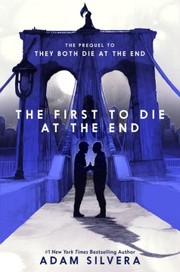
The First to Die at the End
On the night Death-Cast launches, a boy with a bad heart meets a model with everything ahead of him, and one of them gets the call.
2,908-word summary · 13 min read
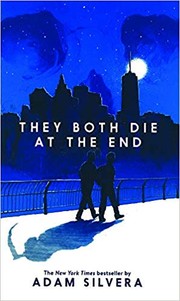
They Both Die at the End
Two teens called as dying meet through an app and share one full day.
1,968-word summary · 9 min read
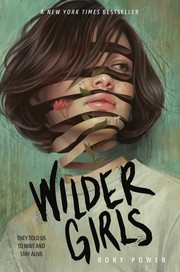
Wilder Girls
At a quarantined boarding school off Maine, three girls with strange mutations search for a missing friend and learn what the adults have hidden.
2,594-word summary · 12 min read
Radio Silence
Head girl Frances loves a secret podcast made by shy Aled, and both crack under A-levels in Oseman's warm 2016 story of friendship, fandom, family and choosing…
2,778-word summary · 12 min read

Nick and Norah's Infinite Playlist
Rachel Cohn and David Levithan trade chapters as two music-obsessed teenagers spend one long New York night together, from a five-minute fake date to something…
2,355-word summary · 10 min read
Impulse
Three teenagers in a Reno residential hospital tell in free verse how they arrived there after suicide attempts and what recovery costs.
2,030-word summary · 9 min read
Finding Audrey
A fourteen-year-old who cannot leave the house or remove her dark glasses finds her way back through therapy, a film project and a patient new friend.
2,559-word summary · 11 min read

The Foxhole Court
A runaway with a false name joins a college Exy team full of other people's cast-offs, only to find that staying might be more dangerous than running.
2,319-word summary · 10 min read
This Winter
On one difficult Christmas Day, Tori, Charlie, and Oliver Spring try to hold their family together while Charlie's eating disorder makes every tradition a test.
2,034-word summary · 9 min read

We Are Okay
Marin fled San Francisco after her grandfather vanished and stopped answering anyone. When Mabel visits her college dorm, she has to say what happened.
2,253-word summary · 10 min read
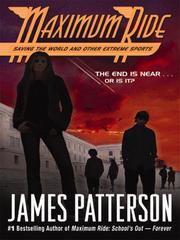
Saving the World and Other Extreme Sports
Max and the flock split in two to take down the lab behind their lives, one half in California and the other in Europe.
2,175-word summary · 10 min read

Big Swiss
A transcriptionist for a sex coach falls for one of his clients, the tall Swiss gynecologist she calls Big Swiss, in a funny novel about work and secrets.
2,523-word summary · 11 min read
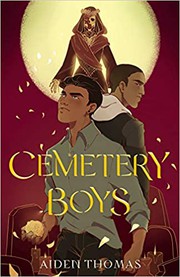
Cemetery Boys
A trans brujo in East Los Angeles summons the ghost of a boy who refuses to move on, and together they uncover a murder hidden beneath Día de los Muertos.
1,997-word summary · 9 min read

Aristotle and Dante Dive into the Waters of the World
Ari and Dante return for senior year in El Paso, navigating first love, AIDS, family grief, and the cost of being openly gay in 1987 Texas.
2,188-word summary · 10 min read
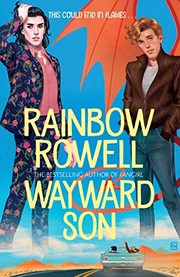
Wayward Son
Simon and Baz road trip America after the war to decide what normal means.
2,505-word summary · 11 min read
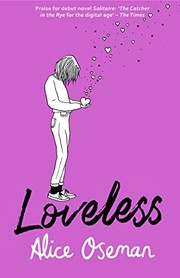
Loveless
Georgia starts university sure she wants love, then learns she is aro-ace.
2,539-word summary · 11 min read
Every Last Word
A girl with OCD finds poetry and friends who know her secrets.
2,434-word summary · 11 min read
School's Out - Forever
The bird kids try normal school under FBI guard until hunters crash class and chase them to Itex in Florida.
2,584-word summary · 11 min read
Solitaire
Gloomy Tori Spring hunts school prank group Solitaire with odd Michael Holden while brother Charlie heals.
2,068-word summary · 9 min read
Skyward
Spensa dreams of flying for Detritus though her father was branded a coward, until a crashed ship, a talking AI, and flight school force out the truth.
2,865-word summary · 13 min read
What If It's Us
Two teens meet by chance at a New York post office and try to turn missed connection into first love.
2,033-word summary · 9 min read
The Darkest Minds
A teen with mind powers escapes a government camp and joins three runaways in Bracken's 2012 dystopia, first in The Darkest Minds series.
2,038-word summary · 9 min read

Girl in Pieces
After treatment ends early, seventeen-year-old Charlie Davis tries to rebuild in Tucson through work, drawing, and fragile friendships.
2,730-word summary · 12 min read
Scythe
Citra and Rowan become apprentice scythes who must glean one another.
2,574-word summary · 11 min read
Before I Fall
Sam Kingston relives the Friday she dies seven times and learns to face Juliet Sykes with kindness.
2,305-word summary · 10 min read
Will Grayson, Will Grayson
Two Chicago teens with one name collide, with Tiny Cooper's musical stealing every scene.
2,742-word summary · 12 min read
Heartstopper: Volume Four
Nick and Charlie face eating disorders, coming out, and first love in Oseman's tender fourth volume.
2,393-word summary · 11 min read
Turtles All the Way Down
Aza Holmes lives with intrusive thoughts while chasing a missing billionaire with Daisy.
2,007-word summary · 9 min read
Aristotle and Dante Discover the Secrets of the Universe
Two Mexican American boys in 1987 El Paso become inseparable and learn what love asks of family.
2,093-word summary · 9 min read
The Perks of Being a Wallflower
Chbosky's Perks retold: Charlie's letters, Sam and Patrick, first year of high school in Pittsburgh.
1,951-word summary · 9 min read