
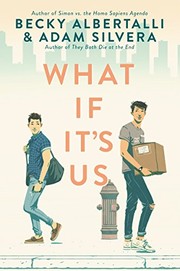
What If It's Us
2,033-word summary 9 min read 437 pages in the book
- First published
- 2018
- Publisher
- HarperTeen
- Pages
- 437
- ISBN
- 9780062795250
- Series
- What If It's Us (#1)
Reading options
What's inside (8 sections)
I picked this one up because I had read Simon vs. the Homo Sapiens Agenda a while back and I was curious what Becky Albertalli would do with a co-writer. Adam Silvera was already known for They Both Die at the End, which is a lot heavier than this. The two of them together sounded like it could either click or clash. It mostly clicks. The book came out in 2018 from HarperTeen, and it reads exactly like a summer in New York when you are sixteen and everything feels possible for about three weeks.
Arthur Seuss is sixteen and spending the summer in the city as an intern at his mom's law firm. He is from Georgia, he is Jewish, he loves Broadway musicals a little too much, and he still believes the universe owes him a meet cute. Ben Alejo is Puerto Rican, lives in the city, writes fantasy on the side, and is stuck in summer school so he does not get held back. He just mailed a breakup box to his ex, Hudson, and he is not really looking for anything new.
They run into each other at a post office. Arthur is there on a coffee run, sees Ben in a Dream N Bean shirt, follows him in, overhears the breakup box conversation, and then loses him in the crowd. That is the whole engine for the first third. Arthur puts up a Missed Connection style poster at the coffee shop. Ben sees his own face on it when he stops for coffee with Dylan. He emails Arthur. They start texting, then meeting up, then trying to figure out if this is actually something.
The post office boy and the poster
What I liked about the opening is how awkward it stays. Arthur is not smooth. He rehearses what he will say and then says the wrong thing. Ben is prickly in a way that felt true to me. He has been burned by Hudson, who is also in his summer school class, so every time Arthur gets excited about fate, Ben pulls back a little.
Dylan Boggs is Ben's best friend, funny and loyal and a little all over the place when he likes someone. Samantha O'Malley is the barista Dylan likes, and she gets pulled into the search. On Arthur's side there is Jessie and Ethan back home, plus Juliet and Namrata at the firm. The friend groups matter because a lot of the dates are group dates or interrupted dates. Nothing happens in a clean bubble.
The poster bit could have felt cute in a forced way, but the alternating chapters help. Arthur chapters were written by Albertalli, Ben chapters by Silvera, and you can feel the different rhythms. Arthur spirals in long hopeful paragraphs. Ben is shorter, more guarded, funnier in a dry way. When they finally reconnect over email, the relief is real because you have watched both of them check their phones too often.
Dating while the city keeps interrupting
Once they start dating, New York keeps getting in the way. Subway delays, summer school schedules, parents with opinions, friends who need attention. One date ends well, the next one stalls because Arthur finds out Ben still has the breakup box and wonders what that means.
I thought this middle part was the strongest writing. The authors do not let either boy be the perfect boyfriend. Arthur pushes for big romantic gestures and labels too fast. He wants to say this is it after two good days. Ben holds back information because he is afraid of looking needy, especially around Hudson. They misread each other in ways that reminded me of being a teenager, where a delayed text feels like a verdict.
There is a scene where they almost have sex and stop because Arthur is not ready. I appreciated that it was not played for drama or as a joke. It is just stated, Ben is kind about it, they move on, and it comes up later without shame. For a young adult romance from 2018, that felt refreshing.
Hamilton comes up a lot because Arthur is obsessed. Ben writes a fantasy novel and eventually shares new chapters with Arthur as a birthday gift, writing Arthur into the plot. Those small creative exchanges tell you more about them than the kissing scenes do. Arthur shows love by planning, Ben shows it by writing.
Hudson, Jessie, Ethan, and the rest of the mess
No romance survives without exes and best friends making things complicated, and this book leans into that.
Hudson is in Ben's summer class, which is brutal. You cannot get over someone when you have to sit near them and do algebra. Ben tries to act fine and does not quite manage it. Arthur tries to act unbothered and does not manage that either. When Arthur surprises Ben after class and sees Hudson there, he breaks up with Ben on the spot. It is impulsive and a little unfair, and the book does not pretend otherwise.
At almost the same time, Jessie and Ethan tell Arthur they have been dating for months and were scared to tell him after he came out. Arthur feels blindsided. He suddenly has no boyfriend and two best friends who kept a secret. I liked that the book lets Arthur be upset about both things at once without making him the villain. He is sixteen, far from home, working a grown up internship, and his support system wobbles.
Dylan is the steady one here in a surprising way. He is goofy, but when he ends up in the hospital later in the summer, it snaps Ben and Arthur out of their pride. Ben texts Arthur because he is scared. Arthur shows up. It is simple and it works.
The hospital night and the birthday
The hospital stretch is short but it changes the tone. Up to then a lot of the conflict is about insecurity and timing. After Dylan's scare, the boys are gentler with each other. They stop keeping score.
Arthur's impromptu late night birthday party is one of my favorite sequences. It is crowded, a little chaotic, friends overlapping, inside jokes flying. Arthur and Ben have sex for the first time afterward, and again the book handles it plainly. No grand speech, no trauma, just two people who have talked enough to feel safe.
Ben sending Arthur the new chapters afterward is the real love confession. He has let Arthur into the fantasy world he usually keeps private. If you write, you know how big that is. Arthur gets it. He does not critique it like an editor. He receives it like a gift.
I will say the pacing sags a tiny bit right before this. There are two or three dates in a row that follow the same pattern: good start, small misunderstanding, retreat, text apology. I started skimming one coffee shop scene because I could guess how it would end. It picks back up once the Jessie and Ethan reveal lands.
Saying goodbye at the end of August
Arthur has to go back to Georgia when summer ends. This is where the book earns its reputation, I think. A lot of teen romances would force a promise to make long distance work or stage a dramatic airport chase. These two talk it through and decide not to force it.
They part as friends, or something more complicated than friends, with a tearful goodbye that does not pretend they know what will happen. Arthur gets on the bus or plane back to his life. Ben stays in New York with school and writing and Dylan. There is sadness, but also a sense that they did this right for who they are right now.
I liked that choice even though part of me wanted the big romantic ending. It fits what the book has been saying about the universe. Arthur starts out believing in fate as a straight line. Ben starts out not believing in it at all. By the end they meet somewhere in the middle. Sometimes you meet the right person at the wrong time, and caring about them means not squeezing too hard.
The sequel, Here's to Us, revisits them years later, which tells you the authors knew readers would want more. But this first book stands alone fine. You do not need a promise of forever for the summer to have mattered.
What works and what drags
The voices are the best part. You can tell who is narrating without chapter headings after a while. Arthur's hope is specific, all Broadway lyrics and law firm anecdotes and texts to his mom. Ben's humor is drier, more self protective, and his chapters about writing felt lived in. I found myself reading Arthur faster, with a kind of fondness, and slowing down for Ben because his sentences carry more weight than they first suggest.
One small thread I kept thinking about is how class shows up without becoming the whole point. Arthur is interning through a family connection, staying somewhere stable, with parents who check in and can afford to let him spend a summer exploring. Ben is trying not to repeat a grade, working around summer school hours, living with the kind of pressure where one more slip costs real money and time. The book does not lecture about this. It just lets Arthur suggest a plan that costs forty dollars and lets Ben do the math in his head. Those moments rang true.
Religion and family culture also sit quietly in the background. Arthur is Jewish and it comes up in ordinary ways, jokes with his mom, food, things he misses from home. Ben is Puerto Rican and his identity shapes how he moves through school and how people read him, though the book keeps the focus on his writing and his friendships rather than turning him into a representative. I liked that both boys get to be specific without the story stopping to explain them.
New York feels real without turning into a travel guide. Post office lines, coffee shops, cramped apartments, summer school classrooms with bad air conditioning, late trains. The city is hot and crowded and expensive, and that pressure shapes how often they can see each other. A date that should be simple becomes complicated because someone has to get to class or cover a shift or catch the last train that actually runs on time.
If I have a complaint, it is that some side characters stay thin. Samantha is mostly Dylan's crush for a long stretch before she gets her own edges. Hudson is mostly a problem to react to rather than a full person, though I suppose that is how exes feel when you are sixteen. Harriet, Ben's former friend, is mentioned more than seen. Jessie and Ethan get more depth near the end, but for half the book they are voices on the phone.
Also, the alternating author setup sometimes shows. A few transitions repeat information you just learned in the other point of view. You get Arthur's version of a date, then Ben's version starts by covering the same ten minutes. It is not bad, just a little careful, like each writer wanted to make sure you did not miss their character's feelings. I noticed it most around the second breakup, where both chapters circle the same hallway conversation.
Still, I finished it in two sittings and I did not want to rush the last forty pages. That is rare for me with romance. I cared whether they would be kind to each other at the goodbye, more than whether they would stay together. That feels like the right thing to care about.
For who this is for: if you like Simon vs. or They Both Die at the End but want something lighter than the second and messier than the first, this sits right between them. It is romantic without being naive about timing, funny without turning the boys into jokes, and honest about how hard it is to be generous when you are scared of being left.
FAQ
What is the breakup box in What If It's Us?
Ben mailed a box of his ex Hudson's things to get closure, and Arthur overheard him talk about it at the post office. Later Arthur worries Ben kept the box because he is not over Hudson.
Is What If It's Us part of a series?
Yes. It is book 1 in the What If It's Us series, published in 2018 by HarperTeen. The sequel Here's to Us brings Arthur and Ben back together years later.
Do Arthur and Ben stay together at the end?
They decide not to force a long distance relationship when Arthur returns to Georgia. They part with care rather than promises, which fits what the book says about timing.
Similar books
More from What If It's Us first, then related titles.
The First to Die at the End
On the night Death-Cast launches, a boy with a bad heart meets a model with everything ahead of him, and one of them gets the call.
2,908-word summary · 13 min read

Aristotle and Dante Dive into the Waters of the World
Ari and Dante return for senior year in El Paso, navigating first love, AIDS, family grief, and the cost of being openly gay in 1987 Texas.
2,188-word summary · 10 min read
Wayward Son
Simon and Baz road trip America after the war to decide what normal means.
2,505-word summary · 11 min read
Loveless
Georgia starts university sure she wants love, then learns she is aro-ace.
2,539-word summary · 11 min read

Will Grayson, Will Grayson
Two Chicago teens with one name collide, with Tiny Cooper's musical stealing every scene.
2,742-word summary · 12 min read
They Both Die at the End
Two teens called as dying meet through an app and share one full day.
1,968-word summary · 9 min read

Dumplin'
Willowdean Dickson enters her town's beauty pageant as a protest and discovers that confidence is harder to keep once she lets someone close.
1,922-word summary · 9 min read
Wilder Girls
At a quarantined boarding school off Maine, three girls with strange mutations search for a missing friend and learn what the adults have hidden.
2,594-word summary · 12 min read
I Kissed Shara Wheeler
Shara Wheeler kisses her rival Chloe Green at prom and disappears, leaving a scavenger hunt that forces Chloe to rethink everything she knew about her.
2,083-word summary · 9 min read

We Are Okay
Marin fled San Francisco after her grandfather vanished and stopped answering anyone. When Mabel visits her college dorm, she has to say what happened.
2,253-word summary · 10 min read

Last Night at the Telegraph Club
The 2021 National Book Award winner follows Lily Hu, a Chinese American teenager in 1954 San Francisco, as she falls for Kath and learns what it costs to be…
2,336-word summary · 10 min read

Big Swiss
A transcriptionist for a sex coach falls for one of his clients, the tall Swiss gynecologist she calls Big Swiss, in a funny novel about work and secrets.
2,523-word summary · 11 min read

The Second Summer of the Sisterhood
Four friends share the traveling pants through a summer of grandmothers, first loves, and mothers who are learning to let go.
2,209-word summary · 10 min read

Dash & Lily's Book of Dares
Two lonely New York teenagers trade dares in a red notebook left at the Strand, falling for each other on the page before they meet.
2,228-word summary · 10 min read
Cemetery Boys
A trans brujo in East Los Angeles summons the ghost of a boy who refuses to move on, and together they uncover a murder hidden beneath Día de los Muertos.
1,997-word summary · 9 min read

Someone Like You
Halley and her best friend Scarlett face a summer of grief, a surprise pregnancy, and Halley's dangerous first romance in Sarah Dessen's 1998 young adult novel.
2,218-word summary · 10 min read
Every Last Word
A girl with OCD finds poetry and friends who know her secrets.
2,434-word summary · 11 min read

Since You've Been Gone
Shy Emily spends summer finishing her vanished best friend Sloane list of thirteen dares, finding Frank, Dawn, and courage.
2,566-word summary · 11 min read
Radio Silence
Head girl Frances loves a secret podcast made by shy Aled, and both crack under A-levels in Oseman's warm 2016 story of friendship, fandom, family and choosing…
2,778-word summary · 12 min read
Queen of Air and Darkness
Emma and Julian face the Cohort, Thule, and the parabatai curse in Cassandra Clare's 880-page Dark Artifices finale of love, Faerie bargains, battle, weddings,…
2,653-word summary · 12 min read
You've Reached Sam
After Sam dies, Julie calls his phone to hear his voicemail and he answers, forcing her to face grief and learn how to say goodbye.
2,887-word summary · 13 min read

The Gentleman's Guide to Vice and Virtue
Bisexual heir Monty flees across Europe with his crush Percy and sister Felicity after stealing a dangerous box.
2,724-word summary · 12 min read
Nick and Charlie: A Heartstopper Novella
Nick is off to university and Charlie is staying behind. One last summer to decide if first love can survive distance.
2,329-word summary · 10 min read
Lock and Key
Abandoned Ruby moves in with her sister and learns to trust Nate and Cora.
2,407-word summary · 11 min read

Let It Snow
Three Christmas stories collide at a Waffle House in a blizzard.
2,094-word summary · 9 min read
Heartstopper: Volume Five
Nick and Charlie face exams and university distance while holding on.
2,057-word summary · 9 min read
I'd Tell You I Love You, But Then I'd Have to Kill You
Cammie Morgan trains at a secret spy school and falls for a town boy she can never tell the truth.
2,179-word summary · 10 min read

Bloodlines
Alchemist Sydney Sage hides Moroi princess Jill in Palm Springs, where tattoo shops and old vampires test every rule she was taught.
2,622-word summary · 12 min read
One Last Stop
August, 23 and newly moved to New York, meets Jane, stuck on the Q train since the 1970s, and fights to free her while falling for her.
2,394-word summary · 11 min read
Every Day
A wakes in a new teen body daily until falling for Rhiannon breaks rules.
2,215-word summary · 10 min read