
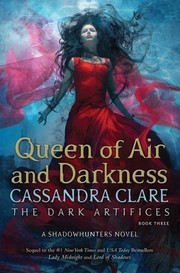
Queen of Air and Darkness
2,653-word summary 12 min read 880 pages in the book
- First published
- 2018
- Publisher
- Margaret K. McElderry Books
- Pages
- 880
- ISBN
- 9781442468436
- Series
- The Dark Artifices (#3)
Reading options
What's inside (9 sections)
I did not start Queen of Air and Darkness right away. I finished Lord of Shadows late on a Sunday, sat with Livvy Blackthorn gone and Ty holding her in Faerie, and I needed a day before I could go back to Los Angeles. When I finally picked up this last book, I could feel its weight in my hands before I read a page. Cassandra Clare published it as the finale of The Dark Artifices, book three after Lady Midnight and Lord of Shadows. The first edition came out Dec 4 2018 from Margaret K. McElderry Books and runs 880 pages with ISBN 9781442468436. That size scared me a little. I read it across six nights at the kitchen table, with tea going cold and notes piling up about who was allied with whom.
The setup carries straight from the last cliff. Emma Carstairs and Julian Blackthorn love each other, though they are parabatai, and parabatai love is forbidden because it warps magic around the pair. The Cohort, a hardline movement inside the Clave led by Horace Dearborn and carried in Los Angeles by his granddaughter Zara Dearborn, wants to strip rights from Downworlders and faeries and half faerie Shadowhunters. Livvy is dead. Annabel Blackthorn has been raised by necromancy tied to the Black Volume of the Dead. The Seelie and Unseelie courts are maneuvering. Julian is willing to trade almost anything to keep his family together. Emma is trying to hold both her sword and her heart steady.
What surprised me on this reread was how domestic the opening feels for such a huge book. The Los Angeles Institute is still a home first. Tavvy asks blunt questions. Dru pretends horror movies do not scare her. Ty lines up objects and facts to keep grief in order. Helen and Aline try to parent from exile and return. Mark tries to sleep in a bed after years with the Wild Hunt. Cristina cooks and listens. Then politics push through the door again.
Grief in the Institute
The first stretch stays close to the children. Ty does not grieve the way the others expect. He wants a clear account of what happened in Faerie, who struck, what the wound was, where Livvy fell. Julian tries to give comfort and gets it wrong because comfort is not what Ty asked for. Emma sits near without trying to fix anything, which helps more. Dru swings between anger and numbness. She snaps at Helen, then clings to her. Tavvy keeps asking where Livvy is, and every answer breaks someone again.
Helen Blackthorn carries a particular ache. She missed years on Wrangel Island because the Cold Peace exiled her for faerie blood, and now she is back with her wife Aline and a house in mourning. She tries to brush Dru's hair, to set bedtimes, to make lists of who eats what. Aline steadies her, practical and kind, and the two of them show the younger kids what adult love can look like when it does not perform. Mark also tries to help, though his own loss is fresh. He rode with the Hunt, loved the faerie prince Kieran, and came back to a family that needs him to be brother, soldier, and witness all at once.
Cristina Rosales holds a lot of these scenes together. She is the exchange student from Mexico City who became family without papers to prove it. She makes food, remembers who likes what, and tells the truth gently. One evening she sits with Emma on the steps while Julian draws inside, and they do not talk about strategy at all. They talk about Livvy laughing at Ty's toy soldiers. I liked that Clare lets grief stay small here. No speeches about war. Just laundry, dishes, and a chair no one wants to move.
The Cohort closes in
If the Institute is warm, the Clave is cold. Horace Dearborn speaks like a concerned grandfather and acts like a man who has waited years for power. His message is simple. Shadowhunters are dying out. Downworlders cannot be trusted. Faeries especially must be registered, watched, and punished for the Cold Peace violations, real or invented. Zara repeats it louder. She arrives with followers, takes space, insults Mark and Helen for faerie blood, and pushes Cohort rules as if they are already law.
The genius of this section is how ordinary the takeover feels. There are meetings. There are votes. There are forms. Diana Wray, who runs the Institute day to day, feels the pressure first because she hides a past the Cohort would use against her. She is trans, and old records could expose her if the wrong people dig. She has to decide who to trust, and when. Her fear is not abstract. A question on a form, a remark from Zara, a look from an older Centurion can end a career or worse.
Alec Lightwood and Magnus Bane appear in this political stretch, and I was glad to see them as adults with limits rather than rescuers. Alec works inside the system, trying to block the worst motions. Magnus, a warlock with centuries of memory, sees where registration lists lead. They argue, they love each other, they get tired. Their presence reminds Emma and Julian that the Clave has been fought before, and that fighting it costs. The Cohort does not need to win every vote at first. It only needs to make cruelty sound like safety until enough frightened people nod along.
A trip to Thule
About a third in, Clare sends part of the group to Thule, a mirror world where Sebastian Morgenstern won the Dark War and everything rotted after. I was nervous about a parallel world detour in an already long book, but Thule earns its pages. The sky is wrong. The Institute in Los Angeles is a ruin. Shadowhunters who were kind in our world are hard or dead there. The air smells of ash and old blood.
Julian and Emma go with a small party because they need knowledge and help that their own world will not give. Thule shows what the Cohort wants without saying it wants that. In Thule, Downworlders were hunted, faeries were broken, love was treated as weakness, and power answered only to itself. Livvy appears there in a way that hurts to describe. She is alive in Thule because choices split, and seeing her alive and changed forces Ty and Julian to face what they lost and what they might still save. I will not spoil the mechanics of how they return. What matters is what they bring back. Proof that Dearborn's path ends in ruin. Grief with sharper edges. And a clearer sense that the parabatai curse cannot be managed by distance anymore.
The Thule chapters also give Ty some of his best scenes. He studies the broken world like a puzzle, noting patrol routes, food stores, and guard habits. His literal mind, which some Shadowhunters dismiss, keeps the group alive. Emma follows his lead without condescension. Julian watches his brother work and understands, maybe for the first time fully, that Ty does not need to be fixed. He needs to be trusted. A short scene where Ty explains how to cross a square without being seen, counting steps aloud while everyone holds breath, stayed with me longer than the bigger fights.
Annabel and the Black Volume
Under the politics runs the old magic plot. The Black Volume of the Dead can raise the dead, and Annabel Blackthorn, raised wrong in the last book, carries its stain. She woke confused and furious, a girl from the 1800s dropped into phones and cars and Clave hearings. She loved once. She was betrayed. She killed and was killed and walled up by family. Now everyone wants to use her. The Cohort wants her as proof that Blackthorns deal in dark magic. Julian wants her knowledge to protect his family. Faerie wants to trade her for favors.
Clare keeps necromancy ugly here, which I appreciated. Raising Livvy is the thought no one says aloud for a long stretch, then everyone has to say. Ty wants his twin back with a focus that scares Julian. Julian, who would burn law books to save his siblings, has to tell his brother no in a way that does not break trust. Emma backs him, though it costs her. Annabel herself warns them in broken, bitter talk. The dead come back wrong. The price lands on the living. Her scenes with Emma are softer than her scenes with men who bargain. Two girls with swords, both orphaned by Shadowhunter choices, talking about parents while the Volume hums in a box.
The Volume plot also pulls in Faerie debts. Emma made a promise to the Seelie Queen earlier, and the Queen collects in favors that sound small. Carry a message. Spare a prisoner. Open a door. Each favor tightens cords around Emma's wrists. Julian makes his own bargains, offering paintings and memories and future service. Magic in Clare's Faerie always charges interest. I liked that neither Emma nor Julian gets to be clever enough to escape clean. They pay. They limp. They learn the wrong lesson and then correct it.
Faerie courts and Kieran's stand
Kieran, the Unseelie prince, gets a full arc here and he needed it. In earlier books he was messenger, lover, exile, and punchline by turns. Here he has to choose where to stand when his father the Unseelie King demands obedience and the Seelie Queen offers poisoned shelter. He loves Mark Blackthorn. He respects Cristina. He owes debts to both courts and trusts neither. Watching him learn plain speech after a life of riddles is slow and moving. He apologizes badly. He tries again. He stands in front of people he once mocked.
Mark and Cristina and Kieran together form the emotional center for many readers, and Clare gives them room without letting them swallow Emma and Julian's story. Mark, half faerie and half Shadowhunter, understands both courts from inside. Cristina, human and steady, hears what faeries do not say. Kieran brings rank and pain. Their scenes in Faerie are bright and dangerous. Food that tempts. Music that pulls toward cliffs. Oaths that trap. Time that slips. One council scene where Kieran refuses his father's order in front of both courts, voice shaking, while Mark holds his gaze and Cristina steps closer, works because Clare kept their love awkward and earned across three books.
Gwyn, the leader of the Wild Hunt, and other faerie figures circle these talks, offering rides and rescues at prices. Adaon, Kieran's brother in spirit if not by blood in every telling, helps where he can. I will keep details light because Faerie genealogy gets tangled fast. The point is clear. Faerie is not one folk. Seelie and Unseelie distrust each other almost as much as they distrust the Clave, and any alliance with Shadowhunters will be narrow, temporary, and paid for in full.
The meeting, the battle, the curse
Everything converges on a great Clave meeting that the Cohort intends to use as coronation. Dearborn plans speeches, lists, and votes that will legalize cruelty. Zara polishes her role as enforcer. Loyalists pack the hall. Downworlders and their allies walk in knowing they may be arrested. Emma and Julian walk in knowing their parabatai bond may flare under stress and expose them.
Clare stages the collapse well. Shouts interrupt procedure. Accusations fly. The Cohort moves to seize control by force, and the hall turns from debate to battle. I will not map every sword swing because the cast is huge. Emma fights with Cortana, fast and loud, shouting names so her people know where to stand. Julian fights like a planner who has run out of plans, counting doors and placing siblings behind him. Mark rides as the Hunt taught him. Cristina holds lines. Helen and Aline shield the young ones. Diana chooses open defiance at last. Alec and Magnus use law and magic together. Kieran turns his cloak in public. Faerie blades join Shadowhunter blades against Cohort blades, and for once the lines are honest.
The parabatai curse breaks in the middle of this, not as a trick but as cost and choice. Emma and Julian stop trying to starve their love or hide it. They accept what they are and what it may do, and they pour that wild magic into protection rather than denial. Clare keeps the mechanics soft. No long lecture on runes. The feeling is what matters. Heat, terror, relief. They live. The magic settles. The Clave witnesses that love did not end the world, which cuts against every Cohort sermon. I found it satisfying though a little gentle after so much warning. After three books of dread, I expected a higher bill.
After the fighting, Clare gives weddings and quiet. Magnus and Alec marry in a ceremony that is funny and tender, with warlock lights and Shadowhunter vows and friends crying into sleeves. Jem and Tessa, who waited across lifetimes, also get vows and peace. These scenes run long, and I let them. After Livvy and after Thule, joy feels defiant. The epilogue moves through the survivors with care. Who parents whom now. Who trains. Who leaves Los Angeles and who stays. Ty gets a path that respects who he is rather than forcing him into a standard mold. Dru gets attention without being made into a new Emma. Tavvy gets to be a child a while longer.
What buckles under 880 pages
Fair criticism belongs here because 880 pages is a promise and a risk. This book is too long in the middle. Council talks repeat. Research loops circle. Emma worries about Julian. Julian hides plans from Emma to spare her. They reunite. They separate for strategy. Repeat. Around page 500 I skimmed a Cohort debate that restated points from page 300. Clare cuts between Emma, Julian, Cristina, Mark, Kieran, Diana, Helen, Dru, Ty, Alec, Magnus, Zara, Dearborn, Annabel, and faerie rulers. Each voice is clear, but the jumps stall chases and kisses alike. A rescue pauses for a speech. A confession pauses for a bargain. Readers who want one line to follow will tire.
The size also crowds some villains. Dearborn is chilling as a polite organizer of harm, yet his end feels quick after so much buildup. Zara starts as a true believer with glimpses of doubt, then hardens into a shape the plot needs rather than a person who might turn. Annabel, so sad and strange when raised, gets less room in the last third than her pain deserves. I wanted one more quiet scene with her and Emma before the hall battle, just talk, no spells.
Politics resolve a bit tidily too. After showing how fear makes decent Shadowhunters nod along with registration and control, Clare lets the battle wash much of that away. A rousing stand, a broken curse, a wedding. The Cohort falls. The Clave promises reform. I believe the joy. I am less sure the fear vanished that fast. Real movements like that do not end when one hall fight ends. Clare knows this and nods to future work, but the close still feels cleaner than the buildup earned.
Still, I closed the book fond of almost everyone. Emma sharpening Cortana while Julian sketches maps he cannot fully fix. Mark learning to sleep indoors. Cristina packing herbs for grief and for cooking. Helen making lists. Ty counting stars to sleep. That family stayed with me more than any spell. Queen of Air and Darkness is The Dark Artifices book three, Dec 2018 from Margaret K. McElderry Books, 880 pages, and it finishes Emma and Julian's story with battle, curse broken, and weddings intact. Bring time. Bring tea. Start with Lady Midnight, then Lord of Shadows, and let this finale take the whole week if it needs to.
FAQ
Is Queen of Air and Darkness the last Dark Artifices book?
Yes. First published Dec 4 2018 by Margaret K. McElderry Books at 880 pages, it closes Emma and Julian's arc after Lady Midnight and Lord of Shadows.
What is the parabatai curse in this finale?
Emma and Julian love despite the parabatai bond forbidding romance, which makes magic wilder around them until they stop hiding it during the final battle.
Who should read this 880-page finale?
Readers who finished books one and two and want the Cohort, Faerie, Thule, and wedding lines resolved, if they accept length, battle violence, and grief.
Similar books
More from The Dark Artifices first, then related titles.
Lady Midnight
Emma and Julian hunt killer echoing old murders while parabatai love grows.
1,982-word summary · 9 min read
Lord of Shadows
Emma and Julian face faerie war and forbidden love as the Cohort rises.
2,496-word summary · 11 min read

City of Lost Souls
Clary leaves the Institute to stay close to a bound Jace while Alec, Izzy, Simon and Magnus search for a cure in New York.
2,782-word summary · 12 min read

City of Fallen Angels
Simon is turned and Jace dreams of killing Clary while Lilith plots to birth evil in New York.
2,249-word summary · 10 min read
Cemetery Boys
A trans brujo in East Los Angeles summons the ghost of a boy who refuses to move on, and together they uncover a murder hidden beneath Día de los Muertos.
1,997-word summary · 9 min read

Wayward Son
Simon and Baz road trip America after the war to decide what normal means.
2,505-word summary · 11 min read
Every Day
A wakes in a new teen body daily until falling for Rhiannon breaks rules.
2,215-word summary · 10 min read
Carry On
Simon Snow returns to Watford for his last year as a failing Chosen One, with his roommate Baz missing and the Humdrum wearing his face.
2,662-word summary · 12 min read

The Bane Chronicles
Eleven stories across five centuries follow Magnus Bane from a ban in Peru to his first date with Alec in this illustrated Shadowhunter companion.
2,470-word summary · 11 min read
Chain of Gold
Cordelia and James hunt demons in Edwardian London while hearts tangle.
2,364-word summary · 11 min read
City of Heavenly Fire
Clary and Jace face Sebastian's dark army while Emma and Julian's story begins in Los Angeles.
2,039-word summary · 9 min read
Clockwork Princess
Tessa chooses between Jem and Will as Mortmain's clockwork army closes on the London Institute.
3,289-word summary · 15 min read

Clockwork Prince
Tessa Gray stays at the London Institute in 1878 as Will hides a curse, Jem weakens, and Mortmain moves his automatons.
2,784-word summary · 12 min read

Clockwork Angel
Tessa Gray finds Shadowhunters in Victorian London while the Magister hunts her.
3,288-word summary · 15 min read
City of Glass
Clary follows Jace to Alicante in Idris where Valentine plans to use the Soul-Sword on Shadowhunters and the Clave splits under pressure.
3,645-word summary · 16 min read
City of Ashes
Clary risks the Clave trial while Valentine raises demons and Jace pulls away in New York.
4,684-word summary · 21 min read

City of Bones
City of Bones retold: Clary sees Shadowhunters, Jace and the Cup, Valentine, and the Institute attack.
2,535-word summary · 11 min read

Vow of Thieves
Kazi and Jase return to Tor's Watch to find it occupied, and their marriage is tested by captivity, betrayal, and a war for the town of Hell's Mouth.
2,059-word summary · 9 min read

The Lost Sisters
Taryn Duarte writes a letter to her twin, Jude, explaining how she fell for Locke and why she stayed silent while he used them both.
1,914-word summary · 9 min read

Archenemies
Nova steals for the Anarchists while Adrian hides his Sentinel identity, and a serum that erases prodigy powers puts them both at risk.
2,485-word summary · 11 min read

The Siren
Saved from a shipwreck in 1930, Kahlen becomes a siren who sings men to their deaths for the Ocean, until a boy in a college library makes her want a life she…
2,369-word summary · 11 min read

Cruel Beauty
A girl raised to kill the demon prince who rules her cursed land instead falls in love with him, in a retelling that mixes Beauty and the Beast with Bluebeard…
2,669-word summary · 12 min read

I Kissed Shara Wheeler
Shara Wheeler kisses her rival Chloe Green at prom and disappears, leaving a scavenger hunt that forces Chloe to rethink everything she knew about her.
2,083-word summary · 9 min read
Demonglass
Sophie Mercer spends the summer at the Council's English estate, where two new demons, a suspicious host, and Archer's return complicate her plan to remove her…
2,771-word summary · 12 min read

Born at Midnight
Kylie Galen is sent to a camp for troubled teens and discovers it is a haven for vampires, werewolves, and witches, and that she may be something stranger…
2,310-word summary · 10 min read

The Rose & the Dagger
Shahrzad is pulled from her Caliph husband and left in a desert camp of rebels, needing to break his curse and end a war before it ends her.
2,520-word summary · 11 min read
The First to Die at the End
On the night Death-Cast launches, a boy with a bad heart meets a model with everything ahead of him, and one of them gets the call.
2,908-word summary · 13 min read

Last Night at the Telegraph Club
The 2021 National Book Award winner follows Lily Hu, a Chinese American teenager in 1954 San Francisco, as she falls for Kath and learns what it costs to be…
2,336-word summary · 10 min read

We Hunt the Flame
In a fractured Arabia-inspired world, a disguised huntress and a prince-assassin race to find a magic-restoring book and confront an ancient evil.
2,195-word summary · 10 min read

Stars Above: A Lunar Chronicles Collection
Nine Lunar Chronicles stories fill in the histories of Cinder, Wolf, Thorne, Cress, Winter, and Jacin, and end with a wedding after the war.
2,230-word summary · 10 min read