
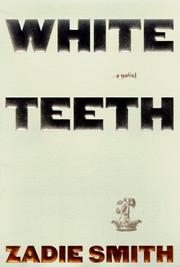
White Teeth
2,110-word summary 9 min read 448 pages in the book
- First published
- 2000
- Publisher
- Random House
- Pages
- 448
- ISBN
- 9780375501852
Reading options
What's inside (10 sections)
I finally read White Teeth because it keeps appearing on century best lists. Zadie Smith published it in 2000 with Random House in the US and Hamish Hamilton in the UK. My reading follows the 448 page hardcover. Archie Jones and Samad Iqbal, WWII buddies turned North London neighbors, watch their families tangle across generations. It is big, funny, generous, and deliberately messy about multicultural England.
Archie Jones opens the book failing to kill himself on New Year's morning 1975, saved by a butcher's van blocking his garage fumes and a medium's prophecy. That comic reprieve sets tone. Archie drifts, folds paper at a print shop, and marries Clara Bowden, a Jamaican beauty half his age with missing front teeth from a scooter crash. Their daughter Irie, knowing and warm, grows up caught between parents' pasts. Samad, Archie's old army friend, Bengali Muslim waiter turned history teacher's assistant, marries Alsana young and fathers twins Magid and Millat, then sends Magid to Bangladesh to preserve faith while Millat stays to test it.
Three families, one postcode
Smith braids the Joneses, Iqbals, and Chalfens across three generations with joyful sprawl. Archie and Samad's wartime bond, sealed over a Nazi collaborator they may or may not have spared, anchors male friendship that survives everything except understanding. Clara brings Jehovah's Witness mother Hortense and teeth that give the book its title motif. Alsana brings sharp tongue and arranged marriage pragmatism. Their kitchens smell of different spices while their children share schools, slang, and secrets.
The twins split the book's argument about identity. Magid, sent home to be properly Bengali and Muslim, returns Anglicized, secular, and scientific, working for geneticist Marcus Chalfen. Millat, kept in London to stay close, becomes rebellious, stylish, and drawn to KEVIN, a fundamentalist group whose acronym jokes mask real rigidity. That reversal, the kept son straying and the sent son returning strange, structures Smith's comedy of good intentions. Parents plan. Children swerve. Everyone means well. No one steers.
Irie loves both boys differently and neither neatly. Big, smart, and hungry for belonging, she crushes on Millat's danger and respects Magid's brains while doubting her own place among Chalfens who collect her like project. Her chapters, with hair straightening disasters and exam pressures, carry the book's heart for younger readers. She wants roots and wings at once. Willesden offers both badly. That wanting feels truer than any thesis about hybridity.
The Chalfens, white liberal intellectuals with a garden and a FutureMouse, adopt the Irie and twins as causes. Marcus engineers a mouse with timed cancer for science. Joyce mothers everyone's children but her own neglected son Joshua. Their benevolence smothers. Smith satirizes them without cruelty, loving their curiosity while noting how charity becomes control. Dinner parties where genetics, race, and fate get debated over lentils are set pieces of comic embarrassment. Everyone talks. No one listens. Dessert arrives.
Genes, faith, and the past biting
The novel's engine is the argument between chance and design. Marcus believes genes program. Samad believes faith guides. Archie believes coins flip. Smith lets each view fail somewhere. FutureMouse develops tumors on schedule but escapes neat meaning. KEVIN's certainty curdles into farce and menace. Archie's coin flips decide nothing and everything. That even handedness frustrates readers wanting verdicts. The book prefers questions with jokes.
History keeps biting ankles, as the cover promises. Samad's great grandfather Mangal Pande fired the first shot of the 1857 uprising, a legacy Samad polishes and Millat weaponizes. Archie's war memories contradict Samad's, and neither remembers the collaborator correctly. Clara's Witness past returns through Hortense's apocalypse dates. Those pasts erupt at school assemblies, weddings, and finally at Marcus's New Year's 1999 presentation, where Magid, Millat, and a freed mouse collide. The climax is farce with teeth. Shots, chases, and a mouse loose in a hall. No tidy moral. Just people ducking.
Smith's comedy carries serious weight on race and belonging without becoming lecture. Millat's KEVIN chapters satirize both fundamentalism and the racism that feeds it. Irie's hair chapters mourn beauty standards that punish Black girls. Samad's letters to Bangladesh ache with exile pride. Those passages, written when Smith was twenty four, stun with confidence. A few stereotypes wobble, the Chalfens occasionally flatten into types, but generosity usually saves. She likes even those she mocks, which keeps satire humane.
What awes is scope managed through voice. Third person omniscient with essayistic asides, footnotes that joke, and time jumps that trust readers. London itself becomes character, buses, schools, and kebab shops rendered with immigrant detail. The mouse, brown and doomed, symbolizes engineered futures escaping plans. Smith juggles without dropping for hundreds of pages. Young novelists should study the transitions. They glide.
What dazzles and what sprawls
What dazzles is voice, structure, and heart. Smith writes sentences that sing and snap, mixing high and low diction, patois and philosophy, in single paragraphs. The book won the Whitbread First Novel, Guardian First Book, and James Tait Black prizes for good reason. It announced a talent fully formed. The three family architecture holds despite sprawl because each strand echoes. Fathers and sons. Mothers and daughters. Teeth, mice, and coins recur like motifs in music.
What sprawls is length and looseness. At 448 pages with detours into Jehovah's Witnesses, mouse genetics, and colonial history, some chapters read as brilliant essays stapled to plot. The Chalfen middle sags with dinner parties. KEVIN's menace wobbles between scary and silly. Readers who want tight plotting may fidget. This is a baggy monster in Victorian tradition, not a thriller. Accept sprawl as price of abundance or skip to leaner books.
The book's sexual politics also date in places. Millat's womanizing gets comic treatment that now reads as indulgent. Clara's arc bends toward wifehood more than selfhood. Irie's body image chapters remain painfully current, which is compliment and indictment both. Smith herself later wrote sharper feminism. Read this as brilliant debut with blind spots, not final word. That frame helps where early praise claimed perfection.
Length suits the ambition. No chapter feels cuttable without losing a joke or a jab, though an editor could have trimmed fifty pages of Chalfen chat. The ending, with Archie's coin and a mouse's fate, refuses neat closure. Some threads tie. Others fray. That fraying is honest for a book about uncontrollable futures. Past bites. Future wriggles free. London continues.
Irie, Millat, Magid, and the young
Irie Jones deserves center focus because she carries the book's future. Big, clever, and hungry, she navigates a white school that others her, a mother who loves fiercely but blindly, and boys who want her admiration without returning it. Her hair chapters, chemical burns and kitchen remedies, remain the book's most quoted for good reason. They compress race, gender, and adolescence into bathroom mirrors. Every Black girl who straightened hair to belong will recognize the scene. Smith writes it with humor that does not soften the wound. Laugh, then ache. Both.
Millat's KEVIN arc needs careful reading as satire with live ammunition. Handsome, charismatic, and lost, he finds belonging in fundamentalism that gives him script and brothers. Smith mocks the group's acronym seriousness while taking Millat's hunger seriously. Racism pushed him. Identity vacuum pulled him. Neither excuses the menace he courts. His storyline scared some readers in 2000 and scares differently now after decades of headlines. Read it as period piece with present echoes rather than prophecy. The book diagnoses conditions, not individuals.
Magid's return as secular scientist completes the twin mirror. Sent to Bangladesh for faith, he comes back quoting Darwin and assisting Marcus. Samad's fury at this inversion drives the book's funniest and saddest fights. A father who sacrificed presence for piety gets the opposite of his order. Smith refuses to declare which twin failed. Both adapted to conditions their father never faced. That refusal irritates moralists who want verdicts on assimilation. The novel prefers observation. Watch what happens when plans meet people. Plans lose. People continue.
Joshua Chalfen, the white son neglected amid his parents' projects, rounds the youth quartet as caution. He joins animal rights militancy for belonging his family outsourced to causes. His arc mirrors Millat's in blazer rather than beard. Both boys seek tribes after homes became headquarters. That parallel keeps satire even handed. Smith loves all her young enough to show their foolishness plainly. Fools with heartbreak behind them. The book's generosity toward youth is its deepest charm. Old argue. Young ache. Everyone eats together anyway.
Chalfenism and its discontents
Marcus and Joyce Chalfen require extended attention because they embody liberal good intentions with smothering follow through. Marcus, brilliant geneticist, believes every problem yields to data and every child to mentoring. He collects Irie and the twins like specimens, scheduling their enrichment while missing his own son's radicalization. His FutureMouse project, engineering cancer on timetable, literalizes control fantasies. Science will schedule even death. The mouse's escape at the finale writes the rebuttal. Life wriggles off timetable. That wriggle is the book's thesis in fur.
Joyce mothers the world to avoid mothering Joshua. She bakes for everyone's children, joins every cause, and narrates her generosity at dinner parties that make guests squirm. Smith writes her with affectionate exasperation familiar to anyone raised around charity matriarchs. The help is real. So is the hunger for applause. Irie both loves and resents her second home's warmth. Warmth with strings tangles. Those strings tighten until Irie must choose between gratitude and selfhood. Her choice to keep both on new terms models the book's mature multiculturalism. Take the lentils. Leave the script.
What saves the Chalfens from caricature is Smith's insistence on their curiosity as virtue. They genuinely want to understand Bangladesh, Jamaica, and Islam beyond headlines. Their library groans with books they actually read. That effort distinguishes them from tourists of diversity. They fail through overconfidence, not malice. When Marcus finally listens rather than lectures at the disastrous presentation, growth flickers. Small, late, real. People can learn at any age if embarrassment does not kill them first. The book grants that grace while counting its cost in neglected sons and used guests.
London as organism
The city deserves final praise as the book's great sustained character. Buses with routes like sentences. Schools with assemblies like parliaments. Kebab shops, pubs, and front rooms where cultures negotiate over tea. Smith writes Willesden from inside knowledge, North London born and raised, with affection that never pretties. Litter stays. Buses late. Neighbors nosy. Those textures ground the ideas in pavements readers can walk. Visit after reading and streets double in meaning. That layering is the novel's gift to its place. It made London legible to itself at millennium turn.
Time structure also rewards notice. Opening on New Year's 1975 with a failed suicide, closing on New Year's 1999 with a chaotic presentation, the book frames a quarter century of British change between two midnights. Chapters flash back to war, partition, and migration that set up present collisions. Those jumps, handled with essayistic signposts, teach history without lecturing. Empire ends. Commonwealth arrives. Genes get mapped. Faiths regroup. Each shift lands on dinner tables rather than timelines. The personal carries the political, which is why the novel lasts as both story and record.
Teeth, mice, and coins
The book's three talismans deserve a final turn because they carry theme without speeches. Teeth, Clara's missing, Irie's braced, Hortense's false, mark history written on bodies. Colonial sugar rots. Accidents cost. Orthodontia straightens toward norms that never fit. Smith returns to mouths whenever belonging bites. Who smiles easily here. Who hides teeth. Those questions map power better than manifestos. Mice, Marcus's engineered FutureMouse and its escape, embody futures planned and fled. Science schedules. Life wriggles. Coins, Archie's flips that decide marriages and shootings, honor chance against design. Flip honestly. Accept landing. Three objects triangulate the novel's wager. Bodies, plans, and luck tangle beyond untying. Chew, chase, flip. Continue.
Who should bite
Give White Teeth to literary fiction readers who like Dickens plus Rushdie plus London buses, to book clubs that enjoy debating identity without rancor, to young writers studying voice. It suits patient readers who savor sentences and forgive detours. Do not give it to readers who need propulsive plot or concise argument. Pair it with On Beauty or NW later to see Smith grow leaner and stranger.
At 448 pages I read it across a week, laughing aloud on buses. Archie starts gassing himself in a car and ends flipping a coin for others' futures while a mouse runs free. That span, from despair to chance embraced, is why the novel lasts as millennium landmark. Teeth fall out. Roots tangle. People chew on. Smith serves the whole messy meal with love. Eat slowly.
FAQ
When was White Teeth published?
Random House published it in 2000. The hardcover runs 448 pages and the ISBN is 9780375501852.
Is it part of a series?
No. It stands alone as Smith's debut, before The Autograph Man and On Beauty.
Who are Archie and Samad?
Archie Jones and Samad Iqbal, hapless WWII veterans whose children Irie, Magid, and Millat collide.
Similar books
Violeta
A woman born in 1920 writes her life story to her grandson, from one pandemic to another, through wealth, ruin, passion, and dictatorship in South America.
2,555-word summary · 11 min read
The Idiot
A Turkish-American freshman at Harvard falls in love through email with a Hungarian math student and spends a summer in Hungary trying to turn correspondence…
2,019-word summary · 9 min read
Mr. Maybe
Libby Mason wants a rich husband, but the wealthy man who proposes is dull and the broke writer she cannot forget is not offering forever.
2,322-word summary · 10 min read
The Lowland
Two brothers grow up beside a marshy lowland in Calcutta, and the choices of the younger one draw the older into a life of duty, distance, and quiet grief that…
2,213-word summary · 10 min read
Her Fearful Symmetry
Twins Julia and Valentina inherit a London flat above Highgate Cemetery from an aunt they never met, then find a ghost in it and a family secret.
2,057-word summary · 9 min read
This Time Next Year
Two women give birth minutes apart on New Year's Day 1990, and one takes the other's lucky name. Thirty years on, their children meet again.
2,194-word summary · 10 min read
Stones from the River
Trudi Montag is born a dwarf in a small German river town in 1915 and grows up to keep the town's library and its secrets, from the First World War to the…
2,818-word summary · 13 min read
Eligible
Austen's Bennet sisters move to modern Cincinnati, where marriage is a reality show and the house is losing its value.
2,293-word summary · 10 min read

Big Swiss
A transcriptionist for a sex coach falls for one of his clients, the tall Swiss gynecologist she calls Big Swiss, in a funny novel about work and secrets.
2,523-word summary · 11 min read

A Spool of Blue Thread
Four generations of the Whitshank family in Baltimore, and the silences, resentments and quiet love they hand down without ever saying so.
2,408-word summary · 11 min read
We Were the Mulvaneys
After a rape following a school dance, the Mulvaneys, a family that believed it was blessed, comes apart over fifteen years. Narrated by the youngest son.
2,094-word summary · 9 min read
I Capture the Castle
Cassandra journals six months of love and money trouble in a castle.
2,402-word summary · 11 min read
Bridget Jones: The Edge of Reason
Bridget doubts Mark, takes a job with Daniel, and lands in trouble in Thailand.
2,198-word summary · 10 min read
The Berry Pickers
A four year old vanishes from a Maine blueberry camp in 1962, and two families carry the loss for decades until Joe and Norma face the truth.
2,606-word summary · 12 min read
Jemima J
Overweight London journalist Jemima Jones invents a slim online self for a California lover, starves to match the photo, then faces betrayal and learns to…
2,883-word summary · 13 min read
Ghosts
At 32, food writer Nina Dean faces ghosting by Max and her father's dementia in London.
2,677-word summary · 12 min read
Post Office
Chinaski drifts through postal shifts, cheap rooms, horse tracks and rough love in Bukowski's 1971 debut about work, drink and survival.
2,444-word summary · 11 min read
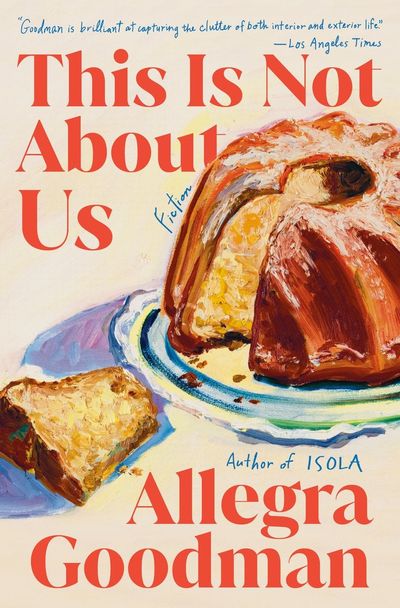
This Is Not About Us
Sisters Sylvia and Helen Rubinstein feud over apple cake in linked stories spanning divorces, bat mitzvahs and three generations of family life.
2,064-word summary · 9 min read
The Humans
An alien borrows Andrew Martin's life to erase a proof, then a dog, peanut butter, and a tired family win him over.
2,959-word summary · 13 min read
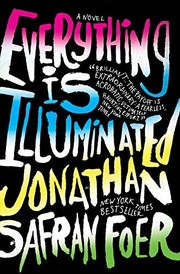
Everything is Illuminated
Jonathan Safran Foer travels to Ukraine with translator Alex to find Trachimbrod and Augustine, while old shtetl chapters retell Brod and Kolker with humor and…
2,616-word summary · 12 min read
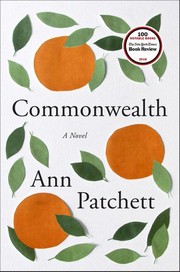
Commonwealth
An uninvited kiss at a christening breaks two marriages, and six stepsiblings share wild summers until loss and a novel pull them apart.
2,348-word summary · 10 min read
Black Cake
After their mother dies, estranged siblings Byron and Benny inherit a black cake and taped confession revealing her hidden life from Jamaica to London.
2,063-word summary · 9 min read
Ask Again, Yes
Two neighboring police families in a New York suburb are shattered when illness turns violent, and the children torn apart find each other again decades later.
2,096-word summary · 9 min read
The Prince of Tides
A South Carolina man tells a psychiatrist about his family past to help his twin sister, and faces what he buried.
2,022-word summary · 9 min read
The Immortalists
Four siblings visit a fortune teller in 1969 who tells each their death date, shaping how they live and love.
2,007-word summary · 9 min read
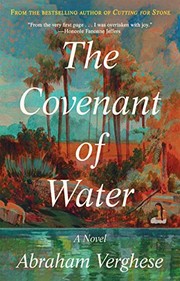
The Covenant of Water
Three generations of a Kerala family face a drowning affliction from 1900 to 1977, from child bride Big Ammachi to physician Mariamma who seeks its cause.
2,955-word summary · 13 min read
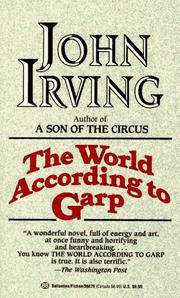
The World According to Garp
Writer Garp navigates fame, marriage, and loss with bears and wrestling.
2,072-word summary · 9 min read
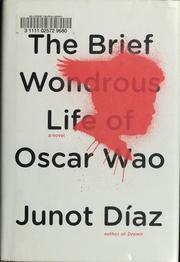
The Brief Wondrous Life of Oscar Wao
Oscar loves sci-fi and wants love, while Yunior traces family curses back through Trujillo terror.
2,056-word summary · 9 min read
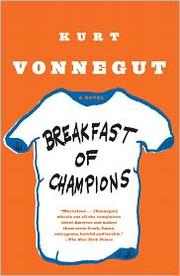
Breakfast of Champions
A Pontiac dealer breaks down while a broke sci-fi writer brings the book that tells him others are robots.
2,013-word summary · 9 min read
Mrs. Dalloway
Clarissa Dalloway gives a London party across one June day while veteran Septimus Smith faces shell shock in the same city.
2,935-word summary · 13 min read