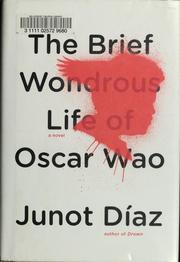
The Brief Wondrous Life of Oscar Wao
2,056-word summary 9 min read 352 pages in the book
- First published
- 2007
- Publisher
- Riverhead Books
- Pages
- 352
- ISBN
- 9781594489587
Reading options
What's inside (9 sections)
I had heard Oscar Wao was funny and sad and full of footnotes, and all of that is true. It won the Pulitzer in 2008, but do not let that scare you. The voice is loud, nerdy, and warm. The narrator, Yunior, talks like a smart friend who read too many comics and lived through enough family trouble to know when jokes stop working.
The book came out in 2007 from Riverhead Books, 352 pages in hardcover. It follows Oscar de León, a fat Dominican kid in New Jersey who loves science fiction and wants to be a writer and to be loved. Around him is his family history in the Dominican Republic under Trujillo, told in chapters that jump back and forth. Yunior, who dated Oscar sister Lola and watched Oscar fall apart, tries to piece it together.
Oscar in New Jersey
Oscar starts as a seven year old ladies man, or so family jokes. By high school he is overweight, sweaty, obsessed with Tolkien, Doctor Who, and role playing games. He writes bad fantasy stories and carries them in a bag. Girls do not want him. Boys mock him. He falls in love hard and fast with girls who are kind for a week and then leave.
Yunior meets him at Rutgers. They share a room. Yunior is fit, confident with women, and a little cruel at first. He tries to toughen Oscar up with exercise and haircuts. Oscar tries, then quits, then writes. He falls for a strict Goth girl who uses him for homework. He attempts to kill himself by jumping off a bridge and survives with broken legs. His mother, Belicia, and sister Lola take him home and watch him closely.
What I felt here was recognition mixed with ache. Oscar is not a loser to laugh at. He is a sensitive kid who never learned how to hide need. He says I love you too soon. He brings flowers to a second date. In a culture that prizes cool distance, his openness reads as weakness. Díaz lets you love him while also seeing why people pull away. Yunior, narrating years later, admits he failed Oscar as a friend. That honesty steadies the book.
Lola is the counterpoint. She is beautiful, sharp, and tired of her mother rules. She shaves her head at one point to claim herself. She dates Yunior, fights with Belicia, leaves for college, comes back. Her chapters, told in her own voice for a stretch, are clear and angry. She loves Oscar but cannot save him. She has her own life to survive.
Belicia and the fukú
To understand Oscar, Yunior says, you need the fukú. Fukú is a curse that came with Columbus and stuck to the island and to anyone who leaves it. Yunior uses it half as joke and half as history. Bad luck follows the family, but the real curse is power, men who take what they want and call it order.
Belicia story is the core. As a girl in the Dominican Republic she is beautiful, dark skinned, with a body that draws attention she does not want. Her parents die. She is raised by relatives who treat her like a servant. She is burned badly as a child and carries scars. As a teenager she falls for a gangster boyfriend, the kind with a car and a gun. She gets pregnant. The boyfriend wife family beats her nearly to death in a cane field. She loses the baby, barely lives, and later flees to New Jersey.
Díaz writes Belicia with respect and without softening. She works hard, hits her kids when she thinks they need it, loves them fiercely, refuses pity. When she gets breast cancer later, she keeps working until she cannot. Her pride is both shield and weight. You see where Lola gets her temper and where Oscar gets his romantic stubbornness.
The footnotes matter here. Yunior drops long notes about Trujillo, the Mirabal sisters, US invasions, sugar prices. Some readers skip them. Do not. They give the political frame that school often leaves out. Trujillo ruled from 1930 to 1961 with secret police, renamed the capital after himself, and killed thousands. The family story happens inside that terror, not beside it.
Abelard and the Trujillo years
Further back is Abelard, Belicia father, a doctor and writer in the 1940s. He refuses to give Trujillo his daughter, or refuses to praise him enough, depending on who tells it. The regime destroys him. He is arrested, tortured, left broken. His wife goes mad with grief. One daughter dies. Belicia survives as an orphan passed around.
These chapters are the hardest to read. Díaz shows prison, beatings, and fear without turning it into action. Abelard tries to write a book about Trujillo supernatural powers, half satire and half belief, and that manuscript becomes dangerous. The point is simple. Under a dictator, even a joke in a drawer can kill your family.
I found myself pausing here. The science fiction Oscar loves starts to make sense as inheritance. If your grandfather was taken by men in cars for writing, and your mother was beaten in cane for loving, then stories about other worlds with clear rules feel safer. Oscar collects comics because his family lived a horror story with no heroes.
Yunior admits gaps. He does not know exactly what Abelard wrote. He guesses. He warns that family memory lies. That modesty helps. Instead of pretending to be a historian, he says here is what Belicia said, here is what Lola remembers, here is what the records show. You build the truth from pieces.
Ybón and the last trip
Adult Oscar teaches English in New Jersey, lives with his mother, writes, gains more weight. He falls for Ybón, an older Dominican sex worker who lives near his family house when he visits the island. Ybón is kind to him in a way that is both real and paid for. She likes his sweetness. She tells him to be careful. Her boyfriend, a violent police captain, notices.
Everyone tells Oscar to stop. Lola flies down to drag him home. Yunior calls and begs. Belicia, sick with cancer, cries. Oscar stays. He walks to Ybón house at night with gifts and letters. The captain men beat him, take him to a cane field, shoot him after he refuses to stop seeing her. He dies asking for more time to write.
It is brutal and deliberate. Díaz mirrors Belicia beating. Cane, men, a love that will not obey. Oscar, who always wanted to be a hero in a fantasy novel, gets a real world death with no magic rescue. Before he dies he writes letters full of love and calm. He says he finally knew what it felt to be loved and to love without shame. Yunior shares those letters without mocking them.
I cried and also felt frustrated, which I think is intended. Oscar could have lived. He chose a romance that put Ybón at risk too. Yunior calls him stupid and brave in the same sentence. Lola hates the island for taking her brother after taking so much else. Belicia dies soon after, worn out. The fukú gets its due, or people make choices inside a narrow cage and call it fate.
Lola and Yunior after
Lola chapters deserve a second look because they do the quiet work. After Oscar death she cleans his room and finds notebooks full of outlines. She reads them and laughs through tears because the dialogue is stiff and the elves sound like kids from Paterson. She keeps one story about a boy who guards a library between worlds and shows it to her daughter years later. She tells Yunior not to turn Oscar into a saint. He was messy, he ate in bed, he left socks everywhere, he called at midnight to talk about a girl who smiled at him on the bus. That list makes him more real than any eulogy.
Yunior tries to make amends by writing carefully. He stops chasing new girlfriends for a while after the funeral and teaches a night class where he assigns fantasy alongside history. He tells students that Trujillo banned books and that Oscar read anyway, which is true in spirit if not in detail. He visits Belicia grave with Lola and does not talk much, which for him is growth. He still slips into old habits, checking his phone too often, making jokes when silence would be better. Díaz does not redeem him fully. He lets him be a work in progress, someone who finally understands that listening is a form of love he learned too late for Oscar but might practice with others.
Teaching scenes also show Oscar influence. Yunior brings in a battered copy of The Lord of the Rings and asks students who never saw themselves as heroes to write their own quest with their grandmother as guide. A quiet girl writes about crossing from Santo Domingo to Newark with a bag of plantains as supplies. The class laughs, then gets serious. That moment captures what Oscar wanted from stories, not escape alone, but a map where someone like him could move and matter.
How it is told
The form is part of the pleasure and part of the work. Yunior narrates most chapters in Spanglish street talk mixed with literary references and nerd jokes. He says things like Sauron and Trujillo in one breath. Footnotes run for pages. Lola gets a first person section that is blunt and clear. An omniscient voice fills prison scenes Yunior could not know.
That mix lets Díaz be funny about serious things without cheapening them. A footnote about the US backing Trujillo lands next to a joke about Dungeons and Dragons. Some readers find the nerd talk too much. I found it honest. This is how a lot of smart kids from immigrant families talk, switching codes between home, school, and comics shop.
What dragged for me was Yunior himself. He is a great narrator and a bad boyfriend. He cheats on Lola, then writes about her with love. He judges Oscar for neediness while chasing women who do not want him. Díaz knows this and lets Lola call him out, but chapters where Yunior brags about sex felt long. I wanted less scoring and more listening, especially after Oscar death when Yunior tries to sound wise.
I also tripped over Spanish without translations. I know some Spanish, so I caught most, but friends who know none told me they guessed from context and missed jokes. A glossary would help. Díaz refuses one on purpose, I think, to put English only readers in the position Spanish speakers often feel. It is a fair point, but it still slows reading.
What stays
What stays is the idea that stories save and fail at once. Oscar writes to survive high school. Abelard writes and is killed. Yunior writes to explain Oscar and still cannot stop the ending. Belicia refuses to tell her story for years, then tells it in pieces to doctors. Everyone uses narrative to make pain bearable, and none of them get a clean rescue from it.
The women carry the book. Belicia endures beatings, migration, factory work, cancer. Lola sets boundaries, leaves, returns, buries. Even Ybón, in few pages, shows more care than most heroes. Oscar loves them, but he does not see how tired they are until late. That blindness feels true to a young man raised on quests where women wait at the end.
If you like footnotes, code switching, and history inside family drama, read this. If you want a straight hero arc, you may struggle. Oscar does not level up. He loves, writes, dies. The wonder in the title is not magic. It is that a short, sad life can still hold a lot of love and a lot of books.
Content notes. There is state torture, prison beatings, severe beating of a young woman with miscarriage, assassination, police violence, murder in a cane field, cancer illness, suicide attempt, fat shaming and bullying, infidelity, sex work described without graphic detail, and strong language with Spanish slurs. None of it feels added for shock, but the Trujillo chapters and the final killing are heavy.
FAQ
What is fukú in the novel?
Fukú is the curse Yunior says followed from Columbus, meaning bad luck and state violence. It frames Trujillo rule, family beatings, and Oscar death as history, not just chance.
Does Oscar get a happy ending?
No. Abelard was ruined for defying Trujillo, Belicia was beaten and fled, and Oscar is killed in a cane field. Yunior writes to remember, not to rescue.
Similar books
More like The Brief Wondrous Life of Oscar Wao →
Kafka on the Shore
Fifteen year old Kafka Tamura flees Tokyo while old Nakata, who talks to cats, drifts toward the same library town in Shikoku in parallel.
2,496-word summary · 11 min read

The World According to Garp
Writer Garp navigates fame, marriage, and loss with bears and wrestling.
2,072-word summary · 9 min read

The Bluest Eye
Pecola prays for blue eyes while her parents repeat the racism that broke them, and the town looks away.
2,024-word summary · 9 min read

Sophie's World
Sophie gets philosophy lessons by mail, then finds she is fiction in a father birthday book for Hilde.
2,013-word summary · 9 min read

The Wind-Up Bird Chronicle
An unemployed Tokyo man hunts a lost cat, then his missing wife, and slips from quiet suburbs into wells and wartime memory.
3,344-word summary · 15 min read

The Namesake
Jhumpa Lahiri follows Gogol Ganguli from a hated namesake to adult loss, marriage, and family reckoning between Calcutta and Boston.
2,878-word summary · 13 min read